VS

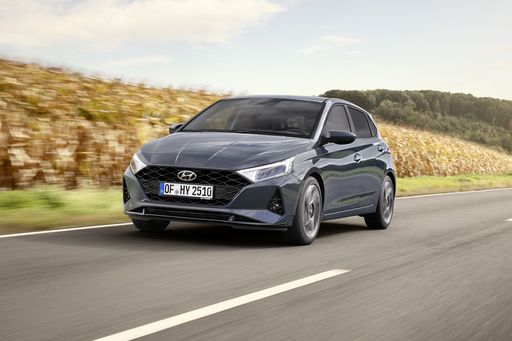
Hyundai i20 vs Honda Jazz comparison

Compare performance (90 HP vs 122 HP), boot space and price (18,600 £ vs 23,100 £ ) at a glance. Find out which car is the better choice for you – Hyundai i20 or Honda Jazz?

Hyundai i20 vs Honda Jazz: Key differences

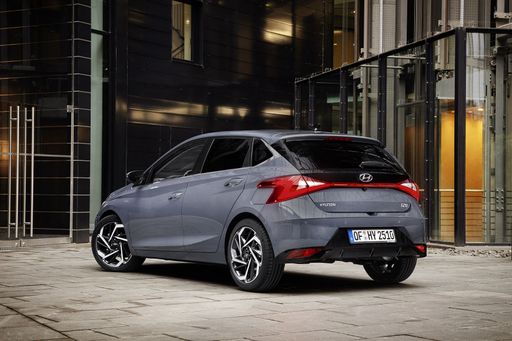
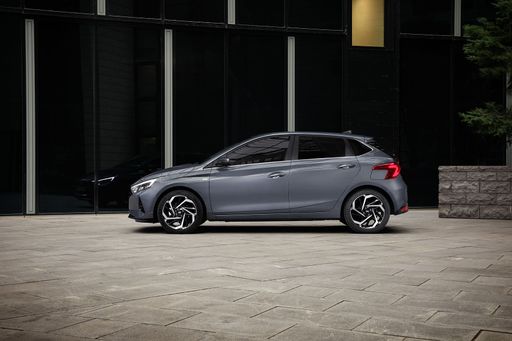
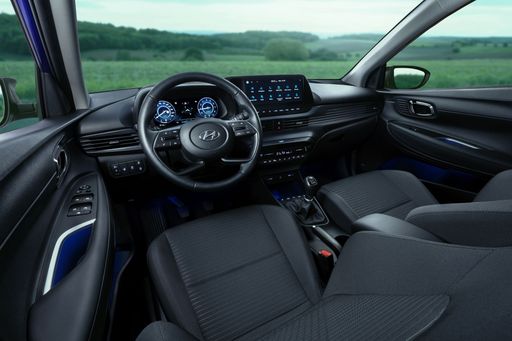
Hyundai i20

4 (1 Reviews)
rate
  • noticeably cheaper
  • slightly lighter
  • moderately more trunk space

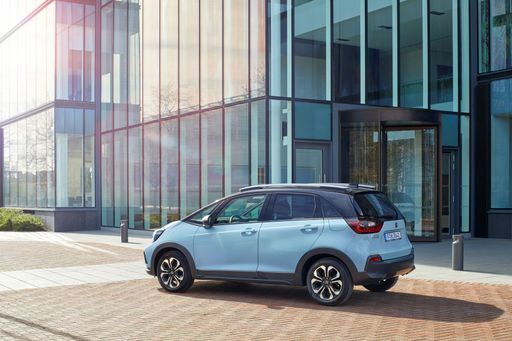
Honda Jazz

4.8 (3 Reviews)
rate
  • noticeably more power
  • noticeably more efficient
  • visibly quicker 0–100 km/h

All details on performance, efficiency, range and trunk space can be found in the technical comparison below – including user reviews for both models.

i20

Introduction: The Key Players in the Hatchback Segment

In the competitive world of hatchbacks, the Honda Jazz and Hyundai i20 stand out as popular choices among consumers seeking practicality, style, and performance. Both models offer a mix of technology, efficiency, and comfort, but how do they compare against one another? In this article, we delve into the technical specifications and innovations of these two impressive vehicles to help you decide which one reigns supreme.
Jazz

Engine Performance and Efficiency

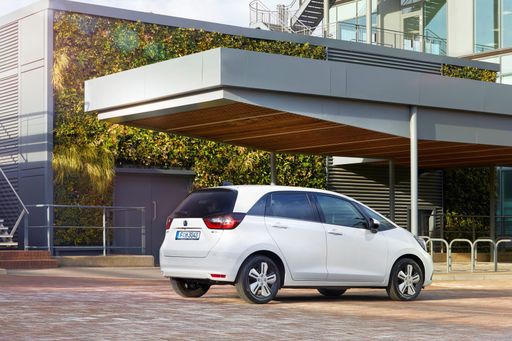
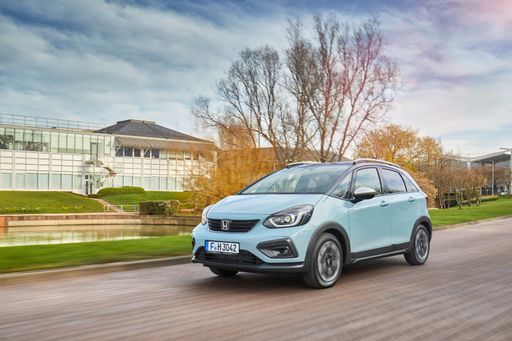
The 2023 Honda Jazz is equipped with a Full Hybrid engine, offering an impressive power output of 122 HP from its 1498 cm³ engine capacity. This hybrid setup ensures remarkable fuel efficiency, with consumption figures ranging from 4.5 L to 4.8 L per 100 km, making it one of the most economical choices in its class.

On the other hand, the 2024 Hyundai i20 comes in two engine configurations: a petrol MHEV and a standard petrol engine, producing 100 HP and 79 HP respectively. The engine capacities of 998 cm³ and 1197 cm³ lead to higher consumption rates of around 5.1 L to 5.3 L per 100 km. While the i20 offers solid performance, it falls short of the Jazz in terms of fuel efficiency.

i20

Acceleration and Speed

When it comes to acceleration, the Jazz proves to be swift, achieving a remarkable 0-100 km/h in just 9.4 seconds. This is a significant advantage, particularly for urban driving scenarios where quick starts can make a big difference.

Conversely, the i20's performance varies depending on the engine choice, with the quickest variant clocking in at 11.1 seconds for 0-100 km/h. This comparative analysis clearly showcases the Jazz's upper hand in performance metrics.

Jazz

Dimensions and Comfort

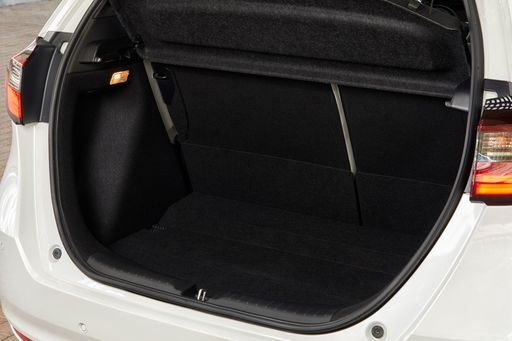
In terms of dimensions, the Honda Jazz measures 4089 mm in length and stands at 1526 mm tall, providing a spacious and comfortable cabin for its five occupants. The trunk capacity of 304 liters allows for ample storage space, ideal for individuals and families alike.

The Hyundai i20, slightly shorter at 4075 mm but with a wider frame of 1775 mm, offers a marginally larger trunk capacity of 352 liters, thus providing a bit more room for luggage. However, its lower height at 1455 mm can make the Jazz feel roomier for passengers seated inside.

i20

Technology and Innovations

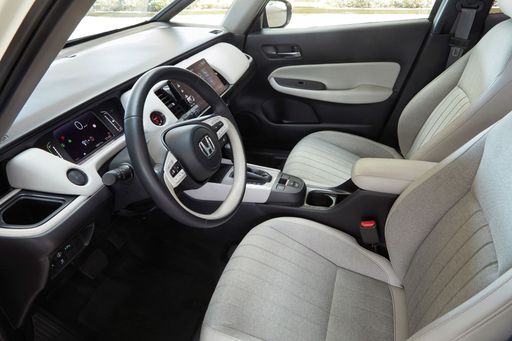
Honda has packed the Jazz with cutting-edge technology, offering features such as advanced driver-assistance systems, a user-friendly infotainment system, and connectivity options including Apple CarPlay and Android Auto. The hybrid system is engineered to maximize efficiency, seamlessly transitioning between electric and petrol power.

Hyundai has also made significant strides with the i20, incorporating features like a modern infotainment display, Bluetooth connectivity, and an array of safety features through its SmartSense technology. However, the i20 lacks the hybrid option, which may deter environmentally-conscious buyers.

Jazz

Environmental Impact and CO2 Emissions

In the realm of eco-friendliness, the Honda Jazz shines with CO2 emissions classified in the C range, producing between 102 g/km to 108 g/km. This impressive efficiency enhances its appeal as a sustainable choice for consumers looking to reduce their carbon footprint.

The Hyundai i20, while still meeting modern regulations, falls into the D efficiency class and emits around 117 g/km to 120 g/km. This increased emission level could be a downside for those prioritizing environmental impact.

i20

Conclusion: Which Hatchback Reigns Supreme?

Both the Honda Jazz and Hyundai i20 bring strong offerings to the hatchback market, but they cater to slightly different demographics. The Jazz excels in fuel efficiency, performance, and modern hybrid technology, making it ideal for those looking for an economical yet robust daily driver.

On the other hand, the i20 offers great practicality and a spacious cabin, but its higher fuel consumption and emissions may sway eco-conscious buyers towards the Jazz. Ultimately, the decision boils down to individual preferences regarding performance, technology, and environmental considerations. Each model has its strengths, but for those who prioritize innovative engineering and efficiency, the Honda Jazz likely takes the lead.

Here’s where it gets real: The technical differences in detail

i20

Costs and Efficiency:

Price and efficiency are key factors when choosing a car – and this is often where the real differences emerge.

Hyundai i20 is noticeably cheaper – starting at 18,600 £ , while the Honda Jazz costs 23,100 £ . That’s a price difference of around 4,500 £.

Fuel consumption also shows a difference: the Honda Jazz uses 4.5 L/100km and is noticeably more efficient than the Hyundai i20 with 5.7 L/100km. The difference is about 1.2 L/100km.

Jazz

Engine and Performance:

Under the bonnet, it becomes clear which model is tuned for sportiness and which one takes the lead when you hit the accelerator.

When it comes to engine power, the Honda Jazz offers noticeably more power – delivering 122 HP compared to 90 HP. That’s roughly 32 HP more horsepower.

When accelerating from 0 to 100 km/h, the Honda Jazz is visibly quicker – completing the sprint in 9.4 s, while the Hyundai i20 takes 11.5 s. That’s about 2.1 s quicker.

There’s also a difference in torque: the Honda Jazz delivers markedly more torque with 253 Nm compared to 172 Nm. That’s about 81 Nm more.

i20

Space and Everyday Use:

Cabin size, boot volume and payload all play a role in everyday practicality. Here, comfort and flexibility make the difference.

Both vehicles offer seating for 5 people.

In terms of curb weight, Hyundai i20 is slightly lighter – 1,145 kg compared to 1,302 kg. The difference is around 157 kg.

Looking at boot space, the Hyundai i20 offers moderately more boot space – 352 L compared to 304 L. That’s a difference of about 48 L.

When it comes to payload, the Hyundai i20 carries a bit more – 465 kg compared to 388 kg. That’s a difference of about 77 kg.

Who wins the race in the data check?

The Honda Jazz is decisively ahead in the objective data comparison.
This result only shows which model scores more points on paper – not which of the two cars feels right for you.

from £23,100
Jazz

Honda Jazz

  • Engine Type : Full Hybrid
  • Transmission : Automatic
  • Drive Type : Front-Wheel Drive
  • Power HP : 122 HP
  • Consumption L/100km : 4.5 - 4.8 L/100km
Hyundai i20
Honda Jazz

Costs and Consumption

View detailed analysis

Engine and Performance

View detailed analysis

Dimensions and Body

View detailed analysis

Hyundai i20

The Hyundai i20 is a cheeky small car that mixes smart styling with sensible practicality, feeling more polished and roomy than you might expect for the money. It’s an easy car to live with, offering engaging handling, a comfy cabin and useful equipment that make daily commutes and weekend errands notably less dull.

details

Honda Jazz

The Honda Jazz is a supremely practical small hatch that hides clever packaging and more usable space than it lets on, with friendly styling and an unfussy charm. It’s economical to run, easy to park and perfect for buyers who want reliable, versatile daily motoring without the hassle.

details
Hyundai i20
Honda Jazz

Costs and Consumption

Price
18,600 - 24,000 £
Price
23,100 - 26,700 £
Consumption L/100km
5.7 L/100km
Consumption L/100km
4.5 - 4.8 L/100km
Consumption kWh/100km
-
Consumption kWh/100km
-
Electric Range
-
Electric Range
-
Battery Capacity
-
Battery Capacity
-
co2
128 - 129 g/km
co2
102 - 108 g/km
Fuel tank capacity
-
Fuel tank capacity
-

Dimensions and Body

Body Type
Hatchback
Body Type
Hatchback
Seats
5
Seats
5
Doors
-
Doors
-
Curb weight
1,145 - 1,170 kg
Curb weight
1,302 - 1,321 kg
Trunk capacity
352 L
Trunk capacity
304 L
Length
-
Length
-
Width
1,775 mm
Width
-
Height
-
Height
-
Max trunk capacity
-
Max trunk capacity
-
Payload
455 - 465 kg
Payload
369 - 388 kg

Engine and Performance

Engine Type
Petrol
Engine Type
Full Hybrid
Transmission
Manuel, Automatic
Transmission
Automatic
Transmission Detail
Manual Gearbox, Dual-Clutch Automatic
Transmission Detail
CVT
Drive Type
Front-Wheel Drive
Drive Type
Front-Wheel Drive
Power HP
90 HP
Power HP
122 HP
Acceleration 0-100km/h
11.5 - 12.8 s
Acceleration 0-100km/h
9.4 - 9.7 s
Max Speed
-
Max Speed
-
Torque
172 Nm
Torque
253 Nm
Number of Cylinders
3
Number of Cylinders
4
Power kW
66 kW
Power kW
90 kW
Engine capacity
998 cm3
Engine capacity
1,498 cm3

General

Model Year
2,025
Model Year
2,025
CO2 Efficiency Class
D
CO2 Efficiency Class
C
Brand
Hyundai
Brand
Honda
DriveDuel uses data analysis and artificial intelligence to evaluate vehicle data and create content. Content is regularly reviewed and improved. The displayed prices are estimates based on German list prices, adjusted to the respective country’s VAT. Country-specific registration taxes are not included. This information is not legally binding.