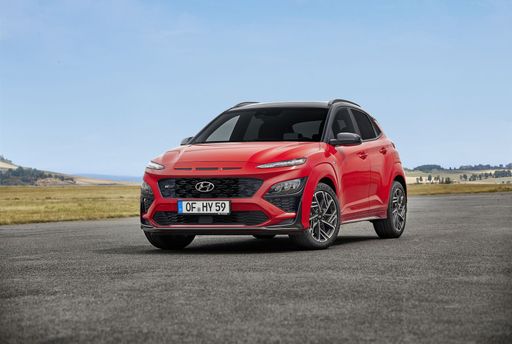
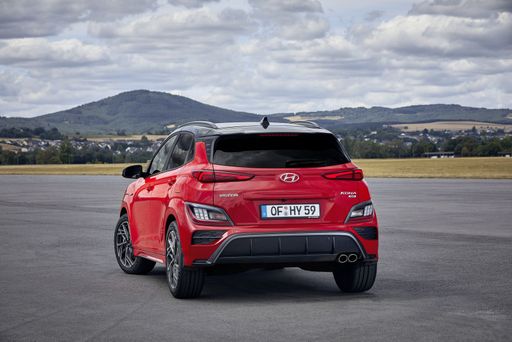
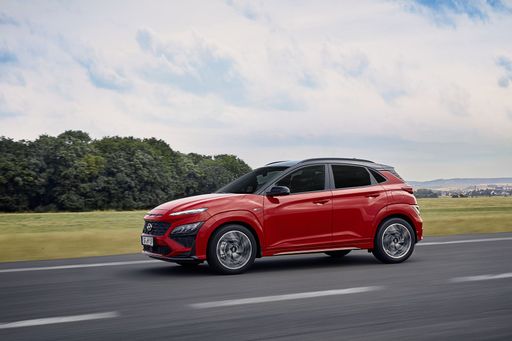
@ Hyundai Motor Company
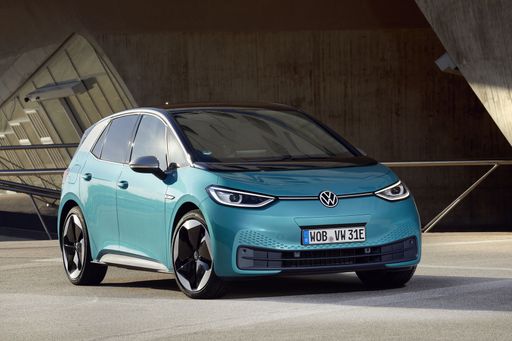
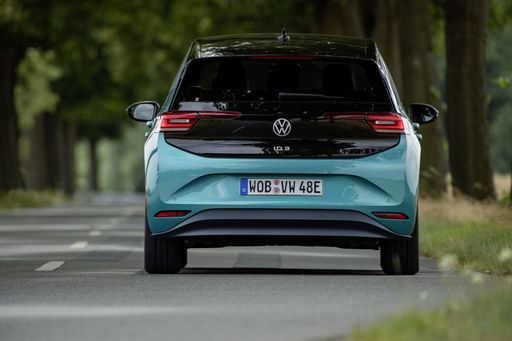
@ Volkswagen AG / VW Media
VS

Hyundai Kona vs VW ID.3 – Which model is better for everyday use?

Two cars, one duel: Hyundai Kona meets VW ID.3.
Which one wins in performance, efficiency and value for money? Find out now!

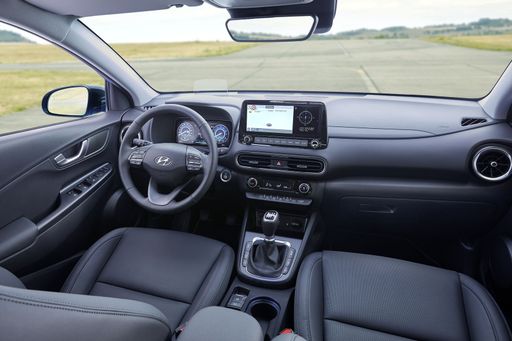
Kona @ Hyundai Motor Company

An Electrifying Showdown: Hyundai Kona vs VW ID.3

The automotive world's shift towards electric vehicles has brought exciting innovations, developing choices for consumers who seek eco-friendly driving solutions. In this competitive arena, the Hyundai Kona and the VW ID.3 stand out as robust contenders, both offering distinctive advantages in design, technology, and performance. Here, we delve into a comparative analysis of these two models to help you determine which might be your ideal next car.

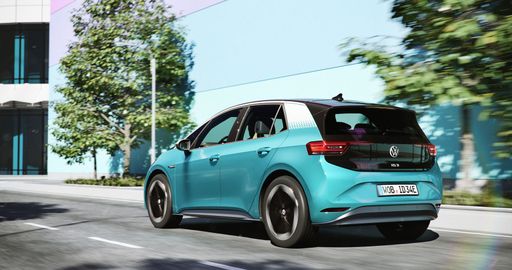
ID.3 @ Volkswagen AG / VW Media

Design and Body Type

The Hyundai Kona is characterized as an SUV, offering the elevated stance and spacious feel that come with this body type. Measuring between 4350mm and 4385mm in length, and with a height of up to 1585mm, the Kona provides a commanding presence on the road, with ample space for five occupants.

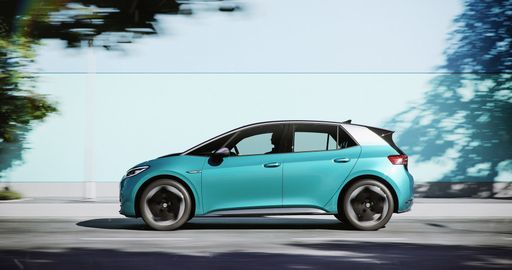
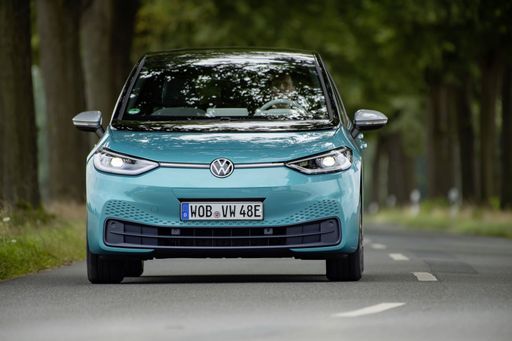
On the other hand, the VW ID.3 presents itself as a hatchback. With a length of 4264mm, a width of 1809mm, and a height of 1564mm, the ID.3 combines sleek aerodynamic lines with compact versatility. It also comfortably accommodates five passengers, demonstrating how efficient packaging can maximize interior volume.

Kona @ Hyundai Motor Company

Performance and Drive

The Kona comes with a versatile choice of powertrains, from traditional petrol engines to full hybrids and fully electric options. In its all-electric form, the Kona delivers up to 218 HP, reaches 0-100 km/h in 7.8 seconds, and can reach a maximum speed of 208 km/h. It also offers an electric range of up to 514 km, thanks to its substantial 65.4 kWh battery capacity.

Meanwhile, the VW ID.3 is exclusively electric, emphasizing its commitment to sustainable driving. It boasts a variety of power outputs up to 326 HP and torque that peaks at 545 Nm, allowing it to sprint from 0-100 km/h in just 5.7 seconds. Its maximum range can extend to an impressive 601 km, backed by available battery capacities up to 79 kWh.

ID.3 @ Volkswagen AG / VW Media

Efficiency and Eco-Friendliness

In terms of efficiency, the Hyundai Kona's electric variant demonstrates a consumption rate of about 14.6 to 16.8 kWh/100km, along with a competitive CO2 efficiency class rating from A to E, depending on the model and engine choice. These numbers reflect its commitment to reducing emissions and operational costs.

The VW ID.3 maintains a consumption rate of 14.5 to 15.8 kWh/100km, asserting its position as a sustainable choice with a consistent CO2 emission of zero. Its classification in the highest CO2 efficiency class ensures that drivers feel good about their environmental impact.

Kona @ Hyundai Motor Company

Interior Space and Utility

The Kona offers a substantial trunk capacity of 466 liters, highlighting its utility for families or those requiring ample cargo space. Its SUV architecture naturally lends itself to more versatile use, whether it's a grocery run or a weekend adventure.

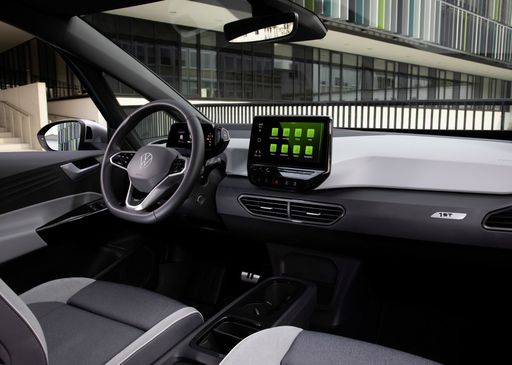
The ID.3, with a trunk capacity of 385 liters, demonstrates an efficient use of space typical of hatchbacks. What it might lack in sheer volume, it makes up for with clever interior design that enhances the passenger experience and usability.

ID.3 @ Volkswagen AG / VW Media

Conclusion: Choosing Your Next Electric Companion

When choosing between the Hyundai Kona and the VW ID.3, your decision may come down to your preferred body type and the experience you seek. If you prioritize an SUV's commanding presence and all-around versatility, the Hyundai Kona might be your ideal companion. Conversely, if a sleek, aerodynamic hatchback with cutting-edge innovations appeals more, then the VW ID.3 could be the choice for you. Both models provide exceptional electric performance and environmental benefits, ensuring a greener drive towards the future.

Here’s where it gets real: The technical differences in detail

Kona @ Hyundai Motor Company

Costs and Efficiency:

Price and efficiency are key factors when choosing a car – and this is often where the real differences emerge.

Hyundai Kona has a noticeable advantage in terms of price – it starts at 23100 £, while the VW ID.3 costs 28600 £. That’s a price difference of around 5511 £.

In terms of energy consumption, the advantage goes to the VW ID.3: with 14.50 kWh per 100 km, it’s hardly perceptible more efficient than the Hyundai Kona with 14.60 kWh. That’s a difference of about 0.10 kWh.

As for range, the VW ID.3 performs somewhat better – achieving up to 605 km, about 91 km more than the Hyundai Kona.

ID.3 @ Volkswagen AG / VW Media

Engine and Performance:

Power, torque and acceleration are the classic benchmarks for car enthusiasts – and here, some clear differences start to show.

When it comes to engine power, the VW ID.3 has a distinct edge – offering 326 HP compared to 218 HP. That’s roughly 108 HP more horsepower.

In acceleration from 0 to 100 km/h, the VW ID.3 is noticeable quicker – completing the sprint in 5.70 s, while the Hyundai Kona takes 7.80 s. That’s about 2.10 s faster.

In terms of top speed, the Hyundai Kona performs hardly perceptible better – reaching 210 km/h, while the VW ID.3 tops out at 200 km/h. The difference is around 10 km/h.

There’s also a difference in torque: VW ID.3 pulls convincingly stronger with 545 Nm compared to 265 Nm. That’s about 280 Nm difference.

Space and Everyday Use:

Cabin size, boot volume and payload all play a role in everyday practicality. Here, comfort and flexibility make the difference.

Both vehicles offer seating for 5 people.

In curb weight, Hyundai Kona is distinct lighter – 1370 kg compared to 1787 kg. The difference is around 417 kg.

In terms of boot space, the Hyundai Kona offers somewhat more room – 466 L compared to 385 L. That’s a difference of about 81 L.

In maximum load capacity, the Hyundai Kona performs barely noticeable better – up to 1300 L, which is about 33 L more than the VW ID.3.

When it comes to payload, Hyundai Kona minimal takes the win – 490 kg compared to 473 kg. That’s a difference of about 17 kg.

Who comes out on top?

Overall, the VW ID.3 shows itself to be outperforms in nearly all aspects and secures the title of DriveDuel Champion.
It convinces with the more balanced overall package and proves to be the more versatile choice for everyday use.

from about £28,600
ID.3 @ Volkswagen AG / VW Media

VW ID.3

  • Engine Type : Electric
  • Transmission : Automatic
  • Drive Type : Rear-Wheel Drive
  • Power HP : 170 - 326 HP
  • Consumption kWh/100km : 14.5 - 15.8 kWh
  • Electric Range : 383 - 605 km

Hyundai Kona

5 (1)
rate

The Hyundai Kona wears its personality on the outside with bold styling and sprightly handling that turns city driving into something a little more fun than a commute. It blends practical space, modern tech and sensible running costs into a compact, stylish package — a smart pick if you want flair without paying luxury prices.

details

VW ID.3

5 (2)
rate

The VW ID.3 is a crisply styled electric hatch that masks serious practicality behind a friendly, modern face, making city runs and longer trips pleasantly fuss free. For buyers seeking a sensible, well-equipped EV that doesn't take itself too seriously, the ID.3 strikes a neat balance of comfort, tech and everyday usability with a cheeky smile.

details
Hyundai Kona
VW ID.3
Kona @ Hyundai Motor Company
ID.3 @ Volkswagen AG / VW Media

Costs and Consumption

Price
23100 - 41600 £
Price
28600 - 49300 £
Consumption L/100km
4.6 - 7 L
Consumption L/100km
-
Consumption kWh/100km
14.6 - 16.8 kWh
Consumption kWh/100km
14.5 - 15.8 kWh
Electric Range
377 - 514 km
Electric Range
383 - 605 km
Battery Capacity
1.3 - 65.4 kWh
Battery Capacity
52 - 79 kWh
co2
0 - 163 g/km
co2
0 g/km
Fuel tank capacity
38 - 47 L
Fuel tank capacity
-

Dimensions and Body

Body Type
SUV
Body Type
Hatchback
Seats
5
Seats
5
Doors
5
Doors
5
Curb weight
1370 - 1773 kg
Curb weight
1787 - 1993 kg
Trunk capacity
466 L
Trunk capacity
385 L
Length
4350 - 4385 mm
Length
4264 mm
Width
1825 mm
Width
1809 mm
Height
1580 - 1585 mm
Height
1564 mm
Max trunk capacity
1300 L
Max trunk capacity
1267 L
Payload
420 - 490 kg
Payload
437 - 473 kg

Engine and Performance

Engine Type
Electric, Petrol, Full Hybrid
Engine Type
Electric
Transmission
Automatic, Manuel
Transmission
Automatic
Transmission Detail
Reduction Gearbox, Manual Gearbox, Dual-Clutch Automatic
Transmission Detail
Reduction Gearbox
Drive Type
Front-Wheel Drive, All-Wheel Drive
Drive Type
Rear-Wheel Drive
Power HP
115 - 218 HP
Power HP
170 - 326 HP
Acceleration 0-100km/h
7.8 - 11.9 s
Acceleration 0-100km/h
5.7 - 8.2 s
Max Speed
162 - 210 km/h
Max Speed
160 - 200 km/h
Torque
200 - 265 Nm
Torque
310 - 545 Nm
Number of Cylinders
3 - 4
Number of Cylinders
-
Power kW
85 - 160 kW
Power kW
125 - 240 kW
Engine capacity
998 - 1598 cm3
Engine capacity
-

General

Model Year
2024 - 2025
Model Year
2024 - 2025
CO2 Efficiency Class
A, D, C, E, F
CO2 Efficiency Class
A
Brand
Hyundai
Brand
VW
Is the Hyundai Kona offered with different drivetrains?

Available configurations include Front-Wheel Drive or All-Wheel Drive.

The prices and data displayed are estimates based on German list prices and may vary by country. This information is not legally binding.