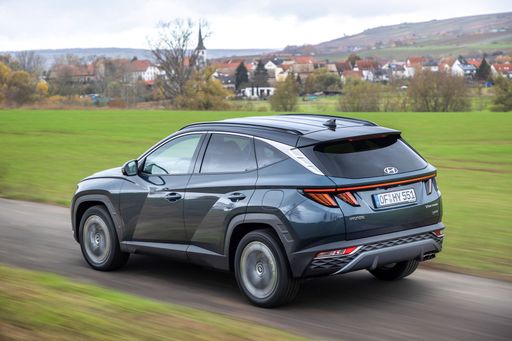
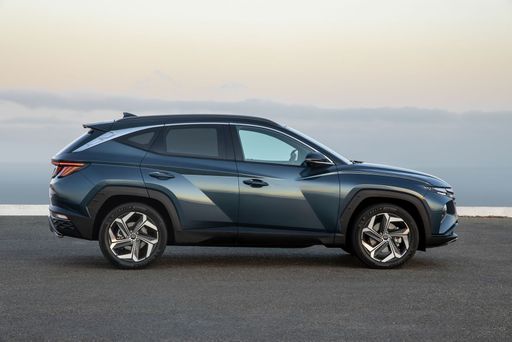
VS

Hyundai Tucson vs Audi Q5 comparison

Compare performance (288 HP vs 367 HP), boot space and price (20,900 £ vs 46,400 £ ) at a glance. Find out which car is the better choice for you – Hyundai Tucson or Audi Q5?

Hyundai Tucson vs Audi Q5: Key differences

Hyundai Tucson

4.6 (4 Reviews)
rate
  • significantly cheaper
  • noticeably lighter
  • moderately more trunk space

Audi Q5

4.4 (5 Reviews)
rate
  • noticeably more power
  • marginally more efficient
  • markedly more electric range
  • significantly quicker 0–100 km/h

All details on performance, efficiency, range and trunk space can be found in the technical comparison below – including user reviews for both models.

Tucson

The Rivalry: Audi Q5 vs. Hyundai Tucson

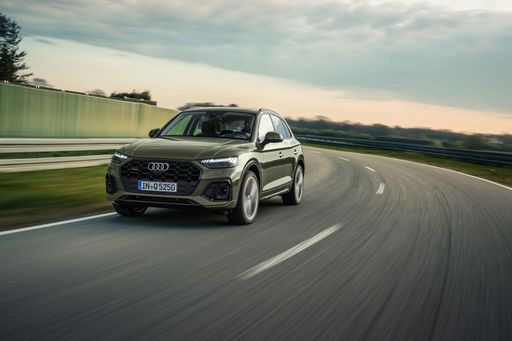
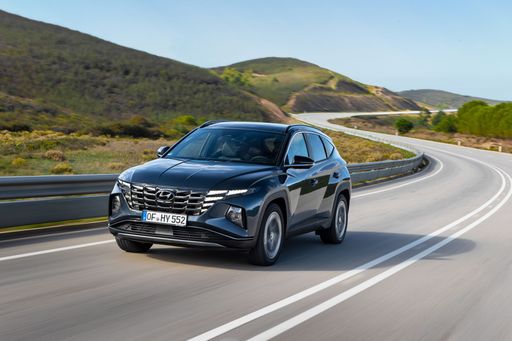
In the competitive landscape of the SUV segment, the Audi Q5 and Hyundai Tucson emerge as two appealing choices, each backed by their own set of strengths and technological innovations. While the Q5 leans on its performance and premium feel, the Tucson offers practicality and value. This article dives deep into the technical specifications and innovations that set these vehicles apart.
Q5

Performance Specifications

The Audi Q5 showcases a diverse lineup of engine options, including Diesel MHEV, Petrol MHEV, and Plugin Hybrid variants. With power outputs ranging from 163 HP to a robust 367 HP, the Q5 delivers impressive performance. Acceleration figures are equally compelling, with the top-performing variants achieving 0-100 km/h in as little as 4.5 seconds.

On the flip side, the Hyundai Tucson is no slouch either. Although it offers less power overall, with a maximum of 252 HP from its Turbocharged engines, the Tucson still provides an engaging drive. Its acceleration from 0-100 km/h ranges from 7.9 seconds to 11.4 seconds, depending on the configuration.

Both vehicles come with automatic gearboxes, and the Q5's advanced Dual-Clutch System enhances its sporty credentials, while the Tucson’s various transmission options, including manual and automatic choices, cater to a broader audience.

Tucson

Fuel Efficiency and Range

Fuel efficiency is vital in today’s automotive market, and the Audi Q5 offers commendable figures, ranging from 5.6 to 8.4 L/100km, depending on the engine choice. The Plugin Hybrid variant pushes the boundaries even further, achieving an incredible efficiency rating of just 1.5 L/100km, making it an excellent choice for eco-conscious drivers.

The Hyundai Tucson also presents strong fuel consumption ratings, particularly in its hybrid configurations, with figures as low as 5.1 L/100km. With its petrol variants, the consumption may rise slightly, but they still compete closely with the Q5. Additionally, the Tucson boasts an electric range of up to 70 km for its hybrid models, providing an appealing solution for short commutes.

Q5

Interior and Comfort

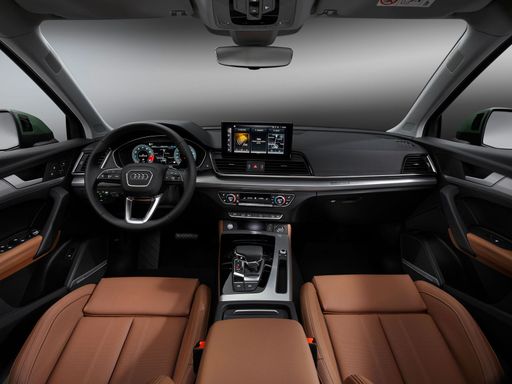
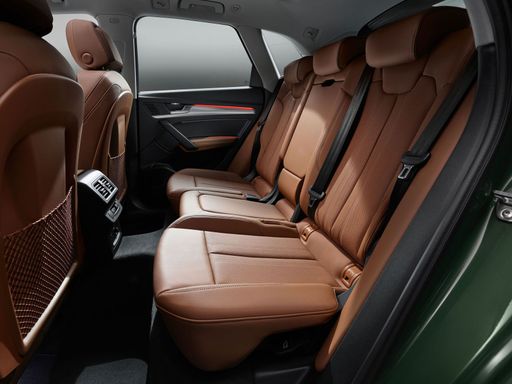
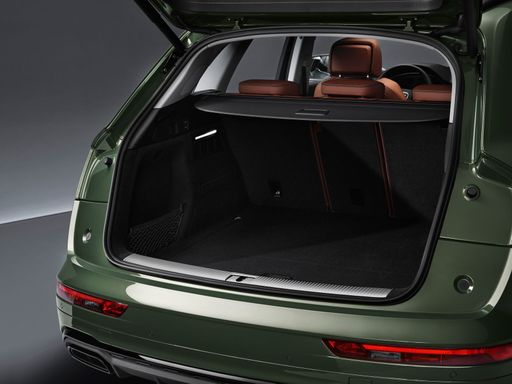
When it comes to interior space and comfort, the Audi Q5 shines with its luxurious finishes and spacious cabin. The trunk capacity ranges from 455 to 520 liters, depending on the configuration. The Q5 employs high-quality materials and advanced technology features, ensuring that each drive feels premium.

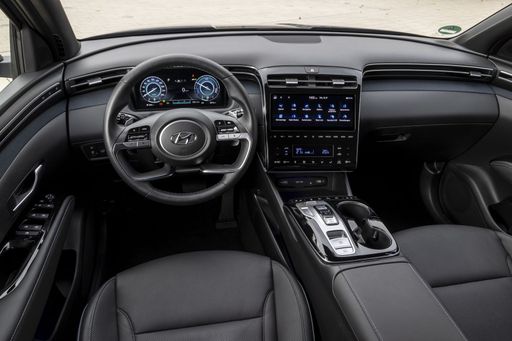
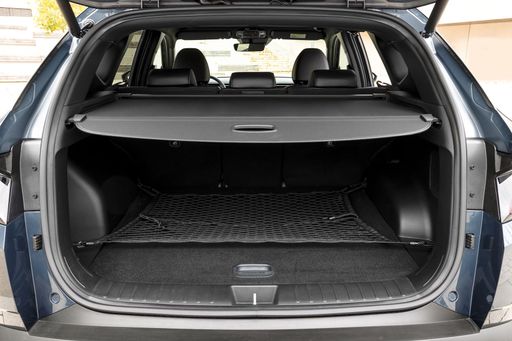
The Hyundai Tucson, while not as luxurious, offers a very practical interior with an emphasis on user-friendly technology. The trunk capacity of the Tucson is quite competitive, stretching up to 620 liters, which is ideal for families or those needing extra cargo space. The Tucson focuses on comfort and accessibility, providing ample legroom and headspace for all passengers.

Tucson

Safety Features and Innovations

Safety is a core component of both the Q5 and Tucson. The Audi Q5 is equipped with an array of advanced safety features, including adaptive cruise control, lane-keeping assist, and a renowned Quattro all-wheel-drive system, ensuring excellent stability and traction under various driving conditions.

The Hyundai Tucson does not fall short, either. It comes loaded with a suite of safety technologies, including forward collision warning, blind-spot monitoring, and a rear cross-traffic alert system. These features enhance the Tucson’s reputation as a family-friendly SUV.

Q5

Conclusion: Which SUV Reigns Supreme?

In the end, the choice between the Audi Q5 and Hyundai Tucson boils down to personal preferences and priorities. If luxury, performance, and advanced technology are key factors, the Q5 is the clear frontrunner. However, if practicality, efficiency, and value for money are at the forefront of your decision-making, the Tucson stands strong. Both SUVs exemplify the best in their respective categories, making them worthy contenders on the road.

Here’s where it gets real: The technical differences in detail

Tucson

Costs and Efficiency:

Price and efficiency are key factors when choosing a car – and this is often where the real differences emerge.

Hyundai Tucson is significantly cheaper – starting at 20,900 £ , while the Audi Q5 costs 46,400 £ . That’s a price difference of around 25,474 £.

Fuel consumption also shows a difference: the Audi Q5 uses 2.5 L/100km and is marginally more efficient than the Hyundai Tucson with 2.7 L/100km. The difference is about 0.2 L/100km.

As for electric range, the Audi Q5 offers markedly more range – reaching up to 100 km, about 30 km more than the Hyundai Tucson.

Q5

Engine and Performance:

Power, torque and acceleration are the classic benchmarks for car enthusiasts – and here, some clear differences start to show.

When it comes to engine power, the Audi Q5 offers noticeably more power – delivering 367 HP compared to 288 HP. That’s roughly 79 HP more horsepower.

When accelerating from 0 to 100 km/h, the Audi Q5 is significantly quicker – completing the sprint in 4.5 s, while the Hyundai Tucson takes 7.5 s. That’s about 3 s quicker.

There’s also a difference in torque: the Audi Q5 delivers markedly more torque with 580 Nm compared to 379 Nm. That’s about 201 Nm more.

Tucson

Space and Everyday Use:

Cabin size, boot volume and payload all play a role in everyday practicality. Here, comfort and flexibility make the difference.

Both vehicles offer seating for 5 people.

In terms of curb weight, Hyundai Tucson is noticeably lighter – 1,542 kg compared to 1,910 kg. The difference is around 368 kg.

Looking at boot space, the Hyundai Tucson offers moderately more boot space – 620 L compared to 520 L. That’s a difference of about 100 L.

When it comes to payload, the Audi Q5 carries marginally more – 565 kg compared to 545 kg. That’s a difference of about 20 kg.

Who wins the race in the data check?

The Audi Q5 holds a decisive overall lead in the objective data comparison.
This result only shows which model scores more points on paper – not which of the two cars feels right for you.

from £46,400
Q5

Audi Q5

  • Engine Type : Plugin Hybrid, Petrol MHEV, Diesel MHEV
  • Transmission : Automatic
  • Drive Type : All-Wheel Drive, Front-Wheel Drive
  • Power HP : 204 - 367 HP
  • Consumption L/100km : 2.5 - 8.3 L/100km
  • Electric Range : 92 - 100 km
Hyundai Tucson
Audi Q5

Costs and Consumption

View detailed analysis

Engine and Performance

View detailed analysis

Dimensions and Body

View detailed analysis

Hyundai Tucson

Hyundai Tucson marries bold, sculpted looks with a clever, roomy cabin that feels smarter than its price tag suggests. It's composed on the road, easy to live with day-to-day, and a sensible choice for buyers who want SUV style without the showroom theatrics.

details

Audi Q5

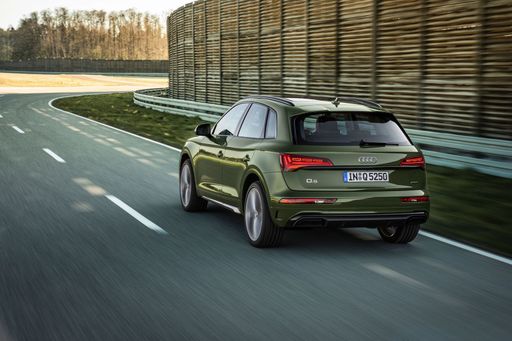
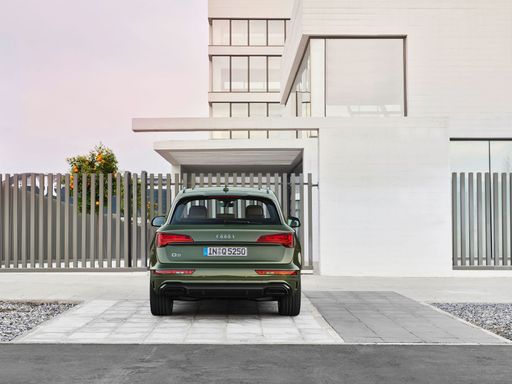
The Audi Q5 feels like the sensible luxury choice — polished cabin materials, a calm ride and enough tech to keep commuters and weekend adventurers equally pleased. It won't shout for attention but will quietly check the boxes for buyers who want refinement, space and everyday usability with a dash of Audi charisma.

details
Hyundai Tucson
Audi Q5

Costs and Consumption

Price
20,900 - 47,900 £
Price
46,400 - 79,600 £
Consumption L/100km
2.7 - 7.6 L/100km
Consumption L/100km
2.5 - 8.3 L/100km
Consumption kWh/100km
-
Consumption kWh/100km
-
Electric Range
63 - 70 km
Electric Range
92 - 100 km
Battery Capacity
-
Battery Capacity
-
co2
62 - 172 g/km
co2
56 - 189 g/km
Fuel tank capacity
52 - 54 L
Fuel tank capacity
-

Dimensions and Body

Body Type
SUV
Body Type
SUV
Seats
5
Seats
5
Doors
5
Doors
-
Curb weight
1,542 - 1,893 kg
Curb weight
1,910 - 2,245 kg
Trunk capacity
546 - 620 L
Trunk capacity
433 - 520 L
Length
4,525 - 4,535 mm
Length
-
Width
1,865 mm
Width
1,900 mm
Height
1,650 mm
Height
-
Max trunk capacity
1,795 - 1,799 L
Max trunk capacity
-
Payload
518 - 545 kg
Payload
490 - 565 kg

Engine and Performance

Engine Type
Petrol, Full Hybrid, Plugin Hybrid, Diesel MHEV
Engine Type
Plugin Hybrid, Petrol MHEV, Diesel MHEV
Transmission
Manuel, Automatic
Transmission
Automatic
Transmission Detail
Manual Gearbox, Dual-Clutch Automatic, Automatic Gearbox
Transmission Detail
Dual-Clutch Automatic
Drive Type
Front-Wheel Drive, All-Wheel Drive
Drive Type
All-Wheel Drive, Front-Wheel Drive
Power HP
136 - 288 HP
Power HP
204 - 367 HP
Acceleration 0-100km/h
7.5 - 11.6 s
Acceleration 0-100km/h
4.5 - 8.6 s
Max Speed
196 - 204 km/h
Max Speed
-
Torque
250 - 379 Nm
Torque
340 - 580 Nm
Number of Cylinders
4
Number of Cylinders
4 - 6
Power kW
100 - 212 kW
Power kW
150 - 270 kW
Engine capacity
1,598 cm3
Engine capacity
1,968 - 2,995 cm3

General

Model Year
2,025
Model Year
2,025
CO2 Efficiency Class
F, D, E, B
CO2 Efficiency Class
B, E, F, G
Brand
Hyundai
Brand
Audi
DriveDuel uses data analysis and artificial intelligence to evaluate vehicle data and create content. Content is regularly reviewed and improved. The displayed prices are estimates based on German list prices, adjusted to the respective country’s VAT. Country-specific registration taxes are not included. This information is not legally binding.