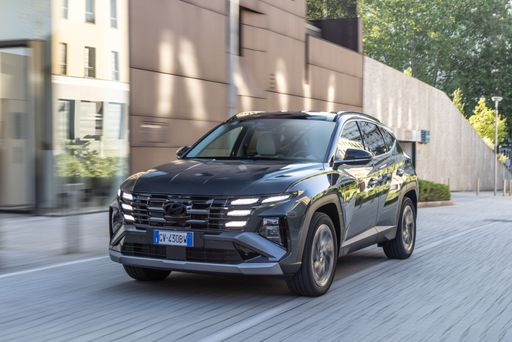
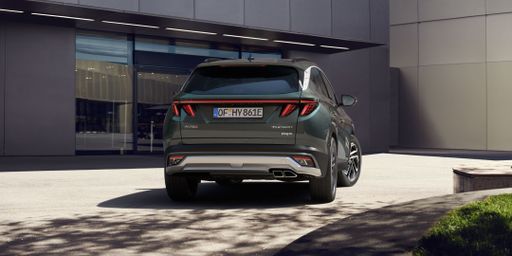
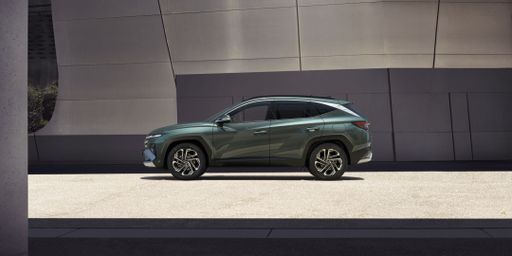
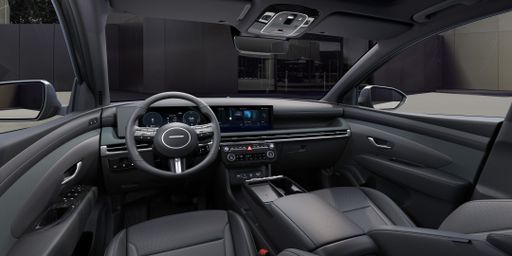
VS

Hyundai Tucson vs Ford Kuga comparison

Compare performance (288 HP vs 243 HP), boot space and price (20,900 £ vs 34,200 £ ) at a glance. Find out which car is the better choice for you – Hyundai Tucson or Ford Kuga?

Hyundai Tucson vs Ford Kuga: Key differences

Hyundai Tucson

4.6 (4 Reviews)
rate
  • considerably cheaper
  • slightly more power
  • barely more efficient
  • barely more electric range

Ford Kuga

4.3 (5 Reviews)
rate
  • barely quicker 0–100 km/h
  • marginally lighter

All details on performance, efficiency, range and trunk space can be found in the technical comparison below – including user reviews for both models.

Tucson

The mid-size SUV segment has become increasingly competitive, with the Ford Kuga and Hyundai Tucson standing out as two notable contenders. As drivers seek performance, comfort, and technology, these models offer a wealth of options that warrant a closer comparison. Let’s dive into the finer points of these two SUVs and see how they stack up against each other.

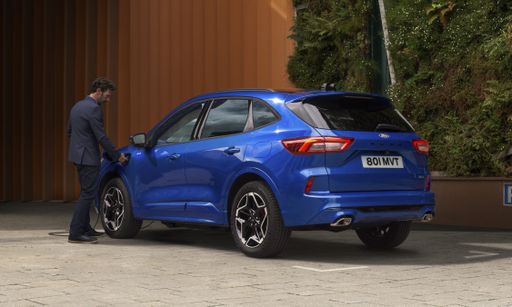
Kuga

Pricing and Models

The Ford Kuga boasts a price range starting from €39,950 to €52,200 across various configurations. It offers a selection of powertrains, including petrol, full hybrid, and plug-in hybrid options, making it versatile for different driving preferences.

In contrast, the Hyundai Tucson presents a slightly more diverse pricing spectrum, from €34,990 to €54,050. Comparable to the Kuga, the Tucson also provides a variety of engines, including diesel MHEV, petrol MHEV, full hybrid, and plug-in hybrid models. Both cars offer solid value, but the Tucson holds the edge with a lower entry price.

Tucson

Dimensions and Design

The Ford Kuga measures between 4,604 mm and 4,645 mm in length, with a width of 1,882 mm and a height ranging from 1,675 mm to 1,681 mm. In terms of trunk capacity, it offers a respectable 412 liters, catering well to families or adventurers needing extra storage.

On the other hand, the Hyundai Tucson is marginally longer at 4,510 mm to 4,520 mm, with a width of 1,865 mm and a height of 1,650 mm. The Tucson’s trunk capacity is remarkable, providing between 546 and 620 liters, making it ideal for hauling larger items effortlessly.

Kuga

Powertrains and Performance

The Kuga is powered by a range of engines, including a robust 243 HP variant and a hybrid option with a fuel consumption as low as 0.9 L/100 km. This makes it particularly appealing for those conscious of fuel efficiency. Additionally, it can accelerate from 0-100 km/h in as little as 7.3 seconds.

Conversely, the Tucson also offers impressive power with options that boast up to 252 HP. Its best-performing variant accelerates from 0-100 km/h in just 7.9 seconds, with a fuel consumption that can dip to an impressive 1.0 L/100 km for its hybrid configurations. The Kuga wins in terms of pure hybrid range with an electric-only range of 69 km, while the Tucson slightly lags with 65 km to 70 km.

Tucson

Driving Experience

In terms of driving dynamics, both vehicles offer all-wheel drive options, but the Kuga's CTV and manual gearbox options provide a nuanced approach for driving enthusiasts. The Kuga’s top speed can reach 200 km/h, whereas the Tucson caps at 194 km/h, indicating a slight performance edge for the Ford.

However, the Tucson’s diesel and MHEV options grant it a preferable torque rating of up to 367 Nm, delivering a more vigorous pull than the Kuga’s 240 Nm. This makes the Tucson a more compelling option for those who prioritize towing or off-road capabilities.

Kuga

Safety and Technology Innovations

Both SUVs are equipped with cutting-edge safety and technology features. The Ford Kuga includes advanced driver-assistance systems like adaptive cruise control and blind-spot monitoring, ensuring a safe journey.

The Hyundai Tucson matches these offerings with its suite of safety technologies, including smart cruise control, lane-keeping assist, and an impressive set of collision avoidance systems. In terms of infotainment, both models offer modern touchscreen interfaces compatible with Apple CarPlay and Android Auto, creating a seamless connection to your smartphone.

Tucson

Conclusion

In the battle of the Ford Kuga versus the Hyundai Tucson, both vehicles bring unique strengths to the table. The Kuga excels with its hybrid technology and performance, while the Tucson showcases versatility with its engine options and spacious interior.

Ultimately, the choice will depend on individual preferences for performance, comfort, and design. Whichever model you choose, both the Kuga and Tucson promise to deliver a compelling driving experience in the competitive SUV market.

Here’s where it gets real: The technical differences in detail

Tucson

Costs and Efficiency:

Price and efficiency are key factors when choosing a car – and this is often where the real differences emerge.

Hyundai Tucson is considerably cheaper – starting at 20,900 £ , while the Ford Kuga costs 34,200 £ . That’s a price difference of around 13,345 £.

Fuel consumption also shows a difference: the Hyundai Tucson uses 2.7 L/100km and is barely more efficient than the Ford Kuga with 2.8 L/100km. The difference is about 0.1 L/100km.

As for electric range, the Hyundai Tucson offers barely more range – reaching up to 70 km, about 2 km more than the Ford Kuga.

Kuga

Engine and Performance:

Under the bonnet, it becomes clear which model is tuned for sportiness and which one takes the lead when you hit the accelerator.

When it comes to engine power, the Hyundai Tucson offers slightly more power – delivering 288 HP compared to 243 HP. That’s roughly 45 HP more horsepower.

When accelerating from 0 to 100 km/h, the Ford Kuga is barely quicker – completing the sprint in 7.3 s, while the Hyundai Tucson takes 7.5 s. That’s about 0.2 s quicker.

There’s also a difference in torque: the Hyundai Tucson delivers clearly more torque with 379 Nm compared to 240 Nm. That’s about 139 Nm more.

Tucson

Space and Everyday Use:

Whether family car or daily driver – which one offers more room, flexibility and comfort?

Both vehicles offer seating for 5 people.

In terms of curb weight, Ford Kuga is marginally lighter – 1,526 kg compared to 1,542 kg. The difference is around 16 kg.

When it comes to payload, the Ford Kuga carries only slightly more – 550 kg compared to 545 kg. That’s a difference of about 5 kg.

Who wins the race in the data check?

The Hyundai Tucson is decisively ahead in the objective data comparison.
This result only shows which model scores more points on paper – not which of the two cars feels right for you.

from £20,900
Tucson

Hyundai Tucson

  • Engine Type : Petrol, Full Hybrid, Plugin Hybrid, Diesel MHEV
  • Transmission : Manuel, Automatic
  • Drive Type : Front-Wheel Drive, All-Wheel Drive
  • Power HP : 136 - 288 HP
  • Consumption L/100km : 2.7 - 7.6 L/100km
  • Electric Range : 63 - 70 km
Hyundai Tucson
Ford Kuga

Costs and Consumption

View detailed analysis

Engine and Performance

View detailed analysis

Dimensions and Body

View detailed analysis

Hyundai Tucson

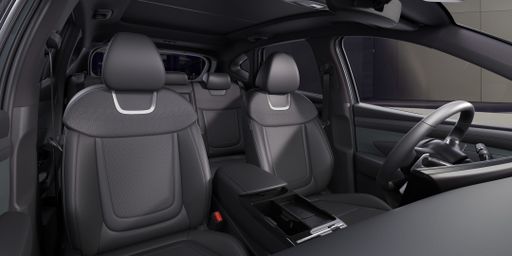
Hyundai Tucson marries bold, sculpted looks with a clever, roomy cabin that feels smarter than its price tag suggests. It's composed on the road, easy to live with day-to-day, and a sensible choice for buyers who want SUV style without the showroom theatrics.

details

Ford Kuga

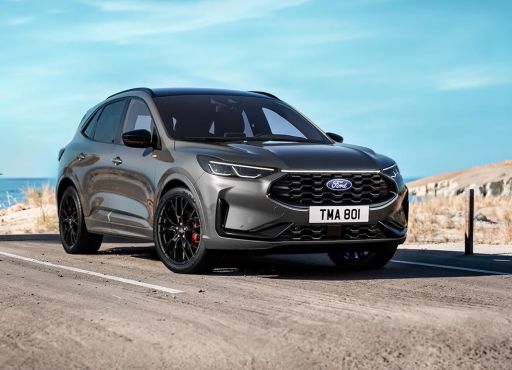
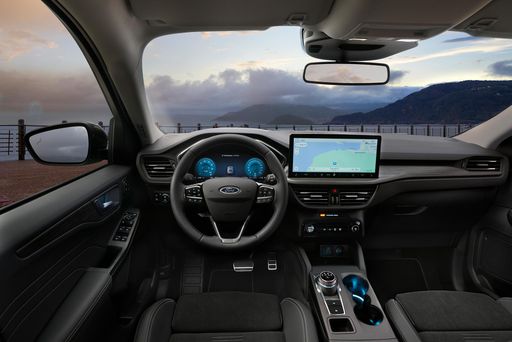
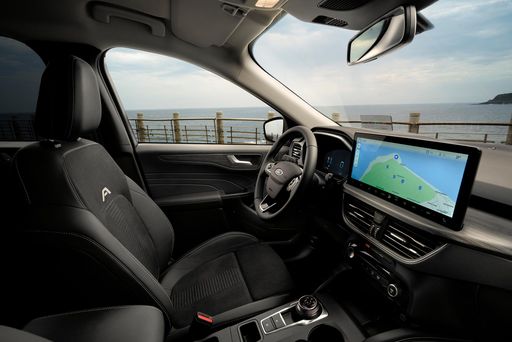
The Kuga is Ford’s adaptable family SUV that blends usable space with a surprisingly lively driving character, making daily commutes and weekend escapes equally enjoyable. With smart interior packaging, an easy-to-use infotainment setup and composed road manners, it’s a sensible choice for buyers who want a bit of fun without the fuss.

details
Hyundai Tucson
Ford Kuga

Costs and Consumption

Price
20,900 - 47,900 £
Price
34,200 - 46,300 £
Consumption L/100km
2.7 - 7.6 L/100km
Consumption L/100km
2.8 - 6.8 L/100km
Consumption kWh/100km
-
Consumption kWh/100km
-
Electric Range
63 - 70 km
Electric Range
68 km
Battery Capacity
-
Battery Capacity
-
co2
62 - 172 g/km
co2
55 - 154 g/km
Fuel tank capacity
52 - 54 L
Fuel tank capacity
-

Dimensions and Body

Body Type
SUV
Body Type
SUV
Seats
5
Seats
5
Doors
5
Doors
-
Curb weight
1,542 - 1,893 kg
Curb weight
1,526 - 1,859 kg
Trunk capacity
546 - 620 L
Trunk capacity
-
Length
4,525 - 4,535 mm
Length
-
Width
1,865 mm
Width
1,882 mm
Height
1,650 mm
Height
-
Max trunk capacity
1,795 - 1,799 L
Max trunk capacity
-
Payload
518 - 545 kg
Payload
541 - 550 kg

Engine and Performance

Engine Type
Petrol, Full Hybrid, Plugin Hybrid, Diesel MHEV
Engine Type
Petrol, Full Hybrid, Plugin Hybrid
Transmission
Manuel, Automatic
Transmission
Manuel, Automatic
Transmission Detail
Manual Gearbox, Dual-Clutch Automatic, Automatic Gearbox
Transmission Detail
Manual Gearbox, CVT, Automatic Gearbox
Drive Type
Front-Wheel Drive, All-Wheel Drive
Drive Type
Front-Wheel Drive, All-Wheel Drive
Power HP
136 - 288 HP
Power HP
150 - 243 HP
Acceleration 0-100km/h
7.5 - 11.6 s
Acceleration 0-100km/h
7.3 - 9.9 s
Max Speed
196 - 204 km/h
Max Speed
-
Torque
250 - 379 Nm
Torque
240 Nm
Number of Cylinders
4
Number of Cylinders
3 - 4
Power kW
100 - 212 kW
Power kW
111 - 178 kW
Engine capacity
1,598 cm3
Engine capacity
1,496 - 2,488 cm3

General

Model Year
2,025
Model Year
2,025
CO2 Efficiency Class
F, D, E, B
CO2 Efficiency Class
E, D, B
Brand
Hyundai
Brand
Ford
DriveDuel uses data analysis and artificial intelligence to evaluate vehicle data and create content. Content is regularly reviewed and improved. The displayed prices are estimates based on German list prices, adjusted to the respective country’s VAT. Country-specific registration taxes are not included. This information is not legally binding.