VS

Hyundai Tucson vs Skoda Elroq comparison

Compare performance (288 HP vs 340 HP), boot space and price (20900 £ vs 37900 £ ) at a glance. Find out which car is the better choice for you – Hyundai Tucson or Skoda Elroq?

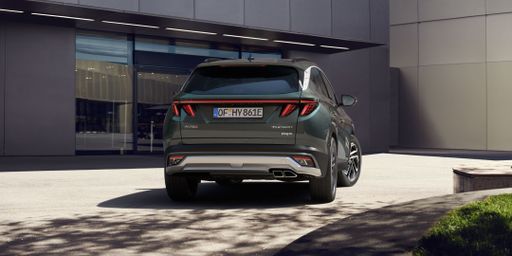
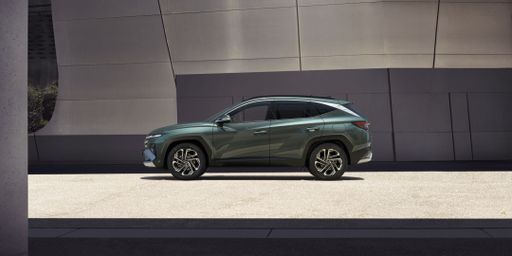
Tucson

The Battle for the Mid-Sized SUV Crown: Hyundai Tucson vs. Skoda Elroq

In the ever-evolving landscape of SUVs, two competitors have emerged as frontrunners in 2024 and 2025 respectively: the Hyundai Tucson and the all-electric Skoda Elroq. Each car offers a unique blend of performance, innovation, and practicality, appealing to different sets of drivers. Let's dive into the technical aspects and innovations of both models to see how they stack up against each other.
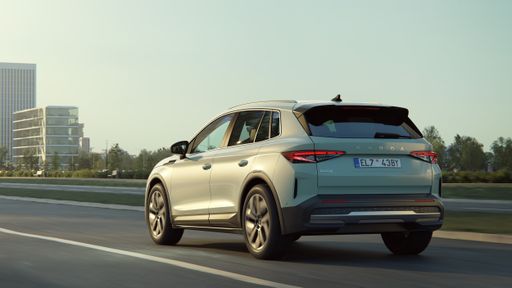
Elroq

Powertrain and Performance

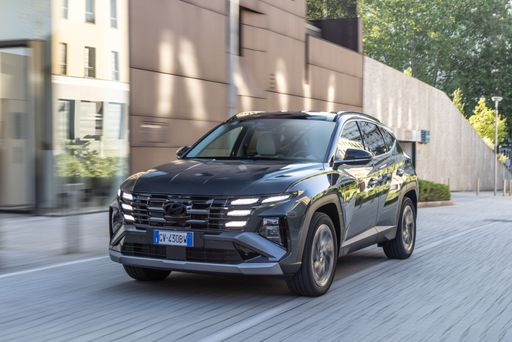
The Hyundai Tucson offers a variety of engine types including diesel MHEV, petrol MHEV, full and plug-in hybrids, and a traditional petrol engine. This spectrum of options reflects Hyundai's commitment to versatility and customer choice. The Tucson's power output varies between 136 HP and 252 HP, with all-wheel drive options available for those seeking enhanced traction and stability. Acceleration from 0 to 100 km/h ranges from 7.9 to 11.6 seconds, depending on the engine and configuration.

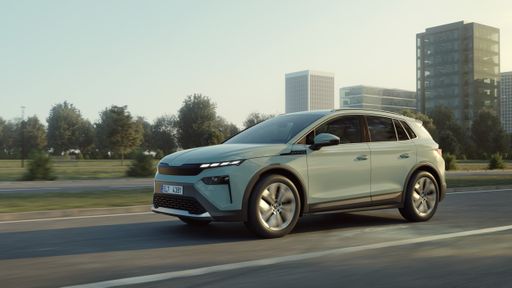
On the other hand, the Skoda Elroq takes a more straightforward approach with an all-electric lineup. It delivers a power output ranging from 170 HP to 286 HP, providing an impressively quiet and smooth driving experience. The Elroq accelerates from 0 to 100 km/h in as little as 6.6 seconds, highlighting its capability as a quick and efficient vehicle. It offers a rear-wheel drive configuration, which may appeal to drivers who prefer a more dynamic driving style.

Tucson

Efficiency and Range

Efficiency is a focal point for both SUVs, with the Hyundai Tucson offering a wide range of consumption figures depending on the engine choice. The plug-in hybrid variant notably boasts an electric range of between 65 to 70 km and a low combined consumption rate of just 1.2 to 1 L/100 km. CO2 emissions vary from 22 to 153 g/km depending on the powertrain, and it falls into the B to E efficiency class.

The Skoda Elroq, being an all-electric vehicle, shines in efficiency with absolutely no CO2 emissions, earning an A-class efficiency rating. Its electric range is highly competitive, ranging from 375 km to a remarkable 580 km on a single charge, depending on the battery configuration. The Elroq offers a consumption range from 15.2 to 16.4 kWh/100 km, which aligns well with the needs of eco-conscious consumers.

Elroq

Interior and Practicality

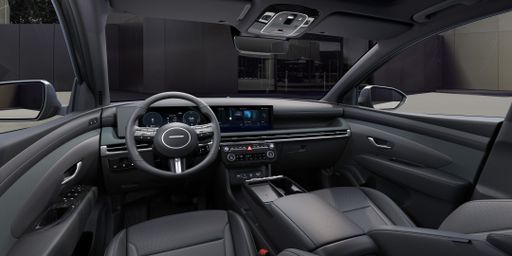
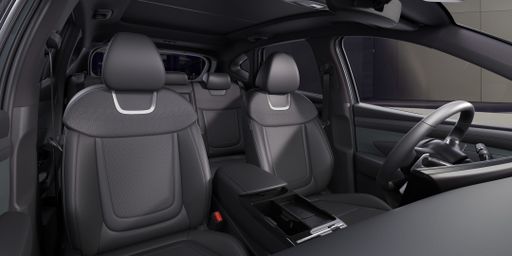
The Hyundai Tucson is slightly larger with a trunk capacity ranging from 546 to 620 liters, accommodating the needs of families and adventurers alike. With a curb weight ranging from 1520 kg to 1889 kg, it balances size and efficiency. The Tucson's design also provides various modern touches and comfort, making it a practical choice for daily commuting and long trips.

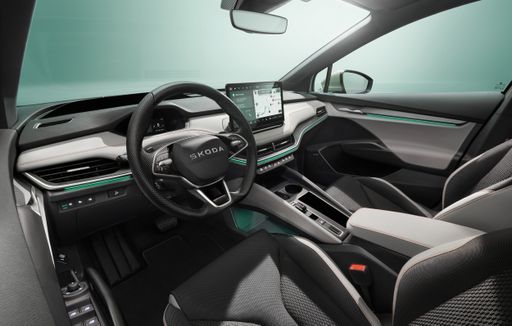
Skoda's Elroq, although more compact with a trunk capacity of 470 liters, makes up for it with innovative design and technology. With a curb weight between 1949 kg and 2119 kg, the Elroq offers a solid build without compromising on its electric efficiency. The interior is poised to be both high-tech and spacious, fitted with cutting-edge infotainment systems that are intuitive and user-friendly.

Tucson

Conclusion

Both the Hyundai Tucson and Skoda Elroq are formidable options in the competitive SUV market. The Tucson shines with its diverse choice of powertrains, ideal for those who prefer flexibility in their driving experience. Conversely, the Skoda Elroq stands out with its all-electric prowess, making it a clear choice for those dedicated to minimizing their carbon footprint without sacrificing luxury or performance. Whichever you choose, both models offer an exciting glimpse into the future of SUV innovation and sustainability.

Video - Skoda Elroq

Hyundai Tucson vs Skoda Elroq: Key differences

Hyundai Tucson

5 (3 Reviews)
rate
  • decisively cheaper
  • noticeable lighter
  • clearly perceptible more trunk space

Skoda Elroq

4.5 (4 Reviews)
rate
  • slightly more power
  • significantly more electric range
  • distinct quicker from 0–100 km/h

All details on performance, efficiency, range and trunk space can be found in the technical comparison below – including user reviews for both models.

Here’s where it gets real: The technical differences in detail

Elroq

Costs and Efficiency:

Price and efficiency are key factors when choosing a car – and this is often where the real differences emerge.

Hyundai Tucson has a decisively advantage in terms of price – it starts at 20900 £ , while the Skoda Elroq costs 37900 £ . That’s a price difference of around 16971 £.

As for electric range, the Skoda Elroq performs significantly better – achieving up to 573 km, about 503 km more than the Hyundai Tucson.

Tucson

Engine and Performance:

Power, torque and acceleration say a lot about how a car feels on the road. This is where you see which model delivers more driving dynamics.

When it comes to engine power, the Skoda Elroq has a slightly edge – offering 340 HP compared to 288 HP. That’s roughly 52 HP more horsepower.

In acceleration from 0 to 100 km/h, the Skoda Elroq is distinct quicker – completing the sprint in 5.40 s, while the Hyundai Tucson takes 7.50 s. That’s about 2.10 s faster.

In terms of top speed, the Hyundai Tucson performs a bit better – reaching 204 km/h, while the Skoda Elroq tops out at 180 km/h. The difference is around 24 km/h.

There’s also a difference in torque: Skoda Elroq pulls convincingly stronger with 679 Nm compared to 379 Nm. That’s about 300 Nm difference.

Space and Everyday Use:

Beyond pure performance, interior space and usability matter most in daily life. This is where you see which car is more practical and versatile.

Both vehicles offer seating for 5 people.

In curb weight, Hyundai Tucson is noticeable lighter – 1542 kg compared to 2133 kg. The difference is around 591 kg.

In terms of boot space, the Hyundai Tucson offers clearly perceptible more room – 620 L compared to 470 L. That’s a difference of about 150 L.

In maximum load capacity, the Hyundai Tucson performs a bit better – up to 1799 L, which is about 219 L more than the Skoda Elroq.

When it comes to payload, Hyundai Tucson minimal takes the win – 545 kg compared to 517 kg. That’s a difference of about 28 kg.

Who wins the race in the data check?

The Skoda Elroq holds a decisive overall lead in the objective data comparison.
This result only shows which model scores more points on paper – not which of the two cars feels right for you.

Hyundai Tucson
Skoda Elroq

Costs and Consumption

View detailed analysis

Engine and Performance

View detailed analysis

Dimensions and Body

View detailed analysis
from about £37,900
Elroq

Skoda Elroq

  • Engine Type : Electric
  • Transmission : Automatic
  • Drive Type : Rear-Wheel Drive, All-Wheel Drive
  • Power HP : 286 - 340 HP
  • Consumption kWh/100km : 15.2 - 16.5 kWh
  • Electric Range : 529 - 573 km

Hyundai Tucson

5 (3 Reviews)
rate

Hyundai Tucson marries bold, sculpted looks with a clever, roomy cabin that feels smarter than its price tag suggests. It's composed on the road, easy to live with day-to-day, and a sensible choice for buyers who want SUV style without the showroom theatrics.

details

Skoda Elroq

4.5 (4 Reviews)
rate

The Skoda Elroq is a cleverly packaged family SUV that mixes roomy practicality with sharp, modern looks, making it an easy pick for buyers who prefer common sense over flash. On the road it's composed and user-friendly, with thoughtful interior details that turn everyday driving into something pleasantly efficient — a sensible companion with a wink.

details
Hyundai Tucson
Skoda Elroq

Costs and Consumption

Price
20900 - 47900 £
Price
37900 - 45500 £
Consumption L/100km
2.7 - 7.6 L
Consumption L/100km
-
Consumption kWh/100km
-
Consumption kWh/100km
15.2 - 16.5 kWh
Electric Range
63 - 70 km
Electric Range
529 - 573 km
Battery Capacity
-
Battery Capacity
77 - 79 kWh
co2
62 - 172 g/km
co2
0 g/km
Fuel tank capacity
52 - 54 L
Fuel tank capacity
-

Dimensions and Body

Body Type
SUV
Body Type
SUV
Seats
5
Seats
5
Doors
5
Doors
5
Curb weight
1542 - 1893 kg
Curb weight
2133 - 2268 kg
Trunk capacity
546 - 620 L
Trunk capacity
470 L
Length
4525 - 4535 mm
Length
4488 mm
Width
1865 mm
Width
1884 mm
Height
1650 mm
Height
1608 - 1625 mm
Max trunk capacity
1795 - 1799 L
Max trunk capacity
1580 L
Payload
518 - 545 kg
Payload
470 - 517 kg

Engine and Performance

Engine Type
Petrol, Full Hybrid, Plugin Hybrid, Diesel MHEV
Engine Type
Electric
Transmission
Manuel, Automatic
Transmission
Automatic
Transmission Detail
Manual Gearbox, Dual-Clutch Automatic, Automatic Gearbox
Transmission Detail
Reduction Gearbox
Drive Type
Front-Wheel Drive, All-Wheel Drive
Drive Type
Rear-Wheel Drive, All-Wheel Drive
Power HP
136 - 288 HP
Power HP
286 - 340 HP
Acceleration 0-100km/h
7.5 - 11.6 s
Acceleration 0-100km/h
5.4 - 6.6 s
Max Speed
196 - 204 km/h
Max Speed
180 km/h
Torque
250 - 379 Nm
Torque
545 - 679 Nm
Number of Cylinders
4
Number of Cylinders
-
Power kW
100 - 212 kW
Power kW
210 - 250 kW
Engine capacity
1598 cm3
Engine capacity
-

General

Model Year
2025
Model Year
2025
CO2 Efficiency Class
F, D, E, B
CO2 Efficiency Class
A
Brand
Hyundai
Brand
Skoda
What drive types are available for the Hyundai Tucson?

Available configurations include Front-Wheel Drive or All-Wheel Drive.

The prices shown are estimates based on German list prices, adjusted for local VAT. Local registration taxes (e.g. NoVA, BPM or CO2 malus) are not included. This information is not legally binding.