VS

Hyundai Tucson vs Skoda Enyaq comparison

Compare performance (288 HP vs 340 HP), boot space and price (31,300 £ vs 36,800 £ ) at a glance. Find out which car is the better choice for you – Hyundai Tucson or Skoda Enyaq?

Hyundai Tucson vs Skoda Enyaq: Key differences

Hyundai Tucson

4.8 (6 Reviews)
rate
  • slightly cheaper
  • clearly lighter
  • barely more trunk space
details

Skoda Enyaq

4.4 (6 Reviews)
rate
  • a bit more power
  • substantially more electric range
  • noticeably quicker 0–100 km/h
details

All details on performance, efficiency, range and trunk space can be found in the technical comparison below – including user reviews for both models.

By Achim Sedelmaier

Tucson

Hyundai Tucson vs Skoda Enyaq: A Battle of Modern SUVs

In today's bustling automotive market, the competition between SUVs is fiercer than ever. The Hyundai Tucson and the Skoda Enyaq represent two popular choices, each bringing unique strengths to the table. Whether you're looking for fuel efficiency or cutting-edge technology, understanding the nuances of each model can guide your decision. Let's delve into the specifics of these automotive contenders.
Enyaq

Engine Options and Performance

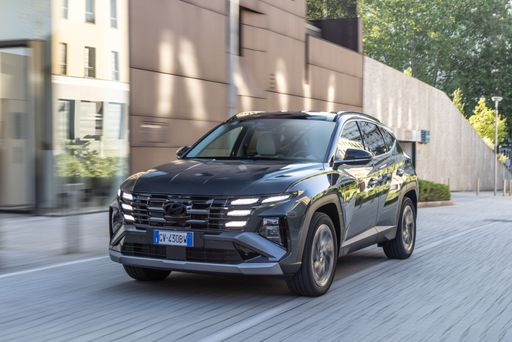
The Hyundai Tucson offers an array of engine types, including Diesel MHEV, Petrol MHEV, Petrol, Full Hybrid, and Plugin Hybrid. This range provides versatility for drivers with preferences for both traditional fuel and hybrid technology. With power outputs between 136 to 252 HP and torque reaching up to 367 Nm, the Tucson combines power with practical efficiency. Its acceleration clocks in between 7.9 to 11.6 seconds from 0-100 km/h, depending on the chosen variant, with a top speed reaching up to 194 km/h.

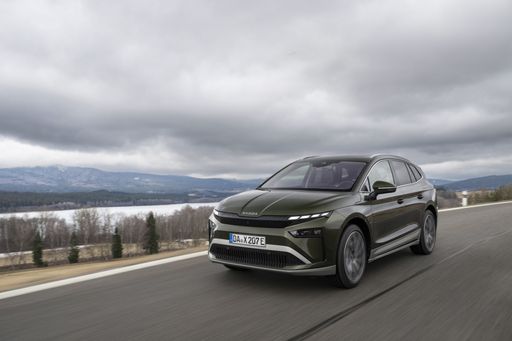
In contrast, the Skoda Enyaq is a fully electric SUV available in both rear-wheel and all-wheel drive. Power outputs range from 204 to 340 HP with torque up to an impressive 679 Nm, offering robust performance for an electric vehicle. The Enyaq accelerates from 0 to 100 km/h in as little as 5.5 seconds, making it a swift option in the electric realm. With a maximum speed of 180 km/h, it holds its own on the road.

Tucson

Fuel Efficiency and Range

Efficiency is a strong suit for the Hyundai Tucson, with fuel consumption between 1.2 to 6.8 L/100km, depending on the model. Hybrid and plug-in hybrid variants offer electric ranges of 65 to 70 km, perfect for daily commutes with a reduced carbon footprint. Meanwhile, its CO2 emissions vary from 22 to 153 g/km, with the most efficient models boasting class B CO2 efficiency.

The Skoda Enyaq shines with its electric efficiency, consuming 14.6 to 16.4 kWh/100km based on the configuration. It excels in range, providing 432 to 587 km on a single charge, making it an attractive choice for those with longer commutes or weekend getaways. Being a zero-emission vehicle, it offers a clear advantage in CO2 efficiency, earning an A rating.

Enyaq

Dimensions and Practicality

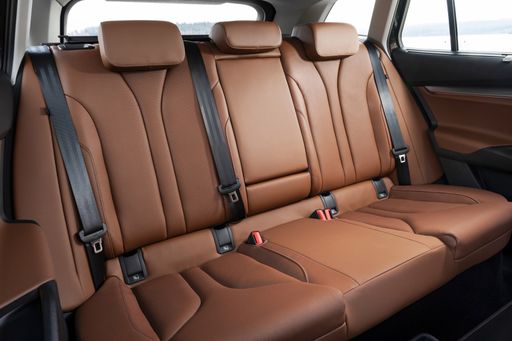
The Hyundai Tucson is fashioned to meet the needs of modern families with a length of 4510 to 4520 mm, width of 1865 mm, and height of 1650 mm. It comfortably seats five, offering a trunk capacity ranging from 546 to 620 liters, ensuring ample storage space for everyday needs.

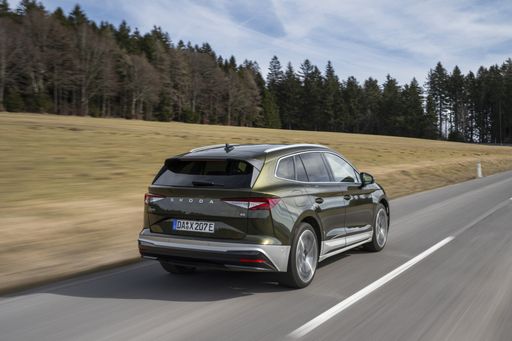
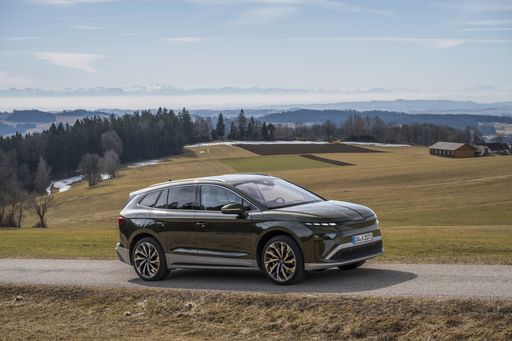
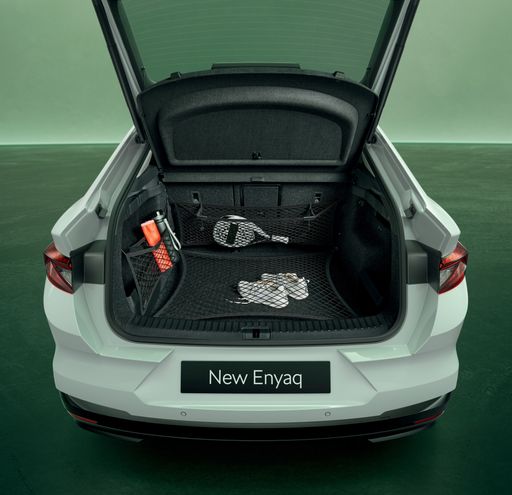
Skoda's Enyaq is slightly larger, with a length spanning from 4649 to 4658 mm, width of 1879 mm, and a height between 1620 to 1623 mm. With a trunk capacity of 570 to 585 liters, it provides significant cargo space, aligning with the needs of those who require additional room.

Tucson

Innovations and Features

Both SUVs are rich with innovations. The Tucson features advanced hybrid systems and a range of transmission options, from dual-clutch automatics to manual gearbox. Its versatility is evident in its configurations, offering front-wheel and all-wheel drive.

The Skoda Enyaq embraces electric innovation with its sole automatic transmission via reduction gearbox, maximizing efficiency. The SUV’s battery options offer flexibility in terms of range and performance, catering to the growing demand for electric vehicles.

Enyaq

Conclusion

Choosing between the Hyundai Tucson and Skoda Enyaq boils down to your specific needs. The Tucson offers a blend of traditional and hybrid powertrains for diverse preferences, while the Enyaq stands out for its electric prowess, providing impressive range and sustainability. Both SUVs represent incredible options in their respective categories, setting new standards in the modern automotive landscape.

Here’s where it gets real: The technical differences in detail

Tucson

Costs and Efficiency:

When it comes to price and running costs, the biggest differences usually appear. This is often where you see which car fits your budget better in the long run.

Hyundai Tucson is slightly cheaper – starting at 31,300 £ , while the Skoda Enyaq costs 36,800 £ . That’s a price difference of around 5,571 £.

As for electric range, the Skoda Enyaq offers substantially more range – reaching up to 589 km, about 519 km more than the Hyundai Tucson.

Enyaq

Engine and Performance:

Power, torque and acceleration say a lot about how a car feels on the road. This is where you see which model delivers more driving dynamics.

When it comes to engine power, the Skoda Enyaq offers a bit more power – delivering 340 HP compared to 288 HP. That’s roughly 52 HP more horsepower.

When accelerating from 0 to 100 km/h, the Skoda Enyaq is noticeably quicker – completing the sprint in 5.4 s, while the Hyundai Tucson takes 7.5 s. That’s about 2.1 s quicker.

There’s also a difference in torque: the Skoda Enyaq delivers considerably more torque with 679 Nm compared to 379 Nm. That’s about 300 Nm more.

Tucson

Space and Everyday Use:

Cabin size, boot volume and payload all play a role in everyday practicality. Here, comfort and flexibility make the difference.

Both vehicles offer seating for 5 people.

In terms of curb weight, Hyundai Tucson is clearly lighter – 1,542 kg compared to 2,074 kg. The difference is around 532 kg.

Looking at boot space, the Hyundai Tucson offers barely more boot space – 620 L compared to 585 L. That’s a difference of about 35 L.

When it comes to payload, the Hyundai Tucson carries very slightly more – 545 kg compared to 526 kg. That’s a difference of about 19 kg.

Who wins the race in the data check?

The Skoda Enyaq is far ahead overall in the objective data comparison.
This result only shows which model scores more points on paper – not which of the two cars feels right for you.

from £36,800
Enyaq

Skoda Enyaq

  • Engine Type Electric
  • Transmission Automatic
  • Drive Type Rear-Wheel Drive, All-Wheel Drive
  • Power HP 190 - 340 HP
  • Consumption kWh/100km 14.9 - 15.9 kWh/100km
  • Electric Range 449 - 589 km
Hyundai Tucson
Skoda Enyaq

Costs and Consumption

View detailed analysis

Engine and Performance

View detailed analysis

Dimensions and Body

View detailed analysis

Hyundai Tucson

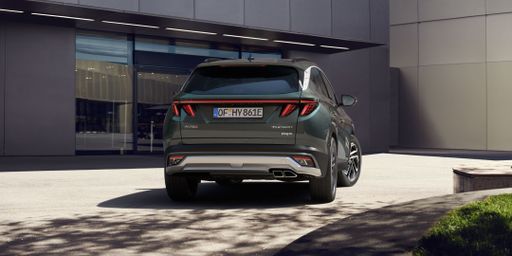
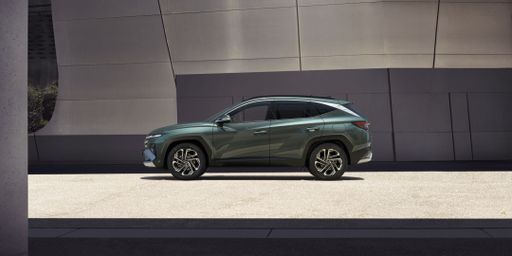
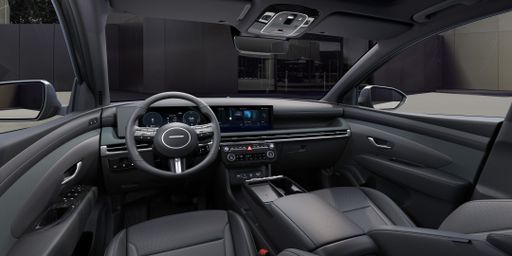
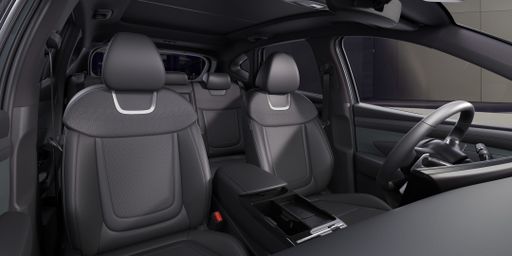
The Hyundai Tucson is a well-rounded compact SUV that blends modern styling with a comfortable, thoughtfully laid-out interior, making it appealing for daily driving and family use. It delivers a calm ride, a generous level of equipment for the price, and sensible practicality, so it's a smart choice if you want a straightforward, dependable crossover without fuss.

details

Skoda Enyaq

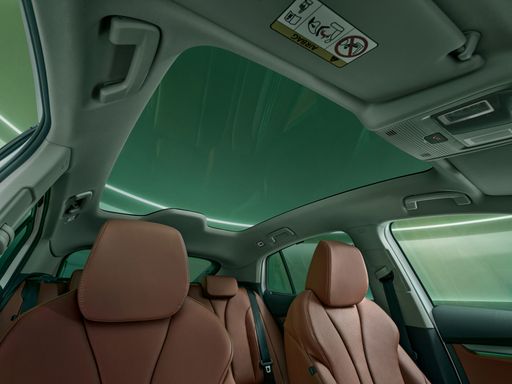
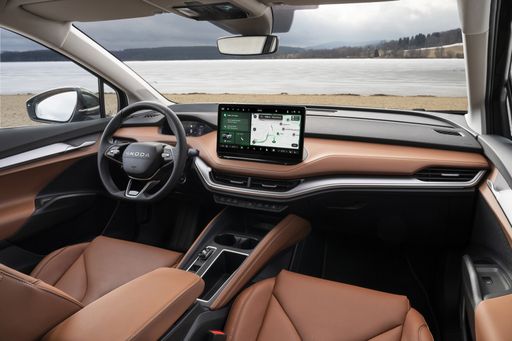
The Skoda Enyaq is a practical and well-appointed electric SUV that blends a roomy interior and everyday usability with clean, understated design. It’s a comfortable, efficient choice for buyers who want a sensible electric family car without flash, backed by solid build quality and clever practicality.

details
Hyundai Tucson
Skoda Enyaq

Costs and Consumption

Price
31,300 - 48,800 £
Price
36,800 - 52,800 £
Consumption L/100km
2.7 - 7.6 L/100km
Consumption L/100km
-
Consumption kWh/100km
-
Consumption kWh/100km
14.9 - 15.9 kWh/100km
Electric Range
63 - 70 km
Electric Range
449 - 589 km
Battery Capacity
-
Battery Capacity
-
co2
62 - 172 g/km
co2
0 g/km
Fuel tank capacity
-
Fuel tank capacity
-

Dimensions and Body

Body Type
SUV
Body Type
SUV
Seats
5
Seats
5
Doors
-
Doors
-
Curb weight
1,542 - 1,893 kg
Curb weight
2,074 - 2,284 kg
Trunk capacity
546 - 620 L
Trunk capacity
570 - 585 L
Length
-
Length
-
Width
1,865 mm
Width
1,879 mm
Height
-
Height
-
Max trunk capacity
-
Max trunk capacity
-
Payload
518 - 545 kg
Payload
449 - 526 kg

Engine and Performance

Engine Type
Petrol, Full Hybrid, Plugin Hybrid, Diesel MHEV
Engine Type
Electric
Transmission
Manuel, Automatic
Transmission
Automatic
Transmission Detail
Manual Gearbox, Dual-Clutch Automatic, Automatic Gearbox
Transmission Detail
Reduction Gearbox
Drive Type
Front-Wheel Drive, All-Wheel Drive
Drive Type
Rear-Wheel Drive, All-Wheel Drive
Power HP
136 - 288 HP
Power HP
190 - 340 HP
Acceleration 0-100km/h
7.5 - 11.6 s
Acceleration 0-100km/h
5.4 - 8.6 s
Max Speed
-
Max Speed
-
Torque
250 - 379 Nm
Torque
350 - 679 Nm
Number of Cylinders
4
Number of Cylinders
-
Power kW
100 - 212 kW
Power kW
140 - 250 kW
Engine capacity
1,598 cm3
Engine capacity
-

General

Model Year
2025
Model Year
2026
CO2 Efficiency Class
F, D, E, B
CO2 Efficiency Class
A
Brand
Hyundai
Brand
Skoda
DriveDuel uses data analysis and artificial intelligence to evaluate vehicle data and create content. Content is regularly reviewed and improved. The displayed prices are estimates based on German list prices, adjusted to the respective country’s VAT. Country-specific registration taxes are not included. This information is not legally binding.