VS

Jaguar I-Pace vs Kia EV3 comparison

Compare performance (400 HP vs 204 HP), boot space and price (79,200 £ vs 30,800 £ ) at a glance. Find out which car is the better choice for you – Jaguar I-Pace or Kia EV3?

Jaguar I-Pace vs Kia EV3: Key differences

Jaguar I-Pace

3.7 (2 Reviews)
rate
  • substantially more power
  • substantially quicker 0–100 km/h
  • clearly more trunk space
details

Kia EV3

4.7 (3 Reviews)
rate
  • significantly cheaper
  • substantially more efficient
  • visibly more electric range
  • clearly lighter
details

All details on performance, efficiency, range and trunk space can be found in the technical comparison below – including user reviews for both models.

By Achim Sedelmaier

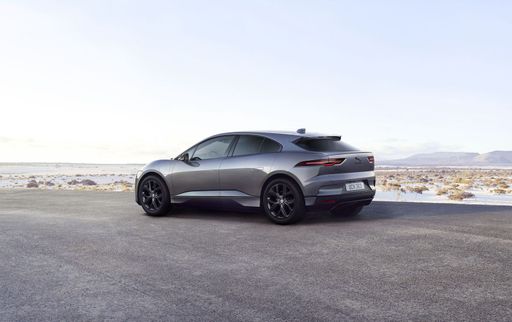
I-Pace

Unleashing the Future: Jaguar I-Pace vs. Kia EV3

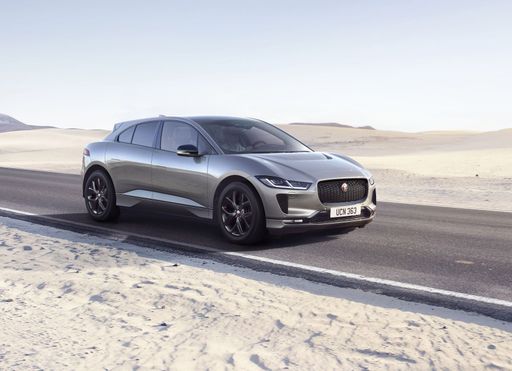
In the evolving world of electric vehicles, the automotive landscape is rapidly transforming. With technology advancing at an unprecedented pace, electric SUVs are quickly becoming the go-to choice for environmentally conscious consumers. Today, we delve into a comparative analysis of two groundbreaking electric SUVs: the Jaguar I-Pace and the Kia EV3. Each vehicle brings its unique flair and innovative technology to the table, making them worthy contenders in the electric SUV market.
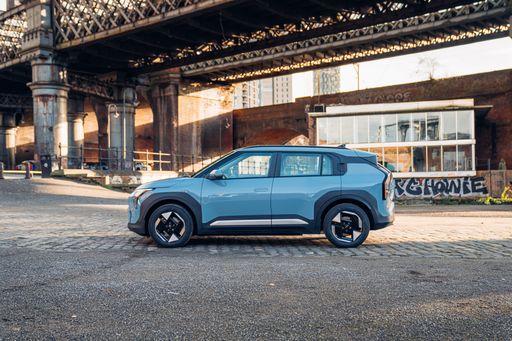
EV3

Performance and Power: Unmatched Ponies Under the Hood

The Jaguar I-Pace proudly showcases a robust Output, powered by a commendable 400 HP (294 kW) electric motor. Its all-wheel-drive capability and torque of 696 Nm ensure impressive maneuverability and a thrilling driving experience. The I-Pace sprints from 0 to 100 km/h in a remarkable 4.8 seconds, providing adrenaline-inducing acceleration that electric car enthusiasts crave.

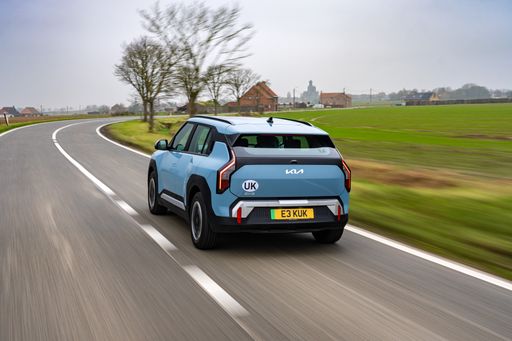
In contrast, the Kia EV3 offers a more modest yet efficient 204 HP (150 kW). While it might not pack the same punch as the I-Pace, the EV3's front-wheel drive and 283 Nm of torque allow it to achieve 0-100 km/h in as quick as 7.5 seconds, depending on the model. It's an ideal blend of practicality and performance for those looking for a reliable city cruiser.

I-Pace

Range and Efficiency: Pushing the Boundaries of Distance

The Jaguar I-Pace presents an impressive range of 469 km, propelled by an 84.7 kWh battery. With a consumption rate of 25.2 kWh/100 km, this elegant predator of the road combines luxury with range, ensuring fewer stops at charging stations and more time on the move.

On the flip side, the Kia EV3 offers a range that varies according to battery capacity. Ranging from 436 km to an impressive 605 km, the EV3's lightweight construction and efficient energy consumption (as low as 14.9 kWh/100 km) make it a strong contender for distance-driven consumers.

EV3

Interior Space and Comfort: Standing Room for Style

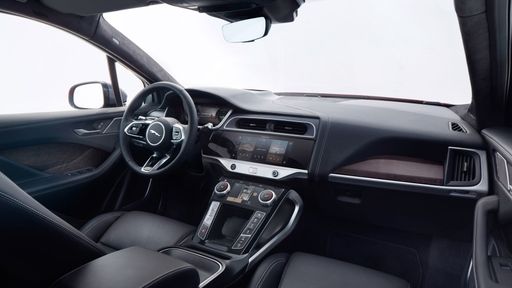
The I-Pace captivates with its spacious design, accommodating five passengers comfortably. It offers a generous trunk capacity of 638 liters, making it the perfect companion for family trips and weekend getaways. Jaguar's attention to luxury detail is evident in its choice of materials and ergonomic design, ensuring an enjoyable ride every time.

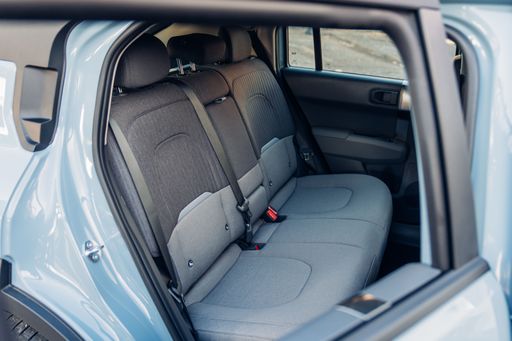
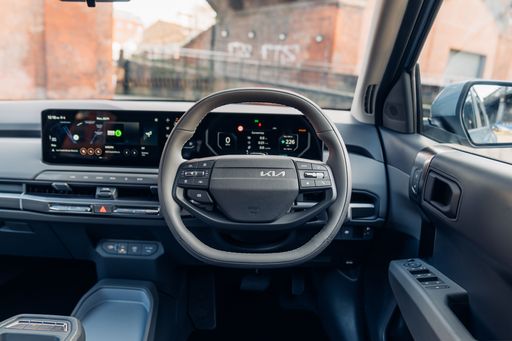
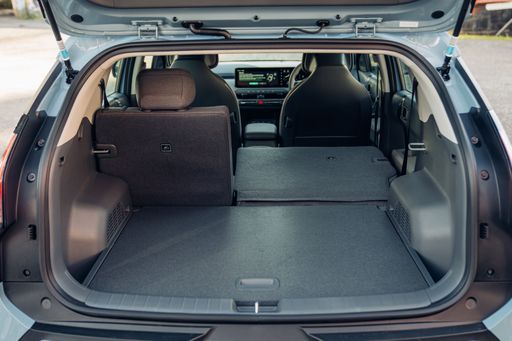
The Kia EV3, slightly more compact, provides adequate space for five passengers with a trunk capacity of 460 liters. Despite its smaller size, it compensates with a user-centric interior, focusing on comfort, connectivity, and practicality, embodying a well-crafted blend of style and substance.

I-Pace

Dimensions and Dynamics: Size Matters

In terms of dimensions, the Jaguar I-Pace measures 4682 mm in length, 2011 mm in width, and 1566 mm in height. Its relatively larger size makes a bold statement on the road and adds to its commanding presence, characteristic of Jaguar's refined design principles.

The Kia EV3 takes on a more compact stance with lengths ranging from 4300 mm to 4310 mm, widths at 1850 mm, and heights from 1560 mm to 1570 mm. While more petite than the I-Pace, its compact nature is perfect for urban environments where maneuverability and efficiency are key.

EV3

Conclusion: Personal Priorities Drive the Choice

In this electrifying battle between the Jaguar I-Pace and the Kia EV3, the ultimate choice boils down to individual priorities. The I-Pace stands out for those seeking unmatched power and luxe, while the EV3 appeals to practical, efficiency-focused consumers who value range and affordability. Both vehicles epitomize the remarkable strides in the evolution of electric mobility, promising a greener and more thrilling driving future.

Here’s where it gets real: The technical differences in detail

I-Pace

Costs and Efficiency:

Price and efficiency are key factors when choosing a car – and this is often where the real differences emerge.

Kia EV3 is significantly cheaper – starting at 30,800 £ , while the Jaguar I-Pace costs 79,200 £ . That’s a price difference of around 48,352 £.

In terms of energy consumption, the Kia EV3 is substantially more efficient: consuming 14.9 kWh/100km compared to 25.2 kWh/100km for the Jaguar I-Pace. That’s a difference of about 10.3 kWh/100km.

As for electric range, the Kia EV3 offers visibly more range – reaching up to 605 km, about 136 km more than the Jaguar I-Pace.

EV3

Engine and Performance:

Under the bonnet, it becomes clear which model is tuned for sportiness and which one takes the lead when you hit the accelerator.

When it comes to engine power, the Jaguar I-Pace offers substantially more power – delivering 400 HP compared to 204 HP. That’s roughly 196 HP more horsepower.

When accelerating from 0 to 100 km/h, the Jaguar I-Pace is substantially quicker – completing the sprint in 4.8 s, while the Kia EV3 takes 7.5 s. That’s about 2.7 s quicker.

Looking at top speed, the Jaguar I-Pace is somewhat faster – reaching 200 km/h, while the Kia EV3 tops out at 170 km/h. The difference is around 30 km/h.

There’s also a difference in torque: the Jaguar I-Pace delivers considerably more torque with 696 Nm compared to 283 Nm. That’s about 413 Nm more.

I-Pace

Space and Everyday Use:

Beyond pure performance, interior space and usability matter most in daily life. This is where you see which car is more practical and versatile.

Both vehicles offer seating for 5 people.

In terms of curb weight, Kia EV3 is clearly lighter – 1,800 kg compared to 2,226 kg. The difference is around 426 kg.

Looking at boot space, the Jaguar I-Pace offers clearly more boot space – 638 L compared to 460 L. That’s a difference of about 178 L.

For maximum load capacity, the Jaguar I-Pace offers slightly more capacity – up to 1,453 L, about 202 L more than the Kia EV3.

When it comes to payload, the Kia EV3 carries barely more – 470 kg compared to 444 kg. That’s a difference of about 26 kg.

Who wins the race in the data check?

The Kia EV3 holds a slight edge in the objective data comparison.
This result only shows which model scores more points on paper – not which of the two cars feels right for you.

from £30,800
EV3

Kia EV3

  • Engine Type : Electric
  • Transmission : Automatic
  • Drive Type : Front-Wheel Drive
  • Power HP : 204 HP
  • Consumption kWh/100km : 14.9 - 16.2 kWh/100km
  • Electric Range : 436 - 605 km
Jaguar I-Pace
Kia EV3

Costs and Consumption

View detailed analysis

Engine and Performance

View detailed analysis

Dimensions and Body

View detailed analysis

Jaguar I-Pace

The Jaguar I-Pace pairs instantaneous electric shove with graceful, feline looks, so it never feels like you're piloting a refrigerator with style. Inside it serves proper Jaguar luxury and clever packaging, making it a tempting choice for buyers who want EV convenience without losing personality.

details

Kia EV3

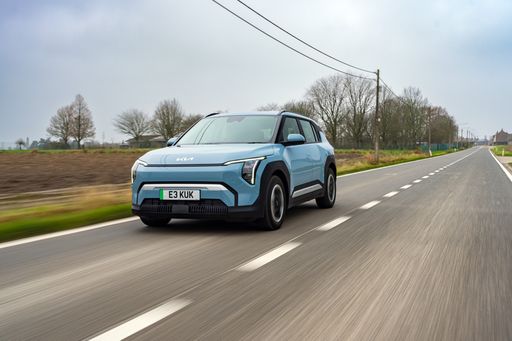
The Kia EV3 arrives as a cheeky, practical electric compact that manages to feel both premium and playful, delivering crisp handling and a roomy cabin that's perfect for urban life. With smart tech, friendly styling and sensible pricing, the EV3 is the kind of car that makes switching to electric feel like a no-brainer without asking you to give anything important up.

details
Jaguar I-Pace
Kia EV3

Costs and Consumption

Price
79,200 - 85,500 £
Price
30,800 - 41,700 £
Consumption L/100km
-
Consumption L/100km
-
Consumption kWh/100km
25.2 kWh/100km
Consumption kWh/100km
14.9 - 16.2 kWh/100km
Electric Range
469 km
Electric Range
436 - 605 km
Battery Capacity
84.7 kWh
Battery Capacity
58.3 - 81.4 kWh
co2
0 g/km
co2
0 g/km
Fuel tank capacity
-
Fuel tank capacity
-

Dimensions and Body

Body Type
SUV
Body Type
SUV
Seats
5
Seats
5
Doors
5
Doors
5
Curb weight
2,226 kg
Curb weight
1,800 - 1,885 kg
Trunk capacity
638 L
Trunk capacity
460 L
Length
4,682 mm
Length
4,300 - 4,310 mm
Width
2,011 mm
Width
1,850 mm
Height
1,566 mm
Height
1,560 - 1,570 mm
Max trunk capacity
1,453 L
Max trunk capacity
1,251 L
Payload
444 kg
Payload
470 kg

Engine and Performance

Engine Type
Electric
Engine Type
Electric
Transmission
Automatic
Transmission
Automatic
Transmission Detail
Reduction Gearbox
Transmission Detail
Reduction Gearbox
Drive Type
All-Wheel Drive
Drive Type
Front-Wheel Drive
Power HP
400 HP
Power HP
204 HP
Acceleration 0-100km/h
4.8 s
Acceleration 0-100km/h
7.5 - 7.9 s
Max Speed
200 km/h
Max Speed
170 km/h
Torque
696 Nm
Torque
283 Nm
Number of Cylinders
-
Number of Cylinders
-
Power kW
294 kW
Power kW
150 kW
Engine capacity
-
Engine capacity
-

General

Model Year
2023
Model Year
2024
CO2 Efficiency Class
A
CO2 Efficiency Class
A
Brand
Jaguar
Brand
Kia
DriveDuel uses data analysis and artificial intelligence to evaluate vehicle data and create content. Content is regularly reviewed and improved. The displayed prices are estimates based on German list prices, adjusted to the respective country’s VAT. Country-specific registration taxes are not included. This information is not legally binding.