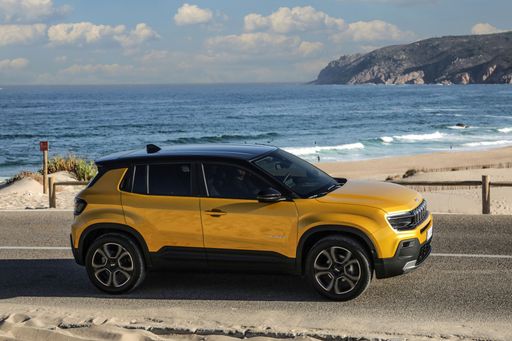
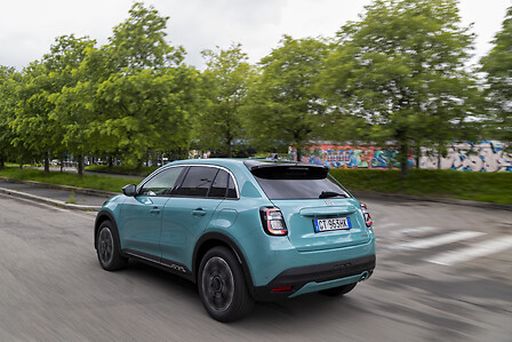
VS

Jeep Avenger vs Fiat 600 comparison

Compare performance (156 HP vs 156 HP), boot space and price (22,500 £ vs 21,000 £ ) at a glance. Find out which car is the better choice for you – Jeep Avenger or Fiat 600?

Jeep Avenger vs Fiat 600: Key differences

Jeep Avenger

4.1 (9 Reviews)
rate
  • very slightly lighter
details

Fiat 600

4.8 (3 Reviews)
rate
  • barely cheaper
  • marginally more efficient
  • barely more efficient
  • very slightly more electric range
  • only slightly quicker 0–100 km/h
  • only slightly more trunk space
details

All details on performance, efficiency, range and trunk space can be found in the technical comparison below – including user reviews for both models.

By Achim Sedelmaier

Avenger

Fiat 600 VS Jeep Avenger — an everyday comparison

Fiat 600 and Jeep Avenger share the B‑SUV stage but serve different motivations: the Fiat trades ruggedness for charm and city agility, while the Jeep swaps sweetness for a sturdier, more versatile persona. The Fiat 600 feels like a deliberately cheerful urban companion, with compact dimensions and a friendly interior layout aimed at easy daily use. The Jeep Avenger presents itself as the tougher, slightly more practical choice with protective cladding and a broader range of drivetrains to suit regional trips. Choosing between them is a matter of priorities — style and tight‑space manoeuvrability versus a robust, comfort‑oriented package that leans to rural escapes. Below we unpack where each car really shines for real buyers, not spec sheets.
600

Character and driving feel

The Fiat 600 drives with a light, relaxed character that rewards low‑stress city running more than enthusiastic cornering, while the Jeep Avenger gives a more planted, comfort‑first feel that masks sporty intentions. Fiat 600’s steering is very effortless and makes parking and threading through traffic pleasantly easy, but that same featherlight feel reduces driver feedback. Jeep Avenger trades some of that ultra‑lightness for a sturdier on‑road composure and a suspension that soaks up bumps in a way that feels mature rather than toy‑like. If you value playful urban agility and a friendly personality, the Fiat 600 will charm; if you prefer calm composure and a sense of protection, the Jeep Avenger will feel more grown‑up. Both sit on the comfort side of the spectrum, but they do so with distinct attitudes.

Avenger

Comfort and long‑distance behavior

On short trips and city errands the Fiat 600 is quiet and pleasant, especially in electric mode, but longer motorway stints reveal its limits and rising noise levels that make sustained high‑speed travel less relaxing. The Jeep Avenger is tuned for everyday comfort and handles regional drives with fewer complaints, though higher speeds can expose wind and tyre noise depending on tyres and trim. Seats and suspension favor comfort in the Avenger, giving it an edge for weekend runs; the Fiat’s softer setup is cosier around town but its rear seating and shorter cushions become noticeable on long journeys. If your routes regularly include long motorway legs, the Jeep Avenger will likely feel less tiring; if most miles are urban, the Fiat 600 keeps things breezy and efficient. Both are comfortable in their intended roles, but the balance between city serenity and motorway composure clearly differs.

600

Practicality and family usability

Practical day‑to‑day use exposes similar compromises: both the Fiat 600 and the Jeep Avenger are compact B‑SUVs with limited rear legroom that makes three adults in the back a squeeze, but they solve loading differently. The Fiat 600 tends to offer a slightly more usable trunk layout and clever storage solutions for everyday shopping, while the Jeep Avenger wins points with a wide, square boot opening and tougher exterior trims that shrug off city bumps. Isofix points and five‑door convenience are standard enough on both, yet families with growing kids will find neither car generous — the Fiat leans towards shorter trips and urban daycare runs, the Avenger toward practical robustness for mixed‑use outings. If you regularly carry bulky gear or three rear passengers for long periods, you’ll feel the tightness sooner in both, but the Jeep’s packaging and tougher optics make it the more pragmatic in mixed‑terrain lives. Neither is a full family hauler, but each fits a different kind of everyday need.

Avenger

Cabin feel, controls and perceived quality

Step inside and the contrast is tonal: the Fiat 600 trades high‑end materials for playful design and lots of hard plastics, while the Jeep Avenger offers a more utilitarian, rugged cabin that also relies on durable plastics rather than luxury finishes. Both cars favour physical climate controls and useful cubbies over minimalist touch‑only layouts, which keeps daily operation simple and safe; Fiat 600 pairs that with a retro‑friendly aesthetic and convenient wireless smartphone mirroring, while Jeep Avenger emphasizes durability and straightforward ergonomics. The infotainment in each can show lag or confusing menu paths on occasion, but Fiat’s tactile buttons and Jeep’s logical storage ideas make living with either system manageable. Perceived quality tilts differently: the Fiat feels more characterful and design‑led, the Avenger more workmanlike and robust, so buyers judge them on style versus toughness rather than outright refinement. If tactile luxury matters, neither will satisfy completely, but the emotional tone of each cabin is unmistakable.

Buyer fit: who should choose which and why

If your world is city streets, short errands and you value personality above brute practicality, the Fiat 600 is the clearer match — it’s compact, easy to park and offers an electric or affordable hybrid route that suits everyday urban life. If you want a compact SUV that feels more substantial, tolerates rougher treatment, and carries people and gear on regional trips with greater composure, the Jeep Avenger is the better fit thanks to its comfort bias and broader drivetrain choices. Safety notes and long‑distance limits are part of the trade‑off: buyers who often tackle high‑speed motorways should carefully compare highway behaviour, while those focused on urban efficiency will reward the Fiat’s city virtues. Ultimately the decision comes down to whether you prioritise charm and city‑first agility (Fiat 600) or robust comfort and versatility for mixed‑use life (Jeep Avenger). The technical comparison that follows will lay out the measurable differences to help you decide on the specifics.

Here’s where it gets real: The technical differences in detail

Avenger

Costs and Efficiency:

Price and efficiency are key factors when choosing a car – and this is often where the real differences emerge.

Fiat 600 is barely cheaper – starting at 21,000 £ , while the Jeep Avenger costs 22,500 £ . That’s a price difference of around 1,551 £.

Fuel consumption also shows a difference: the Fiat 600 uses 4.8 L/100km and is marginally more efficient than the Jeep Avenger with 4.9 L/100km. The difference is about 0.1 L/100km.

In terms of energy consumption, the Fiat 600 is barely more efficient: consuming 15.1 kWh/100km compared to 15.5 kWh/100km for the Jeep Avenger. That’s a difference of about 0.4 kWh/100km.

As for electric range, the Fiat 600 offers very slightly more range – reaching up to 409 km, about 9 km more than the Jeep Avenger.

600

Engine and Performance:

Power, torque and acceleration say a lot about how a car feels on the road. This is where you see which model delivers more driving dynamics.

Both models deliver identical power – 156 HP each.

When accelerating from 0 to 100 km/h, the Fiat 600 is only slightly quicker – completing the sprint in 8.5 s, while the Jeep Avenger takes 9 s. That’s about 0.5 s quicker.

Both models offer the same torque – 260 Nm.

Avenger

Space and Everyday Use:

Whether family car or daily driver – which one offers more room, flexibility and comfort?

Both vehicles offer seating for 5 people.

In terms of curb weight, Jeep Avenger is very slightly lighter – 1,180 kg compared to 1,265 kg. The difference is around 85 kg.

Looking at boot space, the Fiat 600 offers only slightly more boot space – 385 L compared to 380 L. That’s a difference of about 5 L.

When it comes to payload, the Fiat 600 carries barely more – 517 kg compared to 502 kg. That’s a difference of about 15 kg.

Who wins the race in the data check?

The Fiat 600 sits just ahead overall in the objective data comparison.
This result only shows which model scores more points on paper – not which of the two cars feels right for you.

from £21,000
600

Fiat 600

  • Engine Type Petrol MHEV, Electric, Petrol
  • Transmission Automatic, Manuel
  • Drive Type Front-Wheel Drive
  • Power HP 100 - 156 HP
  • Consumption L/100km 4.8 - 5.7 L/100km
  • Consumption kWh/100km 15.1 kWh/100km
  • Electric Range 409 km
Jeep Avenger
Fiat 600

Costs and Consumption

View detailed analysis

Engine and Performance

View detailed analysis

Dimensions and Body

View detailed analysis

Jeep Avenger

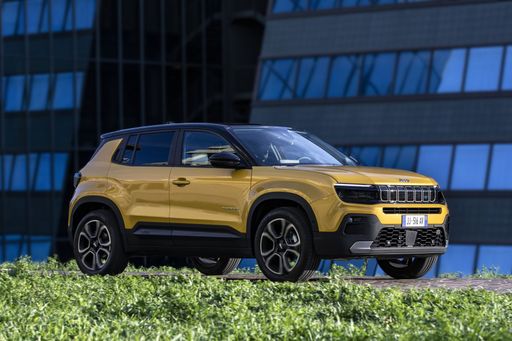
The Jeep Avenger mixes rugged styling with a compact, city‑friendly footprint that makes it easy to maneuver while keeping Jeep’s adventurous character. Inside it offers a practical, modern cabin with sensible tech and comfort aimed at everyday driving and light weekend getaways.

details

Fiat 600

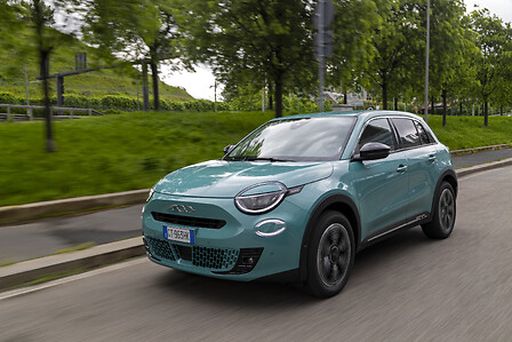
The Fiat 600 is small, cheeky and utterly charming, a pocket-sized Italian that packs more personality than its size suggests. Ideal for city buyers who want fuss-free motoring with a playful driving character, it puts smiles ahead of spreadsheets.

details
Jeep Avenger
Fiat 600

Costs and Consumption

Price
22,500 - 36,800 £
Price
21,000 - 31,300 £
Consumption L/100km
4.9 - 5.7 L/100km
Consumption L/100km
4.8 - 5.7 L/100km
Consumption kWh/100km
15.5 kWh/100km
Consumption kWh/100km
15.1 kWh/100km
Electric Range
400 km
Electric Range
409 km
Battery Capacity
-
Battery Capacity
-
co2
0 - 129 g/km
co2
0 - 129 g/km
Fuel tank capacity
-
Fuel tank capacity
-

Dimensions and Body

Body Type
SUV
Body Type
SUV
Seats
5
Seats
5
Doors
-
Doors
-
Curb weight
1,180 - 1,520 kg
Curb weight
1,265 - 1,595 kg
Trunk capacity
325 - 380 L
Trunk capacity
360 - 385 L
Length
-
Length
-
Width
1,776 mm
Width
1,779 mm
Height
-
Height
-
Max trunk capacity
-
Max trunk capacity
-
Payload
490 - 502 kg
Payload
427 - 517 kg

Engine and Performance

Engine Type
Petrol MHEV, Electric, Petrol
Engine Type
Petrol MHEV, Electric, Petrol
Transmission
Automatic, Manuel
Transmission
Automatic, Manuel
Transmission Detail
Dual-Clutch Automatic, Reduction Gearbox, Manual Gearbox
Transmission Detail
Dual-Clutch Automatic, Reduction Gearbox, Manual Gearbox
Drive Type
Front-Wheel Drive, All-Wheel Drive
Drive Type
Front-Wheel Drive
Power HP
100 - 156 HP
Power HP
100 - 156 HP
Acceleration 0-100km/h
9 - 10.6 s
Acceleration 0-100km/h
8.5 - 10.6 s
Max Speed
-
Max Speed
-
Torque
205 - 260 Nm
Torque
205 - 260 Nm
Number of Cylinders
3
Number of Cylinders
3
Power kW
74 - 115 kW
Power kW
74 - 115 kW
Engine capacity
1,199 cm3
Engine capacity
1,199 cm3

General

Model Year
2026
Model Year
2,025 - 2,026
CO2 Efficiency Class
C, A, D
CO2 Efficiency Class
C, A, D
Brand
Jeep
Brand
Fiat
DriveDuel uses data analysis and artificial intelligence to evaluate vehicle data and create content. Content is regularly reviewed and improved. The displayed prices are estimates based on German list prices, adjusted to the respective country’s VAT. Country-specific registration taxes are not included. This information is not legally binding.