VS

Jeep Avenger vs Ford Mustang Mach-E comparison

Compare performance (156 HP vs 487 HP), boot space and price (22,500 £ vs 48,400 £ ) at a glance. Find out which car is the better choice for you – Jeep Avenger or Ford Mustang Mach-E?

Jeep Avenger vs Ford Mustang Mach-E: Key differences

Jeep Avenger

4 (8 Reviews)
rate
  • substantially cheaper
  • somewhat more efficient
  • substantially lighter
details

Ford Mustang Mach-E

3.4 (3 Reviews)
rate
  • significantly more power
  • clearly more electric range
  • considerably quicker 0–100 km/h
  • clearly more trunk space
details

All details on performance, efficiency, range and trunk space can be found in the technical comparison below – including user reviews for both models.

By Achim Sedelmaier

Avenger

Electrifying Rivals: Ford Mustang Mach-E vs. Jeep Avenger

As the automotive world accelerates into an electrified future, two titans have entered the ring of electric SUVs: the Ford Mustang Mach-E and the Jeep Avenger. Each vehicle carries a storied badge and an electric heart, but how do their technical offerings stack up against each other? Let’s take a closer look.

Mustang Mach-E

Performance and Power

The Ford Mustang Mach-E is a salute to performance enthusiasts. With a range of configurations between 269 to 487 horsepower (HP), it guarantees a thrilling ride. The Mach-E's acceleration is particularly impressive, zipping from 0 to 100 km/h in as fast as 3.5 seconds for its highest trim. On the other side, the Jeep Avenger presents a tamer yet efficient powertrain, offering up to 156 HP and a top acceleration of 9 seconds from 0 to 100 km/h.

Both models feature a reduction gearbox and offer a seamless driving experience with their automatic transmissions. However, the Mach-E pushes the envelope with its rear-wheel and all-wheel drive setups, while the Avenger offers a front-wheel drive alongside its traditional automatic and manual transmission options.

Avenger

Range and Efficiency

Electric range is a crucial consideration for SUV buyers, and both vehicles provide competitive numbers. The Ford Mustang Mach-E can achieve up to 600 km on a single charge, depending on the variant. Comparatively, the Jeep Avenger lands slightly lower with a maximum range of 400 km. However, the Avenger's efficiency shines with a consumption of just 15.4 kWh/100km, highlighting its practical urban design.

The Mustang Mach-E's battery capacity ranges from 72.6 to 91 kWh, while the Avenger features a more modest 51 kWh battery for its electric version. These capacities reflect their intended usages, with the Mach-E targeted at long-range journeys and the Avenger optimized for cityscapes.

Mustang Mach-E

Dimensions and Practicality

Space and functionality are essential for any SUV, and both models provide ample room for passengers and cargo. The Mach-E is a larger presence with a length of up to 4750 mm and a width of 1882 mm, compared to the Avenger's 4084 mm length and 1776 mm width. This results in a more spacious interior for the Mach-E, delivering a trunk capacity of 402 liters versus Avenger's 380 liters, making it ideal for road trips.

Despite their size difference, each SUV seats five comfortably, emphasizing the extra comfort on long drives with the Mach-E and urban maneuverability with the Avenger. Their respective CO2 efficiency classes emphasize their commitment to reducing emissions, with top marks for each.

Avenger

Conclusion: Choosing Your Ride

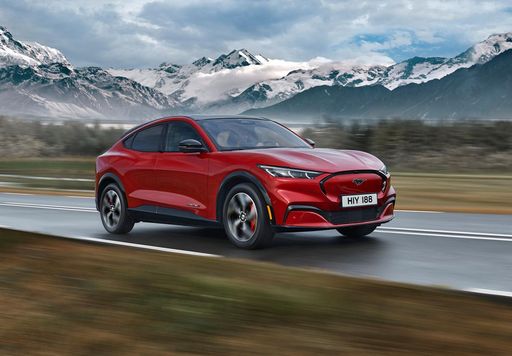
The choice between the Ford Mustang Mach-E and the Jeep Avenger ultimately comes down to your driving preferences. If performance, extended range, and a muscular design allure you, then the Mach-E stands as the smart choice. Conversely, if an agile city performer with practical efficiency and a nod to versatility appeals to you, then the Avenger awaits. Whichever keys you choose, both vehicles promise to power you forward with electrifying ease.

Here’s where it gets real: The technical differences in detail

Avenger

Costs and Efficiency:

Price and efficiency are often the first things buyers look at. Here it becomes clear which model has the long-term edge – whether at the pump, the plug, or in purchase price.

Jeep Avenger is substantially cheaper – starting at 22,500 £ , while the Ford Mustang Mach-E costs 48,400 £ . That’s a price difference of around 25,886 £.

In terms of energy consumption, the Jeep Avenger is somewhat more efficient: consuming 15.5 kWh/100km compared to 17.7 kWh/100km for the Ford Mustang Mach-E. That’s a difference of about 2.2 kWh/100km.

As for electric range, the Ford Mustang Mach-E offers clearly more range – reaching up to 600 km, about 200 km more than the Jeep Avenger.

Mustang Mach-E

Engine and Performance:

Under the bonnet, it becomes clear which model is tuned for sportiness and which one takes the lead when you hit the accelerator.

When it comes to engine power, the Ford Mustang Mach-E offers significantly more power – delivering 487 HP compared to 156 HP. That’s roughly 331 HP more horsepower.

When accelerating from 0 to 100 km/h, the Ford Mustang Mach-E is considerably quicker – completing the sprint in 3.8 s, while the Jeep Avenger takes 9 s. That’s about 5.2 s quicker.

There’s also a difference in torque: the Ford Mustang Mach-E delivers significantly more torque with 950 Nm compared to 260 Nm. That’s about 690 Nm more.

Avenger

Space and Everyday Use:

Whether family car or daily driver – which one offers more room, flexibility and comfort?

Both vehicles offer seating for 5 people.

In terms of curb weight, Jeep Avenger is substantially lighter – 1,180 kg compared to 2,161 kg. The difference is around 981 kg.

Looking at boot space, the Ford Mustang Mach-E offers clearly more boot space – 519 L compared to 380 L. That’s a difference of about 139 L.

When it comes to payload, the Jeep Avenger carries moderately more – 502 kg compared to 450 kg. That’s a difference of about 52 kg.

Who wins the race in the data check?

The Ford Mustang Mach-E is far ahead overall in the objective data comparison.
This result only shows which model scores more points on paper – not which of the two cars feels right for you.

from £48,400
Mustang Mach-E

Ford Mustang Mach-E

  • Engine Type : Electric
  • Transmission : Automatic
  • Drive Type : Rear-Wheel Drive, All-Wheel Drive
  • Power HP : 268 - 487 HP
  • Consumption kWh/100km : 17.7 - 21 kWh/100km
  • Electric Range : 470 - 600 km
Jeep Avenger
Ford Mustang Mach-E

Costs and Consumption

View detailed analysis

Engine and Performance

View detailed analysis

Dimensions and Body

View detailed analysis

Jeep Avenger

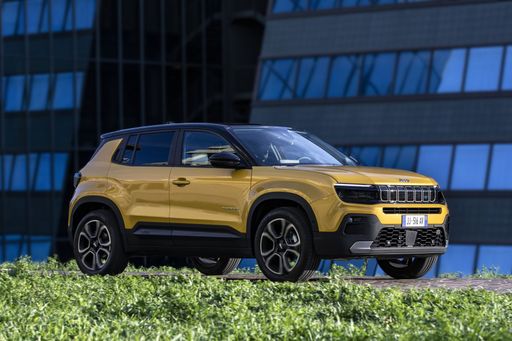
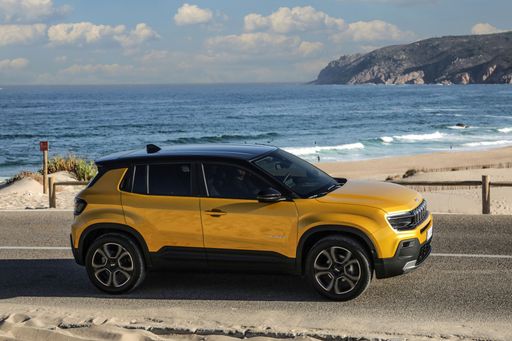
The Jeep Avenger shrinks Jeep's boxy, adventurous styling into a city-friendly electric crossover that looks just as at home on tight streets as it does on muddy weekend lanes. It's a savvy pick for drivers who want go-anywhere attitude without the truck-size ego — practical inside, lively around town and ready to tackle a bit of rough stuff when the mood strikes.

details

Ford Mustang Mach-E

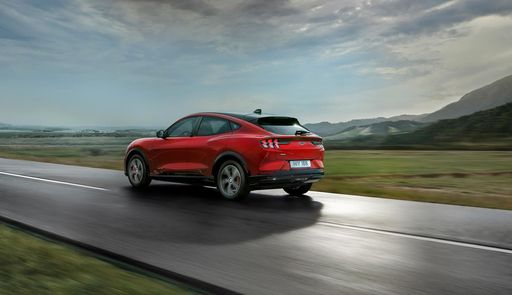
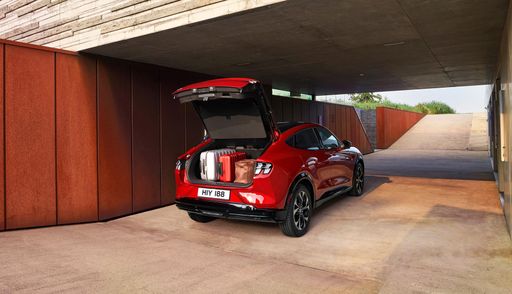
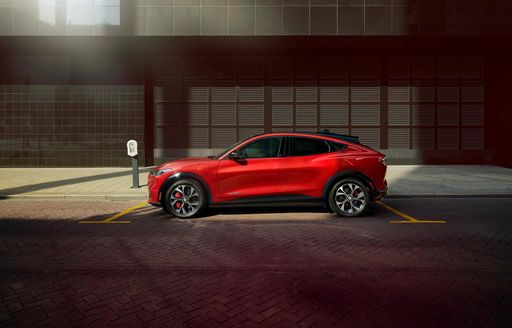
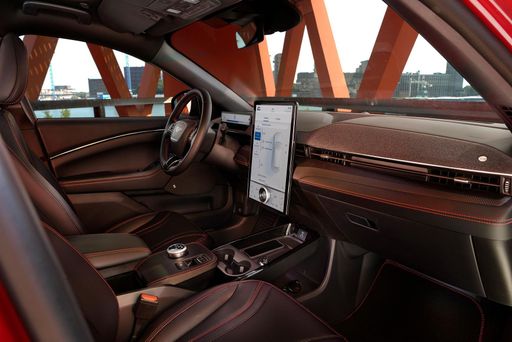
The Mustang Mach-E proves an electric SUV can be both playful and practical, with the Mustang name bringing muscle-car charisma to a family-friendly package. It delivers eager performance, a comfortable cabin, and a slick infotainment setup that keeps daily driving fun — and yes, you’ll still get admiring glances at the lights.

details
Jeep Avenger
Ford Mustang Mach-E

Costs and Consumption

Price
22,500 - 35,000 £
Price
48,400 - 66,900 £
Consumption L/100km
4.9 - 5.7 L/100km
Consumption L/100km
-
Consumption kWh/100km
15.5 kWh/100km
Consumption kWh/100km
17.7 - 21 kWh/100km
Electric Range
400 km
Electric Range
470 - 600 km
Battery Capacity
-
Battery Capacity
-
co2
0 - 129 g/km
co2
0 g/km
Fuel tank capacity
-
Fuel tank capacity
-

Dimensions and Body

Body Type
SUV
Body Type
SUV
Seats
5
Seats
5
Doors
-
Doors
-
Curb weight
1,180 - 1,520 kg
Curb weight
2,161 - 2,351 kg
Trunk capacity
355 - 380 L
Trunk capacity
519 L
Length
-
Length
-
Width
1,776 mm
Width
1,881 mm
Height
-
Height
-
Max trunk capacity
-
Max trunk capacity
-
Payload
494 - 502 kg
Payload
368 - 450 kg

Engine and Performance

Engine Type
Petrol MHEV, Electric, Petrol
Engine Type
Electric
Transmission
Automatic, Manuel
Transmission
Automatic
Transmission Detail
Dual-Clutch Automatic, Reduction Gearbox, Manual Gearbox
Transmission Detail
Reduction Gearbox
Drive Type
Front-Wheel Drive
Drive Type
Rear-Wheel Drive, All-Wheel Drive
Power HP
100 - 156 HP
Power HP
268 - 487 HP
Acceleration 0-100km/h
9 - 10.6 s
Acceleration 0-100km/h
3.8 - 6.2 s
Max Speed
-
Max Speed
-
Torque
205 - 260 Nm
Torque
525 - 950 Nm
Number of Cylinders
3
Number of Cylinders
-
Power kW
74 - 115 kW
Power kW
197 - 358 kW
Engine capacity
1,199 cm3
Engine capacity
-

General

Model Year
2026
Model Year
2025
CO2 Efficiency Class
C, A, D
CO2 Efficiency Class
A
Brand
Jeep
Brand
Ford
DriveDuel uses data analysis and artificial intelligence to evaluate vehicle data and create content. Content is regularly reviewed and improved. The displayed prices are estimates based on German list prices, adjusted to the respective country’s VAT. Country-specific registration taxes are not included. This information is not legally binding.