VS

Jeep Avenger vs Kia EV3 - Differences and prices compared

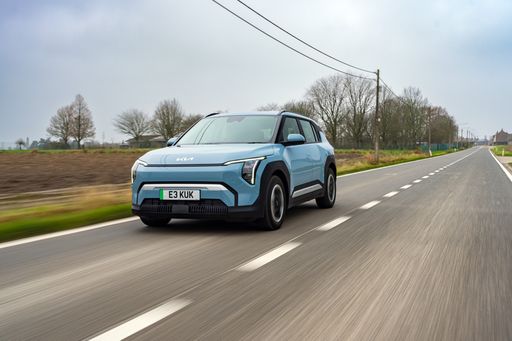
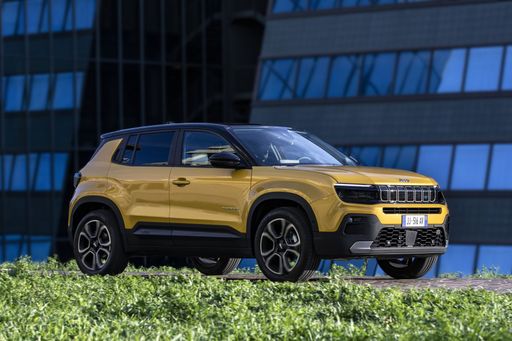
Compare performance (156 HP vs 204 HP), boot space and price (21900 £ vs 30800 £ ) at a glance. Find out which car is the better choice for you – Jeep Avenger or Kia EV3?

Jeep Avenger

5 (2 Reviews)
rate

Kia EV3

4.9 (2 Reviews)
rate

Here’s where it gets real: The technical differences in detail

Avenger

Costs and Efficiency:

Price and efficiency are often the first things buyers look at. Here it becomes clear which model has the long-term edge – whether at the pump, the plug, or in purchase price.

Jeep Avenger has a clearly advantage in terms of price – it starts at 21900 £ , while the Kia EV3 costs 30800 £ . That’s a price difference of around 8906 £.

In terms of energy consumption, the advantage goes to the Kia EV3: with 14.90 kWh per 100 km, it’s minimal more efficient than the Jeep Avenger with 15.50 kWh. That’s a difference of about 0.60 kWh.

As for electric range, the Kia EV3 performs noticeable better – achieving up to 605 km, about 205 km more than the Jeep Avenger.

EV3

Engine and Performance:

Power, torque and acceleration are the classic benchmarks for car enthusiasts – and here, some clear differences start to show.

When it comes to engine power, the Kia EV3 has a noticeable edge – offering 204 HP compared to 156 HP. That’s roughly 48 HP more horsepower.

In acceleration from 0 to 100 km/h, the Kia EV3 is somewhat quicker – completing the sprint in 7.50 s, while the Jeep Avenger takes 9 s. That’s about 1.50 s faster.

In terms of top speed, the Jeep Avenger performs slightly better – reaching 194 km/h, while the Kia EV3 tops out at 170 km/h. The difference is around 24 km/h.

There’s also a difference in torque: Kia EV3 pulls slight stronger with 283 Nm compared to 260 Nm. That’s about 23 Nm difference.

Avenger

Space and Everyday Use:

Cabin size, boot volume and payload all play a role in everyday practicality. Here, comfort and flexibility make the difference.

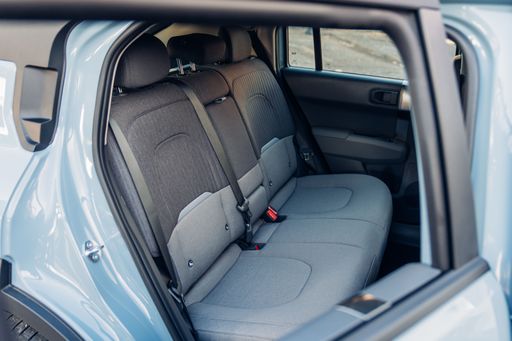
Both vehicles offer seating for 5 people.

In curb weight, Jeep Avenger is convincingly lighter – 1180 kg compared to 1800 kg. The difference is around 620 kg.

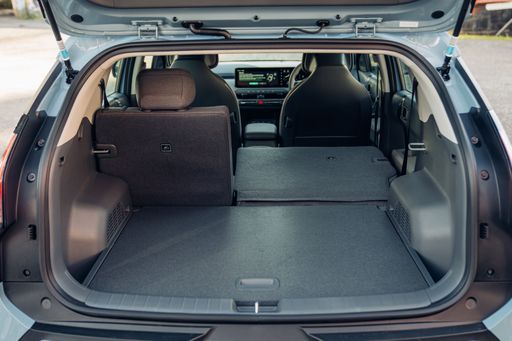
In terms of boot space, the Kia EV3 offers slightly more room – 460 L compared to 380 L. That’s a difference of about 80 L.

In maximum load capacity, the Jeep Avenger performs minimal better – up to 1277 L, which is about 26 L more than the Kia EV3.

When it comes to payload, Jeep Avenger slight takes the win – 502 kg compared to 470 kg. That’s a difference of about 32 kg.

Who wins the race in the data check?

The Kia EV3 leads convincingly in the objective data comparison.
This result only shows which model scores more points on paper – not which of the two cars feels right for you.

Jeep Avenger
Kia EV3

Costs and Consumption

View detailed analysis

Engine and Performance

View detailed analysis

Dimensions and Body

View detailed analysis
from about £30,800
EV3

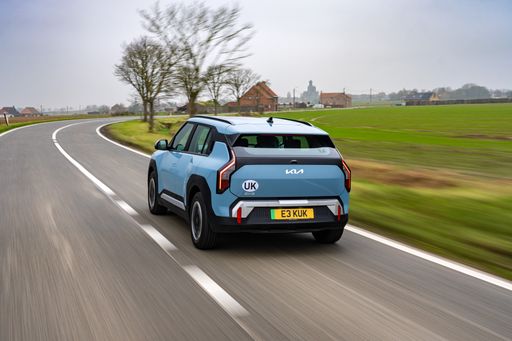
Kia EV3

  • Engine Type : Electric
  • Transmission : Automatic
  • Drive Type : Front-Wheel Drive
  • Power HP : 204 HP
  • Consumption kWh/100km : 14.9 - 16.2 kWh
  • Electric Range : 436 - 605 km

Jeep Avenger

5 (2 Reviews)
rate

The Jeep Avenger shrinks Jeep's boxy, adventurous styling into a city-friendly electric crossover that looks just as at home on tight streets as it does on muddy weekend lanes. It's a savvy pick for drivers who want go-anywhere attitude without the truck-size ego — practical inside, lively around town and ready to tackle a bit of rough stuff when the mood strikes.

details

Kia EV3

4.9 (2 Reviews)
rate

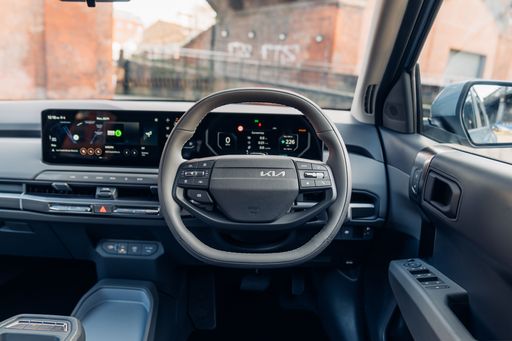
The Kia EV3 arrives as a cheeky, practical electric compact that manages to feel both premium and playful, delivering crisp handling and a roomy cabin that's perfect for urban life. With smart tech, friendly styling and sensible pricing, the EV3 is the kind of car that makes switching to electric feel like a no-brainer without asking you to give anything important up.

details
Jeep Avenger
Kia EV3

Costs and Consumption

Price
21900 - 36900 £
Price
30800 - 41700 £
Consumption L/100km
4.9 - 5.7 L
Consumption L/100km
-
Consumption kWh/100km
15.50 kWh
Consumption kWh/100km
14.9 - 16.2 kWh
Electric Range
400 km
Electric Range
436 - 605 km
Battery Capacity
51 kWh
Battery Capacity
58.3 - 81.4 kWh
co2
0 - 129 g/km
co2
0 g/km
Fuel tank capacity
44 L
Fuel tank capacity
-

Dimensions and Body

Body Type
SUV
Body Type
SUV
Seats
5
Seats
5
Doors
5
Doors
5
Curb weight
1180 - 1520 kg
Curb weight
1800 - 1885 kg
Trunk capacity
325 - 380 L
Trunk capacity
460 L
Length
4084 - 4088 mm
Length
4300 - 4310 mm
Width
1776 mm
Width
1850 mm
Height
1527 - 1541 mm
Height
1560 - 1570 mm
Max trunk capacity
1218 - 1277 L
Max trunk capacity
1251 L
Payload
494 - 502 kg
Payload
470 kg

Engine and Performance

Engine Type
Electric, Petrol, Petrol MHEV
Engine Type
Electric
Transmission
Automatic, Manuel
Transmission
Automatic
Transmission Detail
Reduction Gearbox, Manual Gearbox, Dual-Clutch Automatic
Transmission Detail
Reduction Gearbox
Drive Type
Front-Wheel Drive, All-Wheel Drive
Drive Type
Front-Wheel Drive
Power HP
100 - 156 HP
Power HP
204 HP
Acceleration 0-100km/h
9 - 10.6 s
Acceleration 0-100km/h
7.5 - 7.9 s
Max Speed
150 - 194 km/h
Max Speed
170 km/h
Torque
205 - 260 Nm
Torque
283 Nm
Number of Cylinders
3
Number of Cylinders
-
Power kW
74 - 115 kW
Power kW
150 kW
Engine capacity
1199 cm3
Engine capacity
-

General

Model Year
2023 - 2025
Model Year
2024
CO2 Efficiency Class
A, D, C
CO2 Efficiency Class
A
Brand
Jeep
Brand
Kia
What drivetrain options does the Jeep Avenger have?

Available configurations include Front-Wheel Drive or All-Wheel Drive.

The prices shown are estimates based on German list prices, adjusted for local VAT. Local registration taxes (e.g. NoVA, BPM or CO2 malus) are not included. This information is not legally binding.