VS

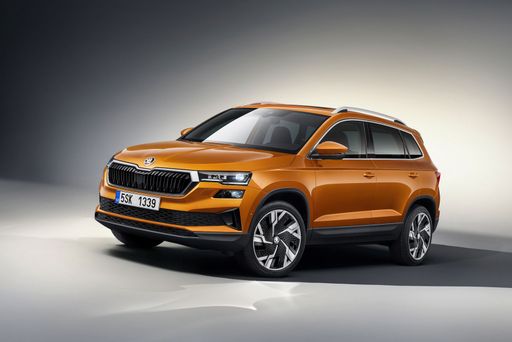
Jeep Compass vs Skoda Karoq comparison

Compare performance (225 HP vs 190 HP), boot space and price (34200 £ vs 29100 £ ) at a glance. Find out which car is the better choice for you – Jeep Compass or Skoda Karoq?

Compass

Jeep Compass vs. Skoda Karoq: The Ultimate SUV Showdown

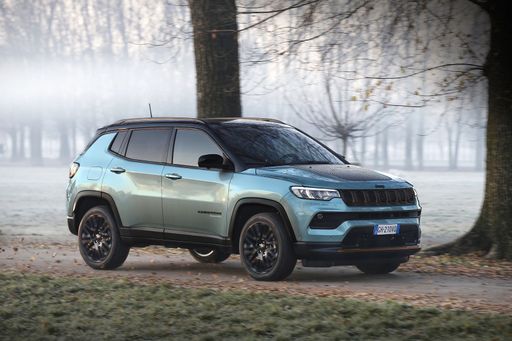
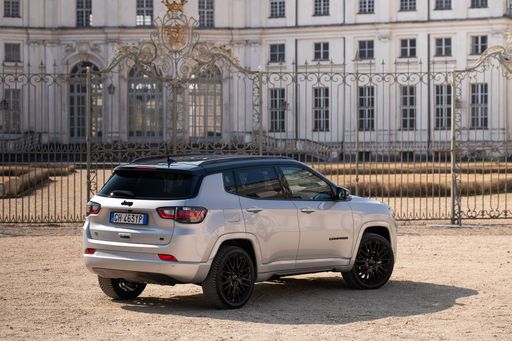
In the rapidly evolving SUV market, discerning customers often find themselves choosing between two popular contenders: the Jeep Compass and the Skoda Karoq. Both of these SUVs offer a blend of robust performance, innovative technology, and versatile design. But how do they compete when put head-to-head? Let's delve into the technical aspects and innovations of these two vehicles.
Karoq

Performance and Efficiency

The 2024 Jeep Compass offers a variety of powertrains to fit different needs. With options ranging from a 130 HP petrol MHEV to a 240 HP plug-in hybrid, it covers a broad spectrum of drivers' desires. Acceleration from 0 to 100 km/h ranges from 7.3 to 10.3 seconds, highlighting its versatility across power outputs. The Compass also provides all-wheel-drive capabilities, ensuring robust handling in various conditions, and an impressive electric range of 36 km with the plugin hybrid version.

In contrast, the Skoda Karoq leans towards conventional powertrains with petrol and diesel engines, offering power outputs from 115 HP to 190 HP. Its acceleration ranges between 7 and 10.6 seconds. Notably, the Karoq includes both manual and dual-clutch automatic transmissions across its lineup, appealing to traditional enthusiasts and those seeking modern convenience. Its fuel consumption ranges from 4.9 L/100 km to 7.6 L/100 km, showing efficiency particularly in its diesel variants.

Compass

Interior and Practicality

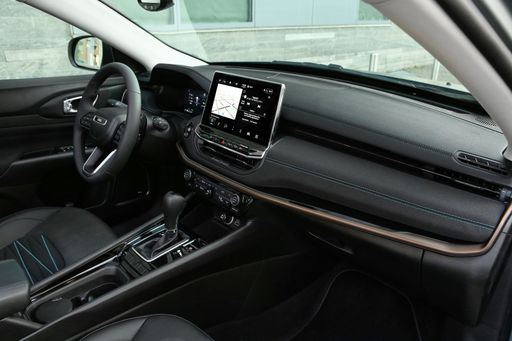
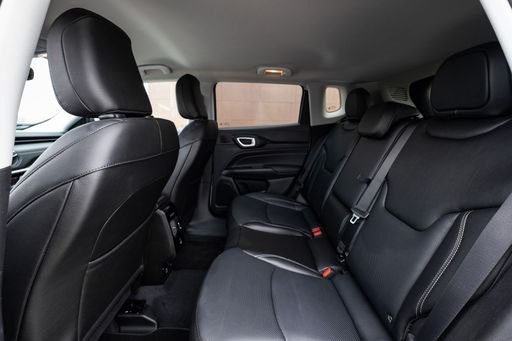
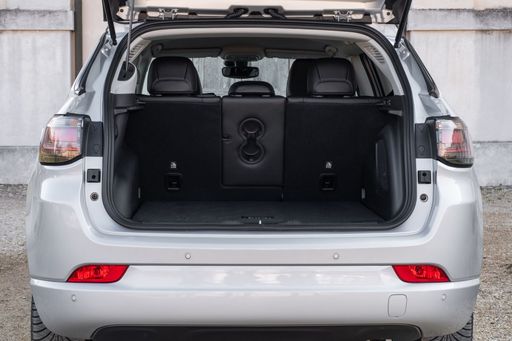
The Compass holds its ground with a trunk capacity of up to 438 liters and a five-seat configuration that speaks to its practical design for families or adventurers. The Jeep's interior highlights functional yet modern finishes, designed to withstand the rigors of off-road adventures while providing comfort in city driving.

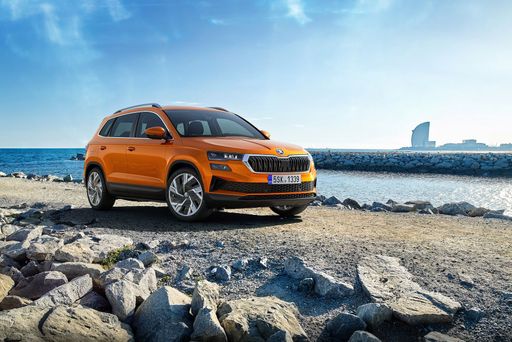
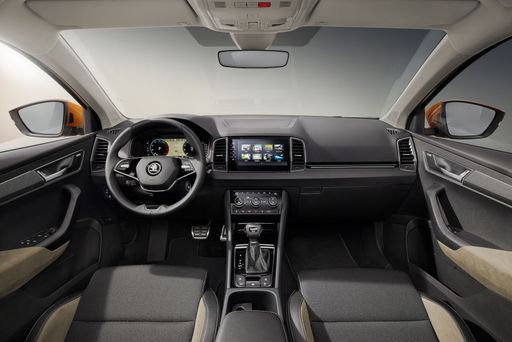
The Karoq offers a competitive edge with a trunk capacity of 521 liters, providing more storage space, which is beneficial for long road trips or daily errands. Its thoughtful interior design utilizes a range of quality materials, ensuring a comfortable and spacious environment for all passengers.

Karoq

Dimensions and Styling

Dimensionally, the Jeep Compass measures 4404 mm in length, offering a robust and commanding presence on the road. With a width of 1819 mm and a height variation between 1629 mm and 1649 mm, it embodies the classic SUV look, coupled with Jeep’s signature design cues.

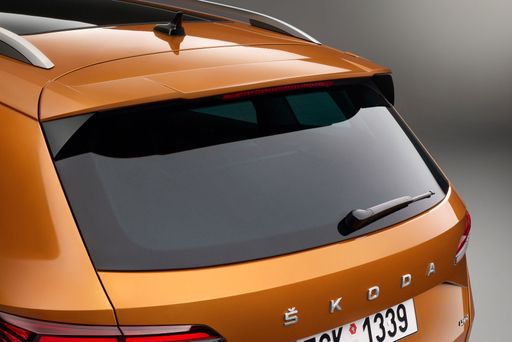
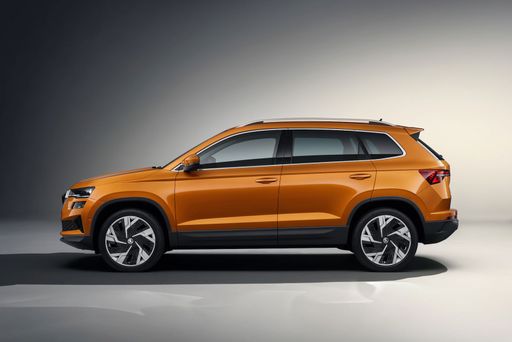
Meanwhile, the Skoda Karoq sports a length slightly shorter at 4390 mm, paired with a wider stance at 1841 mm. Its height ranges between 1603 mm and 1624 mm, lending it a sleek yet sturdy profile. The Karoq's design focuses on simplicity and elegance, maintaining a modern aesthetic that complements its practical nature.

Compass

Technology and Safety

When it comes to technology, the Jeep Compass embraces modern advancements, featuring cutting-edge software for navigation and connectivity, thoroughly integrated with driver-assistance systems that enhance safety and driving pleasure.

The Skoda Karoq keeps pace with an array of technological features fitted into its cabins, such as adaptive cruise control, lane assist, and a sophisticated infotainment system. Skoda's commitment to safety is evident through its comprehensive suite of safety systems, aimed at safeguarding passengers while maximizing driving confidence.

Karoq

Conclusion

Both the Jeep Compass and the Skoda Karoq bring compelling features to the table. While the Compass stands out with its variety of powertrains and hybrid options, the Karoq offers superior storage capacity and a wider choice in transmissions. Ultimately, the decision between these two SUVs might come down to specific needs and brand preference. For those seeking a rugged, off-road capable SUV with hybrid technology, the Compass is the clear choice. Conversely, if traditional powertrains with spacious interiors and efficient diesel options are preferred, the Skoda Karoq deserves a closer look.

Jeep Compass vs Skoda Karoq: Key differences

Jeep Compass

2.4 (4 Reviews)
rate
  • to a small extent more power
  • decisively more efficient
  • minimal more trunk space

Skoda Karoq

4.6 (2 Reviews)
rate
  • a bit cheaper
  • slightly quicker from 0–100 km/h
  • noticeable lighter

Here’s where it gets real: The technical differences in detail

Compass

Costs and Efficiency:

When it comes to price and running costs, the biggest differences usually appear. This is often where you see which car fits your budget better in the long run.

Skoda Karoq has a a bit advantage in terms of price – it starts at 29100 £ , while the Jeep Compass costs 34200 £ . That’s a price difference of around 5118 £.

Fuel consumption also shows a difference: Jeep Compass manages with 3 L and is therefore decisively more efficient than the Skoda Karoq with 4.90 L. The difference is about 1.90 L per 100 km.

Karoq

Engine and Performance:

Power, torque and acceleration are the classic benchmarks for car enthusiasts – and here, some clear differences start to show.

When it comes to engine power, the Jeep Compass has a to a small extent edge – offering 225 HP compared to 190 HP. That’s roughly 35 HP more horsepower.

In acceleration from 0 to 100 km/h, the Skoda Karoq is slightly quicker – completing the sprint in 7 s, while the Jeep Compass takes 8 s. That’s about 1 s faster.

In terms of top speed, the Skoda Karoq performs a bit better – reaching 221 km/h, while the Jeep Compass tops out at 188 km/h. The difference is around 33 km/h.

There’s also a difference in torque: Skoda Karoq pulls hardly perceptible stronger with 360 Nm compared to 345 Nm. That’s about 15 Nm difference.

Compass

Space and Everyday Use:

Whether family car or daily driver – which one offers more room, flexibility and comfort?

Both vehicles offer seating for 5 people.

In curb weight, Skoda Karoq is noticeable lighter – 1380 kg compared to 1667 kg. The difference is around 287 kg.

In terms of boot space, the Jeep Compass offers minimal more room – 550 L compared to 521 L. That’s a difference of about 29 L.

In maximum load capacity, the Skoda Karoq performs slight better – up to 1630 L, which is about 69 L more than the Jeep Compass.

Who wins the race in the data check?

The Jeep Compass is decisively ahead in the objective data comparison.
This result only shows which model scores more points on paper – not which of the two cars feels right for you.

Jeep Compass
Skoda Karoq

Costs and Consumption

View detailed analysis

Engine and Performance

View detailed analysis

Dimensions and Body

View detailed analysis
from about £34,200
Compass

Jeep Compass

  • Engine Type : Petrol MHEV, Electric, Plugin Hybrid
  • Transmission : Automatic
  • Drive Type : Front-Wheel Drive
  • Power HP : 145 - 225 HP
  • Consumption L/100km : 3 - 5.8 L
  • Consumption kWh/100km : 17.50 kWh
  • Electric Range : 95 - 500 km

Jeep Compass

2.4 (4 Reviews)
rate

The Jeep Compass packs classic Jeep styling with a surprisingly composed demeanor, equally at home turning heads in the city or tackling a weekend dirt track. Inside it's a pragmatic, user-friendly compact SUV that prioritizes comfort and versatility — a smart pick if you want a dose of adventure without giving up everyday sense.

details

Skoda Karoq

4.6 (2 Reviews)
rate

The Skoda Karoq is a smart, unfussy compact SUV that blends roomy practicality with a pleasantly composed driving character. It won’t turn heads at a car meet, but it will make daily life easier with clever storage, sensible ergonomics and a reassuringly grown-up ride.

details
Jeep Compass
Skoda Karoq

Costs and Consumption

Price
34200 - 43200 £
Price
29100 - 41700 £
Consumption L/100km
3 - 5.8 L
Consumption L/100km
4.9 - 7.6 L
Consumption kWh/100km
17.50 kWh
Consumption kWh/100km
-
Electric Range
95 - 500 km
Electric Range
-
Battery Capacity
74 kWh
Battery Capacity
-
co2
0 - 130 g/km
co2
128 - 173 g/km
Fuel tank capacity
55 L
Fuel tank capacity
50 - 55 L

Dimensions and Body

Body Type
SUV
Body Type
SUV
Seats
5
Seats
5
Doors
5
Doors
5
Curb weight
1667 - 2198 kg
Curb weight
1380 - 1655 kg
Trunk capacity
550 L
Trunk capacity
521 L
Length
4552 mm
Length
4384 - 4390 mm
Width
1928 mm
Width
1841 mm
Height
1675 mm
Height
1624 - 1629 mm
Max trunk capacity
1561 L
Max trunk capacity
1630 L
Payload
-
Payload
456 - 549 kg

Engine and Performance

Engine Type
Petrol MHEV, Electric, Plugin Hybrid
Engine Type
Petrol, Diesel
Transmission
Automatic
Transmission
Manuel, Automatic
Transmission Detail
Dual-Clutch Automatic, Reduction Gearbox
Transmission Detail
Manual Gearbox, Dual-Clutch Automatic
Drive Type
Front-Wheel Drive
Drive Type
Front-Wheel Drive, All-Wheel Drive
Power HP
145 - 225 HP
Power HP
115 - 190 HP
Acceleration 0-100km/h
8 - 10.3 s
Acceleration 0-100km/h
7 - 11.2 s
Max Speed
180 - 188 km/h
Max Speed
192 - 221 km/h
Torque
230 - 345 Nm
Torque
200 - 360 Nm
Number of Cylinders
3 - 4
Number of Cylinders
3 - 4
Power kW
107 - 165 kW
Power kW
85 - 140 kW
Engine capacity
1199 - 1596 cm3
Engine capacity
999 - 1984 cm3

General

Model Year
2025 - 2026
Model Year
2025
CO2 Efficiency Class
D, A, B
CO2 Efficiency Class
D, E, F
Brand
Jeep
Brand
Skoda
What drivetrain options does the Jeep Compass have?

The Jeep Compass is available as Front-Wheel Drive.

The prices shown are estimates based on German list prices, adjusted for local VAT. Local registration taxes (e.g. NoVA, BPM or CO2 malus) are not included. This information is not legally binding.