VS

Jeep Renegade vs Hyundai Tucson comparison

Compare performance (240 HP vs 288 HP), boot space and price (26,700 £ vs 31,300 £ ) at a glance. Find out which car is the better choice for you – Jeep Renegade or Hyundai Tucson?

Jeep Renegade vs Hyundai Tucson: Key differences

Jeep Renegade

  • a bit cheaper
  • clearly more efficient
  • barely quicker 0–100 km/h
  • barely lighter
details

Hyundai Tucson

4.7 (8 Reviews)
rate
  • moderately more power
  • substantially more electric range
  • clearly more trunk space
details

All details on performance, efficiency, range and trunk space can be found in the technical comparison below – including user reviews for both models.

By Achim Sedelmaier

Renegade

Hyundai Tucson vs. Jeep Renegade: Battle of the Compact SUVs

The compact SUV segment is a fiercely competitive arena with many worthy contenders vying for the spotlight. Today, we're putting two popular models under the microscope: the Hyundai Tucson and the Jeep Renegade. Both offer a compelling mix of style, functionality, and innovation, but how do they stack up against each other on the road? Let's dive into the technical aspects and innovative features of these SUVs to find out.
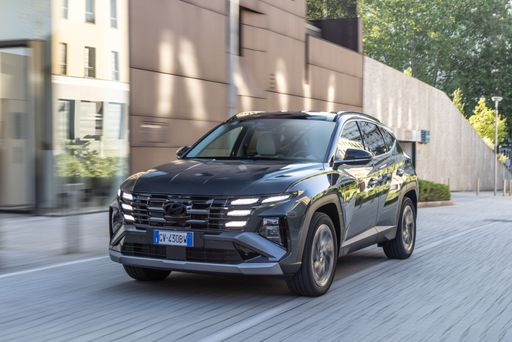
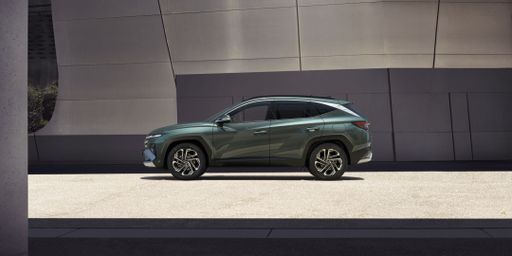
Tucson

Engines and Performance

Under the hood, the Hyundai Tucson offers a diverse range of powertrains. Available options include Diesel MHEV, Petrol MHEV, Full Hybrid, and Plugin Hybrid configurations. This variety provides potential buyers with a choice between different levels of power and efficiency. The Tucson runs on a 1.598 cm3 engine, reaching up to 252 HP and sprinting from 0 to 100 km/h in as fast as 7.9 seconds. Its all-wheel-drive variant delivers a robust torque of 367 Nm, ensuring a dynamic driving experience.

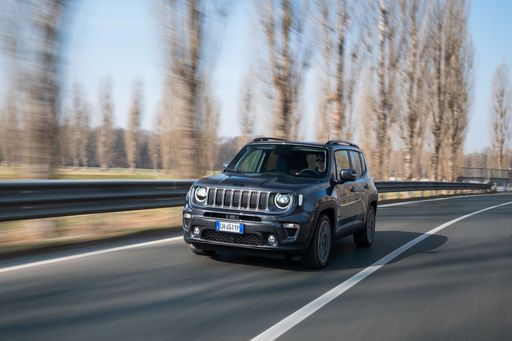
Conversely, the Jeep Renegade features a slightly reduced engine diversity, offering Petrol MHEV and Plugin Hybrid options. Its smaller engine capacities of 1469 cm3 and 1332 cm3 pack a punch with up to 240 HP. The electric range, though shorter than the Tucson, is handy at 36 km. Notably, the Renegade is no slouch; it speeds from 0 to 100 km/h in just 7.1 seconds, indicative of a spirited drive, especially for the all-wheel-drive models with torque rated at 240 Nm.

Renegade

Dimensions and Interior Space

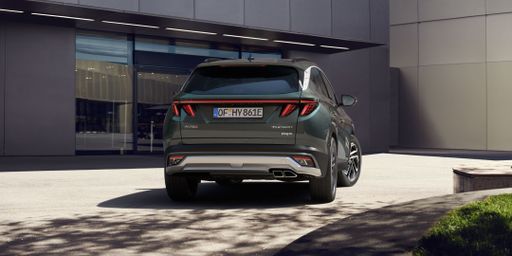
In terms of size, the Hyundai Tucson stands longer and wider, measuring 4510 to 4520 mm in length and 1865 mm in width. Its height of 1650 mm contributes to a sleek profile while retaining ample interior space. The Tucson impresses with a trunk capacity ranging from 546 to 620 liters, easily accommodating luggage for family getaways.

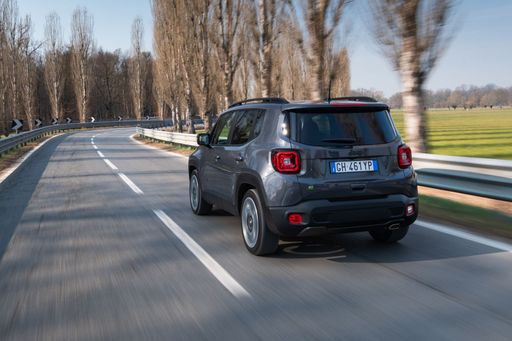
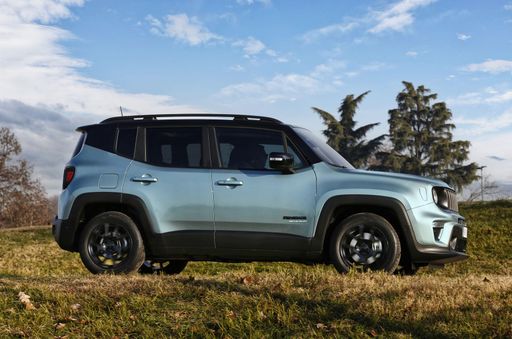
The Jeep Renegade, on the other hand, is more compact with a length of 4236 mm and a width of 1805 mm. Its tall stance, with a height range of 1684 to 1718 mm, presents a more rugged SUV aesthetic. Despite its smaller size, the Renegade offers plenty of comfort for its segment, though its trunk capacity of 330 to 351 liters falls short compared to the Tucson.

Tucson

Technological Innovations

Both SUVs feature comprehensive technological advancements to enhance the driving experience. The Hyundai Tucson integrates state-of-the-art hybrid systems, offering excellent fuel efficiency—ranging from an impressive 1.2 L/100km to 6.8 L/100km depending on the variant. Its CO2 emissions are kept in check, ranging from 22 to 153 g/km, making it an environmentally conscious choice.

Meanwhile, the Jeep Renegade prides itself on its off-road prowess, benefiting from Jeep's heritage. It offers excellent fuel consumption figures, with improvements seen in the Plugin Hybrid reaching a remarkable 2.1 L/100km. Additionally, the CO2 emissions are reduced significantly at 48 g/km for the Plugin Hybrid, showcasing Jeep's commitment to eco-friendly driving.

Renegade

Final Verdict

Ultimately, the choice between the Hyundai Tucson and Jeep Renegade comes down to priorities. If your preference is for a vehicle with flexible powertrain options, slightly more interior space, and considerable trunk capacity, the Tucson emerges as a potent contender. However, if off-road capabilities paired with the heritage of the Jeep brand are what you seek, then the Renegade’s compact size and rugged appeal make it a suitable choice. Both SUVs offer unique strengths and cutting-edge innovations that cater to different driver needs in the dynamic world of compact SUVs.

Here’s where it gets real: The technical differences in detail

Renegade

Costs and Efficiency:

When it comes to price and running costs, the biggest differences usually appear. This is often where you see which car fits your budget better in the long run.

Jeep Renegade is a bit cheaper – starting at 26,700 £ , while the Hyundai Tucson costs 31,300 £ . That’s a price difference of around 4,620 £.

Fuel consumption also shows a difference: the Jeep Renegade uses 2.1 L/100km and is clearly more efficient than the Hyundai Tucson with 2.7 L/100km. The difference is about 0.6 L/100km.

As for electric range, the Hyundai Tucson offers substantially more range – reaching up to 70 km, about 34 km more than the Jeep Renegade.

Tucson

Engine and Performance:

Under the bonnet, it becomes clear which model is tuned for sportiness and which one takes the lead when you hit the accelerator.

When it comes to engine power, the Hyundai Tucson offers moderately more power – delivering 288 HP compared to 240 HP. That’s roughly 48 HP more horsepower.

When accelerating from 0 to 100 km/h, the Jeep Renegade is barely quicker – completing the sprint in 7.1 s, while the Hyundai Tucson takes 7.5 s. That’s about 0.4 s quicker.

There’s also a difference in torque: the Hyundai Tucson delivers visibly more torque with 379 Nm compared to 240 Nm. That’s about 139 Nm more.

Renegade

Space and Everyday Use:

Whether family car or daily driver – which one offers more room, flexibility and comfort?

Both vehicles offer seating for 5 people.

In terms of curb weight, Jeep Renegade is barely lighter – 1,420 kg compared to 1,542 kg. The difference is around 122 kg.

Looking at boot space, the Hyundai Tucson offers clearly more boot space – 620 L compared to 351 L. That’s a difference of about 269 L.

When it comes to payload, the Jeep Renegade carries marginally more – 570 kg compared to 545 kg. That’s a difference of about 25 kg.

Who wins the race in the data check?

The Hyundai Tucson is decisively ahead in the objective data comparison.
This result only shows which model scores more points on paper – not which of the two cars feels right for you.

from £31,300
Tucson

Hyundai Tucson

  • Engine Type Petrol, Full Hybrid, Plugin Hybrid, Diesel MHEV
  • Transmission Manuel, Automatic
  • Drive Type Front-Wheel Drive, All-Wheel Drive
  • Power HP 136 - 288 HP
  • Consumption L/100km 2.7 - 7.6 L/100km
  • Electric Range 63 - 70 km
Jeep Renegade
Hyundai Tucson

Costs and Consumption

View detailed analysis

Engine and Performance

View detailed analysis

Dimensions and Body

View detailed analysis

Jeep Renegade

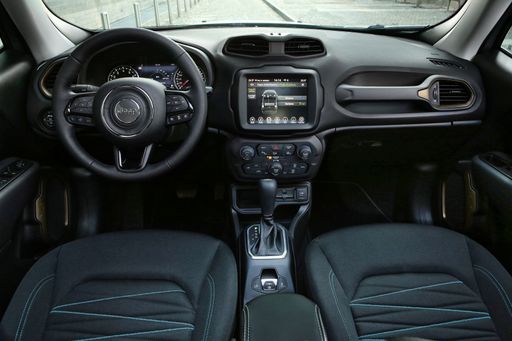
The Jeep Renegade wears its chunky, boxy looks like a badge of character, blending genuine off-road swagger with city-friendly manners so it feels at home on a muddy trail or a tight urban lane. Inside you'll find a surprisingly practical cabin with rugged touches and clever storage, making it a sensible choice for buyers who want a compact SUV with personality rather than just another anonymous crossover.

details

Hyundai Tucson

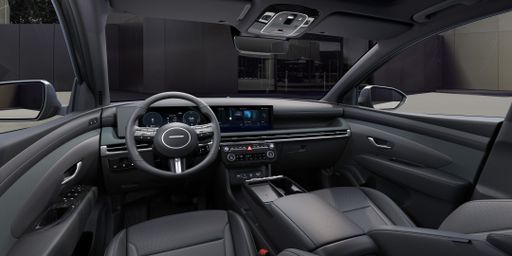
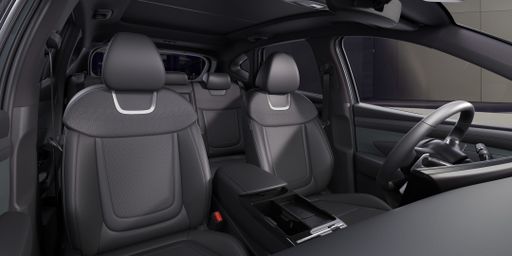
The Hyundai Tucson is a well-rounded compact SUV that blends modern styling with a comfortable, thoughtfully laid-out interior, making it appealing for daily driving and family use. It delivers a calm ride, a generous level of equipment for the price, and sensible practicality, so it's a smart choice if you want a straightforward, dependable crossover without fuss.

details
Jeep Renegade
Hyundai Tucson

Costs and Consumption

Price
26,700 - 39,200 £
Price
31,300 - 48,800 £
Consumption L/100km
2.1 - 5.5 L/100km
Consumption L/100km
2.7 - 7.6 L/100km
Consumption kWh/100km
-
Consumption kWh/100km
-
Electric Range
36 km
Electric Range
63 - 70 km
Battery Capacity
-
Battery Capacity
-
co2
48 - 125 g/km
co2
62 - 172 g/km
Fuel tank capacity
36 - 48 L
Fuel tank capacity
-

Dimensions and Body

Body Type
SUV
Body Type
SUV
Seats
5
Seats
5
Doors
5
Doors
-
Curb weight
1,420 - 1,770 kg
Curb weight
1,542 - 1,893 kg
Trunk capacity
330 - 351 L
Trunk capacity
546 - 620 L
Length
4,236 mm
Length
-
Width
1,805 mm
Width
1,865 mm
Height
1,684 - 1,718 mm
Height
-
Max trunk capacity
1,277 - 1,297 L
Max trunk capacity
-
Payload
545 - 570 kg
Payload
518 - 545 kg

Engine and Performance

Engine Type
Petrol MHEV, Plugin Hybrid
Engine Type
Petrol, Full Hybrid, Plugin Hybrid, Diesel MHEV
Transmission
Automatic
Transmission
Manuel, Automatic
Transmission Detail
Dual-Clutch Automatic, Automatic Gearbox
Transmission Detail
Manual Gearbox, Dual-Clutch Automatic, Automatic Gearbox
Drive Type
Front-Wheel Drive, All-Wheel Drive
Drive Type
Front-Wheel Drive, All-Wheel Drive
Power HP
130 - 240 HP
Power HP
136 - 288 HP
Acceleration 0-100km/h
7.1 - 9.7 s
Acceleration 0-100km/h
7.5 - 11.6 s
Max Speed
191 - 199 km/h
Max Speed
-
Torque
240 Nm
Torque
250 - 379 Nm
Number of Cylinders
4
Number of Cylinders
4
Power kW
96 - 177 kW
Power kW
100 - 212 kW
Engine capacity
1,332 - 1,469 cm3
Engine capacity
1,598 cm3

General

Model Year
2024
Model Year
2025
CO2 Efficiency Class
D, B
CO2 Efficiency Class
F, D, E, B
Brand
Jeep
Brand
Hyundai
DriveDuel uses data analysis and artificial intelligence to evaluate vehicle data and create content. Content is regularly reviewed and improved. The displayed prices are estimates based on German list prices, adjusted to the respective country’s VAT. Country-specific registration taxes are not included. This information is not legally binding.