VS

Jeep Renegade vs Toyota C-HR comparison

Compare performance (240 HP vs 223 HP), boot space and price (26,700 £ vs 29,100 £ ) at a glance. Find out which car is the better choice for you – Jeep Renegade or Toyota C-HR?

Jeep Renegade vs Toyota C-HR: Key differences

Jeep Renegade

  • very slightly cheaper
  • marginally more power
  • only slightly more efficient
  • marginally quicker 0–100 km/h
  • barely lighter

Toyota C-HR

4.8 (2 Reviews)
rate
  • substantially more electric range
  • markedly more trunk space
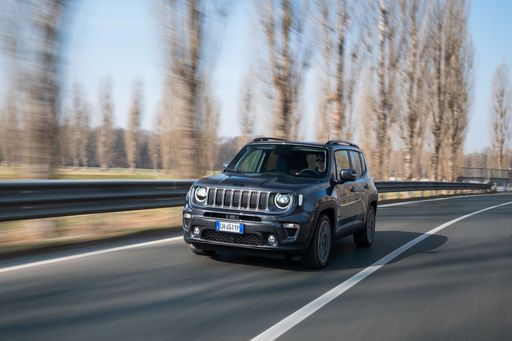
Renegade

Introduction

In the competitive world of compact SUVs, the Jeep Renegade and the Toyota C-HR stand out for their unique designs, advanced technologies, and innovative features. This article delves into a comprehensive comparison of these two models, examining their technical aspects, performance, and innovations.
C-HR

Engine Options and Performance

The Jeep Renegade is available with two potent engine options: a petrol mild-hybrid and a plug-in hybrid variant. The petrol MHEV generates up to 130 horsepower, while the plug-in hybrid boasts an impressive 240 horsepower. Acceleration from 0 to 100 km/h can be achieved in as little as 7.1 seconds for the higher-powered model, while its top speed reaches 199 km/h. Additionally, the Renegade showcases a fuel consumption of just 2.1 L/100km in hybrid mode, and an electric range of up to 36 km.

On the other hand, the Toyota C-HR also offers an array of engine choices, including a full hybrid and a plug-in hybrid, providing outputs ranging from 140 to 223 horsepower. The C-HR’s hybrid variant offers remarkable fuel efficiency, with consumption figures as low as 0.8 L/100km, and an electric range that extends up to 68 km. This model can sprint from 0 to 100 km/h in 7.4 seconds, with a top speed of 180 km/h, making it a compelling choice for drivers seeking a balance between performance and efficiency.

Renegade

Transmission and Drive Type

The Jeep Renegade features a modern dual-clutch automatic transmission for its higher trims, while the standard version is equipped with an automatic gearbox. It offers both front-wheel drive and all-wheel drive options, providing flexibility for various driving conditions.

Meanwhile, the Toyota C-HR utilizes a continuously variable transmission (CVT), known for its smooth acceleration. It, too, is available in both front-wheel drive and all-wheel drive configurations, ensuring that drivers can adapt to different terrains and weather conditions effectively.

C-HR

Interior Space and Comfort

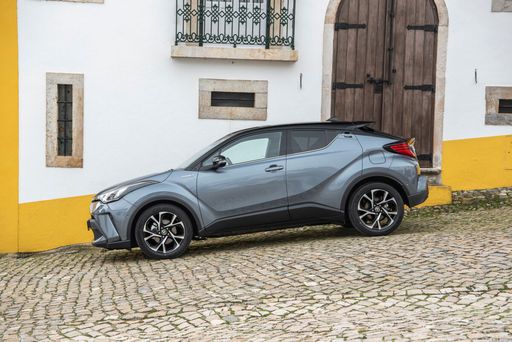
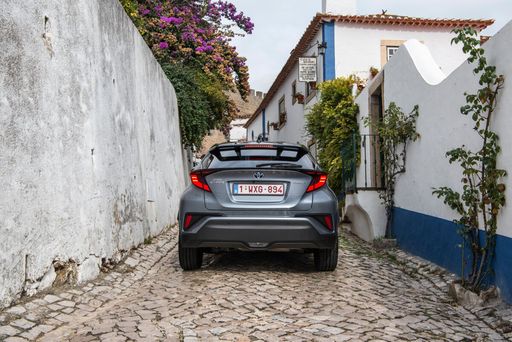
Both the Renegade and C-HR can comfortably accommodate five passengers. The Jeep Renegade provides a trunk capacity of 351 liters, which is slightly less than the C-HR’s maximum offering of 447 liters. The C-HR also boasts a cleverly designed interior, ensuring practicality and comfort, with thoughtful storage solutions throughout.

In terms of dimensions, the Renegade measures 4236 mm in length, 1805 mm in width, and stands at 1684 mm in height. The C-HR, on the other hand, is slightly longer at 4362 mm, wider at 1832 mm, but shorter in height at 1558 mm. This results in a sportier stance for the C-HR, appealing to drivers seeking a more dynamic aesthetic.

Renegade

Technological Innovations

Both vehicles come equipped with advanced technological features tailored for modern drivers. The Renegade includes a well-integrated infotainment system compatible with both Android Auto and Apple CarPlay, alongside a robust set of safety technologies such as adaptive cruise control and lane-keeping assist.

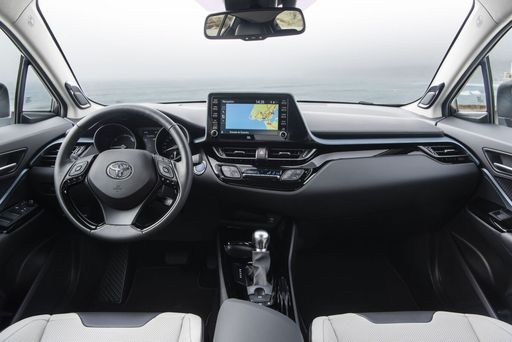
The Toyota C-HR excels in its Safety Sense package, which includes pre-collision systems, dynamic radar cruise control, and automatic high beams, all designed to enhance safety and driving convenience. Additionally, its infotainment system is user-friendly, with a touchscreen interface and seamless smartphone integration.

C-HR

Environmental Impact

When comparing their environmental credentials, the Renault's CO2 emissions range from 48 g/km for the plug-in hybrid to 125 g/km for the petrol variant, landing in the efficiency classes B and D. The Toyota C-HR showcases even lower emissions, with figures starting at just 17 g/km for the plug-in hybrid, placing it firmly in class B and demonstrating its commitment to sustainability.

Renegade

Conclusion

In the end, the choice between the Jeep Renegade and Toyota C-HR may boil down to personal preferences and specific needs. The Renegade offers robust performance, appealing to those seeking adventure and off-road capability, while the C-HR shines with exceptional fuel efficiency and a suite of safety features. Understanding these subtle yet significant differences can help potential buyers make informed decisions in this crowded SUV market.

Here’s where it gets real: The technical differences in detail

Renegade

Costs and Efficiency:

Price and efficiency are key factors when choosing a car – and this is often where the real differences emerge.

Jeep Renegade is very slightly cheaper – starting at 26,700 £ , while the Toyota C-HR costs 29,100 £ . That’s a price difference of around 2,477 £.

Fuel consumption also shows a difference: the Jeep Renegade uses 2.1 L/100km and is only slightly more efficient than the Toyota C-HR with 2.3 L/100km. The difference is about 0.2 L/100km.

As for electric range, the Toyota C-HR offers substantially more range – reaching up to 66 km, about 30 km more than the Jeep Renegade.

C-HR

Engine and Performance:

Power, torque and acceleration say a lot about how a car feels on the road. This is where you see which model delivers more driving dynamics.

When it comes to engine power, the Jeep Renegade offers marginally more power – delivering 240 HP compared to 223 HP. That’s roughly 17 HP more horsepower.

When accelerating from 0 to 100 km/h, the Jeep Renegade is marginally quicker – completing the sprint in 7.1 s, while the Toyota C-HR takes 7.4 s. That’s about 0.3 s quicker.

Renegade

Space and Everyday Use:

Cabin size, boot volume and payload all play a role in everyday practicality. Here, comfort and flexibility make the difference.

Both vehicles offer seating for 5 people.

In terms of curb weight, Jeep Renegade is barely lighter – 1,420 kg compared to 1,505 kg. The difference is around 85 kg.

Looking at boot space, the Toyota C-HR offers markedly more boot space – 447 L compared to 351 L. That’s a difference of about 96 L.

When it comes to payload, the Jeep Renegade carries clearly more – 570 kg compared to 425 kg. That’s a difference of about 145 kg.

Who wins the race in the data check?

The Toyota C-HR is narrowly ahead in the objective data comparison.
This result only shows which model scores more points on paper – not which of the two cars feels right for you.

from £29,100
C-HR

Toyota C-HR

  • Engine Type : Full Hybrid, Plugin Hybrid
  • Transmission : Automatic
  • Drive Type : Front-Wheel Drive, All-Wheel Drive
  • Power HP : 140 - 223 HP
  • Consumption L/100km : 2.3 - 5.1 L/100km
  • Electric Range : 66 km
Jeep Renegade
Toyota C-HR

Costs and Consumption

View detailed analysis

Engine and Performance

View detailed analysis

Dimensions and Body

View detailed analysis

Jeep Renegade

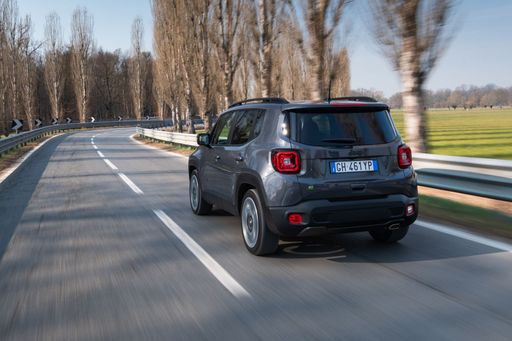
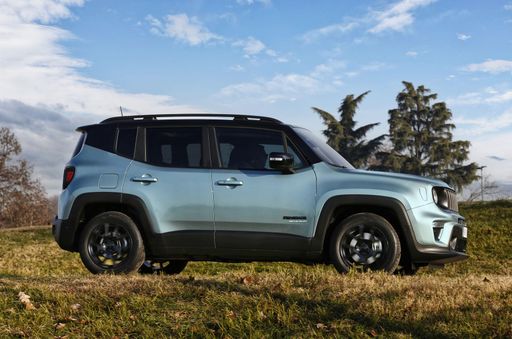
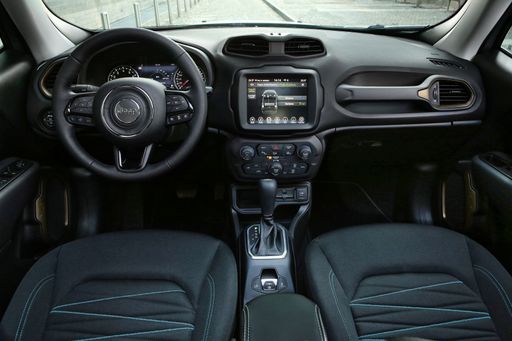
The Jeep Renegade wears its chunky, boxy looks like a badge of character, blending genuine off-road swagger with city-friendly manners so it feels at home on a muddy trail or a tight urban lane. Inside you'll find a surprisingly practical cabin with rugged touches and clever storage, making it a sensible choice for buyers who want a compact SUV with personality rather than just another anonymous crossover.

details

Toyota C-HR

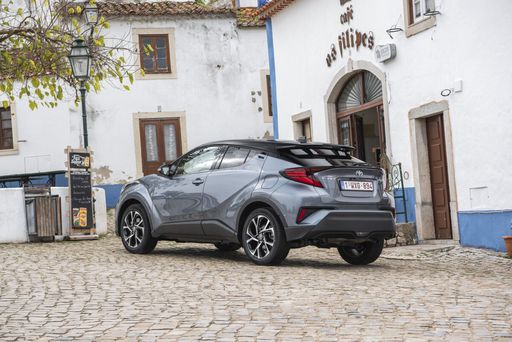
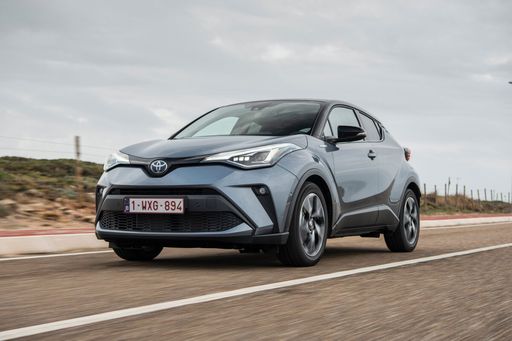
The Toyota C-HR cuts a striking figure with its angular styling and coupe-like profile, so you’ll never go unnoticed in the supermarket car park. It balances everyday practicality with a nimble, city-friendly personality, making routine commutes feel a touch more fun without asking for forgiveness.

details
Jeep Renegade
Toyota C-HR

Costs and Consumption

Price
26,700 - 39,200 £
Price
29,100 - 42,800 £
Consumption L/100km
2.1 - 5.5 L/100km
Consumption L/100km
2.3 - 5.1 L/100km
Consumption kWh/100km
-
Consumption kWh/100km
-
Electric Range
36 km
Electric Range
66 km
Battery Capacity
-
Battery Capacity
-
co2
48 - 125 g/km
co2
52 - 116 g/km
Fuel tank capacity
36 - 48 L
Fuel tank capacity
-

Dimensions and Body

Body Type
SUV
Body Type
SUV
Seats
5
Seats
5
Doors
5
Doors
-
Curb weight
1,420 - 1,770 kg
Curb weight
1,505 - 1,755 kg
Trunk capacity
330 - 351 L
Trunk capacity
350 - 447 L
Length
4,236 mm
Length
-
Width
1,805 mm
Width
1,832 mm
Height
1,684 - 1,718 mm
Height
-
Max trunk capacity
1,277 - 1,297 L
Max trunk capacity
-
Payload
545 - 570 kg
Payload
375 - 425 kg

Engine and Performance

Engine Type
Petrol MHEV, Plugin Hybrid
Engine Type
Full Hybrid, Plugin Hybrid
Transmission
Automatic
Transmission
Automatic
Transmission Detail
Dual-Clutch Automatic, Automatic Gearbox
Transmission Detail
CVT
Drive Type
Front-Wheel Drive, All-Wheel Drive
Drive Type
Front-Wheel Drive, All-Wheel Drive
Power HP
130 - 240 HP
Power HP
140 - 223 HP
Acceleration 0-100km/h
7.1 - 9.7 s
Acceleration 0-100km/h
7.4 - 9.9 s
Max Speed
191 - 199 km/h
Max Speed
-
Torque
240 Nm
Torque
-
Number of Cylinders
4
Number of Cylinders
4
Power kW
96 - 177 kW
Power kW
103 - 164 kW
Engine capacity
1,332 - 1,469 cm3
Engine capacity
1,798 - 1,987 cm3

General

Model Year
2,024
Model Year
2,026
CO2 Efficiency Class
D, B
CO2 Efficiency Class
C, D, B
Brand
Jeep
Brand
Toyota
DriveDuel uses data analysis and artificial intelligence to evaluate vehicle data and create content. Content is regularly reviewed and improved. The displayed prices are estimates based on German list prices, adjusted to the respective country’s VAT. Country-specific registration taxes are not included. This information is not legally binding.