VS

Kia EV3 vs Ford Explorer EV comparison

Compare performance (265 HP vs 340 HP), boot space and price (40,200 £ vs 34,200 £ ) at a glance. Find out which car is the better choice for you – Kia EV3 or Ford Explorer EV?

Kia EV3 vs Ford Explorer EV: Key differences

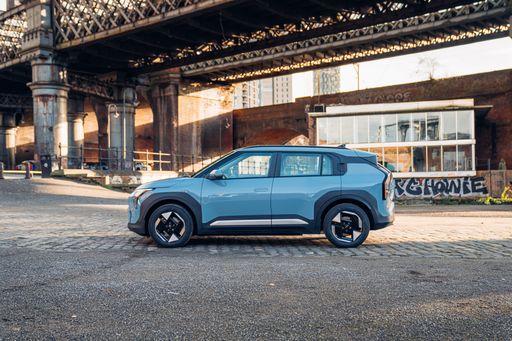
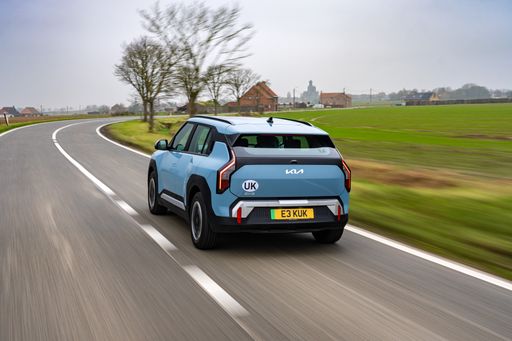
Kia EV3

4.3 (7 Reviews)
rate
  • marginally lighter
details

Ford Explorer EV

4.7 (5 Reviews)
rate
  • slightly cheaper
  • clearly more power
  • very slightly more efficient
  • very slightly more electric range
  • visibly quicker 0–100 km/h
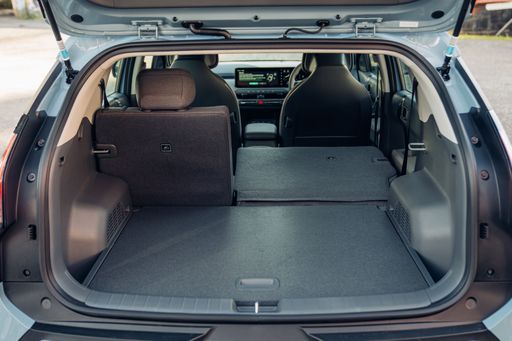
  • moderately more trunk space
details

All details on performance, efficiency, range and trunk space can be found in the technical comparison below – including user reviews for both models.

By Achim Sedelmaier

EV3

Ford Explorer EV VS Kia EV3: which electric SUV fits your life?

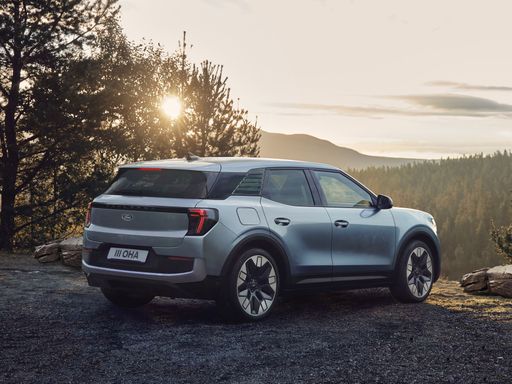
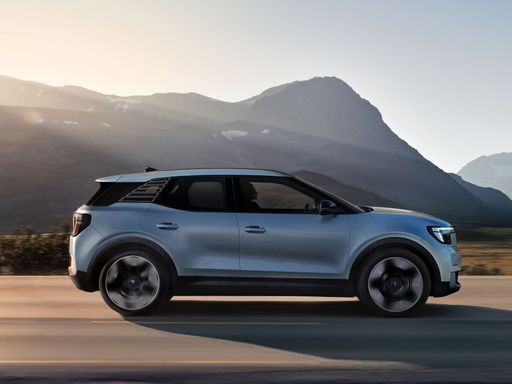
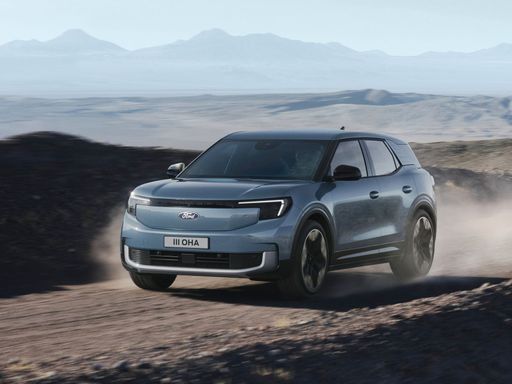
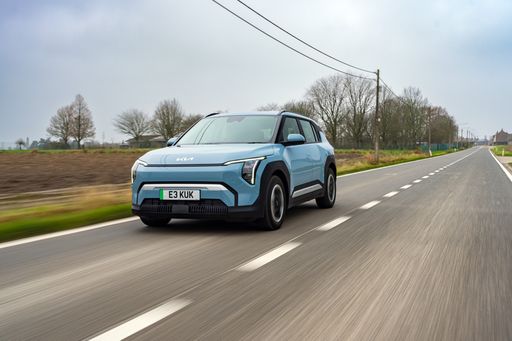
The Ford Explorer EV and Kia EV3 take very different routes to the same goal, and that makes this electric SUV matchup especially interesting. The Ford Explorer EV feels like the confident all-rounder with extra muscle and a calmer motorway manner. The Kia EV3 answers with tidy city manners, smart packaging and an easygoing, efficiency-minded drive. Your choice will hinge on whether you value punch and long-haul composure or maneuverability and day-to-day pragmatism.
Explorer EV

Driving character and pace

The Ford Explorer EV comes across as the more eager car, with stronger shove and a steering feel that invites a brisker pace. It keeps its body movements in check, but that tautness also makes it feel firmer over poor surfaces. The Kia EV3 prefers a relaxed rhythm: secure and predictable, yet less engaging when you press on. If you like a car that responds crisply to inputs, the Ford Explorer EV suits that mood; if you want calm progress and low-effort driving, the Kia EV3 plays to that brief.

EV3

Long-distance confidence and charging

On the motorway the Ford Explorer EV is impressively quiet, and its driver assistance takes the edge off long stints with smooth lane-keeping and fuss-free traffic jams. Its fast-charging behavior is more consistent on a high-power stop, which shortens total journey time on multi-leg trips. The Kia EV3 covers real distance efficiently and remains stable at speed, but tyre roar creeps in on coarse asphalt and its DC charging tends to slow earlier in the session. For frequent intercity travel, the Ford’s blend of hushed cruising and strong assistance feels more soothing, while the Kia EV3 works if you plan slightly longer pauses and value efficiency.

Explorer EV

Cabin feel, tech and everyday usability

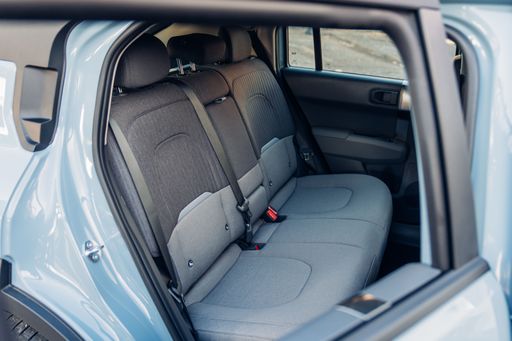
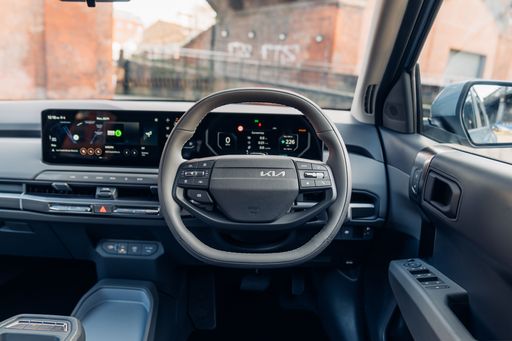
The Ford Explorer EV’s cabin mixes clever storage—think deep console and a hidden space behind the sliding screen—with a spacious rear bench that suits taller passengers. Its big-screen interface looks modern, yet touch sliders and haptic wheel buttons can frustrate when you just want quick adjustments. The Kia EV3’s controls are more straightforward in daily use, and its adjustable regeneration with true one‑pedal driving is a pleasure in traffic, though some assistant chimes and a partially obscured climate mini‑display annoy. If you prize rear-seat comfort for adults and inventive stowage, the Ford Explorer EV feels more accommodating; if you want simple controls and easy energy management, the Kia EV3 hits the mark.

EV3

Practicality, city manners and family life

The Kia EV3 shines for families with a big, well-shaped boot and a handy small frunk, plus wide-opening rear doors that make child-seat duty simple. Its compact footprint and tight turning circle make it an effortlessly city-friendly choice. The Ford Explorer EV has ample space for two child seats and generous leg and head room in the back, but its luggage area is less cavernous and the car’s width needs attention in tight car parks. Countering that, the Ford can shoulder heavier loads and feels more planted with bikes or kit on board, which active households may appreciate.

Explorer EV

Value, costs and who each car suits

Spec for spec, the Ford Explorer EV often starts at a keener price and brings stronger performance, while key comforts like a heat pump remain extras on both. The Kia EV3 fights back with lower running feel, long warranty coverage in many markets, and equipment that favors everyday convenience. If your week mixes school runs with regular motorway miles, the Ford Explorer EV’s quiet poise, assistance polish and pace will feel worth it. If your life is mostly urban and suburban, with maximum boot usability and simple controls top of the list, the Kia EV3 is the sensible, satisfying pick. With those trade-offs in mind, the next step is to weigh the detailed specs to match your priorities without overpaying.

Here’s where it gets real: The technical differences in detail

EV3

Costs and Efficiency:

Price and efficiency are key factors when choosing a car – and this is often where the real differences emerge.

Ford Explorer EV is slightly cheaper – starting at 34,200 £ , while the Kia EV3 costs 40,200 £ . That’s a price difference of around 5,982 £.

In terms of energy consumption, the Ford Explorer EV is very slightly more efficient: consuming 14.6 kWh/100km compared to 15.8 kWh/100km for the Kia EV3. That’s a difference of about 1.2 kWh/100km.

As for electric range, the Ford Explorer EV offers very slightly more range – reaching up to 602 km, about 30 km more than the Kia EV3.

Explorer EV

Engine and Performance:

Under the bonnet, it becomes clear which model is tuned for sportiness and which one takes the lead when you hit the accelerator.

When it comes to engine power, the Ford Explorer EV offers clearly more power – delivering 340 HP compared to 265 HP. That’s roughly 75 HP more horsepower.

When accelerating from 0 to 100 km/h, the Ford Explorer EV is visibly quicker – completing the sprint in 5.3 s, while the Kia EV3 takes 6.6 s. That’s about 1.3 s quicker.

There’s also a difference in torque: the Ford Explorer EV delivers considerably more torque with 679 Nm compared to 385 Nm. That’s about 294 Nm more.

EV3

Space and Everyday Use:

Whether family car or daily driver – which one offers more room, flexibility and comfort?

Both vehicles offer seating for 5 people.

In terms of curb weight, Kia EV3 is marginally lighter – 1,995 kg compared to 1,996 kg. The difference is around 1 kg.

Looking at boot space, the Ford Explorer EV offers moderately more boot space – 472 L compared to 413 L. That’s a difference of about 59 L.

When it comes to payload, the Ford Explorer EV carries a bit more – 585 kg compared to 485 kg. That’s a difference of about 100 kg.

Who wins the race in the data check?

The Ford Explorer EV holds a decisive overall lead in the objective data comparison.
This result only shows which model scores more points on paper – not which of the two cars feels right for you.

from £34,200
Explorer EV

Ford Explorer EV

  • Engine Type Electric
  • Transmission Automatic
  • Drive Type Rear-Wheel Drive, All-Wheel Drive
  • Power HP 190 - 340 HP
  • Consumption kWh/100km 14.6 - 17.3 kWh/100km
  • Electric Range 417 - 602 km
Kia EV3
Ford Explorer EV

Costs and Consumption

View detailed analysis

Engine and Performance

View detailed analysis

Dimensions and Body

View detailed analysis

Kia EV3

The Kia EV3 is a stylish, user-friendly electric crossover that focuses on practicality and a roomy, well-equipped cabin. It delivers a comfortable ride with intuitive technology and efficient everyday performance, making it a sensible choice for city and family use.

details

Ford Explorer EV

The Explorer EV brings the familiar presence and practicality of an Explorer into the electric age, offering roomy comfort and modern tech for everyday life and family trips. It feels composed on the road and serves as a straightforward, user-friendly alternative to conventional gas-powered SUVs.

details
Kia EV3
Ford Explorer EV

Costs and Consumption

Price
40,200 - 43,900 £
Price
34,200 - 49,600 £
Consumption L/100km
-
Consumption L/100km
-
Consumption kWh/100km
15.8 kWh/100km
Consumption kWh/100km
14.6 - 17.3 kWh/100km
Electric Range
572 km
Electric Range
417 - 602 km
Battery Capacity
-
Battery Capacity
-
co2
0 g/km
co2
0 g/km
Fuel tank capacity
-
Fuel tank capacity
-

Dimensions and Body

Body Type
SUV
Body Type
SUV
Seats
5
Seats
5
Doors
-
Doors
-
Curb weight
1,995 kg
Curb weight
1,996 - 2,209 kg
Trunk capacity
413 L
Trunk capacity
472 L
Length
-
Length
-
Width
1,850 mm
Width
1,872 mm
Height
-
Height
-
Max trunk capacity
-
Max trunk capacity
-
Payload
485 kg
Payload
531 - 585 kg

Engine and Performance

Engine Type
Electric
Engine Type
Electric
Transmission
Automatic
Transmission
Automatic
Transmission Detail
Reduction Gearbox
Transmission Detail
Reduction Gearbox
Drive Type
All-Wheel Drive
Drive Type
Rear-Wheel Drive, All-Wheel Drive
Power HP
265 HP
Power HP
190 - 340 HP
Acceleration 0-100km/h
6.6 s
Acceleration 0-100km/h
5.3 - 8 s
Max Speed
-
Max Speed
-
Torque
385 Nm
Torque
350 - 679 Nm
Number of Cylinders
-
Number of Cylinders
-
Power kW
195 kW
Power kW
140 - 250 kW
Engine capacity
-
Engine capacity
-

General

Model Year
2026
Model Year
2026
CO2 Efficiency Class
A
CO2 Efficiency Class
A
Brand
Kia
Brand
Ford
DriveDuel uses data analysis and artificial intelligence to evaluate vehicle data and create content. Content is regularly reviewed and improved. The displayed prices are estimates based on German list prices, adjusted to the respective country’s VAT. Country-specific registration taxes are not included. This information is not legally binding.