VS

Kia EV3 vs Peugeot 2008 comparison

Compare performance (265 HP vs 156 HP), boot space and price (40,200 £ vs 24,800 £ ) at a glance. Find out which car is the better choice for you – Kia EV3 or Peugeot 2008?

Kia EV3 vs Peugeot 2008: Key differences

Kia EV3

4.6 (5 Reviews)
rate
  • clearly more power
  • markedly more electric range
  • markedly quicker 0–100 km/h
details

Peugeot 2008

5 (1 Reviews)
rate
  • clearly cheaper
  • barely more efficient
  • significantly lighter
  • only slightly more trunk space
details

All details on performance, efficiency, range and trunk space can be found in the technical comparison below – including user reviews for both models.

By Achim Sedelmaier

EV3

Introduction: Battle of the SUVs

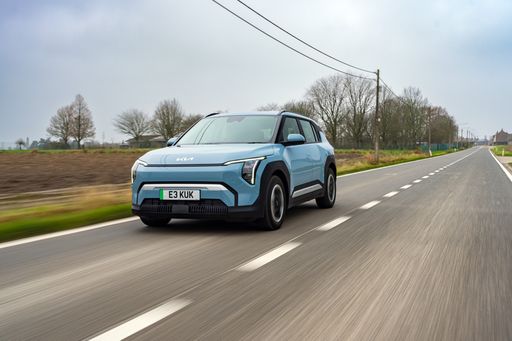
In the increasingly popular world of compact SUVs, the Kia EV3 and Peugeot 2008 are drawing significant attention. Both models represent a blend of forward-thinking technology and stylish design, but how do they stack up against each other on performance, features, and sustainability? Let's delve into these vehicles to see which comes out on top.
2008

Design and Dimensions: Aesthetic and Practicality Converge

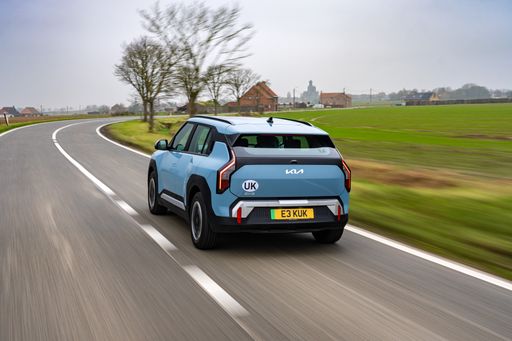
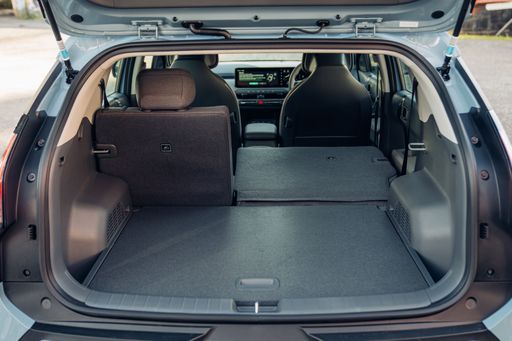
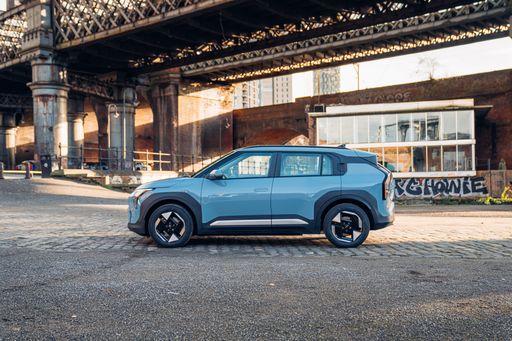
The Kia EV3 embodies a modern design language synonymous with Kia's adventurous spirit, with a length ranging from 4300 to 4310 mm, a width of 1850 mm, and a height between 1560 to 1570 mm. Its sleek silhouette is matched by a generous trunk capacity of 460 liters, providing ample space for both passengers and luggage.

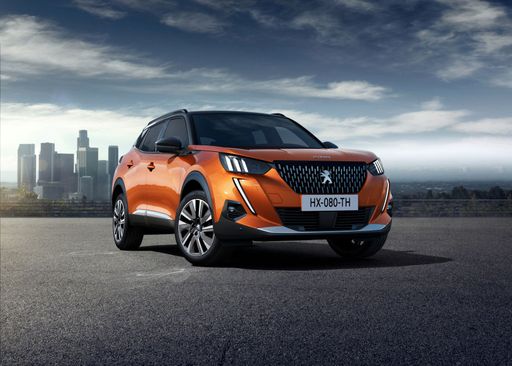
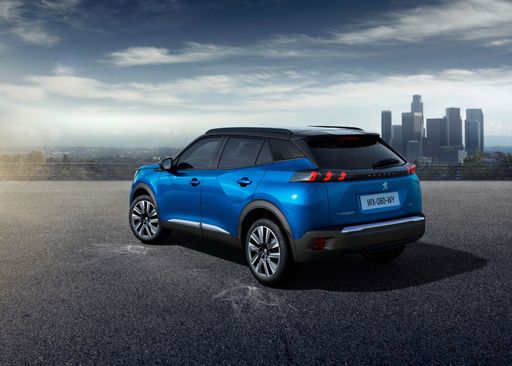
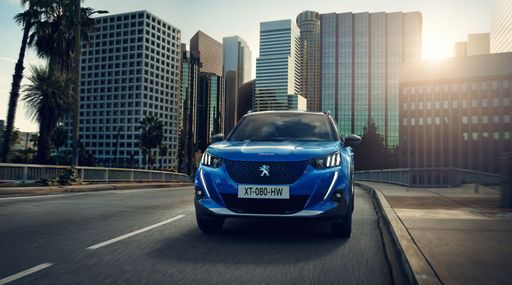
In contrast, the Peugeot 2008 showcases French flair in its design. Slightly longer at 4304 mm and narrower at 1770 mm, the 2008 offers a slightly smaller trunk capacity of 434 liters. It stands lower at 1523 mm, lending it a sportier stance. Both vehicles feature a 5-door setup, accommodating up to five passengers comfortably.

EV3

Performance and Power: Electric Efficiency vs. Versatile Options

The Kia EV3 is an all-electric marvel, offering multiple power outputs up to 204 HP and torque of 283 Nm. The EV3 accelerates from 0-100 km/h in a swift 7.5 to 7.9 seconds, thanks to its front-wheel drive and reduction gearbox transmission. Its top speed caps at 170 km/h. With an electric range spanning 436 to 605 km and battery capacities from 58.3 to 81.4 kWh, it's built for the future.

The Peugeot 2008 provides versatility with its variety of engine options: Petrol MHEV, Petrol, and Electric. Power outputs vary, with the top electric version delivering 156 HP and torque of 260 Nm, achieving 0-100 km/h in 9 seconds. Its maximum speed reaches 150 km/h for the electric variant. The 2008 offers a respectable electric range of 343 to 406 km, with a battery capacity of up to 51 kWh.

2008

Efficiency and Sustainability: Leading the Charge

Committed to sustainability, the Kia EV3 boasts a CO2 efficiency class of A, with zero emissions thanks to its all-electric powertrain. Its consumption ranges from 14.9 to 16.2 kWh/100 km, and the vehicle has no CO2 footprint, making it an eco-friendly choice.

The Peugeot 2008 offers flexibility in its environmental credentials, with the electric variant sharing a CO2 efficiency class of A and zero emissions. However, the petrol versions emit between 113 to 129 g/km of CO2, demonstrating Peugeot's efforts to provide greener options alongside traditional powertrains.

EV3

Innovation and Features: Modern Amenities

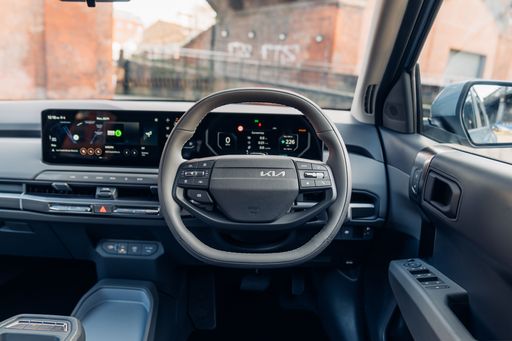
Both the Kia EV3 and Peugeot 2008 are equipped with state-of-the-art features. The EV3 incorporates Kia's latest infotainment and safety technologies, emphasizing a seamless driving experience. Its electric architecture paves the way for innovative driver aids and connectivity features.

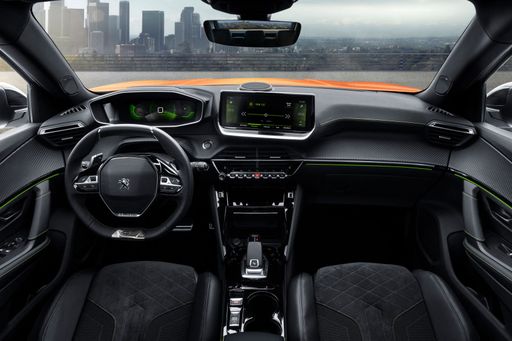
The Peugeot 2008, with its i-Cockpit and advanced driver assistance systems, brings a fresh perspective to driving. Its dual-clutch automatic and manual gearbox allow for varied driving experiences, tailored to diverse preferences.

2008

Conclusion: Different Paths to Modern Mobility

When comparing the Kia EV3 and Peugeot 2008, both vehicles represent distinct paths in the modern SUV market. The EV3 shines as an electric trailblazer, offering impressive range and zero emissions. On the other hand, the 2008 caters to diverse needs with multiple powertrain options, striking a balance between performance and efficiency. Buyers looking for a sustainable electric vehicle might favor the Kia EV3, while those desiring versatility and classic petrol options may find the Peugeot 2008 more appealing.

Here’s where it gets real: The technical differences in detail

EV3

Costs and Efficiency:

When it comes to price and running costs, the biggest differences usually appear. This is often where you see which car fits your budget better in the long run.

Peugeot 2008 is clearly cheaper – starting at 24,800 £ , while the Kia EV3 costs 40,200 £ . That’s a price difference of around 15,420 £.

In terms of energy consumption, the Peugeot 2008 is barely more efficient: consuming 15.3 kWh/100km compared to 15.8 kWh/100km for the Kia EV3. That’s a difference of about 0.5 kWh/100km.

As for electric range, the Kia EV3 offers markedly more range – reaching up to 572 km, about 167 km more than the Peugeot 2008.

2008

Engine and Performance:

Power, torque and acceleration are the classic benchmarks for car enthusiasts – and here, some clear differences start to show.

When it comes to engine power, the Kia EV3 offers clearly more power – delivering 265 HP compared to 156 HP. That’s roughly 109 HP more horsepower.

When accelerating from 0 to 100 km/h, the Kia EV3 is markedly quicker – completing the sprint in 6.6 s, while the Peugeot 2008 takes 8.3 s. That’s about 1.7 s quicker.

There’s also a difference in torque: the Kia EV3 delivers clearly more torque with 385 Nm compared to 270 Nm. That’s about 115 Nm more.

EV3

Space and Everyday Use:

Beyond pure performance, interior space and usability matter most in daily life. This is where you see which car is more practical and versatile.

Both vehicles offer seating for 5 people.

In terms of curb weight, Peugeot 2008 is significantly lighter – 1,263 kg compared to 1,995 kg. The difference is around 732 kg.

Looking at boot space, the Peugeot 2008 offers only slightly more boot space – 434 L compared to 413 L. That’s a difference of about 21 L.

When it comes to payload, the Kia EV3 carries only slightly more – 485 kg compared to 447 kg. That’s a difference of about 38 kg.

Who wins the race in the data check?

The Kia EV3 is clearly ahead overall in the objective data comparison.
This result only shows which model scores more points on paper – not which of the two cars feels right for you.

from £40,200
EV3

Kia EV3

  • Engine Type Electric
  • Transmission Automatic
  • Drive Type All-Wheel Drive
  • Power HP 265 HP
  • Consumption kWh/100km 15.8 kWh/100km
  • Electric Range 572 km
Kia EV3
Peugeot 2008

Costs and Consumption

View detailed analysis

Engine and Performance

View detailed analysis

Dimensions and Body

View detailed analysis

Kia EV3

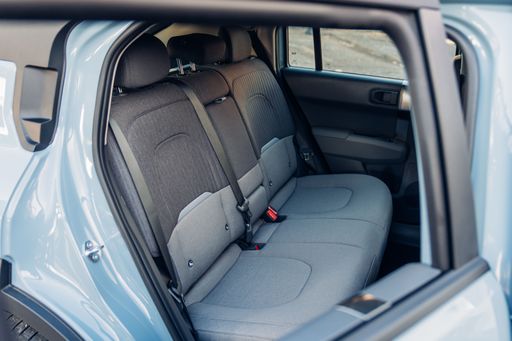
The Kia EV3 is a stylish, user-friendly electric crossover that focuses on practicality and a roomy, well-equipped cabin. It delivers a comfortable ride with intuitive technology and efficient everyday performance, making it a sensible choice for city and family use.

details

Peugeot 2008

The Peugeot 2008 is a compact crossover that blends sharp French styling with a practical, high-riding layout, giving it more presence and versatility than a typical small hatchback. Inside it offers a clever, user-friendly cabin with sensible storage and modern infotainment, while a composed ride and efficient powertrains make it well suited to both city errands and longer journeys.

details
Kia EV3
Peugeot 2008

Costs and Consumption

Price
40,200 - 43,900 £
Price
24,800 - 40,400 £
Consumption L/100km
-
Consumption L/100km
4.9 - 5.7 L/100km
Consumption kWh/100km
15.8 kWh/100km
Consumption kWh/100km
15.3 kWh/100km
Electric Range
572 km
Electric Range
405 km
Battery Capacity
-
Battery Capacity
-
co2
0 g/km
co2
0 - 129 g/km
Fuel tank capacity
-
Fuel tank capacity
-

Dimensions and Body

Body Type
SUV
Body Type
SUV
Seats
5
Seats
5
Doors
-
Doors
-
Curb weight
1,995 kg
Curb weight
1,263 - 1,623 kg
Trunk capacity
413 L
Trunk capacity
434 L
Length
-
Length
-
Width
1,850 mm
Width
1,770 mm
Height
-
Height
-
Max trunk capacity
-
Max trunk capacity
-
Payload
485 kg
Payload
407 - 447 kg

Engine and Performance

Engine Type
Electric
Engine Type
Petrol MHEV, Electric, Petrol
Transmission
Automatic
Transmission
Automatic, Manuel
Transmission Detail
Reduction Gearbox
Transmission Detail
Dual-Clutch Automatic, Reduction Gearbox, Manual Gearbox
Drive Type
All-Wheel Drive
Drive Type
Front-Wheel Drive
Power HP
265 HP
Power HP
101 - 156 HP
Acceleration 0-100km/h
6.6 s
Acceleration 0-100km/h
8.3 - 10.9 s
Max Speed
-
Max Speed
-
Torque
385 Nm
Torque
205 - 270 Nm
Number of Cylinders
-
Number of Cylinders
3
Power kW
195 kW
Power kW
74 - 115 kW
Engine capacity
-
Engine capacity
1,199 cm3

General

Model Year
2026
Model Year
2,025 - 2,026
CO2 Efficiency Class
A
CO2 Efficiency Class
C, A, D
Brand
Kia
Brand
Peugeot
DriveDuel uses data analysis and artificial intelligence to evaluate vehicle data and create content. Content is regularly reviewed and improved. The displayed prices are estimates based on German list prices, adjusted to the respective country’s VAT. Country-specific registration taxes are not included. This information is not legally binding.