VS

Kia EV3 vs Volvo XC40 comparison

Compare performance (204 HP vs 197 HP), boot space and price (30,800 £ vs 36,800 £ ) at a glance. Find out which car is the better choice for you – Kia EV3 or Volvo XC40?

Kia EV3 vs Volvo XC40: Key differences

Kia EV3

4.7 (3 Reviews)
rate
  • a bit cheaper
  • very slightly more power
  • barely quicker 0–100 km/h
  • only slightly more trunk space
details

Volvo XC40

5 (5 Reviews)
rate
  • very slightly lighter
details

All details on performance, efficiency, range and trunk space can be found in the technical comparison below – including user reviews for both models.

By Achim Sedelmaier

EV3

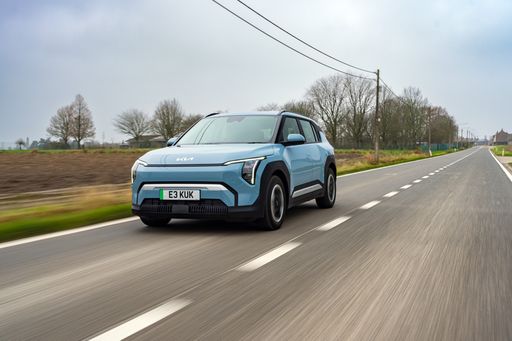
As the automotive industry progressively pivots towards electric mobility, the competition among SUVs in this segment heightens. Today, we delve into a comprehensive comparison of the all-electric Kia EV3 and the hybrid Volvo XC40. While both models boast impressive features, their distinct engineering approaches and innovations present unique advantages for potential buyers.
XC40

Design and Space

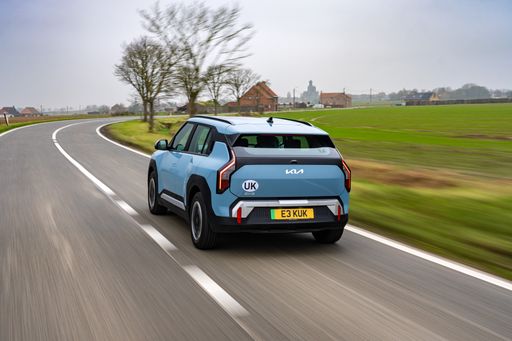
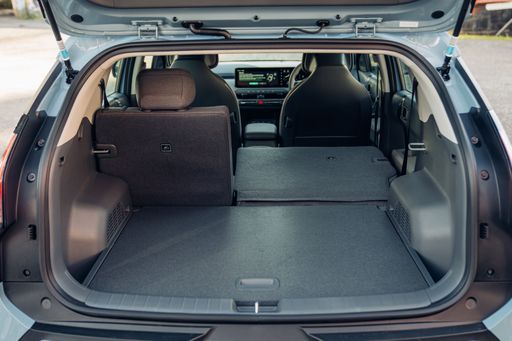
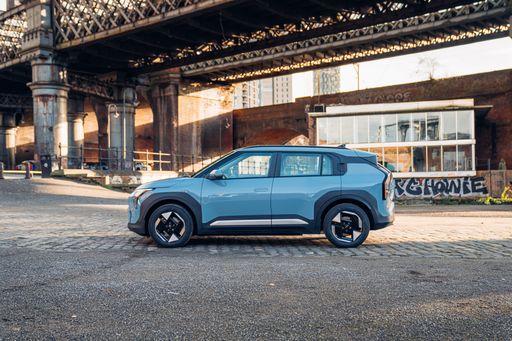
Both the Kia EV3 and the Volvo XC40 fall under the SUV category, offering spacious interiors suited for family use. The Kia EV3 measures 4300 mm in length and stands 1560 mm tall with a width of 1850 mm. With a trunk capacity of 460 liters, it showcases ample storage space, making it a practical choice for everyday needs.

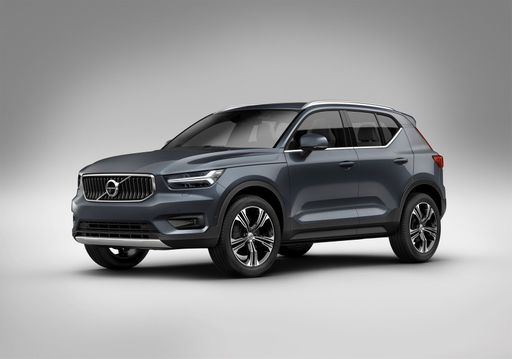
On the other hand, the Volvo XC40 is slightly larger, at 4425 mm long, 1652 mm high, and 1863 mm wide. Its trunk capacity is just a bit larger than that of the EV3, at 452 liters. The additional height and width of the XC40 provide a roomier feel, particularly for rear passengers, which is an essential aspect for family-oriented buyers.

EV3

Power and Performance

Powertrain differentiation is one of the key factors to consider. The Kia EV3 offers an electric powertrain with a peak output of 204 HP (150 kW) and delivers instantaneous torque of 283 Nm. This model achieves remarkable acceleration, going from 0 to 100 km/h in as little as 7.5 seconds, showcasing its spirited performance on urban roads.

Conversely, the Volvo XC40 features a petrol mild-hybrid engine with power outputs ranging from 163 HP (120 kW) to 197 HP (145 kW). This power allows the XC40 to reach 100 km/h in a commendable 7.6 seconds as well. The diesel’s torque figures also peak higher at 300 Nm, translating to robust power delivery during driving.

XC40

Efficiency and Range

When it comes to efficiency, the Kia EV3 clearly excels with an electric range of up to 605 km, depending on battery capacity and conditions. With a consumption of just 14.9 to 16.2 kWh/100 km, the EV3 stands out as a leader in energy efficiency among electric SUVs. Its battery options include 58.3 kWh and 81.4 kWh, allowing buyers to choose according to their range needs.

In comparison, the Volvo XC40’s fuel consumption stands at 6.5 L/100 km, which is commendable for a hybrid SUV. However, its CO2 emissions range from 147 to 148 g/km, positioning it on the lower end of eco-friendliness when compared to the Kia's zero emissions.

EV3

Innovation and Technology

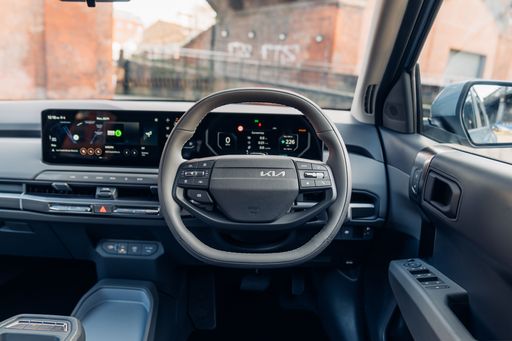
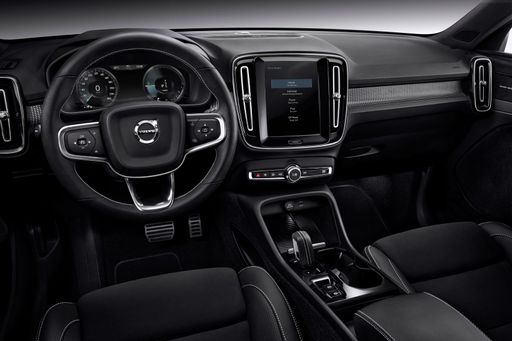
In terms of innovations, the EV3 showcases a futuristic dashboard integrated with advanced infotainment systems, emphasizing connectivity and user-friendly controls. Kia’s ongoing commitment to offering electric vehicle technology includes regenerative braking and vehicle-to-load (V2L) capabilities, providing versatility for users who need power on the go.

On the technology front, the Volvo XC40 is equipped with a comprehensive suite of safety and driver-assist features, stemming from Volvo’s long-standing reputation for safety. The brand excels in offering advanced driver aids such as Pilot Assist and adaptive cruise control, ensuring a secure driving experience.

XC40

Conclusion

The choice between the Kia EV3 and the Volvo XC40 essentially boils down to the buyer's preferences. For those leaning towards sustainability, efficiency, and cutting-edge electric technology, the Kia EV3 emerges as the preferred choice. In contrast, if brand loyalty, luxury, and advanced safety features are priorities, the Volvo XC40 shines in those areas. Both vehicles represent the future of driving, but each caters to distinct lifestyle needs and expectations.

Here’s where it gets real: The technical differences in detail

EV3

Costs and Efficiency:

Price and efficiency are often the first things buyers look at. Here it becomes clear which model has the long-term edge – whether at the pump, the plug, or in purchase price.

Kia EV3 is a bit cheaper – starting at 30,800 £ , while the Volvo XC40 costs 36,800 £ . That’s a price difference of around 5,914 £.

XC40

Engine and Performance:

Power, torque and acceleration are the classic benchmarks for car enthusiasts – and here, some clear differences start to show.

When it comes to engine power, the Kia EV3 offers very slightly more power – delivering 204 HP compared to 197 HP. That’s roughly 7 HP more horsepower.

When accelerating from 0 to 100 km/h, the Kia EV3 is barely quicker – completing the sprint in 7.5 s, while the Volvo XC40 takes 7.6 s. That’s about 0.1 s quicker.

Looking at top speed, the Volvo XC40 is barely faster – reaching 180 km/h, while the Kia EV3 tops out at 170 km/h. The difference is around 10 km/h.

There’s also a difference in torque: the Volvo XC40 delivers only slightly more torque with 300 Nm compared to 283 Nm. That’s about 17 Nm more.

EV3

Space and Everyday Use:

Whether family car or daily driver – which one offers more room, flexibility and comfort?

Both vehicles offer seating for 5 people.

In terms of curb weight, Volvo XC40 is very slightly lighter – 1,688 kg compared to 1,800 kg. The difference is around 112 kg.

Looking at boot space, the Kia EV3 offers only slightly more boot space – 460 L compared to 452 L. That’s a difference of about 8 L.

For maximum load capacity, the Volvo XC40 offers very slightly more capacity – up to 1,328 L, about 77 L more than the Kia EV3.

When it comes to payload, the Volvo XC40 carries slightly more – 532 kg compared to 470 kg. That’s a difference of about 62 kg.

Who wins the race in the data check?

The Kia EV3 is clearly superior overall in the objective data comparison.
This result only shows which model scores more points on paper – not which of the two cars feels right for you.

from £30,800
EV3

Kia EV3

  • Engine Type : Electric
  • Transmission : Automatic
  • Drive Type : Front-Wheel Drive
  • Power HP : 204 HP
  • Consumption kWh/100km : 14.9 - 16.2 kWh/100km
  • Electric Range : 436 - 605 km
Kia EV3
Volvo XC40

Costs and Consumption

View detailed analysis

Engine and Performance

View detailed analysis

Dimensions and Body

View detailed analysis

Kia EV3

The Kia EV3 arrives as a cheeky, practical electric compact that manages to feel both premium and playful, delivering crisp handling and a roomy cabin that's perfect for urban life. With smart tech, friendly styling and sensible pricing, the EV3 is the kind of car that makes switching to electric feel like a no-brainer without asking you to give anything important up.

details

Volvo XC40

The Volvo XC40 wraps Scandinavian minimalism into a compact, city-ready SUV with a premium cabin that feels both practical and grown-up. It will suit buyers who prize safety, clever storage and a composed ride, proving that small dimensions don't mean small personality.

details
Kia EV3
Volvo XC40

Costs and Consumption

Price
30,800 - 41,700 £
Price
36,800 - 47,200 £
Consumption L/100km
-
Consumption L/100km
6.5 L/100km
Consumption kWh/100km
14.9 - 16.2 kWh/100km
Consumption kWh/100km
-
Electric Range
436 - 605 km
Electric Range
-
Battery Capacity
58.3 - 81.4 kWh
Battery Capacity
-
co2
0 g/km
co2
147 - 148 g/km
Fuel tank capacity
-
Fuel tank capacity
54 L

Dimensions and Body

Body Type
SUV
Body Type
SUV
Seats
5
Seats
5
Doors
5
Doors
5
Curb weight
1,800 - 1,885 kg
Curb weight
1,688 kg
Trunk capacity
460 L
Trunk capacity
452 L
Length
4,300 - 4,310 mm
Length
4,425 mm
Width
1,850 mm
Width
1,863 mm
Height
1,560 - 1,570 mm
Height
1,652 mm
Max trunk capacity
1,251 L
Max trunk capacity
1,328 L
Payload
470 kg
Payload
532 kg

Engine and Performance

Engine Type
Electric
Engine Type
Petrol MHEV
Transmission
Automatic
Transmission
Automatic
Transmission Detail
Reduction Gearbox
Transmission Detail
Dual-Clutch Automatic
Drive Type
Front-Wheel Drive
Drive Type
Front-Wheel Drive
Power HP
204 HP
Power HP
163 - 197 HP
Acceleration 0-100km/h
7.5 - 7.9 s
Acceleration 0-100km/h
7.6 - 8.6 s
Max Speed
170 km/h
Max Speed
180 km/h
Torque
283 Nm
Torque
265 - 300 Nm
Number of Cylinders
-
Number of Cylinders
4
Power kW
150 kW
Power kW
120 - 145 kW
Engine capacity
-
Engine capacity
1,969 cm3

General

Model Year
2024
Model Year
2024
CO2 Efficiency Class
A
CO2 Efficiency Class
E
Brand
Kia
Brand
Volvo
DriveDuel uses data analysis and artificial intelligence to evaluate vehicle data and create content. Content is regularly reviewed and improved. The displayed prices are estimates based on German list prices, adjusted to the respective country’s VAT. Country-specific registration taxes are not included. This information is not legally binding.