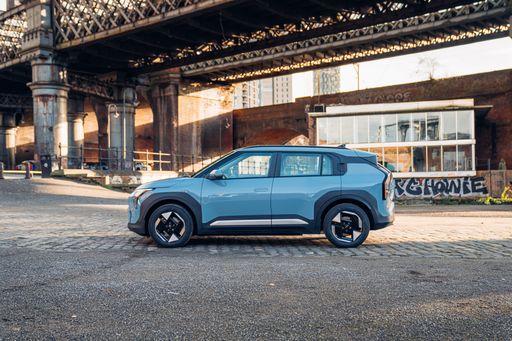
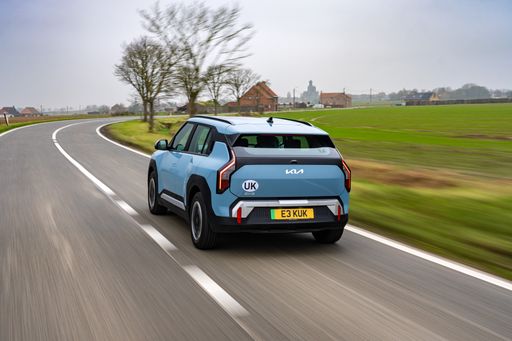
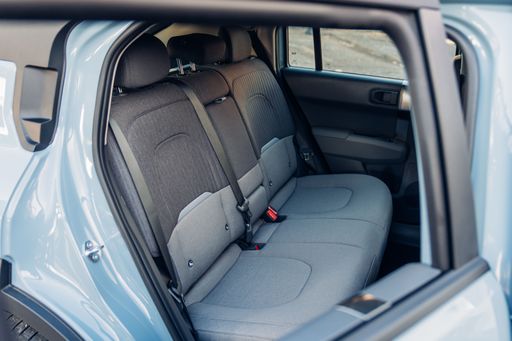
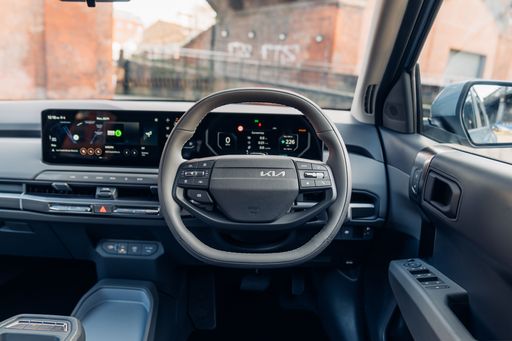
@ Kia Corporation
@ Volkswagen AG / VW Media
VS

Kia EV3 vs VW ID.5 – Which one offers the better deal?

Compare performance, boot capacity, efficiency and price at a glance.
Find out which car is the better choice for you – Kia EV3 or VW ID.5?

EV3 @ Kia Corporation

Battle of the Electric SUVs: Kia EV3 vs. VW ID.5

In the rapidly evolving world of electric SUVs, two models are vying for the attention of eco-conscious drivers: the Kia EV3 and the VW ID.5. Both vehicles promise impressive performance, advanced technology, and sustainable driving—all wrapped in modern, stylish designs. But which one truly stands out? Let's compare these electric contenders on several key points.
ID.5 @ Volkswagen AG / VW Media

Performance and Power

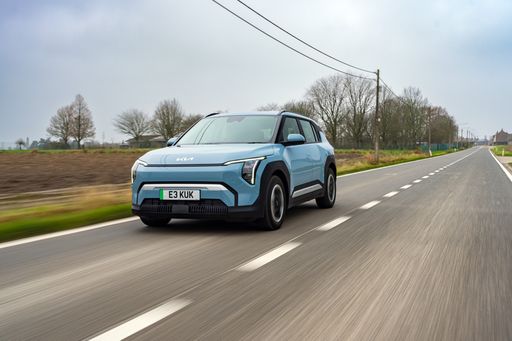
The Kia EV3 is equipped with a single electric motor that delivers 204 horsepower and a torque of 283 Nm, coupled with a reduction gearbox that drives the front wheels. This provides a balanced and efficient urban drive, with an acceleration from 0 to 100 km/h in 7.5 to 7.9 seconds, depending on the variant. The EV3's maximum speed peaks at 170 km/h, offering a solid performance for city and highway conditions.

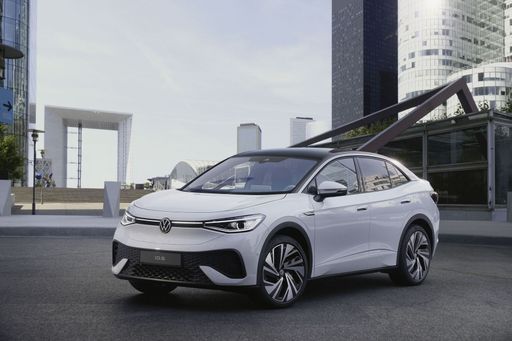
On the other hand, the VW ID.5 offers a broader range of power options, from 170 HP to a robust 340 HP, courtesy of rear-wheel and all-wheel drive systems. The ID.5's top variant accelerates from 0 to 100 km/h in a swift 5.4 seconds, while delivering a top speed of 180 km/h, making it a compelling option for those seeking a more spirited drive.

EV3 @ Kia Corporation

Electric Range and Efficiency

With a battery capacity ranging from 58.3 kWh to 81.4 kWh, the Kia EV3 provides an impressive electric range between 436 km and 605 km. It boasts a consumption rate of just 14.9 to 16.2 kWh per 100 km, positioning it as an efficient choice in its class.

The VW ID.5, with its larger battery sizes ranging from 52 kWh to 79 kWh, offers a slightly varied range of 365 km to 563 km, depending on the chosen configuration. Its energy consumption is marginally higher, between 15.6 and 16.6 kWh/100 km, reflecting its additional power capabilities.

ID.5 @ Volkswagen AG / VW Media

Dimensions and Practicality

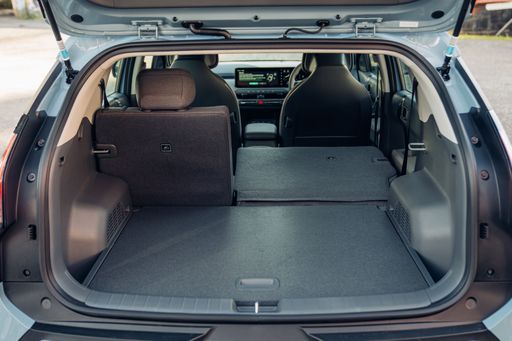
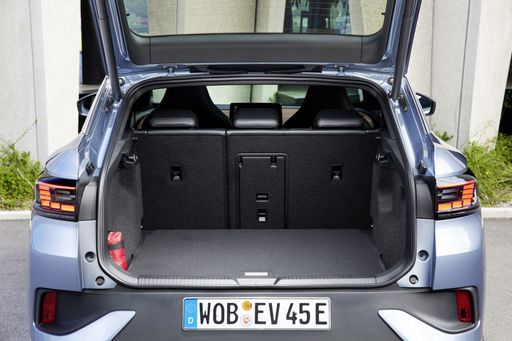
Aimed at family users, both SUVs offer five seats and ample cargo space. The Kia EV3 measures between 4300 mm and 4310 mm in length, with a width of 1850 mm and a height of up to 1570 mm. It provides a trunk capacity of 460 liters, catering adequately to day-to-day stowage needs.

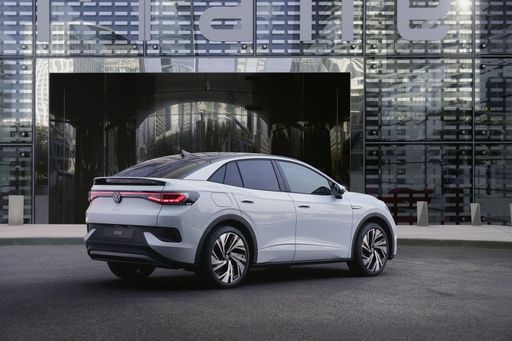
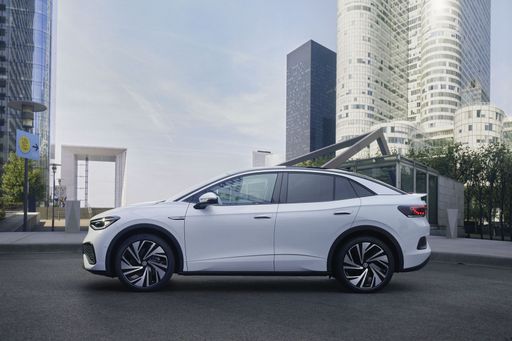
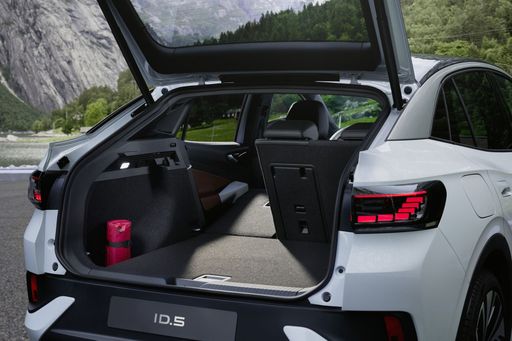
Conversely, the slightly longer VW ID.5 stretches to 4599 mm, with its greater length translating into more boot space, offering 549 liters. The broad width of 1852 mm and varying height from 1601 mm to 1618 mm offer a spacious and comfortable ride.

EV3 @ Kia Corporation

Innovations and Technology

Both vehicles are at the forefront of incorporating the latest automotive technology. The Kia EV3 features advanced driver assistance systems, intuitive infotainment, and connectivity options designed to enhance the driving experience.

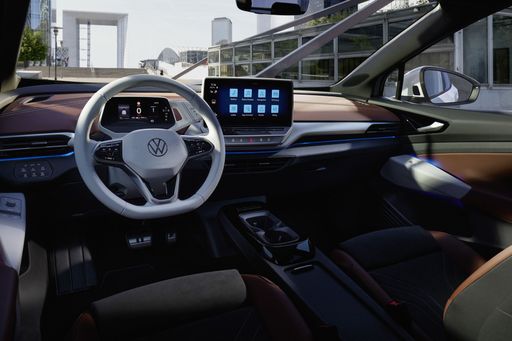
Finding its stride in similar tech-enhanced utility, the VW ID.5 integrates a range of innovations from its comprehensive ID software suite to enhanced safety and autonomous driving capabilities. Its cutting-edge interior and technology reflect VW's commitment to a future-forward driving experience.

ID.5 @ Volkswagen AG / VW Media

The Verdict

In the contest between the Kia EV3 and VW ID.5, preferences will depend largely on driving style and lifestyle needs. The EV3 appeals to those seeking efficient urban mobility combined with substantial range. Meanwhile, the ID.5 shines with its diversity in power options and dynamic performance.

Ultimately, potential buyers have two outstanding options in these electric SUVs, each catering to a specific range of priorities. Whether you choose the sleek and efficient Kia EV3 or the versatile and powerful VW ID.5, both vehicles signify a strong step toward a sustainable automotive future.

Here’s where it gets real: The technical differences in detail

Costs and Efficiency:

Looking at overall running costs, both models reveal some interesting differences in everyday economy.

Kia EV3 has a a bit advantage in terms of price – it starts at 30800 £, while the VW ID.5 costs 36800 £. That’s a price difference of around 5983 £.

In terms of energy consumption, the advantage goes to the Kia EV3: with 14.90 kWh per 100 km, it’s minimal more efficient than the VW ID.5 with 15.70 kWh. That’s a difference of about 0.80 kWh.

As for range, the Kia EV3 performs barely noticeable better – achieving up to 605 km, about 46 km more than the VW ID.5.

Engine and Performance:

Power, torque and acceleration say a lot about how a car feels on the road. This is where you see which model delivers more driving dynamics.

When it comes to engine power, the VW ID.5 has a noticeable edge – offering 340 HP compared to 204 HP. That’s roughly 136 HP more horsepower.

In acceleration from 0 to 100 km/h, the VW ID.5 is evident quicker – completing the sprint in 5.40 s, while the Kia EV3 takes 7.50 s. That’s about 2.10 s faster.

In terms of top speed, the VW ID.5 performs hardly perceptible better – reaching 180 km/h, while the Kia EV3 tops out at 170 km/h. The difference is around 10 km/h.

There’s also a difference in torque: VW ID.5 pulls clearly stronger with 679 Nm compared to 283 Nm. That’s about 396 Nm difference.

Space and Everyday Use:

Beyond pure performance, interior space and usability matter most in daily life. This is where you see which car is more practical and versatile.

Both vehicles offer seating for 5 people.

In curb weight, Kia EV3 is slight lighter – 1800 kg compared to 1963 kg. The difference is around 163 kg.

In terms of boot space, the VW ID.5 offers somewhat more room – 549 L compared to 460 L. That’s a difference of about 89 L.

In maximum load capacity, the VW ID.5 performs somewhat better – up to 1561 L, which is about 310 L more than the Kia EV3.

When it comes to payload, VW ID.5 a bit takes the win – 549 kg compared to 470 kg. That’s a difference of about 79 kg.

Who wins the race?

The VW ID.5 proves to be dominates this comparison and therefore becomes our DriveDuel Champion!
VW ID.5 is the better all-rounder in this comparison.

from about £36,800
ID.5 @ Volkswagen AG / VW Media

VW ID.5

  • Engine Type : Electric
  • Transmission : Automatic
  • Drive Type : Rear-Wheel Drive, All-Wheel Drive
  • Power HP : 170 - 340 HP
  • Consumption kWh/100km : 15.7 - 16.6 kWh
  • Electric Range : 363 - 559 km

Kia EV3

5 (1)
rate

The Kia EV3 arrives as a cheeky, practical electric compact that manages to feel both premium and playful, delivering crisp handling and a roomy cabin that's perfect for urban life. With smart tech, friendly styling and sensible pricing, the EV3 is the kind of car that makes switching to electric feel like a no-brainer without asking you to give anything important up.

details

VW ID.5

VW ID.5 dresses electric power in a sleek, coupe-like profile that turns sensible motoring into something a touch more stylish and smug. Inside it’s spacious and user-friendly, with calm, confidence-inspiring driving that suits buyers who want EV simplicity without the sci‑fi theatrics.

details
Kia EV3
VW ID.5
EV3 @ Kia Corporation
ID.5 @ Volkswagen AG / VW Media

Costs and Consumption

Price
30800 - 41700 £
Price
36800 - 48400 £
Consumption L/100km
-
Consumption L/100km
-
Consumption kWh/100km
14.9 - 16.2 kWh
Consumption kWh/100km
15.7 - 16.6 kWh
Electric Range
436 - 605 km
Electric Range
363 - 559 km
Battery Capacity
58.3 - 81.4 kWh
Battery Capacity
52 - 79 kWh
co2
0 g/km
co2
0 g/km
Fuel tank capacity
-
Fuel tank capacity
-

Dimensions and Body

Body Type
SUV
Body Type
SUV
Seats
5
Seats
5
Doors
5
Doors
5
Curb weight
1800 - 1885 kg
Curb weight
1963 - 2233 kg
Trunk capacity
460 L
Trunk capacity
549 L
Length
4300 - 4310 mm
Length
4582 - 4599 mm
Width
1850 mm
Width
1852 mm
Height
1560 - 1570 mm
Height
1601 - 1618 mm
Max trunk capacity
1251 L
Max trunk capacity
1561 L
Payload
470 kg
Payload
517 - 549 kg

Engine and Performance

Engine Type
Electric
Engine Type
Electric
Transmission
Automatic
Transmission
Automatic
Transmission Detail
Reduction Gearbox
Transmission Detail
Reduction Gearbox
Drive Type
Front-Wheel Drive
Drive Type
Rear-Wheel Drive, All-Wheel Drive
Power HP
204 HP
Power HP
170 - 340 HP
Acceleration 0-100km/h
7.5 - 7.9 s
Acceleration 0-100km/h
5.4 - 8.9 s
Max Speed
170 km/h
Max Speed
160 - 180 km/h
Torque
283 Nm
Torque
310 - 679 Nm
Number of Cylinders
-
Number of Cylinders
-
Power kW
150 kW
Power kW
125 - 250 kW
Engine capacity
-
Engine capacity
-

General

Model Year
2024
Model Year
2024 - 2025
CO2 Efficiency Class
A
CO2 Efficiency Class
A
Brand
Kia
Brand
VW
What drive types are available for the Kia EV3?

The Kia EV3 is offered with Front-Wheel Drive.

The prices and data displayed are estimates based on German list prices and may vary by country. This information is not legally binding.