VS

Kia Niro vs Hyundai Bayon comparison

Compare performance (138 HP vs 90 HP), boot space and price (29,100 £ vs 20,500 £ ) at a glance. Find out which car is the better choice for you – Kia Niro or Hyundai Bayon?

Kia Niro vs Hyundai Bayon: Key differences

Kia Niro

4.5 (3 Reviews)
rate
  • clearly more power
  • clearly more efficient
  • very slightly quicker 0–100 km/h
  • barely more trunk space
details

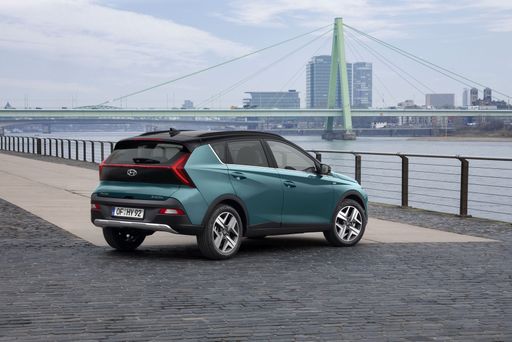
Hyundai Bayon

4.4 (2 Reviews)
rate
  • substantially cheaper
  • clearly lighter
details

All details on performance, efficiency, range and trunk space can be found in the technical comparison below – including user reviews for both models.

By Achim Sedelmaier

Niro

A Battle of Innovation: Hyundai Bayon vs. Kia Niro

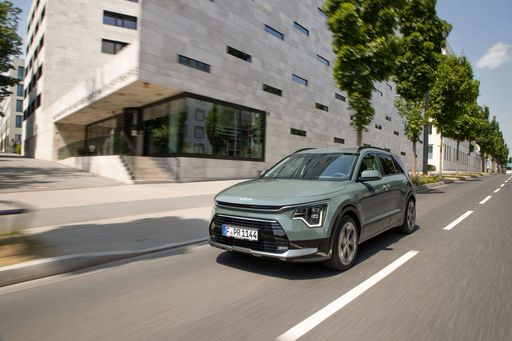
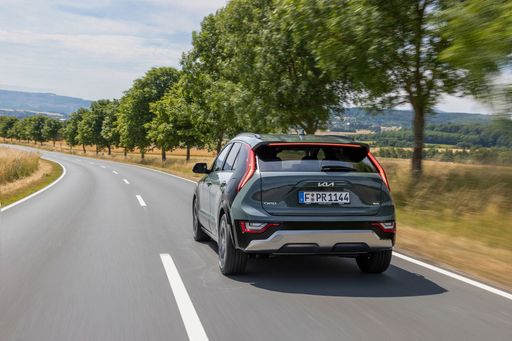
In the competitive world of compact SUVs, the Hyundai Bayon and Kia Niro have emerged as front-runners, each boasting a unique blend of practicality, efficiency, and cutting-edge technology. As they cater to the modern driver’s needs, we delve into a detailed comparison of these two dynamic vehicles, examining their technical specifications and innovative features.
Bayon

Powertrain & Performance

The Hyundai Bayon is equipped with a 1.0-liter three-cylinder petrol engine that delivers a respectable 100 HP and 172 Nm of torque. Available with both manual and dual-clutch automatic transmissions, it offers a smooth driving experience, achieving acceleration from 0-100 km/h in approximately 11.3 seconds. With a top speed of 179 km/h and fuel consumption rated at 5.4 L/100km, the Bayon balances power and efficiency admirably.

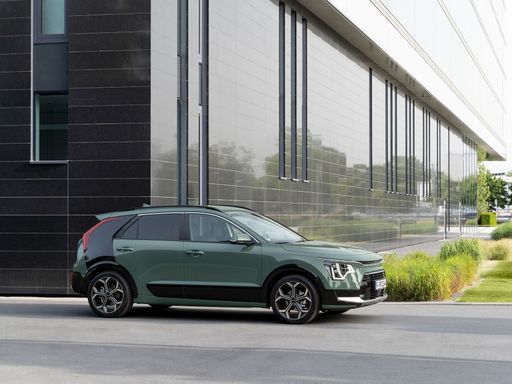
On the other hand, the Kia Niro takes the hybrid approach with two engine options: a full hybrid and a plug-in hybrid. The full hybrid configuration generates 129 HP with a torque of 265 Nm, while the plug-in version cranks out up to 171 HP. Regardless of the choice, the Niro stands out with its impressive fuel efficiency, featuring consumption figures as low as 4.4 L/100km for its hybrid model and an astonishing 1 L/100km in electric mode. The Niro's acceleration is equally promising, clocking in at around 11.3 seconds for the hybrid while achieving 10.4 seconds for the plug-in hybrid variant.

Niro

Dimensions & Practicality

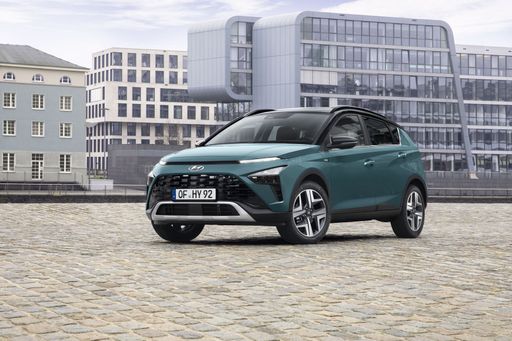
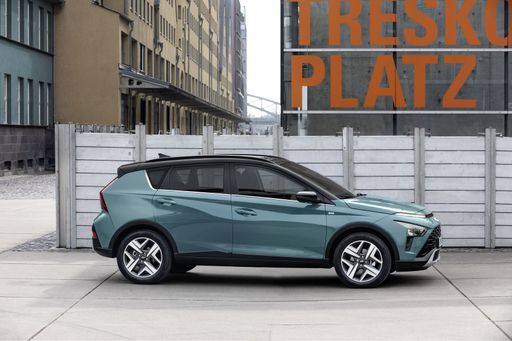
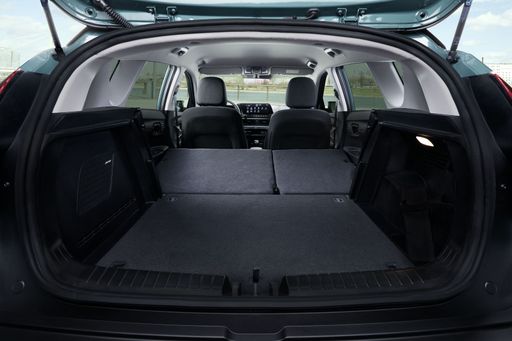
When it comes to size, the Hyundai Bayon measures 4180 mm in length and 1775 mm in width, with a height of 1500 mm. It offers a spacious interior accommodating five passengers comfortably, alongside a trunk capacity of 411 liters—ideal for daily groceries or weekend getaways. Curb weight for the Bayon is a manageable 1170 kg, making it nimble and easy to handle in urban environments.

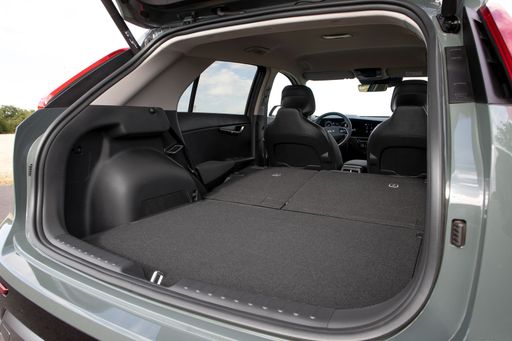
The Kia Niro is slightly larger at 4420 mm in length and 1825 mm in width, standing at a height of 1545 mm. With a trunk space of 451 liters, it affords a bit more utility than the Bayon, while still providing seating for five. However, its curb weight ranges from 1474 kg to 1594 kg depending on the model and battery configuration, making it a bit heavier compared to its Hyundai counterpart.

Bayon

Technological Innovations

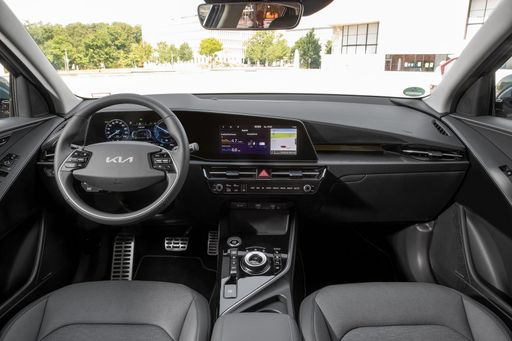
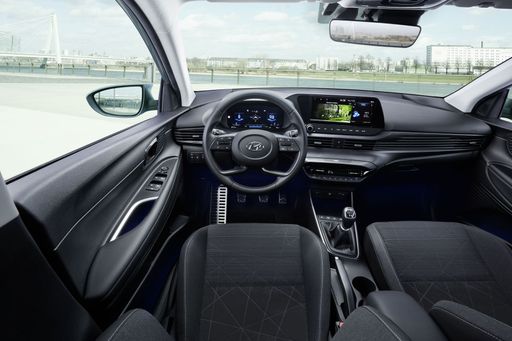
Both vehicles come equipped with a plethora of technological advancements that enhance the driving experience. The Bayon features a host of driver-assistance systems and a user-friendly infotainment system, designed for maximum connectivity and convenience. The spacious cabin is complemented with an intuitive touchscreen display, integrating seamlessly with smartphones for navigation and entertainment.

The Kia Niro, showcasing its commitment to sustainability, incorporates advanced eco-friendly technologies. Its hybrid system utilizes regenerative braking to power the battery while driving, granting an electric range of up to 65 km. Additionally, the Kia Connect app enhances user interaction with the vehicle, offering remote access to various functions, setting it apart in the tech-savvy market.

Niro

Conclusion: Which One to Choose?

In conclusion, the choice between the Hyundai Bayon and Kia Niro narrows down to individual needs and preferences. The Bayon provides a spirited petrol-driven experience with ample space and efficiency. In contrast, the Kia Niro champions hybrid technology, offering superior fuel economy and electric capabilities, catering to environmentally conscious consumers.

Ultimately, both vehicles represent their brands with pride, showcasing innovation and practicality suitable for modern lifestyles. Whether you prioritize performance or a commitment to greener driving, both the Hyundai Bayon and Kia Niro have something noteworthy to offer.

Here’s where it gets real: The technical differences in detail

Niro

Costs and Efficiency:

When it comes to price and running costs, the biggest differences usually appear. This is often where you see which car fits your budget better in the long run.

Hyundai Bayon is substantially cheaper – starting at 20,500 £ , while the Kia Niro costs 29,100 £ . That’s a price difference of around 8,649 £.

Fuel consumption also shows a difference: the Kia Niro uses 4.5 L/100km and is clearly more efficient than the Hyundai Bayon with 5.8 L/100km. The difference is about 1.3 L/100km.

Bayon

Engine and Performance:

Under the bonnet, it becomes clear which model is tuned for sportiness and which one takes the lead when you hit the accelerator.

When it comes to engine power, the Kia Niro offers clearly more power – delivering 138 HP compared to 90 HP. That’s roughly 48 HP more horsepower.

When accelerating from 0 to 100 km/h, the Kia Niro is very slightly quicker – completing the sprint in 11.1 s, while the Hyundai Bayon takes 11.9 s. That’s about 0.8 s quicker.

There’s also a difference in torque: the Kia Niro delivers visibly more torque with 265 Nm compared to 172 Nm. That’s about 93 Nm more.

Niro

Space and Everyday Use:

Cabin size, boot volume and payload all play a role in everyday practicality. Here, comfort and flexibility make the difference.

Both vehicles offer seating for 5 people.

In terms of curb weight, Hyundai Bayon is clearly lighter – 1,175 kg compared to 1,474 kg. The difference is around 299 kg.

Looking at boot space, the Kia Niro offers barely more boot space – 451 L compared to 411 L. That’s a difference of about 40 L.

When it comes to payload, the Kia Niro carries very slightly more – 466 kg compared to 460 kg. That’s a difference of about 6 kg.

Who wins the race in the data check?

The Kia Niro is decisively ahead in the objective data comparison.
This result only shows which model scores more points on paper – not which of the two cars feels right for you.

from £29,100
Niro

Kia Niro

  • Engine Type Full Hybrid
  • Transmission Automatic
  • Drive Type Front-Wheel Drive
  • Power HP 138 HP
  • Consumption L/100km 4.5 - 4.9 L/100km
Kia Niro
Hyundai Bayon

Costs and Consumption

View detailed analysis

Engine and Performance

View detailed analysis

Dimensions and Body

View detailed analysis

Kia Niro

The Kia Niro is a practical crossover that blends economy and everyday versatility without sacrificing comfort. With a roomy, well-laid-out cabin and calm, composed handling, it’s an easy-to-live-with choice for commuters and families.

details

Hyundai Bayon

The Hyundai Bayon slips neatly between city runabout and small SUV, offering surprising practicality and a fresh, confident design that stands out in urban traffic. It's an easy buy for shoppers who want smart packaging, tidy handling and a dash of personality without fuss — a sensible little crossover that makes everyday driving a bit more enjoyable.

details
Kia Niro
Hyundai Bayon

Costs and Consumption

Price
29,100 - 33,800 £
Price
20,500 - 26,200 £
Consumption L/100km
4.5 - 4.9 L/100km
Consumption L/100km
5.8 L/100km
Consumption kWh/100km
-
Consumption kWh/100km
-
Electric Range
-
Electric Range
-
Battery Capacity
-
Battery Capacity
-
co2
102 - 111 g/km
co2
130 - 132 g/km
Fuel tank capacity
-
Fuel tank capacity
-

Dimensions and Body

Body Type
SUV
Body Type
SUV
Seats
5
Seats
5
Doors
-
Doors
-
Curb weight
1,474 kg
Curb weight
1,175 - 1,200 kg
Trunk capacity
451 L
Trunk capacity
411 L
Length
-
Length
-
Width
1,825 mm
Width
1,775 mm
Height
-
Height
-
Max trunk capacity
-
Max trunk capacity
-
Payload
466 kg
Payload
450 - 460 kg

Engine and Performance

Engine Type
Full Hybrid
Engine Type
Petrol
Transmission
Automatic
Transmission
Manuel, Automatic
Transmission Detail
Dual-Clutch Automatic
Transmission Detail
Manual Gearbox, Dual-Clutch Automatic
Drive Type
Front-Wheel Drive
Drive Type
Front-Wheel Drive
Power HP
138 HP
Power HP
90 HP
Acceleration 0-100km/h
11.1 - 11.4 s
Acceleration 0-100km/h
11.9 - 13.3 s
Max Speed
-
Max Speed
-
Torque
265 Nm
Torque
172 Nm
Number of Cylinders
4
Number of Cylinders
3
Power kW
102 kW
Power kW
66 kW
Engine capacity
1,580 cm3
Engine capacity
998 cm3

General

Model Year
2025
Model Year
2025
CO2 Efficiency Class
C
CO2 Efficiency Class
D
Brand
Kia
Brand
Hyundai
DriveDuel uses data analysis and artificial intelligence to evaluate vehicle data and create content. Content is regularly reviewed and improved. The displayed prices are estimates based on German list prices, adjusted to the respective country’s VAT. Country-specific registration taxes are not included. This information is not legally binding.