VS

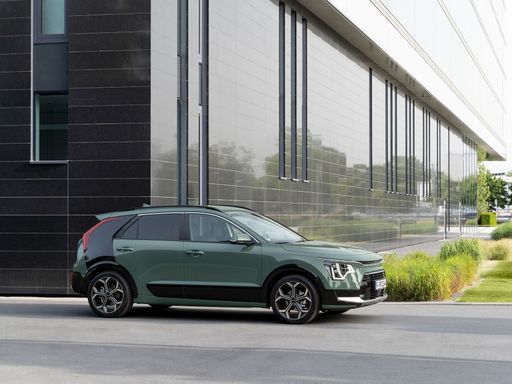
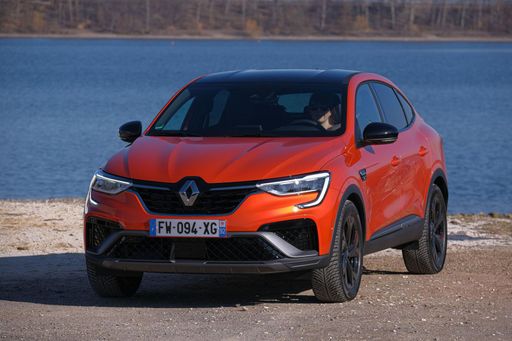
Kia Niro vs Renault Arkana comparison

Compare performance (138 HP vs 143 HP), boot space and price (29100 £ vs 28500 £ ) at a glance. Find out which car is the better choice for you – Kia Niro or Renault Arkana?

Niro

Exploring the Waves of Innovation: Kia Niro vs. Renault Arkana

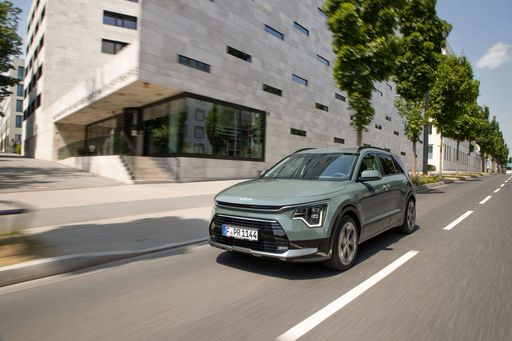
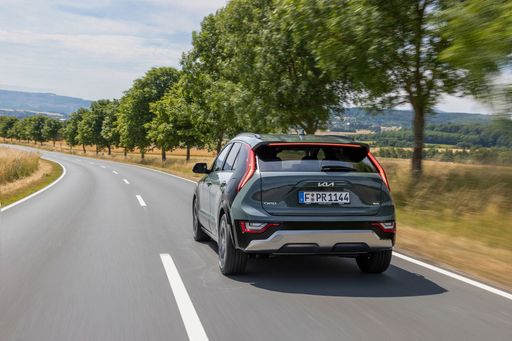
In the realm of compact SUVs, both Kia and Renault are redefining expectations with their models—the Kia Niro and the Renault Arkana. Each vehicle brings unique features and cutting-edge technology to the table, making them both appealing options for modern drivers. In this article, we'll delve into the technical specifications and innovative aspects that set these two contenders apart.
Arkana

Design and Dimensions

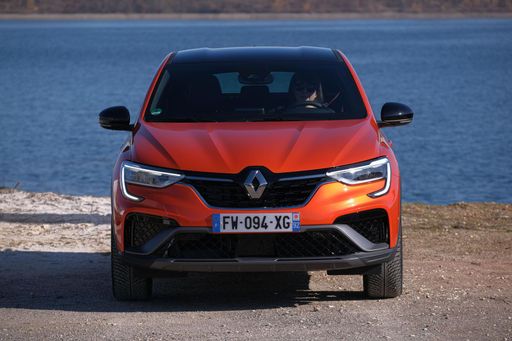
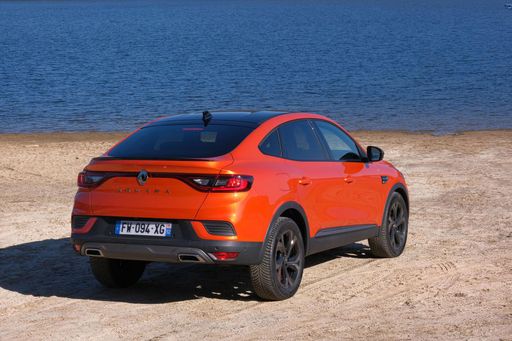
The Kia Niro, with a length of 4420 mm, a width of 1825 mm, and a height of 1545 mm, presents a balanced and compact profile suitable for urban commuting. In contrast, the Renault Arkana offers a slightly larger build, measuring 4568 mm in length, 1821 mm in width, and 1576 mm in height, providing a more spacious interior without sacrificing its sleeker, coupe-like design.

Niro

Performance and Power Train

Under the hood, both the Kia Niro and the Renault Arkana offer hybrid variants that cater to environmentally conscious consumers. The Kia Niro presents options between a Full Hybrid and a Plugin Hybrid, with power outputs ranging from 129 to 171 HP, and an impressive electric range of up to 65 km. The torque peaks at 265 Nm, complemented by a smooth dual-clutch automatic transmission.

The Renault Arkana counters with up to 158 HP available in its hybrid and mild hybrid variants, coupled with a torque range of up to 270 Nm. The Arkana’s performance is just as efficient, showcasing a slightly quicker acceleration capability with its fastest time of 9.1 seconds to reach 100 km/h.

Arkana

Efficiency and Environmental Concerns

Fuel efficiency is a strong suit for both models. The Kia Niro's consumption ranges from 4.4 to an exceptional 0.8 L/100 km for the Plugin Hybrid variant. The Renault Arkana, with a marginally higher consumption of 4.7 to 6 L/100 km, balances performance with emission sensitivity.

In terms of CO2 emissions, the Niro achieves impressive figures of just 19 to 23 g/km for its Plugin Hybrid version, while Arkana maintains a respectable range from 106 to 135 g/km. Both vehicles demonstrate compliance with CO2 efficiency classes, being an eco-efficient choice in the SUV segment.

Niro

Interior and Practicality

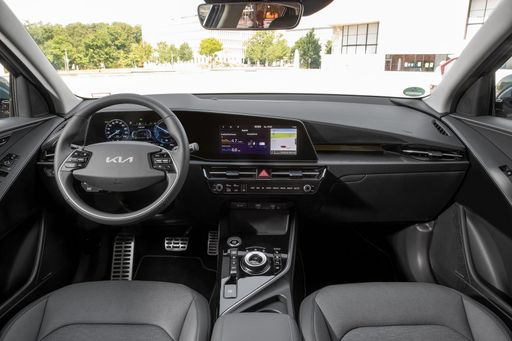
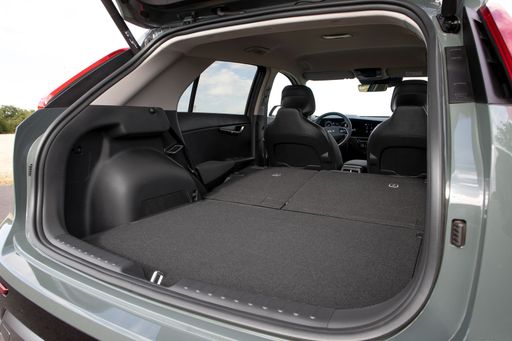
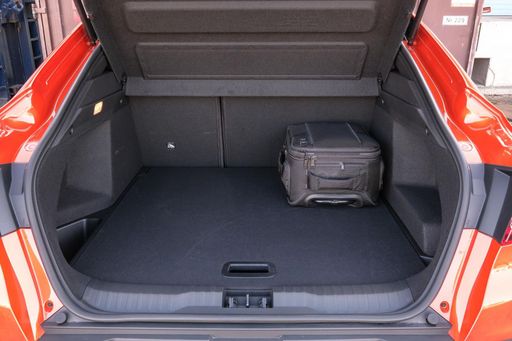
Inside, the Kia Niro comfortably seats five passengers, offering a trunk capacity of 451 liters, which maximizes utility without compromising rear-seat comfort. Meanwhile, the Renault Arkana enhances practicality with a larger trunk capacity, offering between 480 to 513 liters, tailoring to those who require more cargo space.

Arkana

Safety and Technology

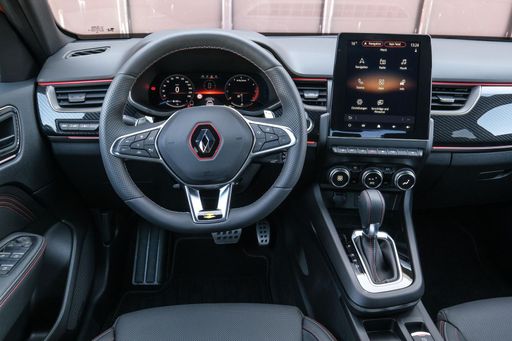
Both the Niro and Arkana are equipped with state-of-the-art safety features and technology to enhance driving experiences and overall vehicle safety. From advanced driver-assistance systems to infotainment features that keep drivers connected, each model incorporates the best of modern automotive innovation.

Niro

Conclusion: A Choice Between Innovation and Practicality

Making a choice between the Kia Niro and the Renault Arkana ultimately comes down to personal preference and specific needs. The Niro, with its advanced hybrid technology and commendable electric range, is ideal for those prioritizing eco-friendliness and compact design. On the other hand, the Arkana appeals to buyers who need a slightly larger vehicle with substantial cargo space and efficient performance. Both vehicles stand out in the crowded SUV market by catering to diverse but distinctive customer demands.

Kia Niro vs Renault Arkana: Key differences

Kia Niro

5 (1 Reviews)
rate
  • hardly perceptible more efficient
  • barely noticeable lighter

Renault Arkana

3.8 (6 Reviews)
rate
  • minimal cheaper
  • minimal more power
  • barely noticeable quicker from 0–100 km/h
Customer feedback generally presents the Arkana as an economical, stylish and practical family crossover that suits everyday needs. Owners often praise its fuel economy, space and safety, while noting it isn’t a sporty coupe; a few reports of serious mechanical issues and costly repairs also appear. Opinions are mixed enough that broader reliability trends aren’t fully clear from the available comments.

All details on performance, efficiency, range and trunk space can be found in the technical comparison below – including user reviews for both models.

Here’s where it gets real: The technical differences in detail

Arkana

Costs and Efficiency:

When it comes to price and running costs, the biggest differences usually appear. This is often where you see which car fits your budget better in the long run.

Renault Arkana has a minimal advantage in terms of price – it starts at 28500 £ , while the Kia Niro costs 29100 £ . That’s a price difference of around 677 £.

Fuel consumption also shows a difference: Kia Niro manages with 4.50 L and is therefore hardly perceptible more efficient than the Renault Arkana with 4.70 L. The difference is about 0.20 L per 100 km.

Niro

Engine and Performance:

Under the bonnet, it becomes clear which model is tuned for sportiness and which one takes the lead when you hit the accelerator.

When it comes to engine power, the Renault Arkana has a minimal edge – offering 143 HP compared to 138 HP. That’s roughly 5 HP more horsepower.

In acceleration from 0 to 100 km/h, the Renault Arkana is barely noticeable quicker – completing the sprint in 10.80 s, while the Kia Niro takes 11.10 s. That’s about 0.30 s faster.

There’s also a difference in torque: Kia Niro pulls distinct stronger with 265 Nm compared to 205 Nm. That’s about 60 Nm difference.

Arkana

Space and Everyday Use:

Cabin size, boot volume and payload all play a role in everyday practicality. Here, comfort and flexibility make the difference.

Both vehicles offer seating for 5 people.

In curb weight, Kia Niro is barely noticeable lighter – 1474 kg compared to 1510 kg. The difference is around 36 kg.

When it comes to payload, Kia Niro minimal takes the win – 466 kg compared to 451 kg. That’s a difference of about 15 kg.

Who wins the race in the data check?

The Kia Niro comes out modestly ahead in the objective data comparison.
This result only shows which model scores more points on paper – not which of the two cars feels right for you.

Kia Niro
Renault Arkana

Costs and Consumption

View detailed analysis

Engine and Performance

View detailed analysis

Dimensions and Body

View detailed analysis
from about £29,100
Niro

Kia Niro

  • Engine Type : Full Hybrid
  • Transmission : Automatic
  • Drive Type : Front-Wheel Drive
  • Power HP : 138 HP
  • Consumption L/100km : 4.5 - 4.9 L

Kia Niro

5 (1 Reviews)
rate

The Kia Niro blends clever packaging and modern styling into a compact crossover that’s refreshingly sensible for daily life. It’s comfortable, economical and packed with user‑friendly tech, so if you want a fuss‑free family car with a touch of green credibility, the Niro is worth a test drive.

details

Renault Arkana

3.8 (6 Reviews)
rate

The Arkana stands out with its striking coupe-SUV design, blending sporty aesthetics with practicality. Its bold silhouette and high ride height offer a unique presence on the road, attracting attention wherever it goes. Inside, the Arkana combines modern technology with comfort, making it a versatile choice for both city driving and weekend getaways.

details
Kia Niro
Renault Arkana

Costs and Consumption

Price
29100 - 33800 £
Price
28500 - 31900 £
Consumption L/100km
4.5 - 4.9 L
Consumption L/100km
4.70 L
Consumption kWh/100km
-
Consumption kWh/100km
-
Electric Range
-
Electric Range
-
Battery Capacity
-
Battery Capacity
-
co2
102 - 111 g/km
co2
106 g/km
Fuel tank capacity
-
Fuel tank capacity
-

Dimensions and Body

Body Type
SUV
Body Type
SUV
Seats
5
Seats
5
Doors
-
Doors
-
Curb weight
1474 kg
Curb weight
1510 kg
Trunk capacity
-
Trunk capacity
-
Length
-
Length
-
Width
1825 mm
Width
1821 mm
Height
-
Height
-
Max trunk capacity
-
Max trunk capacity
-
Payload
466 kg
Payload
451 kg

Engine and Performance

Engine Type
Full Hybrid
Engine Type
Full Hybrid
Transmission
Automatic
Transmission
Automatic
Transmission Detail
Dual-Clutch Automatic
Transmission Detail
Automatic Gearbox
Drive Type
Front-Wheel Drive
Drive Type
Front-Wheel Drive
Power HP
138 HP
Power HP
143 HP
Acceleration 0-100km/h
11.1 - 11.4 s
Acceleration 0-100km/h
10.80 s
Max Speed
-
Max Speed
-
Torque
265 Nm
Torque
205 Nm
Number of Cylinders
4
Number of Cylinders
4
Power kW
102 kW
Power kW
105 kW
Engine capacity
1580 cm3
Engine capacity
1598 cm3

General

Model Year
2025
Model Year
2025
CO2 Efficiency Class
C
CO2 Efficiency Class
C
Brand
Kia
Brand
Renault
Is the Kia Niro offered with different drivetrains?

The Kia Niro is available as Front-Wheel Drive.

The prices shown are estimates based on German list prices, adjusted for local VAT. Local registration taxes (e.g. NoVA, BPM or CO2 malus) are not included. This information is not legally binding.