VS

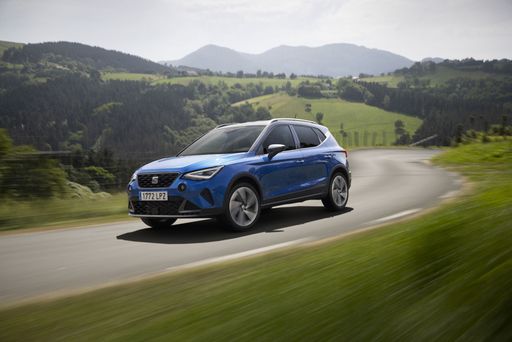
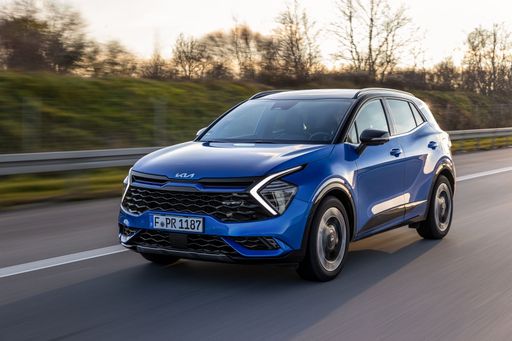
Kia Sportage vs SEAT Arona comparison

Compare performance (288 HP vs 150 HP), boot space and price (29,100 £ vs 20,700 £ ) at a glance. Find out which car is the better choice for you – Kia Sportage or SEAT Arona?

Kia Sportage vs SEAT Arona: Key differences

Kia Sportage

5 (4 Reviews)
rate
  • considerably more power
  • clearly more efficient
  • slightly quicker 0–100 km/h
  • visibly more trunk space
details

SEAT Arona

4.8 (6 Reviews)
rate
  • substantially cheaper
  • visibly lighter
details

All details on performance, efficiency, range and trunk space can be found in the technical comparison below – including user reviews for both models.

By Achim Sedelmaier

Sportage

Quick take: Kia Sportage VS SEAT Arona

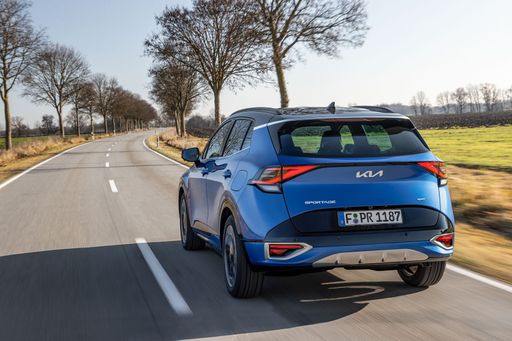
Kia Sportage VS SEAT Arona sets up a straightforward contrast between a roomy, long‑distance compact SUV and a compact, city‑tuned crossover. The Kia Sportage leans into interior space, long‑haul calm and family‑friendly practicality, while the SEAT Arona trades bulk for agility, simpler ergonomics and lower running costs. That creates a classic trade‑off: the Sportage aims to be a composed all‑rounder for miles and passengers, the Arona prioritises easy urban use and a more engaging drive. Below we break down how those differences feel every day, who they suit and where the compromises matter most.
Arona

Comfort and long‑distance behaviour

On long runs the Kia Sportage feels like the more relaxed companion, smoothing miles with a hushed, composed character that reduces fatigue on long drives. The SEAT Arona is firmer and more alert — it rewards twisty stretches and city-to-country responsiveness but lets road and wind noise through sooner at sustained speeds. If you routinely carry passengers over motorways the Sportage will be noticeably kinder to backs and ears; if your priority is a tauter, more connected feel for shorter trips the Arona will please. Both cars have their caveats — the Sportage can be firmer on coarse surfaces with larger wheels, and the Arona’s firmness becomes more obvious at highway pace — so trim and wheel choice matter.

Sportage

City friendliness and everyday usability

In town the SEAT Arona is the easier companion: its compact footprint, direct steering and straightforward controls make parking and low‑speed manoeuvres painless. The Kia Sportage gives a more comfortable vantage point and helpful driver aids, but its larger body and chunky rear pillars mean you’ll rely on cameras more when squeezing into tight spaces. For pure urban use and single‑driver life the Arona’s lightness and predictable controls will feel less fussy, whereas the Sportage suits buyers who want confidence on busy roads and occasional motorway comfort. If your life is split between city commutes and regular A‑road or motorway runs, the Sportage’s motorway composure offsets its city compromises, while the Arona shines for tight‑space convenience.

Arona

Practicality and day‑to‑day cargo use

The Kia Sportage is the pragmatic pick for anyone who needs genuine load space and flexible rear seating — its boot and split‑seat layout make bulky items and family kit easier to live with. The SEAT Arona provides a well‑shaped, usable load area for groceries and weekend bags, but the narrower hold and higher lip make heavy or awkward loads trickier to handle. Families or active buyers who carry strollers, sports gear or luggage regularly will appreciate the Sportage’s extra usability, while buyers with modest cargo needs and tighter parking will prefer the Arona’s compact convenience. Neither car becomes a people‑carrier, but the Sportage clearly leans toward cargo versatility and the Arona toward city practicality.

Sportage

Cabin feel, tech and ergonomics

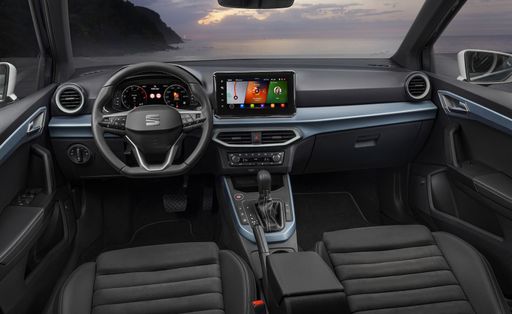
Inside, the Kia Sportage pushes toward a more premium atmosphere with softer surfaces and a roomier layout, yet some modern touch‑centric controls demand patience and a short learning curve. The SEAT Arona keeps the interface simple and tactile where it counts, pairing physical controls with reliable wireless phone integration that feels reassuring day to day. If perceived quality, a quieter cabin and a slightly more mature presentation matter to you, the Sportage will impress; if you value immediate ergonomics, straightforward menus and lower complexity the Arona wins in everyday usability. In short, Sportage trades simplicity for refinement, Arona trades some polish for clarity and lower cost.

Arona

Which buyer each car suits — clear trade‑offs

Choose the Kia Sportage if your priorities are rear‑seat space, relaxed long‑distance comfort and a family‑minded, well‑equipped vehicle that feels substantial on the road. Opt for the SEAT Arona if you want a nimble, affordable B‑SUV that’s easy to park, economical for daily urban use and pleasantly direct to drive. Both models fit different lifestyles: Sportage favours families and regular motorway miles, Arona suits city dwellers, commuters and budget‑aware buyers who value agility. Read on to the technical comparison to see how engines, economy, dimensions and safety kit underpin these everyday differences when the numbers meet real roads.

Here’s where it gets real: The technical differences in detail

Sportage

Costs and Efficiency:

Price and efficiency are key factors when choosing a car – and this is often where the real differences emerge.

SEAT Arona is substantially cheaper – starting at 20,700 £ , while the Kia Sportage costs 29,100 £ . That’s a price difference of around 8,434 £.

Fuel consumption also shows a difference: the Kia Sportage uses 2.9 L/100km and is clearly more efficient than the SEAT Arona with 5.3 L/100km. The difference is about 2.4 L/100km.

Arona

Engine and Performance:

Under the bonnet, it becomes clear which model is tuned for sportiness and which one takes the lead when you hit the accelerator.

When it comes to engine power, the Kia Sportage offers considerably more power – delivering 288 HP compared to 150 HP. That’s roughly 138 HP more horsepower.

When accelerating from 0 to 100 km/h, the Kia Sportage is slightly quicker – completing the sprint in 7.5 s, while the SEAT Arona takes 8.3 s. That’s about 0.8 s quicker.

There’s also a difference in torque: the Kia Sportage delivers noticeably more torque with 380 Nm compared to 250 Nm. That’s about 130 Nm more.

Sportage

Space and Everyday Use:

Whether family car or daily driver – which one offers more room, flexibility and comfort?

Both vehicles offer seating for 5 people.

In terms of curb weight, SEAT Arona is visibly lighter – 1,188 kg compared to 1,552 kg. The difference is around 364 kg.

Looking at boot space, the Kia Sportage offers visibly more boot space – 587 L compared to 400 L. That’s a difference of about 187 L.

When it comes to payload, the Kia Sportage carries barely more – 580 kg compared to 522 kg. That’s a difference of about 58 kg.

Who wins the race in the data check?

The Kia Sportage is far ahead overall in the objective data comparison.
This result only shows which model scores more points on paper – not which of the two cars feels right for you.

from £29,100
Sportage

Kia Sportage

  • Engine Type Petrol, Full Hybrid, Diesel MHEV, Plugin Hybrid
  • Transmission Manuel, Automatic
  • Drive Type Front-Wheel Drive, All-Wheel Drive
  • Power HP 136 - 288 HP
  • Consumption L/100km 2.9 - 7.8 L/100km
  • Electric Range 63 - 66 km
Kia Sportage
SEAT Arona

Costs and Consumption

View detailed analysis

Engine and Performance

View detailed analysis

Dimensions and Body

View detailed analysis

Kia Sportage

The Kia Sportage is a roomy, well-equipped compact SUV that balances comfort and practicality for daily driving. It delivers a modern interior, composed ride, and strong value for buyers who want versatility without fuss.

details

SEAT Arona

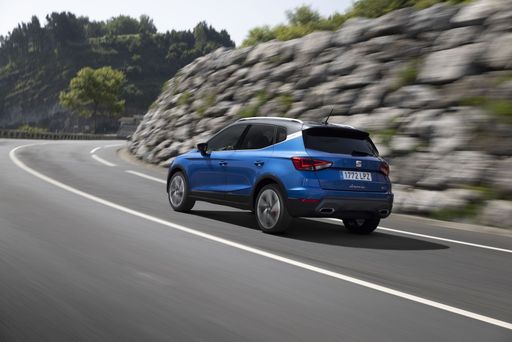
The SEAT Arona is a compact crossover that blends practical, city-friendly packaging with a sporty, youthful design. It delivers a comfortable ride, an intuitive cabin and economical running costs, making it a sensible pick for daily drives and weekend getaways.

details
Kia Sportage
SEAT Arona

Costs and Consumption

Price
29,100 - 47,100 £
Price
20,700 - 30,300 £
Consumption L/100km
2.9 - 7.8 L/100km
Consumption L/100km
5.3 - 5.8 L/100km
Consumption kWh/100km
-
Consumption kWh/100km
-
Electric Range
63 - 66 km
Electric Range
-
Battery Capacity
-
Battery Capacity
-
co2
67 - 177 g/km
co2
120 - 132 g/km
Fuel tank capacity
-
Fuel tank capacity
-

Dimensions and Body

Body Type
SUV
Body Type
SUV
Seats
5
Seats
5
Doors
-
Doors
-
Curb weight
1,552 - 1,896 kg
Curb weight
1,188 - 1,268 kg
Trunk capacity
526 - 587 L
Trunk capacity
400 L
Length
-
Length
-
Width
1,865 mm
Width
1,780 mm
Height
-
Height
-
Max trunk capacity
-
Max trunk capacity
-
Payload
533 - 580 kg
Payload
502 - 522 kg

Engine and Performance

Engine Type
Petrol, Full Hybrid, Diesel MHEV, Plugin Hybrid
Engine Type
Petrol
Transmission
Manuel, Automatic
Transmission
Manuel, Automatic
Transmission Detail
Manual Gearbox, Dual-Clutch Automatic, Automatic Gearbox
Transmission Detail
Manual Gearbox, Dual-Clutch Automatic
Drive Type
Front-Wheel Drive, All-Wheel Drive
Drive Type
Front-Wheel Drive
Power HP
136 - 288 HP
Power HP
95 - 150 HP
Acceleration 0-100km/h
7.5 - 11.6 s
Acceleration 0-100km/h
8.3 - 11.1 s
Max Speed
-
Max Speed
-
Torque
250 - 380 Nm
Torque
175 - 250 Nm
Number of Cylinders
4
Number of Cylinders
3 - 4
Power kW
100 - 212 kW
Power kW
70 - 110 kW
Engine capacity
1,598 cm3
Engine capacity
999 - 1,498 cm3

General

Model Year
2,025 - 2,026
Model Year
2025
CO2 Efficiency Class
F, D, E, G, B
CO2 Efficiency Class
D
Brand
Kia
Brand
SEAT
DriveDuel uses data analysis and artificial intelligence to evaluate vehicle data and create content. Content is regularly reviewed and improved. The displayed prices are estimates based on German list prices, adjusted to the respective country’s VAT. Country-specific registration taxes are not included. This information is not legally binding.