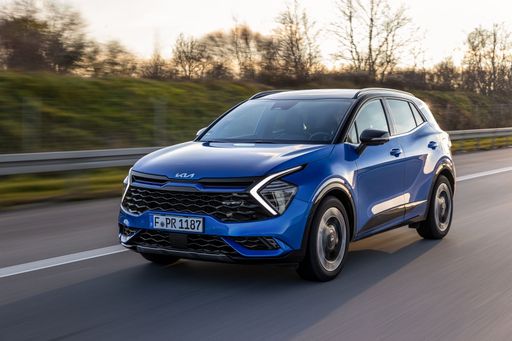
@ Kia Corporation
@ Volkswagen AG / VW Media
VS

Kia Sportage vs VW Passat – Differences & prices compared

Both models have their strengths – but which one suits you more?
Compare performance, efficiency, price and space directly: Kia Sportage or VW Passat?

Kia Sportage

5 (1 Reviews)
rate

VW Passat

5 (2 Reviews)
rate
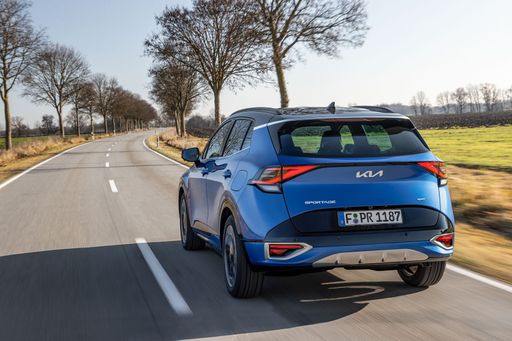
Sportage @ Kia Corporation

Comparing the Kia Sportage and VW Passat: A Clash of Icons

As we dive into the automotive wizardry of 2024, two notable contenders in the category of versatile family vehicles stand out — the Kia Sportage and the VW Passat. These two models offer distinct characteristics and innovations that cater to different needs and preferences. While the Kia Sportage invites you into the SUV segment with its robust design, the VW Passat carries on with its refined legacy as a Wagon. Let’s explore their technical aspects, which promise to intrigue even the most discerning car enthusiasts.
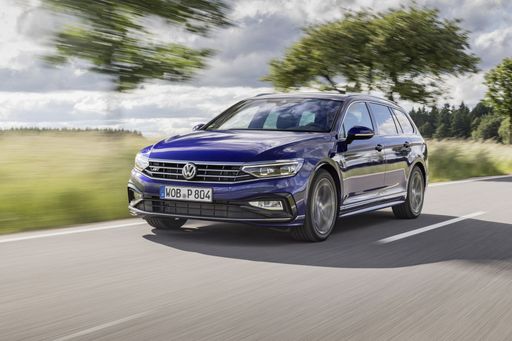
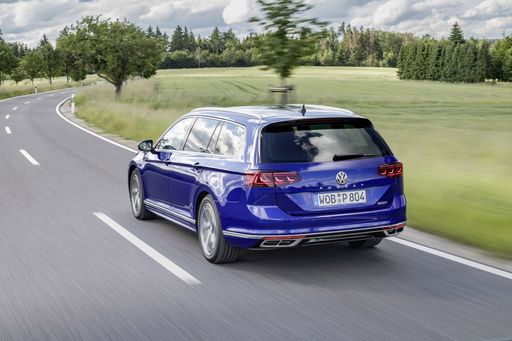
Passat @ Volkswagen AG / VW Media

Engine Variety and Performance

The Kia Sportage offers a wide spectrum of engine options – from Diesel MHEV to Full Hybrid and Plugin Hybrid – making it a versatile choice for any potential buyer. Its engine power varies significantly, displaying outputs from 136 HP to a powerful 252 HP, with torque peaking at 350 Nm. Acceleration from 0 to 100 km/h ranges from 8.3 to 11.6 seconds, depending on the engine configuration, with maximum speeds reaching up to 194 km/h. For those conscious of fuel efficiency, its petrol engines provide a consumption range of 5 to 7.2 L/100km, with CO2 emissions varying across different efficiency classes.

The VW Passat, on the other hand, remains robust with its Plugin Hybrid and traditional combustion engines, delivering power outputs of 122 HP to a spirited 272 HP. The Passat impresses with a rapid acceleration of 5.8 seconds in its top variants while achieving a top speed of 250 km/h. The Wagon also excels in fuel efficiency, with consumption as low as 0.4 L/100km on its Plugin Hybrid, and a longer electric range, leveraging a 19.7 kWh battery to cover up to 126 km purely on electricity.

Sportage @ Kia Corporation

Build and Design

The Kia Sportage, with its 4515 mm length, 1865 mm width, and 1650 mm height, confidently asserts itself in the SUV category. It offers a comfortable space for five passengers and provides a generous trunk capacity ranging from 526 L to 587 L, proving utility is at its core. The Sportage’s all-wheel drive versions enhance traction and off-road capabilities, ideal for adventurous family outings.

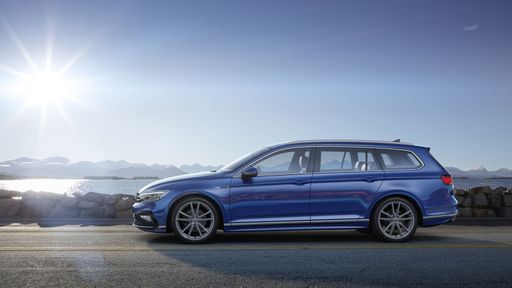
Meanwhile, the VW Passat extends its Wagon persona across a body of 4917 mm in length, with a height of 1521 mm. It offers a similarly expansive five-seat arrangement, but truly shines with an impressive 690 L of trunk space. Its aerodynamic design and lower stance compared to the Sportage reflect a perfect blend of fastidious engineering and style-driven performance. The Passat’s interiors offer an elegant feel, enriched by VW’s legacy of premium craftsmanship.

Passat @ Volkswagen AG / VW Media

Innovations and High-Tech Features

The Kia Sportage includes technical innovations that cater to a modern driver’s desires. These encompass everything from Dual-Clutch Automatic gearboxes providing seamless transitions to advanced safety features, which ensure peace of mind on varied terrains.

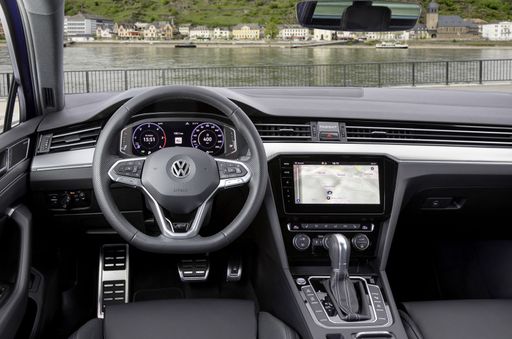
In contrast, the VW Passat focuses on enhancing the driving experience with its array of high-tech features and infotainment systems that make long drives a pleasurable affair. Its automatic transmission ensures a smooth and refined driving experience, supported by advanced driving aids and connectivity options.

Sportage @ Kia Corporation

Conclusion: A Decision Beyond Specs

When choosing between the Kia Sportage and the VW Passat, potential buyers face a decision that encompasses more than just figures. The Sportage caters to those in search of a versatile and adventurous SUV, whereas the Passat offers a luxurious and efficient ride for Wagon enthusiasts. Each of these models represents a commendable effort in their respective categories and successfully captures the essence of their brand heritage, providing features that align with different driving philosophies and lifestyles.

Here’s where it gets real: The technical differences in detail

Passat @ Volkswagen AG / VW Media

Costs and Efficiency:

When it comes to price and running costs, the biggest differences usually appear. This is often where you see which car fits your budget better in the long run.

Kia Sportage has a somewhat advantage in terms of price – it starts at 30200 £, while the VW Passat costs 35700 £. That’s a price difference of around 5572 £.

Fuel consumption also shows a difference: VW Passat manages with 1.20 L and is therefore clearly more efficient than the Kia Sportage with 5 L. The difference is about 3.80 L per 100 km.

Sportage @ Kia Corporation

Engine and Performance:

Power, torque and acceleration say a lot about how a car feels on the road. This is where you see which model delivers more driving dynamics.

When it comes to engine power, the VW Passat has a slightly edge – offering 272 HP compared to 239 HP. That’s roughly 33 HP more horsepower.

In acceleration from 0 to 100 km/h, the VW Passat is clearly perceptible quicker – completing the sprint in 5.80 s, while the Kia Sportage takes 7.90 s. That’s about 2.10 s faster.

In terms of top speed, the VW Passat performs a bit better – reaching 250 km/h, while the Kia Sportage tops out at 203 km/h. The difference is around 47 km/h.

There’s also a difference in torque: VW Passat pulls a bit stronger with 400 Nm compared to 320 Nm. That’s about 80 Nm difference.

Passat @ Volkswagen AG / VW Media

Space and Everyday Use:

Beyond pure performance, interior space and usability matter most in daily life. This is where you see which car is more practical and versatile.

Both vehicles offer seating for 5 people.

In curb weight, Kia Sportage is barely noticeable lighter – 1552 kg compared to 1573 kg. The difference is around 21 kg.

In terms of boot space, the VW Passat offers slightly more room – 690 L compared to 587 L. That’s a difference of about 103 L.

In maximum load capacity, the VW Passat performs hardly perceptible better – up to 1920 L, which is about 144 L more than the Kia Sportage.

When it comes to payload, Kia Sportage slight takes the win – 580 kg compared to 577 kg. That’s a difference of about 3 kg.

Who comes out on top?

Overall, the VW Passat shows itself to be dominates this comparison and secures the title of DriveDuel Champion.
It convinces with the more balanced overall package and proves to be the more versatile choice for everyday use.

Kia Sportage
VW Passat

Costs and Consumption

View detailed analysis

Engine and Performance

View detailed analysis

Dimensions and Body

View detailed analysis
from about £35,700
Passat @ Volkswagen AG / VW Media

VW Passat

  • Engine Type : Petrol, Petrol MHEV, Diesel, Plugin Hybrid
  • Transmission : Automatic
  • Drive Type : All-Wheel Drive, Front-Wheel Drive
  • Power HP : 122 - 272 HP
  • Consumption L/100km : 1.2 - 8 L
  • Electric Range : 124 - 135 km

Kia Sportage

5 (1 Reviews)
rate

The Kia Sportage proves you don't have to choose between style and sensible family motoring, wrapping modern, confident looks around a roomy, well-equipped cabin. It's an easy car to live with — comfortable on daily runs, pleasantly engaging when you want a bit of fun, and kind to your wallet so you can keep smiling at the fuel pump.

details

VW Passat

5 (2 Reviews)
rate

The VW Passat is the grown-up family car that gets the basics absolutely right — roomy, comfortable and built to handle weekday commutes and weekend getaways without fuss. It won't set your pulse racing, but its calm composure and sensible packaging make it boring in the best possible way: a dependable, no‑drama choice for buyers who value practicality over flash.

details
Kia Sportage
VW Passat
Sportage @ Kia Corporation
Passat @ Volkswagen AG / VW Media

Costs and Consumption

Price
30200 - 43900 £
Price
35700 - 58500 £
Consumption L/100km
5 - 7.9 L
Consumption L/100km
1.2 - 8 L
Consumption kWh/100km
-
Consumption kWh/100km
-
Electric Range
-
Electric Range
124 - 135 km
Battery Capacity
-
Battery Capacity
19.70 kWh
co2
132 - 180 g/km
co2
28 - 181 g/km
Fuel tank capacity
52 - 54 L
Fuel tank capacity
45 - 66 L

Dimensions and Body

Body Type
SUV
Body Type
Estate
Seats
5
Seats
5
Doors
5
Doors
5
Curb weight
1552 - 1733 kg
Curb weight
1573 - 1858 kg
Trunk capacity
526 - 587 L
Trunk capacity
510 - 690 L
Length
4540 mm
Length
4917 mm
Width
1865 mm
Width
1849 mm
Height
1645 mm
Height
1521 mm
Max trunk capacity
1715 - 1776 L
Max trunk capacity
1770 - 1920 L
Payload
543 - 580 kg
Payload
501 - 577 kg

Engine and Performance

Engine Type
Petrol, Full Hybrid, Diesel MHEV
Engine Type
Petrol, Petrol MHEV, Diesel, Plugin Hybrid
Transmission
Manuel, Automatic
Transmission
Automatic
Transmission Detail
Manual Gearbox, Dual-Clutch Automatic, Automatic Gearbox
Transmission Detail
Dual-Clutch Automatic
Drive Type
Front-Wheel Drive, All-Wheel Drive
Drive Type
All-Wheel Drive, Front-Wheel Drive
Power HP
136 - 239 HP
Power HP
122 - 272 HP
Acceleration 0-100km/h
7.9 - 11.6 s
Acceleration 0-100km/h
5.8 - 10.7 s
Max Speed
180 - 203 km/h
Max Speed
212 - 250 km/h
Torque
250 - 320 Nm
Torque
250 - 400 Nm
Number of Cylinders
4
Number of Cylinders
4
Power kW
100 - 176 kW
Power kW
90 - 200 kW
Engine capacity
1598 cm3
Engine capacity
1498 - 1984 cm3

General

Model Year
2025
Model Year
2024 - 2025
CO2 Efficiency Class
F, D, E, G
CO2 Efficiency Class
G, D, E, B
Brand
Kia
Brand
VW
Is the Kia Sportage offered with different drivetrains?

The Kia Sportage is offered with Front-Wheel Drive or All-Wheel Drive.

The prices and data displayed are estimates based on German list prices and may vary by country. This information is not legally binding.

do not click