VS

Kia Sportage vs Toyota Yaris Cross comparison

Compare performance (288 HP vs 130 HP), boot space and price (29,100 £ vs 23,700 £ ) at a glance. Find out which car is the better choice for you – Kia Sportage or Toyota Yaris Cross?

Kia Sportage vs Toyota Yaris Cross: Key differences

Kia Sportage

5 (4 Reviews)
rate
  • clearly more power
  • significantly more efficient
  • clearly quicker 0–100 km/h
  • clearly more trunk space
details

Toyota Yaris Cross

4.2 (19 Reviews)
rate
  • markedly cheaper
  • clearly lighter
details

All details on performance, efficiency, range and trunk space can be found in the technical comparison below – including user reviews for both models.

Sportage

Head-to-head: Kia Sportage VS Toyota Yaris Cross

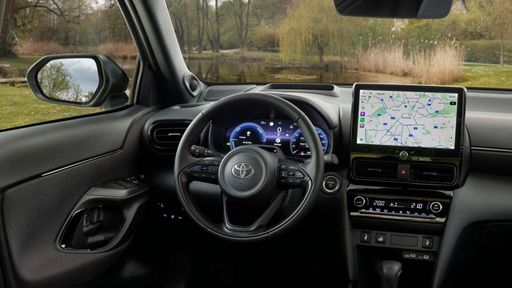
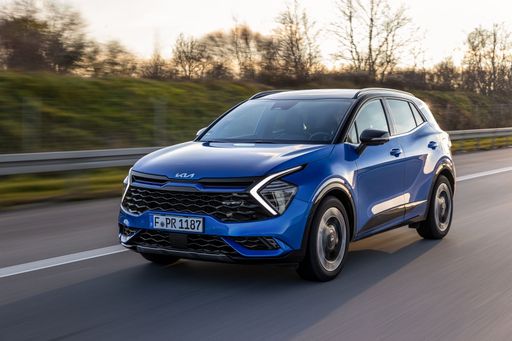
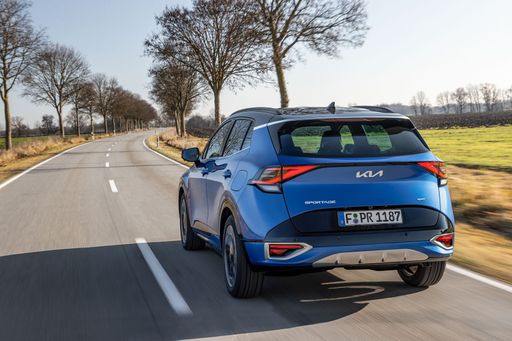
Kia Sportage VS Toyota Yaris Cross pits a roomy compact SUV against a compact, highly efficient B‑SUV, and the choices are about priorities rather than absolutes. The Kia Sportage leans into space, comfort and long‑distance refinement, while the Toyota Yaris Cross prioritises low running costs, city agility and a straightforward, fuss‑free drive. That contrast frames every other trade‑off here: one car expands cabin and luggage practicality, the other shrinks your fuel bill and parking headaches. Read on for how those differences play out in daily life, from traffic jams to family trips.
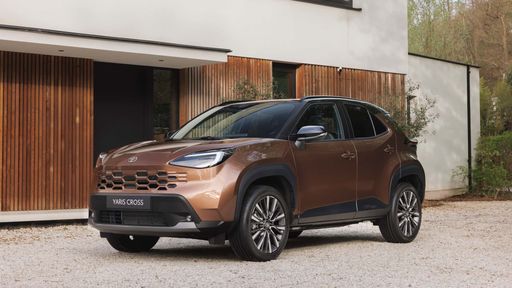
Yaris Cross

Character and driving feel

The Kia Sportage feels composed and settled, built for mile‑eating and relaxed motorway cruising, whereas the Toyota Yaris Cross presents a lighter, more city‑centric character that rewards short trips and tight streets. Sportage’s heavier presence and quieter cruising mask long drives; it rewards steady progress rather than sporty cornering. The Yaris Cross is more eager in town with a hybrid system that smooths stop‑start traffic and frequently lets the petrol engine sleep, but under hard acceleration it becomes noticeably louder. Buyers who favour calm, planted highway manners will prefer the Sportage; those who put most miles on urban runs will appreciate the Yaris Cross’s livelier city temperament.

Sportage

Comfort and cabin feel

Step inside the Kia Sportage and the impression is of genuine space and comfort: generous rear legroom, adjustable rear backrests and seats shaped for longer stints make it the more relaxing place on long trips. The Toyota Yaris Cross is comfortable up front and easy to live with, but the rear seats are simply tighter and less forgiving for tall adults on lengthy journeys. Sportage carries a more substantial, slightly upscale cabin feel overall, while Yaris Cross keeps things simpler and more pragmatic — clean, functional materials rather than plush luxury. If rear‑seat comfort and a sense of roominess matter, Sportage has the advantage; if front‑seat ergonomics and a compact footprint matter most, Yaris Cross answers the brief.

Yaris Cross

Practicality and everyday usability

Practicality is a clear stronghold for the Kia Sportage: a larger, more flexible boot, a 40:20:40 split rear and a double‑floor approach make hauling children, suitcases or DIY kit easier and less fiddly. The Toyota Yaris Cross fits surprisingly much into a compact footprint and wins in tight parking and city manoeuvres, but its boot and rear packaging are constrained by the car’s smaller overall dimensions and by the all‑wheel option that eats space. Sportage’s extra storage and family‑friendly details reduce daily compromises, whereas Yaris Cross rewards buyers who prioritise easy urban parking and clever use of a small footprint. For families who regularly load the car or need flexible cabin arrangements, Sportage feels more forgiving; for solo commuters or couples who need a nimble city runner, Yaris Cross is the sensible pick.

Sportage

Technology, finish and perceived quality

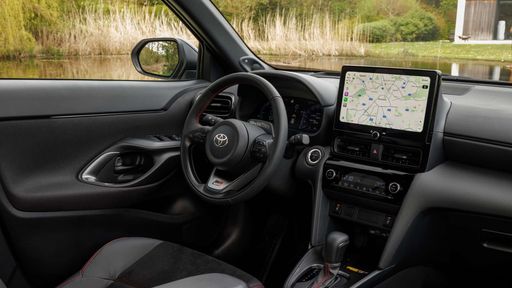
The Kia Sportage generally presents a more upmarket feel with broad instrument displays and materials that read as more premium in direct contact, though some control layouts demand patience to master. The Toyota Yaris Cross has become noticeably better with recent infotainment updates and keeps its controls simple and intuitive, which works in everyday life even if the cabin plastics feel a touch more utilitarian. Sportage’s touchscreen and touch‑bar features look modern but can be fiddly on the move, while Yaris Cross trades polish for predictability and quicker learning curve. If tactile refinement and a stronger showroom impression matter, Sportage nudges ahead; if reliable, no‑nonsense tech that just works is your priority, Yaris Cross will feel less intrusive.

Yaris Cross

Buyer fit — who should choose which?

Choose the Kia Sportage if you value rear passenger comfort, a big, versatile boot and a calm long‑distance character — it suits families, frequent motorway drivers and anyone who values interior space over urban nimbleness. Opt for the Toyota Yaris Cross if your life revolves around city runs, tight parking and ultra‑efficient hybrid operation; it’s aimed at commuters, small households and drivers who prize low running costs and simplicity. Warranty, ownership expectations and resale should also factor in: Sportage leans on generous coverage and perceived value, while Yaris Cross leans on Toyota’s long‑running efficiency credentials and pragmatic reliability. The technical comparison that follows will unpack the mechanical trade‑offs behind these real‑world impressions so you can match numbers to the daily priorities described here.

Here’s where it gets real: The technical differences in detail

Sportage

Costs and Efficiency:

Price and efficiency are key factors when choosing a car – and this is often where the real differences emerge.

Toyota Yaris Cross is markedly cheaper – starting at 23,700 £ , while the Kia Sportage costs 29,100 £ . That’s a price difference of around 5,443 £.

Fuel consumption also shows a difference: the Kia Sportage uses 2.9 L/100km and is significantly more efficient than the Toyota Yaris Cross with 4.5 L/100km. The difference is about 1.6 L/100km.

Yaris Cross

Engine and Performance:

Power, torque and acceleration say a lot about how a car feels on the road. This is where you see which model delivers more driving dynamics.

When it comes to engine power, the Kia Sportage offers clearly more power – delivering 288 HP compared to 130 HP. That’s roughly 158 HP more horsepower.

When accelerating from 0 to 100 km/h, the Kia Sportage is clearly quicker – completing the sprint in 7.5 s, while the Toyota Yaris Cross takes 10.7 s. That’s about 3.2 s quicker.

Sportage

Space and Everyday Use:

Beyond pure performance, interior space and usability matter most in daily life. This is where you see which car is more practical and versatile.

Both vehicles offer seating for 5 people.

In terms of curb weight, Toyota Yaris Cross is clearly lighter – 1,180 kg compared to 1,552 kg. The difference is around 372 kg.

Looking at boot space, the Kia Sportage offers clearly more boot space – 587 L compared to 397 L. That’s a difference of about 190 L.

When it comes to payload, the Kia Sportage carries somewhat more – 580 kg compared to 510 kg. That’s a difference of about 70 kg.

Who wins the race in the data check?

The Kia Sportage is clearly superior overall in the objective data comparison.
This result only shows which model scores more points on paper – not which of the two cars feels right for you.

from £29,100
Sportage

Kia Sportage

  • Engine Type Petrol, Full Hybrid, Diesel MHEV, Plug-in Hybrid
  • Transmission Manual, Automatic
  • Drive Type Front-Wheel Drive, All-Wheel Drive
  • Power HP 136 - 288 HP
  • Consumption L/100km 2.9 - 7.8 L/100km
  • Electric Range 63 - 66 km
Kia Sportage
Toyota Yaris Cross

Costs and Consumption

View detailed analysis

Engine and Performance

View detailed analysis

Dimensions and Body

View detailed analysis

Kia Sportage

The Kia Sportage is a roomy, well-equipped compact SUV that balances comfort and practicality for daily driving. It delivers a modern interior, composed ride, and strong value for buyers who want versatility without fuss.

details

Toyota Yaris Cross

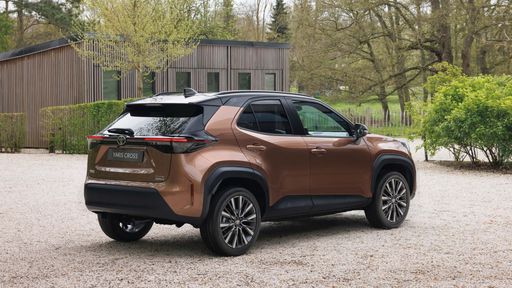
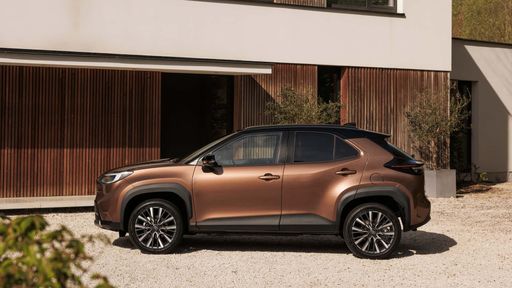
The Toyota Yaris Cross blends the maneuverability of a small hatch with the higher driving position and practicality of a crossover, wrapped in Toyota's dependable build quality. It suits urban buyers who need easy parking, flexible cargo space and a comfortable, economical daily driver.

details
Kia Sportage
Toyota Yaris Cross

Costs and Consumption

Price
29,100 - 47,100 £
Price
23,700 - 34,300 £
Consumption L/100km
2.9 - 7.8 L/100km
Consumption L/100km
4.5 - 4.8 L/100km
Consumption kWh/100km
-
Consumption kWh/100km
-
Electric Range
63 - 66 km
Electric Range
-
Battery Capacity
-
Battery Capacity
-
co2
67 - 177 g/km
co2
101 - 108 g/km
Fuel tank capacity
-
Fuel tank capacity
-

Dimensions and Body

Body Type
SUV
Body Type
SUV
Seats
5
Seats
5
Doors
-
Doors
-
Curb weight
1,552 - 1,896 kg
Curb weight
1,180 - 1,290 kg
Trunk capacity
526 - 587 L
Trunk capacity
320 - 397 L
Length
-
Length
-
Width
1,865 mm
Width
1,765 mm
Height
-
Height
-
Max trunk capacity
-
Max trunk capacity
-
Payload
533 - 580 kg
Payload
485 - 510 kg

Engine and Performance

Engine Type
Petrol, Full Hybrid, Diesel MHEV, Plug-in Hybrid
Engine Type
Full Hybrid
Transmission
Manual, Automatic
Transmission
Automatic
Transmission Detail
Manual Gearbox, Dual-Clutch Automatic, Automatic Gearbox
Transmission Detail
CVT
Drive Type
Front-Wheel Drive, All-Wheel Drive
Drive Type
Front-Wheel Drive, All-Wheel Drive
Power HP
136 - 288 HP
Power HP
116 - 130 HP
Acceleration 0-100km/h
7.5 - 11.6 s
Acceleration 0-100km/h
10.7 - 11.3 s
Max Speed
-
Max Speed
-
Torque
250 - 380 Nm
Torque
-
Number of Cylinders
4
Number of Cylinders
3
Power kW
100 - 212 kW
Power kW
85 - 96 kW
Engine capacity
1,598 cm3
Engine capacity
1,490 cm3

General

Model Year
2,025 - 2,026
Model Year
2026
CO2 Efficiency Class
F, D, E, G, B
CO2 Efficiency Class
C
Brand
Kia
Brand
Toyota
DriveDuel uses data analysis and artificial intelligence to evaluate vehicle data and create content. Content is regularly reviewed and improved. The displayed prices are estimates based on German list prices, adjusted to the respective country’s VAT. Country-specific registration taxes are not included. This information is not legally binding.