VS

Kia Stonic vs Fiat Panda comparison

Compare performance (115 HP vs 70 HP), boot space and price (20,100 £ vs 14,100 £ ) at a glance. Find out which car is the better choice for you – Kia Stonic or Fiat Panda?

Kia Stonic vs Fiat Panda: Key differences

Kia Stonic

4.6 (2 Reviews)
rate
  • clearly more power
  • markedly quicker 0–100 km/h
  • visibly more trunk space

Fiat Panda

4.5 (2 Reviews)
rate
  • substantially cheaper
  • a bit more efficient
  • somewhat lighter

All details on performance, efficiency, range and trunk space can be found in the technical comparison below – including user reviews for both models.

Stonic

City Cruiser vs. Urban Adventurer: Fiat Panda vs. Kia Stonic

In the bustling world of compact cars and SUVs, the 2024 Fiat Panda and the Kia Stonic each offer a unique take on urban driving. From hatchback simplicity to SUV practicality, both models cater to a variety of tastes and needs. But how do these two popular models compare when put head-to-head?
Panda

Design and Dimensions

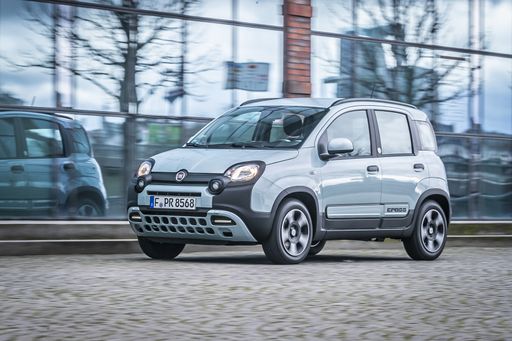
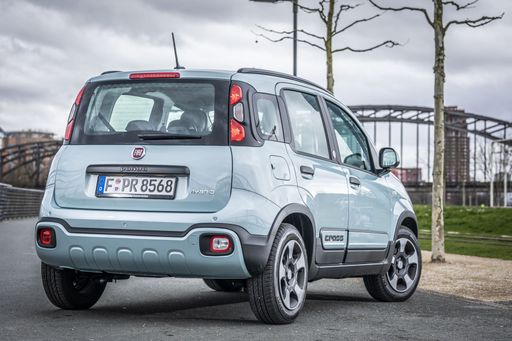
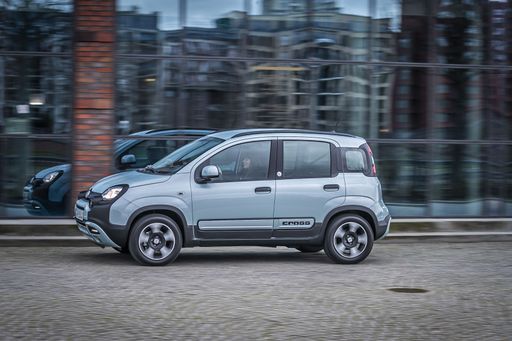
The Fiat Panda presents itself as a classic European hatchback with compact dimensions ideal for city dwellers. At a length of up to 3705 mm and a width of 1662 mm, maneuvering through tight city streets is a breeze. Its 5-door layout provides practicality, while a trunk capacity of 225 liters ensures enough room for everyday needs.

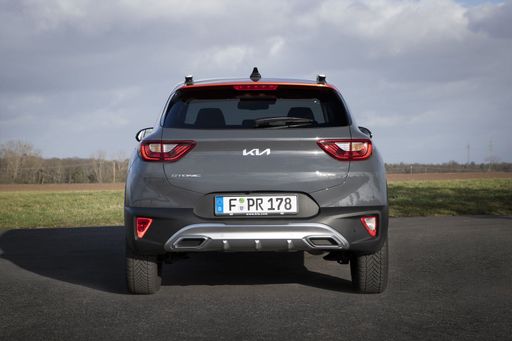
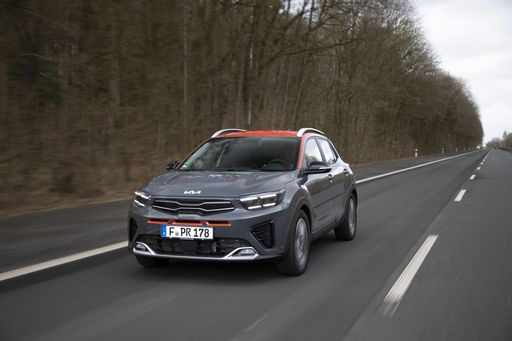
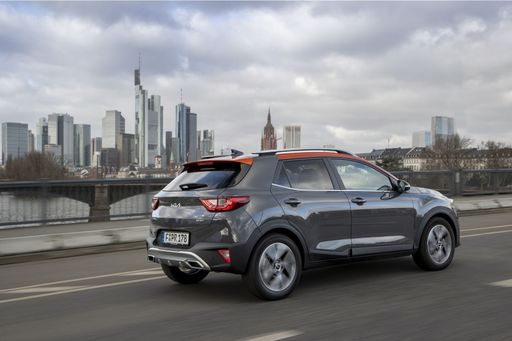
In contrast, the Kia Stonic embraces the SUV archetype, promising greater road presence and higher ground clearance. Measuring 4140 mm in length and 1760 mm in width, it commands a bit more space on the road. Yet, its 352-liter trunk capacity outshines the Panda, offering more room for weekend adventures or running errands.

Stonic

Performance and Engineering

Under the hood, the Panda opts for a 999 cm3 petrol MHEV (Mild Hybrid Electric Vehicle) engine delivering 70 HP, which translates to a fuel-efficient operation with consumption rates from 5.0 to 5.1 L/100km. The Panda's performance is modest, with a 0-100 km/h acceleration in 13.9 to 14.7 seconds, and a maximum speed of 155-164 km/h.

The Kia Stonic offers a broader range of powertrains, including both petrol and petrol MHEV options with powers ranging from 79 to 100 HP. Its engines also feature a more robust torque range, peaking at 200 Nm. This extra power allows the Stonic to accelerate from 0-100 km/h in just 11.3 seconds with certain configurations, reaching top speeds of 176-179 km/h.

Panda

Efficiency and Environmental Impact

The Fiat Panda demonstrates respectable environmental credentials, with CO2 emissions between 113-116 g/km, placing it in the C to D efficiency class. Its lightweight build, at a curb weight of 1055 kg, aids in achieving better fuel efficiency.

Conversely, the Kia Stonic exhibits slightly higher emissions, ranging from 125 to 132 g/km, due to its larger size and power. Lying in the D efficiency class, the Stonic balances efficiency with enhanced performance, which is reflected in its curb weights from 1155 to 1260 kg.

Stonic

Driving Experience and Comfort

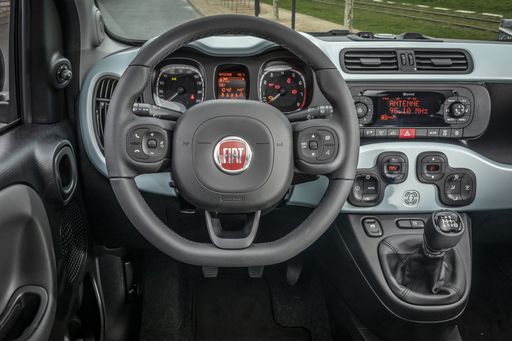
Driving the Fiat Panda emphasizes simplicity and agility. With its front-wheel-drive layout and manual gearbox, it suits urban environments perfectly. Four to five passengers fit comfortably inside, and its compact dimensions make parking a simple task.

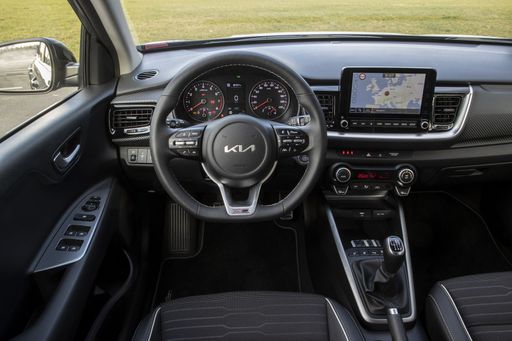
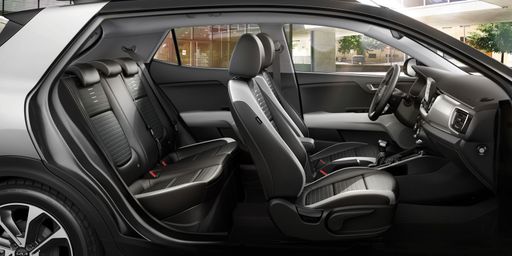
The Stonic, however, caters to those who desire an SUV feel without the bulk. It supports manual and automatic transmissions, enhancing driving comfort and versatility, especially for longer trips. Designed to seat five comfortably, it offers a better choice for families or those needing extra space.

Panda

Conclusion: The Right Fit for You?

Choosing between the Fiat Panda and the Kia Stonic boils down to individual needs. For those seeking economical urban mobility, the Panda's tight dimensions and low emissions offer an attractive package. However, if you prefer a touch more power and space, along with SUV aesthetics, the Kia Stonic presents a compelling case.

Ultimately, whether you're drawn to the compact practicality of the Panda or the adventurous spirit of the Stonic, both vehicles embody the forward-thinking design and engineering expected in today's automotive landscape.

Here’s where it gets real: The technical differences in detail

Stonic

Costs and Efficiency:

Price and efficiency are often the first things buyers look at. Here it becomes clear which model has the long-term edge – whether at the pump, the plug, or in purchase price.

Fiat Panda is substantially cheaper – starting at 14,100 £ , while the Kia Stonic costs 20,100 £ . That’s a price difference of around 6,000 £.

Fuel consumption also shows a difference: the Fiat Panda uses 5 L/100km and is a bit more efficient than the Kia Stonic with 5.6 L/100km. The difference is about 0.6 L/100km.

Panda

Engine and Performance:

Power, torque and acceleration are the classic benchmarks for car enthusiasts – and here, some clear differences start to show.

When it comes to engine power, the Kia Stonic offers clearly more power – delivering 115 HP compared to 70 HP. That’s roughly 45 HP more horsepower.

When accelerating from 0 to 100 km/h, the Kia Stonic is markedly quicker – completing the sprint in 10.7 s, while the Fiat Panda takes 13.9 s. That’s about 3.2 s quicker.

Looking at top speed, the Kia Stonic is barely faster – reaching 182 km/h, while the Fiat Panda tops out at 164 km/h. The difference is around 18 km/h.

There’s also a difference in torque: the Kia Stonic delivers clearly more torque with 200 Nm compared to 92 Nm. That’s about 108 Nm more.

Stonic

Space and Everyday Use:

Cabin size, boot volume and payload all play a role in everyday practicality. Here, comfort and flexibility make the difference.

Seats: Kia Stonic offers more seats – 5 vs 4.

In terms of curb weight, Fiat Panda is somewhat lighter – 1,055 kg compared to 1,205 kg. The difference is around 150 kg.

Looking at boot space, the Kia Stonic offers visibly more boot space – 352 L compared to 225 L. That’s a difference of about 127 L.

For maximum load capacity, the Kia Stonic offers visibly more capacity – up to 1,155 L, about 285 L more than the Fiat Panda.

When it comes to payload, the Kia Stonic carries slightly more – 445 kg compared to 365 kg. That’s a difference of about 80 kg.

Who wins the race in the data check?

The Kia Stonic holds a decisive overall lead in the objective data comparison.
This result only shows which model scores more points on paper – not which of the two cars feels right for you.

from £20,100
Stonic

Kia Stonic

  • Engine Type : Petrol, Petrol MHEV
  • Transmission : Manuel, Automatic
  • Drive Type : Front-Wheel Drive
  • Power HP : 100 - 115 HP
  • Consumption L/100km : 5.6 - 5.9 L/100km
Kia Stonic
Fiat Panda

Costs and Consumption

View detailed analysis

Engine and Performance

View detailed analysis

Dimensions and Body

View detailed analysis

Kia Stonic

The Kia Stonic is a sprightly compact crossover that mixes city-friendly agility with a cheeky, modern design — perfect for buyers who want style without sacrificing sense. Inside it serves up clever practicality and a bright, well-equipped cabin, making everyday driving feel a bit more fun than it has any right to be.

details

Fiat Panda

The Panda is a charming, no-nonsense city companion that mixes cheerful Italian flair with genuinely useful practicality, making tight streets and daily errands feel less of a chore. Its honest simplicity, clever packaging and a dash of cheeky character make it a smart, low-stress buy for people who prefer sensible perks over showroom flash.

details
Kia Stonic
Fiat Panda

Costs and Consumption

Price
20,100 - 26,600 £
Price
14,100 £
Consumption L/100km
5.6 - 5.9 L/100km
Consumption L/100km
5 L/100km
Consumption kWh/100km
-
Consumption kWh/100km
-
Electric Range
-
Electric Range
-
Battery Capacity
-
Battery Capacity
-
co2
127 - 133 g/km
co2
113 g/km
Fuel tank capacity
45 L
Fuel tank capacity
38 L

Dimensions and Body

Body Type
SUV
Body Type
Hatchback
Seats
5
Seats
4
Doors
5
Doors
5
Curb weight
1,205 - 1,270 kg
Curb weight
1,055 kg
Trunk capacity
352 L
Trunk capacity
225 L
Length
4,165 mm
Length
3,635 mm
Width
1,760 mm
Width
1,643 mm
Height
1,520 mm
Height
1,551 mm
Max trunk capacity
1,155 L
Max trunk capacity
870 L
Payload
440 - 445 kg
Payload
365 kg

Engine and Performance

Engine Type
Petrol, Petrol MHEV
Engine Type
Petrol MHEV
Transmission
Manuel, Automatic
Transmission
Manuel
Transmission Detail
Manual Gearbox, Dual-Clutch Automatic
Transmission Detail
Manual Gearbox
Drive Type
Front-Wheel Drive
Drive Type
Front-Wheel Drive
Power HP
100 - 115 HP
Power HP
70 HP
Acceleration 0-100km/h
10.7 - 12.1 s
Acceleration 0-100km/h
13.9 s
Max Speed
179 - 182 km/h
Max Speed
164 km/h
Torque
172 - 200 Nm
Torque
92 Nm
Number of Cylinders
3
Number of Cylinders
3
Power kW
74 - 85 kW
Power kW
51 kW
Engine capacity
998 cm3
Engine capacity
999 cm3

General

Model Year
2,025
Model Year
2,024
CO2 Efficiency Class
D
CO2 Efficiency Class
C
Brand
Kia
Brand
Fiat
DriveDuel uses data analysis and artificial intelligence to evaluate vehicle data and create content. Content is regularly reviewed and improved. The displayed prices are estimates based on German list prices, adjusted to the respective country’s VAT. Country-specific registration taxes are not included. This information is not legally binding.