VS

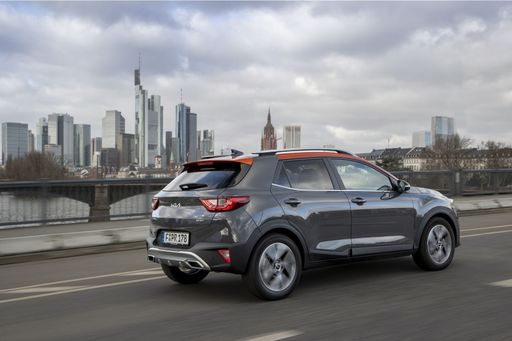
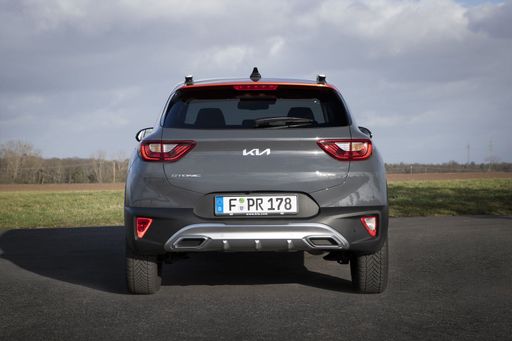
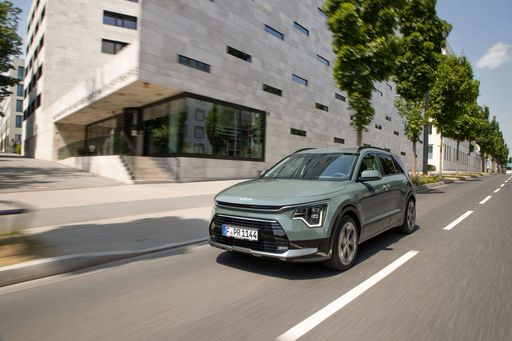
Kia Niro vs Kia Stonic comparison

Compare performance (138 HP vs 115 HP), boot space and price (29,100 £ vs 20,100 £ ) at a glance. Find out which car is the better choice for you – Kia Niro or Kia Stonic?

Kia Niro vs Kia Stonic: Key differences

Kia Niro

4.5 (2 Reviews)
rate
  • somewhat more power
  • visibly more efficient

Kia Stonic

4.6 (2 Reviews)
rate
  • substantially cheaper
  • very slightly quicker 0–100 km/h
  • noticeably lighter

All details on performance, efficiency, range and trunk space can be found in the technical comparison below – including user reviews for both models.

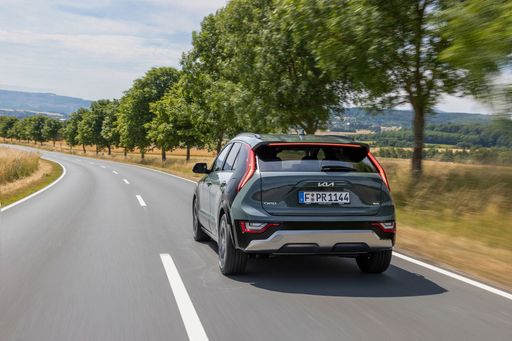
Niro

Kia Niro vs. Kia Stonic: A Comprehensive Comparison

In the crowded landscape of compact SUVs, the Kia Niro and Kia Stonic stand out as compelling options for consumers seeking versatility, efficiency, and innovative features. Both vehicles showcase Kia’s commitment to quality and technology, yet they cater to slightly different audiences. This article dives into a head-to-head comparison, highlighting the technical aspects and innovations that define each model.
Stonic

Performance and Powertrain

The Kia Niro is available in full hybrid and plug-in hybrid variants, offering power outputs of 129 HP and 171 HP, respectively. Its engines are designed for efficiency, with a fuel consumption of just 4.4 L/100 km, making it an excellent choice for eco-conscious drivers. The electric range on the plug-in hybrid reaches up to 65 km, supported by an 11.1 kWh battery capacity.

Conversely, the Kia Stonic presents a lineup of petrol and mild hybrid petrol engines, with power outputs of 100 HP and 79 HP. With a maximum fuel consumption ranging from 5.5 L/100 km to 5.8 L/100 km, the Stonic is a reliable performer but falls slightly behind the Niro in terms of fuel efficiency. The Stonic's manual and automatic transmission options cater to diverse driver preferences, while the acceleration from 0-100 km/h varies from 11.3 seconds to 14.2 seconds, depending on the engine choice.

Niro

Dimensions and Cargo Space

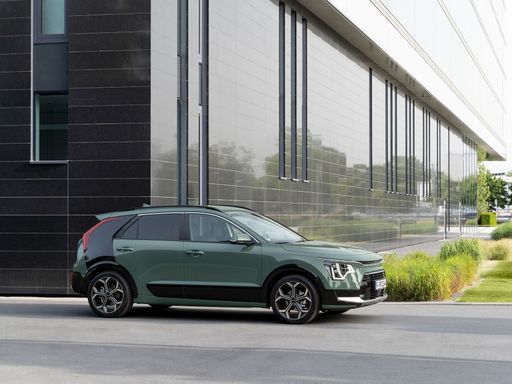
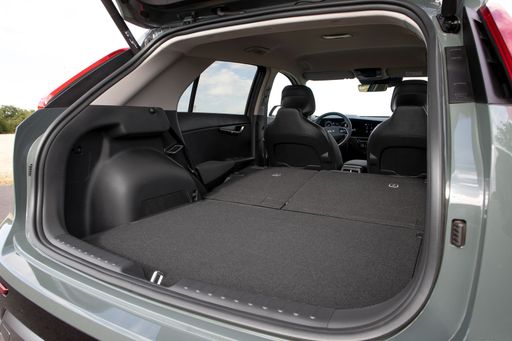
When it comes to size, the Kia Niro measures 4,420 mm in length, 1,825 mm in width, and stands at a height of 1,545 mm. With a trunk capacity of 451 liters, it provides ample space for luggage and groceries, making it a practical choice for families.

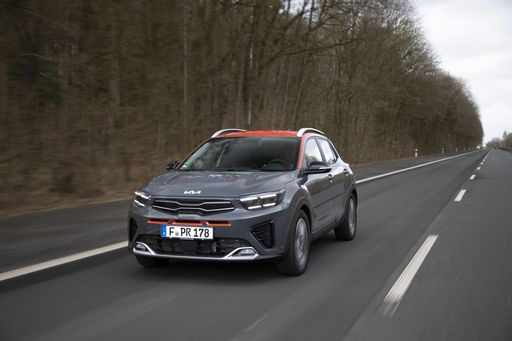
The Stonic, slightly smaller at 4,140 mm long and 1,760 mm wide, has a trunk capacity of 352 liters. Although it may offer less cargo room than the Niro, its compact dimensions enhance urban maneuverability, making it ideal for city dwellers.

Stonic

Interior Comfort and Technology

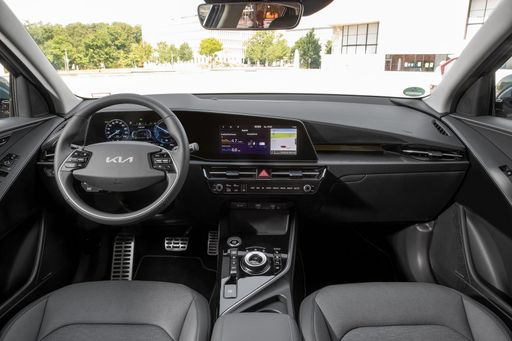
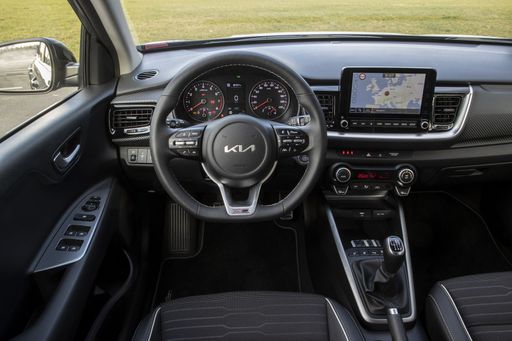
Both the Niro and Stonic prioritize driver and passenger comfort with high-quality interiors, but the Niro elevates this experience with advanced technology. The Niro boasts a modern digital cockpit with an intuitive infotainment system that includes smartphone integration and a range of driver-assist features.

The Stonic, while not as tech-rich, still offers plenty of modern amenities, such as a user-friendly touchscreen and optional connectivity features. The focus on simplicity and functionality resonates with younger buyers seeking a stylish yet practical vehicle.

Niro

Sustainability and Efficiency

The environmental impact of vehicles is an increasingly critical consideration for consumers. The Kia Niro excels in this area with its hybrid options, reducing CO2 emissions significantly to as low as 19 g/km for the plug-in hybrid variant. In comparison, the Stonic's petrol engines produce a higher range of CO2 emissions, peaking at 132 g/km, which may not appeal as much to eco-conscious drivers.

Stonic

Conclusion: Which One Should You Choose?

Choosing between the Kia Niro and Kia Stonic ultimately depends on individual needs and preferences. If efficiency and sustainability are your top priorities, the Niro’s hybrid technology makes it a standout choice. However, if you seek a stylish and compact SUV suitable for city driving, the Stonic offers a charismatic package with an engaging driving experience.

In an evolving automotive landscape, both Kia models shine with their distinct advantages, appealing to a diverse spectrum of drivers. Whichever you choose, quality and innovation are guaranteed in these exceptional vehicles.

Here’s where it gets real: The technical differences in detail

Niro

Costs and Efficiency:

Price and efficiency are often the first things buyers look at. Here it becomes clear which model has the long-term edge – whether at the pump, the plug, or in purchase price.

Kia Stonic is substantially cheaper – starting at 20,100 £ , while the Kia Niro costs 29,100 £ . That’s a price difference of around 9,000 £.

Fuel consumption also shows a difference: the Kia Niro uses 4.5 L/100km and is visibly more efficient than the Kia Stonic with 5.6 L/100km. The difference is about 1.1 L/100km.

Stonic

Engine and Performance:

Under the bonnet, it becomes clear which model is tuned for sportiness and which one takes the lead when you hit the accelerator.

When it comes to engine power, the Kia Niro offers somewhat more power – delivering 138 HP compared to 115 HP. That’s roughly 23 HP more horsepower.

When accelerating from 0 to 100 km/h, the Kia Stonic is very slightly quicker – completing the sprint in 10.7 s, while the Kia Niro takes 11.1 s. That’s about 0.4 s quicker.

There’s also a difference in torque: the Kia Niro delivers clearly more torque with 265 Nm compared to 200 Nm. That’s about 65 Nm more.

Niro

Space and Everyday Use:

Cabin size, boot volume and payload all play a role in everyday practicality. Here, comfort and flexibility make the difference.

Both vehicles offer seating for 5 people.

In terms of curb weight, Kia Stonic is noticeably lighter – 1,205 kg compared to 1,474 kg. The difference is around 269 kg.

When it comes to payload, the Kia Niro carries barely more – 466 kg compared to 445 kg. That’s a difference of about 21 kg.

Who wins the race in the data check?

The Kia Niro stands well ahead of its rival in the objective data comparison.
This result only shows which model scores more points on paper – not which of the two cars feels right for you.

from £29,100
Niro

Kia Niro

  • Engine Type : Full Hybrid
  • Transmission : Automatic
  • Drive Type : Front-Wheel Drive
  • Power HP : 138 HP
  • Consumption L/100km : 4.5 - 4.9 L/100km
Kia Niro
Kia Stonic

Costs and Consumption

View detailed analysis

Engine and Performance

View detailed analysis

Dimensions and Body

View detailed analysis

Kia Niro

The Kia Niro blends clever packaging and modern styling into a compact crossover that’s refreshingly sensible for daily life. It’s comfortable, economical and packed with user‑friendly tech, so if you want a fuss‑free family car with a touch of green credibility, the Niro is worth a test drive.

details

Kia Stonic

The Kia Stonic is a sprightly compact crossover that mixes city-friendly agility with a cheeky, modern design — perfect for buyers who want style without sacrificing sense. Inside it serves up clever practicality and a bright, well-equipped cabin, making everyday driving feel a bit more fun than it has any right to be.

details
Kia Niro
Kia Stonic

Costs and Consumption

Price
29,100 - 33,800 £
Price
20,100 - 26,600 £
Consumption L/100km
4.5 - 4.9 L/100km
Consumption L/100km
5.6 - 5.9 L/100km
Consumption kWh/100km
-
Consumption kWh/100km
-
Electric Range
-
Electric Range
-
Battery Capacity
-
Battery Capacity
-
co2
102 - 111 g/km
co2
127 - 133 g/km
Fuel tank capacity
-
Fuel tank capacity
45 L

Dimensions and Body

Body Type
SUV
Body Type
SUV
Seats
5
Seats
5
Doors
-
Doors
5
Curb weight
1,474 kg
Curb weight
1,205 - 1,270 kg
Trunk capacity
-
Trunk capacity
352 L
Length
-
Length
4,165 mm
Width
1,825 mm
Width
1,760 mm
Height
-
Height
1,520 mm
Max trunk capacity
-
Max trunk capacity
1,155 L
Payload
466 kg
Payload
440 - 445 kg

Engine and Performance

Engine Type
Full Hybrid
Engine Type
Petrol, Petrol MHEV
Transmission
Automatic
Transmission
Manuel, Automatic
Transmission Detail
Dual-Clutch Automatic
Transmission Detail
Manual Gearbox, Dual-Clutch Automatic
Drive Type
Front-Wheel Drive
Drive Type
Front-Wheel Drive
Power HP
138 HP
Power HP
100 - 115 HP
Acceleration 0-100km/h
11.1 - 11.4 s
Acceleration 0-100km/h
10.7 - 12.1 s
Max Speed
-
Max Speed
179 - 182 km/h
Torque
265 Nm
Torque
172 - 200 Nm
Number of Cylinders
4
Number of Cylinders
3
Power kW
102 kW
Power kW
74 - 85 kW
Engine capacity
1,580 cm3
Engine capacity
998 cm3

General

Model Year
2,025
Model Year
2,025
CO2 Efficiency Class
C
CO2 Efficiency Class
D
Brand
Kia
Brand
Kia
DriveDuel uses data analysis and artificial intelligence to evaluate vehicle data and create content. Content is regularly reviewed and improved. The displayed prices are estimates based on German list prices, adjusted to the respective country’s VAT. Country-specific registration taxes are not included. This information is not legally binding.