VS

Kia Stonic vs Skoda Kamiq comparison

Compare performance (115 HP vs 150 HP), boot space and price (20,400 £ vs 22,300 £ ) at a glance. Find out which car is the better choice for you – Kia Stonic or Skoda Kamiq?

Kia Stonic vs Skoda Kamiq: Key differences

Kia Stonic

4.6 (2 Reviews)
rate
  • very slightly cheaper
  • very slightly lighter
details

Skoda Kamiq

4.9 (6 Reviews)
rate
  • visibly more power
  • barely more efficient
  • noticeably quicker 0–100 km/h
  • somewhat more trunk space
details

All details on performance, efficiency, range and trunk space can be found in the technical comparison below – including user reviews for both models.

By Achim Sedelmaier

Stonic

Quick comparison: Kia Stonic VS Skoda Kamiq

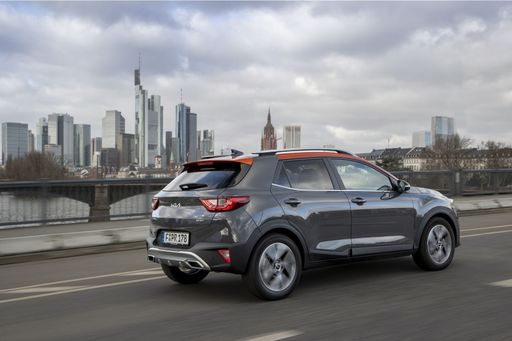
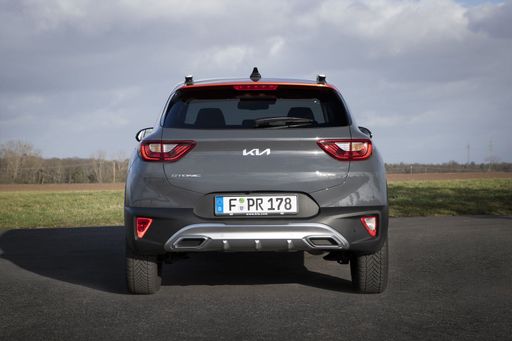
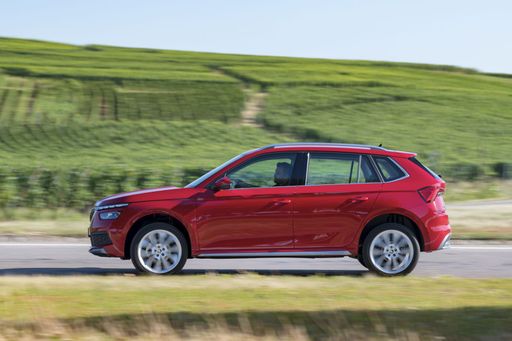
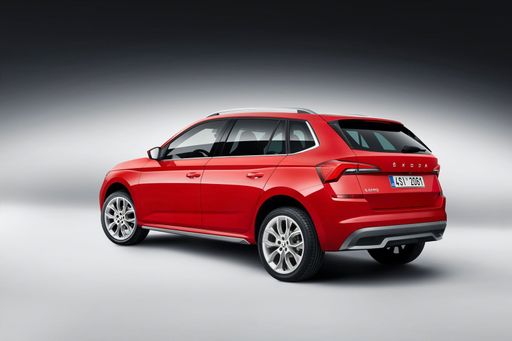
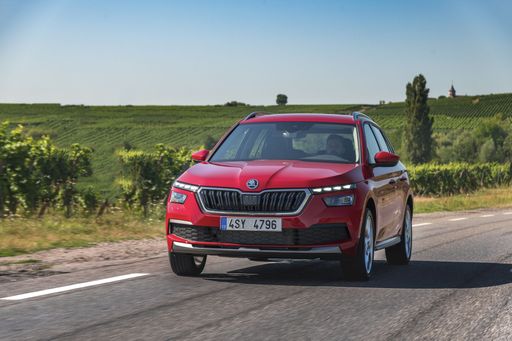
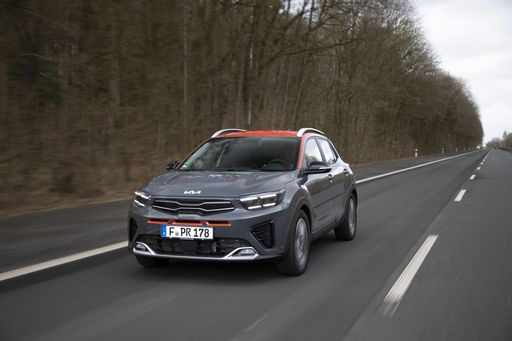
Kia Stonic VS Skoda Kamiq frames a familiar trade-off: the Stonic is the city‑first, value‑focused small SUV while the Kamiq leans toward room, calm and everyday utility. The Stonic sells on compact agility, a very competitive price and a long factory guarantee that lowers ownership anxiety. The Kamiq answers with noticeably more rear space, a larger boot and a quieter, more assured highway demeanor. Buyers will quickly see this is not about one being strictly better but about whether you value nimble city manners and low entry cost (Stonic) or cabin space and long‑distance composure (Kamiq).
Kamiq

Driving character and everyday usability

The Kia Stonic feels light on its feet: sharp initial turn‑in and a steering that makes urban weaving and tight parking effortless, which suits short trips and frequent stops. The Skoda Kamiq trades some of that immediacy for a steadier, less fidgety personality that masks speed changes and keeps highway cruising relaxed. In town the Stonic’s smaller footprint and eager responses mask its limited torque on highways, whereas the Kamiq’s stronger engine and calmer setup give it the reserve to overtake without fuss. Both are easy to live with day‑to‑day, but the Stonic rewards city commuters while the Kamiq better fits mixed routes with longer runs.

Stonic

Comfort and long‑distance behavior

On long runs the differences become obvious: the Stonic’s suspension and higher noise levels make prolonged motorway stints more tiring, with road and wind noise intruding at pace. The Kamiq is quieter and rides with more composure, absorbing sustained speed and crosswinds in a way that reduces driver fatigue. Seats feel appropriately supportive in the Kamiq for hours on end; the Stonic’s seats are fine for shorter stints but the chassis transmits more sharp inputs. If you spend a lot of time on the motorway, the Kamiq’s long‑distance refinement will be more appreciated.

Kamiq

Cabin feel, controls and perceived quality

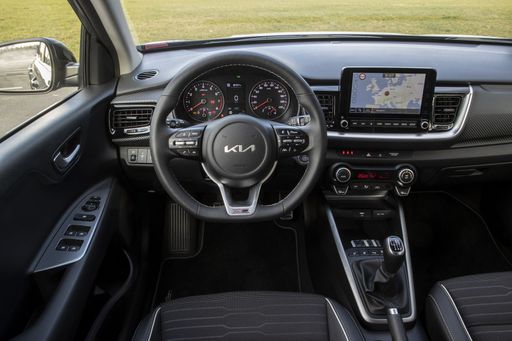
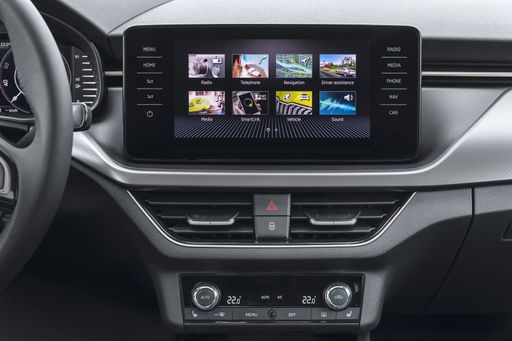
The Stonic’s facelifted cockpit brings modern dual displays and a tidy layout but the touch is often economical — visible hard plastics remind you it’s a budget‑minded package. The Kamiq opts for practical, tactile controls with climate knobs and useful physical buttons that feel easier to use without looking away from the road. Both interiors are functional, but the Kamiq presents a more robust, utility‑first atmosphere while the Stonic leans on style updates and connectivity to mask simpler materials. Infotainment contrast is subtle: Stonic’s system is snappy and phone‑friendly often by cable, while the Kamiq can be reliable but occasionally sluggish depending on spec.

Stonic

Practicality, space and everyday loading

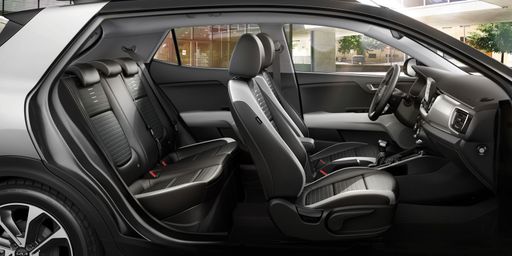
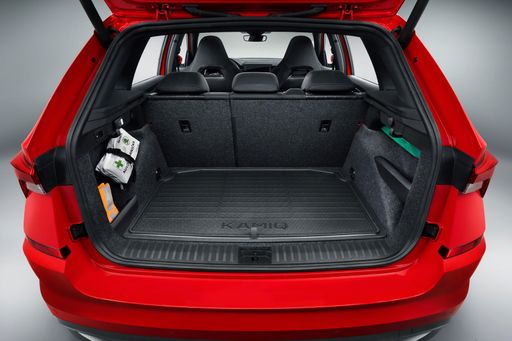
Practical differences are decisive: the Kamiq gives noticeably more rear legroom and a larger, more usable boot that suits families and weekend luggage without constant Tetris packing. The Stonic’s boot and rear space are acceptable for two and occasional trips, but taller rear passengers and bulky loads quickly expose its limits. Both cars have trade‑offs around boot floor design and loading height, so think about how often you haul prams, bikes or awkward boxes. If you prioritise parking ease and tight‑city comfort, the Stonic wins on maneuverability; if daily cargo and passenger space matter more, the Kamiq is the smarter choice.

Kamiq

Who should choose which car?

Choose the Kia Stonic if you want the cheapest entry to a modern small SUV, value a long warranty, and spend most time in town where agility and ease of parking dominate. Opt for the Skoda Kamiq if you need real rear‑seat room, a larger boot and a composed highway companion that saves stress and fuel on long commutes. The decision comes down to a clear buyer fit: Stonic for city‑centric, budget‑sensitive drivers; Kamiq for small families and mixed‑route commuters who prize space and refinement. Below this editorial comparison the technical section lays out the measurable differences — engine character, consumption and luggage numbers — so you can match those facts to the lifestyle trade‑offs described here.

Here’s where it gets real: The technical differences in detail

Stonic

Costs and Efficiency:

Looking at overall running costs, both models reveal some interesting differences in everyday economy.

Kia Stonic is very slightly cheaper – starting at 20,400 £ , while the Skoda Kamiq costs 22,300 £ . That’s a price difference of around 1,877 £.

Fuel consumption also shows a difference: the Skoda Kamiq uses 5.3 L/100km and is barely more efficient than the Kia Stonic with 5.6 L/100km. The difference is about 0.3 L/100km.

Kamiq

Engine and Performance:

Under the bonnet, it becomes clear which model is tuned for sportiness and which one takes the lead when you hit the accelerator.

When it comes to engine power, the Skoda Kamiq offers visibly more power – delivering 150 HP compared to 115 HP. That’s roughly 35 HP more horsepower.

When accelerating from 0 to 100 km/h, the Skoda Kamiq is noticeably quicker – completing the sprint in 8.1 s, while the Kia Stonic takes 10.7 s. That’s about 2.6 s quicker.

There’s also a difference in torque: the Skoda Kamiq delivers a bit more torque with 250 Nm compared to 200 Nm. That’s about 50 Nm more.

Stonic

Space and Everyday Use:

Whether family car or daily driver – which one offers more room, flexibility and comfort?

Both vehicles offer seating for 5 people.

In terms of curb weight, Kia Stonic is very slightly lighter – 1,205 kg compared to 1,231 kg. The difference is around 26 kg.

Looking at boot space, the Skoda Kamiq offers somewhat more boot space – 400 L compared to 352 L. That’s a difference of about 48 L.

When it comes to payload, the Skoda Kamiq carries a bit more – 539 kg compared to 445 kg. That’s a difference of about 94 kg.

Who wins the race in the data check?

The Skoda Kamiq is decisively ahead in the objective data comparison.
This result only shows which model scores more points on paper – not which of the two cars feels right for you.

from £22,300
Kamiq

Skoda Kamiq

  • Engine Type Petrol
  • Transmission Manuel, Automatic
  • Drive Type Front-Wheel Drive
  • Power HP 95 - 150 HP
  • Consumption L/100km 5.3 - 5.7 L/100km
Kia Stonic
Skoda Kamiq

Costs and Consumption

View detailed analysis

Engine and Performance

View detailed analysis

Dimensions and Body

View detailed analysis

Kia Stonic

The Kia Stonic is a compact crossover that pairs nimble city manners with a surprisingly spacious and comfortable cabin. It’s a practical, well-equipped choice for buyers who value sensible features, approachable styling and easy everyday usability.

details

Skoda Kamiq

The Skoda Kamiq is a practical, well-built small crossover that mixes city-friendly manners with surprisingly versatile interior space and clever storage solutions. It offers a comfortable ride, user-friendly technology and solid value, making it a sensible choice for everyday driving.

details
Kia Stonic
Skoda Kamiq

Costs and Consumption

Price
20,400 - 26,800 £
Price
22,300 - 32,700 £
Consumption L/100km
5.6 - 5.7 L/100km
Consumption L/100km
5.3 - 5.7 L/100km
Consumption kWh/100km
-
Consumption kWh/100km
-
Electric Range
-
Electric Range
-
Battery Capacity
-
Battery Capacity
-
co2
126 - 128 g/km
co2
121 - 128 g/km
Fuel tank capacity
-
Fuel tank capacity
-

Dimensions and Body

Body Type
SUV
Body Type
SUV
Seats
5
Seats
5
Doors
-
Doors
-
Curb weight
1,205 - 1,270 kg
Curb weight
1,231 - 1,340 kg
Trunk capacity
352 L
Trunk capacity
400 L
Length
-
Length
-
Width
1,760 mm
Width
1,793 mm
Height
-
Height
-
Max trunk capacity
-
Max trunk capacity
-
Payload
440 - 445 kg
Payload
439 - 539 kg

Engine and Performance

Engine Type
Petrol, Petrol MHEV
Engine Type
Petrol
Transmission
Manuel, Automatic
Transmission
Manuel, Automatic
Transmission Detail
Manual Gearbox, Dual-Clutch Automatic
Transmission Detail
Manual Gearbox, Dual-Clutch Automatic
Drive Type
Front-Wheel Drive
Drive Type
Front-Wheel Drive
Power HP
100 - 115 HP
Power HP
95 - 150 HP
Acceleration 0-100km/h
10.7 - 12.1 s
Acceleration 0-100km/h
8.1 - 11 s
Max Speed
-
Max Speed
-
Torque
172 - 200 Nm
Torque
175 - 250 Nm
Number of Cylinders
3
Number of Cylinders
3 - 4
Power kW
74 - 85 kW
Power kW
70 - 110 kW
Engine capacity
998 cm3
Engine capacity
999 - 1,498 cm3

General

Model Year
2025
Model Year
2025
CO2 Efficiency Class
D
CO2 Efficiency Class
D
Brand
Kia
Brand
Skoda
DriveDuel uses data analysis and artificial intelligence to evaluate vehicle data and create content. Content is regularly reviewed and improved. The displayed prices are estimates based on German list prices, adjusted to the respective country’s VAT. Country-specific registration taxes are not included. This information is not legally binding.