VS

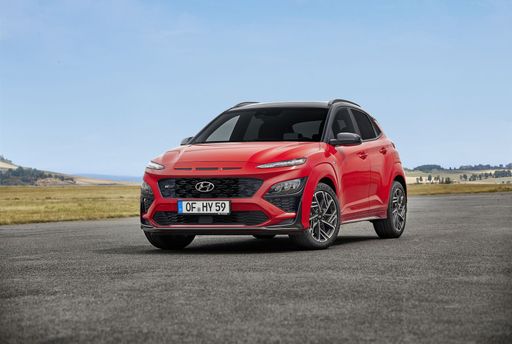
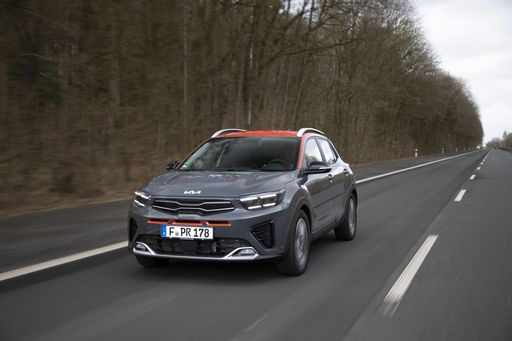
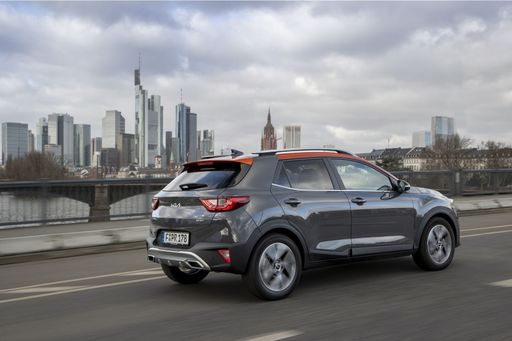
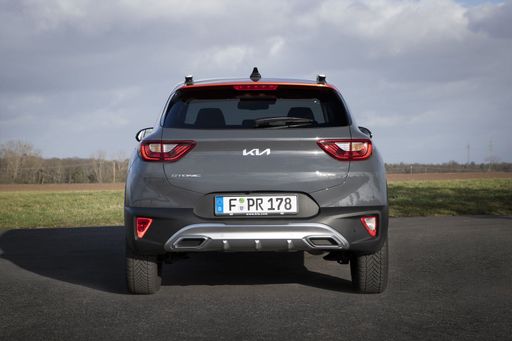
Kia Stonic vs Hyundai Kona comparison

Compare performance (115 HP vs 218 HP), boot space and price (20,100 £ vs 23,100 £ ) at a glance. Find out which car is the better choice for you – Kia Stonic or Hyundai Kona?

Kia Stonic vs Hyundai Kona: Key differences

Kia Stonic

4.6 (2 Reviews)
rate
  • somewhat cheaper
  • a bit lighter

Hyundai Kona

5 (1 Reviews)
rate
  • significantly more power
  • visibly more efficient
  • visibly quicker 0–100 km/h
  • visibly more trunk space

All details on performance, efficiency, range and trunk space can be found in the technical comparison below – including user reviews for both models.

Stonic

The Battle of Compact SUVs: Hyundai Kona vs Kia Stonic

When it comes to compact SUVs, the Hyundai Kona and Kia Stonic have emerged as two of the most competitive offerings on the market. Both models showcase innovative engineering, sleek styling, and a host of features designed to meet the needs of modern drivers. In this article, we’ll delve into a comprehensive comparison of these two vehicles, highlighting their technical specifications, innovations, and performance aspects to help potential buyers make informed decisions.

Kona

Powertrains and Performance

The Hyundai Kona offers a diverse lineup of powertrains that include petrol, full hybrid, and electric options. The petrol variants deliver a range of power from 100 HP up to a robust 218 HP with the electric version boasting a significant 65.4 kWh battery that allows for a remarkable electric range of up to 514 km. Performance-wise, the Kona can accelerate from 0 to 100 km/h in as little as 7.8 seconds for the high-performance models.

In contrast, the Kia Stonic is limited to petrol engine options, which include a mild hybrid variation. The Stonic’s power output peaks at 100 HP, with a focus on efficiency, making it slightly less powerful than its Hyundai counterpart. While the Stonic's acceleration times range from 11.3 seconds to 14.2 seconds, it still manages to offer a respectable performance for city driving and occasional highway cruising.

Stonic

Fuel Efficiency and CO2 Emissions

Fuel economy is a significant factor for many SUV buyers, and both the Kona and Stonic perform commendably in this area. The Hyundai Kona exhibits a fuel consumption range of 4.5 to 6.7 L/100 km, depending on the chosen engine and configuration. Its electric variant offers a green alternative with no tailpipe emissions, catering to eco-conscious consumers.

The Kia Stonic fares slightly better in terms of fossil fuel efficiency, showing a consumption range of 5.5 to 5.8 L/100 km. Both vehicles feature competitive CO2 emissions, with the Kona offering configurations that comfortably sit in the A to E emissions class, while the Stonic resides in the D class. This is particularly important for urban drivers who may face surcharges for high-emission vehicles.

Kona

Dimensions and Practicality

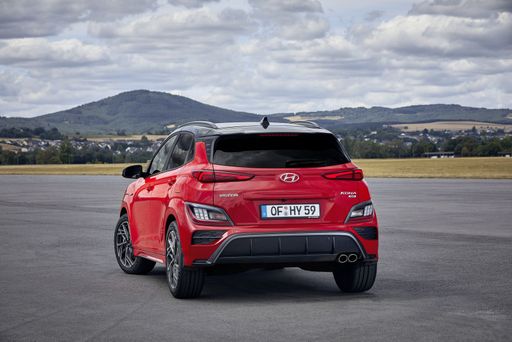
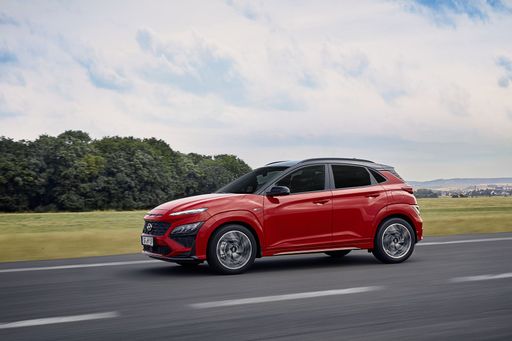
In terms of size, the Hyundai Kona measures 4,350 mm in length, 1,825 mm in width, and stands 1,585 mm high, providing a spacious and practical environment for passengers and cargo alike. It also boasts a trunk capacity of 466 liters, ensuring ample space for daily and recreational use.

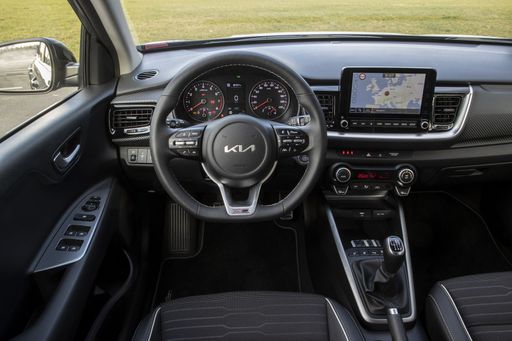
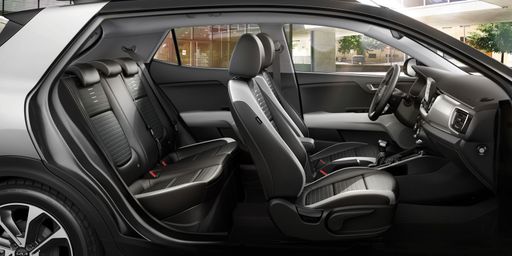
The smaller Kia Stonic measures at 4,140 mm in length and 1,760 mm in width, which contributes to its agility in urban settings. However, this compactness does sacrifice some cargo space, with a trunk capacity of 352 liters. Both models can comfortably accommodate five passengers with ease.

Stonic

Technological Innovations

Both the Kona and Stonic are equipped with cutting-edge technology features designed to enhance the driving experience. The Hyundai Kona shines with its advanced infotainment system, which includes a high-resolution touchscreen, smartphone integration through Apple CarPlay and Android Auto, and a premium audio system in higher trims. Additionally, the Kona also offers safety features such as lane-keeping assist, adaptive cruise control, and a suite of driver-assistance technologies that elevate its appeal for safety-conscious buyers.

Similarly, the Kia Stonic offers a modern infotainment setup with an equally user-friendly interface. However, it may lack some of the advanced driver-assistance offerings found in the Kona but compensates with stylish aesthetics and ergonomic interior design. Both vehicles come equipped with smart tech that includes Bluetooth connectivity and USB ports, ensuring that drivers stay connected on the go.

Kona

Conclusion: Which SUV Is for You?

In summary, the choice between the Hyundai Kona and the Kia Stonic ultimately comes down to individual preferences and priorities. The Kona is the ideal option for those seeking a more powerful, versatile vehicle with advanced electrification and enhanced technology. Meanwhile, the Stonic presents an attractive choice for buyers prioritizing efficiency and compact urban maneuverability. As compact SUVs continue to gain popularity, both the Kona and Stonic stand out as capable competitors ready to meet customer demands in style and substance.

Here’s where it gets real: The technical differences in detail

Stonic

Costs and Efficiency:

Looking at overall running costs, both models reveal some interesting differences in everyday economy.

Kia Stonic is somewhat cheaper – starting at 20,100 £ , while the Hyundai Kona costs 23,100 £ . That’s a price difference of around 2,923 £.

Fuel consumption also shows a difference: the Hyundai Kona uses 4.6 L/100km and is visibly more efficient than the Kia Stonic with 5.6 L/100km. The difference is about 1 L/100km.

Kona

Engine and Performance:

Power, torque and acceleration are the classic benchmarks for car enthusiasts – and here, some clear differences start to show.

When it comes to engine power, the Hyundai Kona offers significantly more power – delivering 218 HP compared to 115 HP. That’s roughly 103 HP more horsepower.

When accelerating from 0 to 100 km/h, the Hyundai Kona is visibly quicker – completing the sprint in 7.8 s, while the Kia Stonic takes 10.7 s. That’s about 2.9 s quicker.

Looking at top speed, the Kia Stonic is only slightly faster – reaching 182 km/h, while the Hyundai Kona tops out at 172 km/h. The difference is around 10 km/h.

There’s also a difference in torque: the Hyundai Kona delivers markedly more torque with 265 Nm compared to 200 Nm. That’s about 65 Nm more.

Stonic

Space and Everyday Use:

Beyond pure performance, interior space and usability matter most in daily life. This is where you see which car is more practical and versatile.

Both vehicles offer seating for 5 people.

In terms of curb weight, Kia Stonic is a bit lighter – 1,205 kg compared to 1,370 kg. The difference is around 165 kg.

Looking at boot space, the Hyundai Kona offers visibly more boot space – 466 L compared to 352 L. That’s a difference of about 114 L.

For maximum load capacity, the Hyundai Kona offers moderately more capacity – up to 1,300 L, about 145 L more than the Kia Stonic.

When it comes to payload, the Hyundai Kona carries very slightly more – 490 kg compared to 445 kg. That’s a difference of about 45 kg.

Who wins the race in the data check?

The Hyundai Kona is far ahead overall in the objective data comparison.
This result only shows which model scores more points on paper – not which of the two cars feels right for you.

from £23,100
Kona

Hyundai Kona

  • Engine Type : Electric, Petrol, Full Hybrid
  • Transmission : Automatic, Manuel
  • Drive Type : Front-Wheel Drive, All-Wheel Drive
  • Power HP : 115 - 218 HP
  • Consumption L/100km : 4.6 - 7 L/100km
  • Consumption kWh/100km : 14.6 - 16.8 kWh/100km
  • Electric Range : 377 - 514 km
Kia Stonic
Hyundai Kona

Costs and Consumption

View detailed analysis

Engine and Performance

View detailed analysis

Dimensions and Body

View detailed analysis

Kia Stonic

The Kia Stonic is a sprightly compact crossover that mixes city-friendly agility with a cheeky, modern design — perfect for buyers who want style without sacrificing sense. Inside it serves up clever practicality and a bright, well-equipped cabin, making everyday driving feel a bit more fun than it has any right to be.

details

Hyundai Kona

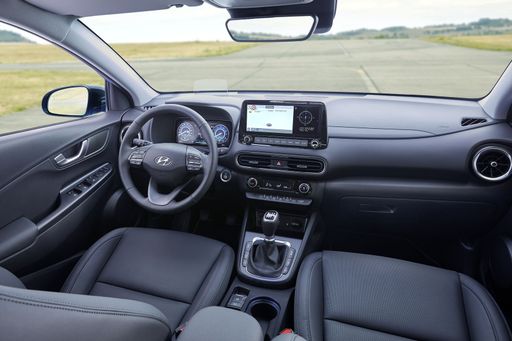
The Hyundai Kona wears its personality on the outside with bold styling and sprightly handling that turns city driving into something a little more fun than a commute. It blends practical space, modern tech and sensible running costs into a compact, stylish package — a smart pick if you want flair without paying luxury prices.

details
Kia Stonic
Hyundai Kona

Costs and Consumption

Price
20,100 - 26,600 £
Price
23,100 - 41,600 £
Consumption L/100km
5.6 - 5.9 L/100km
Consumption L/100km
4.6 - 7 L/100km
Consumption kWh/100km
-
Consumption kWh/100km
14.6 - 16.8 kWh/100km
Electric Range
-
Electric Range
377 - 514 km
Battery Capacity
-
Battery Capacity
48.4 - 65.4 kWh
co2
127 - 133 g/km
co2
0 - 163 g/km
Fuel tank capacity
45 L
Fuel tank capacity
-

Dimensions and Body

Body Type
SUV
Body Type
SUV
Seats
5
Seats
5
Doors
5
Doors
5
Curb weight
1,205 - 1,270 kg
Curb weight
1,370 - 1,773 kg
Trunk capacity
352 L
Trunk capacity
466 L
Length
4,165 mm
Length
4,355 - 4,385 mm
Width
1,760 mm
Width
1,825 mm
Height
1,520 mm
Height
1,580 mm
Max trunk capacity
1,155 L
Max trunk capacity
1,300 L
Payload
440 - 445 kg
Payload
420 - 490 kg

Engine and Performance

Engine Type
Petrol, Petrol MHEV
Engine Type
Electric, Petrol, Full Hybrid
Transmission
Manuel, Automatic
Transmission
Automatic, Manuel
Transmission Detail
Manual Gearbox, Dual-Clutch Automatic
Transmission Detail
Reduction Gearbox, Manual Gearbox, Dual-Clutch Automatic
Drive Type
Front-Wheel Drive
Drive Type
Front-Wheel Drive, All-Wheel Drive
Power HP
100 - 115 HP
Power HP
115 - 218 HP
Acceleration 0-100km/h
10.7 - 12.1 s
Acceleration 0-100km/h
7.8 - 11.9 s
Max Speed
179 - 182 km/h
Max Speed
162 - 172 km/h
Torque
172 - 200 Nm
Torque
200 - 265 Nm
Number of Cylinders
3
Number of Cylinders
3 - 4
Power kW
74 - 85 kW
Power kW
85 - 160 kW
Engine capacity
998 cm3
Engine capacity
998 - 1,598 cm3

General

Model Year
2,025
Model Year
2,024 - 2,025
CO2 Efficiency Class
D
CO2 Efficiency Class
A, D, C, E, F
Brand
Kia
Brand
Hyundai
DriveDuel uses data analysis and artificial intelligence to evaluate vehicle data and create content. Content is regularly reviewed and improved. The displayed prices are estimates based on German list prices, adjusted to the respective country’s VAT. Country-specific registration taxes are not included. This information is not legally binding.