@ Kia Corporation
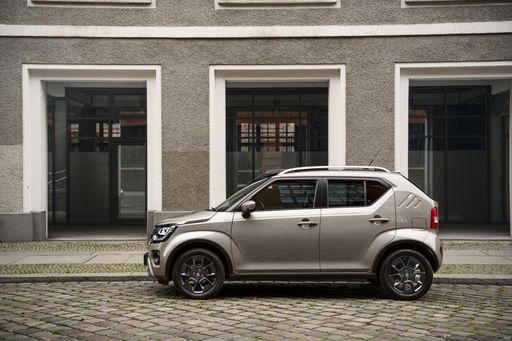
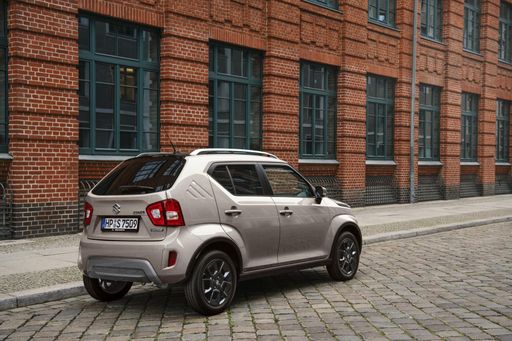
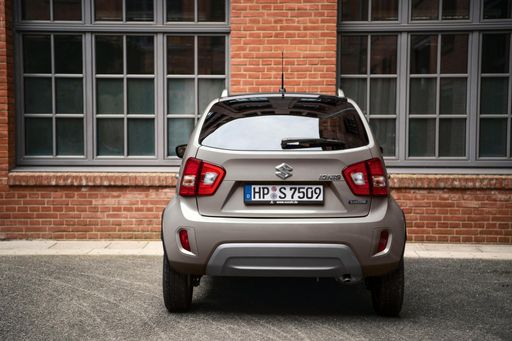
@ Suzuki Motor Corporation
VS

Kia Stonic vs Suzuki Ignis – Which one offers the better deal?

Everyday use, family trips or long-distance drives – here’s where the differences show.
Discover whether Kia Stonic or Suzuki Ignis fits your lifestyle better.

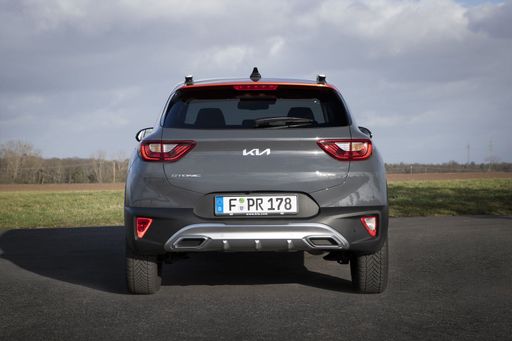
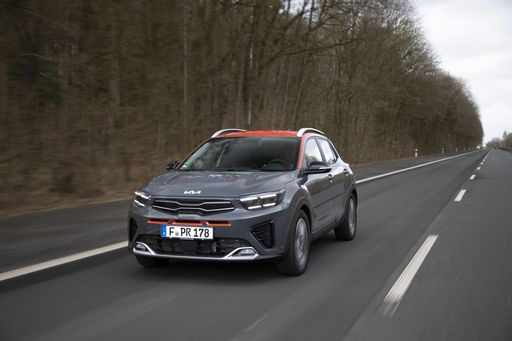
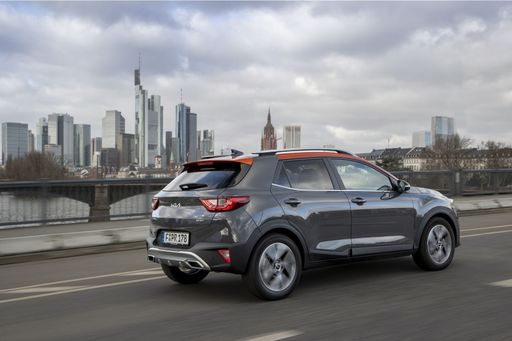
Stonic @ Kia Corporation

A Tale of Two Crossovers: Kia Stonic vs. Suzuki Ignis

In the fiercely competitive subcompact SUV segment, two models have emerged as popular choices for drivers seeking practicality and style without breaking the bank: the Kia Stonic and the Suzuki Ignis. Both vehicles offer distinct advantages and technical features that cater to differing preferences and driving needs. Let’s explore how these two contenders stack up against each other.
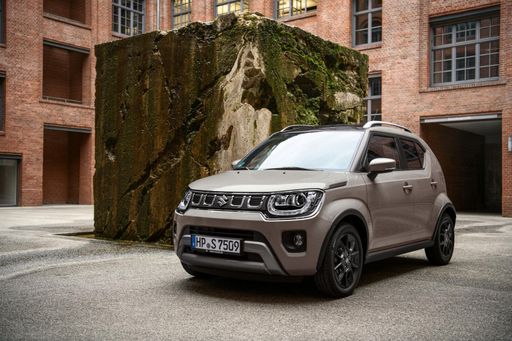
Ignis @ Suzuki Motor Corporation

Design and Dimensions: Compact, Yet Spacious

The Kia Stonic and Suzuki Ignis both bring their unique styling to the road, each exuding a youthful and energetic vibe. The Stonic boasts a length of 4140 mm, width of 1760 mm, and height of 1505 mm, creating a sleek profile that fits the urban landscape effortlessly. With a trunk capacity of 352 liters, it provides ample cargo space for daily adventures.

On the other hand, the Suzuki Ignis comes in a more compact form, measuring 3700 mm in length, 1690 mm in width, and 1605 mm in height. While it offers a smaller trunk capacity of 267 liters, its quirky and robust appearance, coupled with the option for all-wheel drive, adds a touch of off-road excitement.

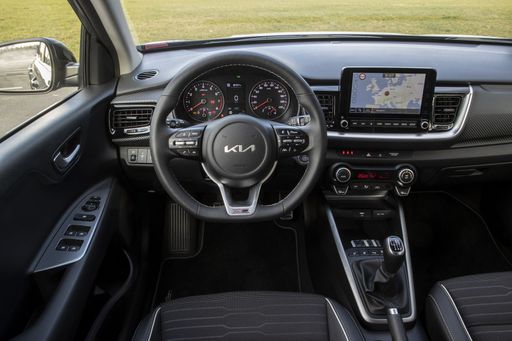
Stonic @ Kia Corporation

Performance and Efficiency: A Balance of Power

The Kia Stonic offers a diverse range of engine options, including petrol and petrol mild hybrid (MHEV) variants. The power output varies between 79 and 100 HP, with torque ranging from 113 to 200 Nm. Drivers have the option of a manual gearbox or a sophisticated dual-clutch automatic transmission, ensuring a dynamic driving experience. It boasts an acceleration of 11.3 to 14.2 seconds from 0 to 100 km/h and reaches a max speed between 158 and 179 km/h.

The Suzuki Ignis is equipped with a 1.2-liter petrol MHEV engine, delivering 83 HP and 107 Nm of torque. This model is available in both manual and CVT transmissions, providing an effortless driving experience. With a top speed of up to 165 km/h and acceleration from 0 to 100 km/h in approximately 12.7 to 12.8 seconds, the Ignis focuses on delivering efficiency, as reflected in its impressive fuel consumption of 4.9 to 5.4 L/100km.

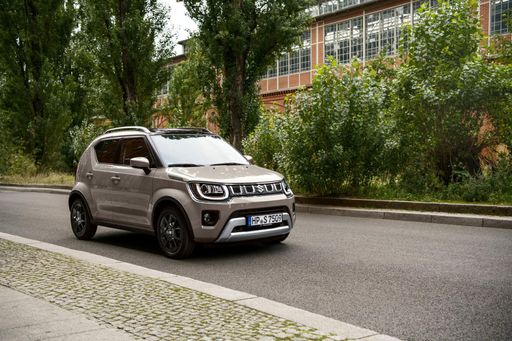
Ignis @ Suzuki Motor Corporation

Innovations and Features: Technology for Every Drive

Both the Kia Stonic and Suzuki Ignis come equipped with a host of modern technologies designed to enhance the driving experience. The Stonic features a user-friendly infotainment system, advanced driver assistance systems, and connectivity options that cater to tech-savvy drivers.

Meanwhile, the Suzuki Ignis focuses on delivering practical innovations with its compact design, offering features like an advanced infotainment touchscreen with smartphone integration, as well as optional all-wheel drive capabilities, which are particularly beneficial for those seeking a versatile vehicle able to handle different terrains.

Stonic @ Kia Corporation

Conclusion: Choosing Your Perfect Match

Ultimately, the choice between the Kia Stonic and the Suzuki Ignis depends on your personal priorities and driving environment. The Stonic’s wider range of engine options and advanced transmission features may appeal to those who prioritize performance and refinement. In contrast, the Ignis’s compact design, lower fuel consumption, and all-wheel-drive option make it an excellent choice for drivers seeking efficiency and versatility in a small package.

Whichever vehicle you choose, both the Kia Stonic and the Suzuki Ignis offer a delightful blend of style, technology, and practicality, making them excellent candidates in the subcompact SUV segment.

Here’s where it gets real: The technical differences in detail

Ignis @ Suzuki Motor Corporation

Costs and Efficiency:

Price and efficiency are often the first things buyers look at. Here it becomes clear which model has the long-term edge – whether at the pump, the plug, or in purchase price.

Suzuki Ignis has a distinct advantage in terms of price – it starts at 15600 £, while the Kia Stonic costs 20100 £. That’s a price difference of around 4526 £.

Fuel consumption also shows a difference: Suzuki Ignis manages with 4.90 L and is therefore to a small extent more efficient than the Kia Stonic with 5.60 L. The difference is about 0.70 L per 100 km.

Stonic @ Kia Corporation

Engine and Performance:

Power, torque and acceleration are the classic benchmarks for car enthusiasts – and here, some clear differences start to show.

When it comes to engine power, the Kia Stonic has a noticeable edge – offering 115 HP compared to 83 HP. That’s roughly 32 HP more horsepower.

In acceleration from 0 to 100 km/h, the Kia Stonic is somewhat quicker – completing the sprint in 10.70 s, while the Suzuki Ignis takes 12.70 s. That’s about 2 s faster.

In terms of top speed, the Kia Stonic performs barely noticeable better – reaching 182 km/h, while the Suzuki Ignis tops out at 165 km/h. The difference is around 17 km/h.

There’s also a difference in torque: Kia Stonic pulls convincingly stronger with 200 Nm compared to 107 Nm. That’s about 93 Nm difference.

Ignis @ Suzuki Motor Corporation

Space and Everyday Use:

Cabin size, boot volume and payload all play a role in everyday practicality. Here, comfort and flexibility make the difference.

Both vehicles offer seating for 5 people.

In curb weight, Suzuki Ignis is evident lighter – 935 kg compared to 1205 kg. The difference is around 270 kg.

In terms of boot space, the Kia Stonic offers clearly perceptible more room – 352 L compared to 267 L. That’s a difference of about 85 L.

In maximum load capacity, the Kia Stonic performs minimal better – up to 1155 L, which is about 55 L more than the Suzuki Ignis.

When it comes to payload, Kia Stonic somewhat takes the win – 445 kg compared to 395 kg. That’s a difference of about 50 kg.

Who wins the race?

The Kia Stonic proves to be is largely superior and therefore becomes our DriveDuel Champion!
Kia Stonic is the better all-rounder in this comparison.

from about £20,100
Stonic @ Kia Corporation

Kia Stonic

  • Engine Type : Petrol, Petrol MHEV
  • Transmission : Manuel, Automatic
  • Drive Type : Front-Wheel Drive
  • Power HP : 100 - 115 HP
  • Consumption L/100km : 5.6 - 5.9 L

Kia Stonic

The Kia Stonic is a sprightly compact crossover that mixes city-friendly agility with a cheeky, modern design — perfect for buyers who want style without sacrificing sense. Inside it serves up clever practicality and a bright, well-equipped cabin, making everyday driving feel a bit more fun than it has any right to be.

details

Suzuki Ignis

The Suzuki Ignis is a compact car that stands out with its unique blend of small SUV aesthetics and city-friendly dimensions. Its playful and distinctive design, combined with a practical and elevated driving position, makes it an appealing choice for urban dwellers seeking versatility without compromising on style. Inside, the Ignis offers a surprisingly spacious cabin with innovative storage solutions, making it ideal for those who need a functional yet characterful vehicle.

details
Kia Stonic
Suzuki Ignis
Stonic @ Kia Corporation
Ignis @ Suzuki Motor Corporation

Costs and Consumption

Price
20100 - 26600 £
Price
15600 - 19500 £
Consumption L/100km
5.6 - 5.9 L
Consumption L/100km
4.9 - 5.4 L
Consumption kWh/100km
-
Consumption kWh/100km
-
Electric Range
-
Electric Range
-
Battery Capacity
-
Battery Capacity
-
co2
127 - 133 g/km
co2
110 - 122 g/km
Fuel tank capacity
45 L
Fuel tank capacity
30 - 32 L

Dimensions and Body

Body Type
SUV
Body Type
SUV
Seats
5
Seats
4 - 5
Doors
5
Doors
5
Curb weight
1205 - 1270 kg
Curb weight
935 - 995 kg
Trunk capacity
352 L
Trunk capacity
204 - 267 L
Length
4165 mm
Length
3700 mm
Width
1760 mm
Width
1690 mm
Height
1520 mm
Height
1605 mm
Max trunk capacity
1155 L
Max trunk capacity
1086 - 1100 L
Payload
440 - 445 kg
Payload
335 - 395 kg

Engine and Performance

Engine Type
Petrol, Petrol MHEV
Engine Type
Petrol MHEV
Transmission
Manuel, Automatic
Transmission
Manuel, Automatic
Transmission Detail
Manual Gearbox, Dual-Clutch Automatic
Transmission Detail
Manual Gearbox, CVT
Drive Type
Front-Wheel Drive
Drive Type
Front-Wheel Drive, All-Wheel Drive
Power HP
100 - 115 HP
Power HP
83 HP
Acceleration 0-100km/h
10.7 - 12.1 s
Acceleration 0-100km/h
12.7 - 12.8 s
Max Speed
179 - 182 km/h
Max Speed
155 - 165 km/h
Torque
172 - 200 Nm
Torque
107 Nm
Number of Cylinders
3
Number of Cylinders
4
Power kW
74 - 85 kW
Power kW
61 kW
Engine capacity
998 cm3
Engine capacity
1197 cm3

General

Model Year
2025
Model Year
2020
CO2 Efficiency Class
D
CO2 Efficiency Class
C, D
Brand
Kia
Brand
Suzuki
Is the Kia Stonic offered with different drivetrains?

The Kia Stonic is offered with Front-Wheel Drive.

The prices and data displayed are estimates based on German list prices and may vary by country. This information is not legally binding.