VS

Kia Stonic vs VW Taigo comparison

Compare performance (115 HP vs 150 HP), boot space and price (20,400 £ vs 19,900 £ ) at a glance. Find out which car is the better choice for you – Kia Stonic or VW Taigo?

Kia Stonic vs VW Taigo: Key differences

Kia Stonic

4.8 (4 Reviews)
rate
  • only slightly lighter
details

VW Taigo

4.6 (5 Reviews)
rate
  • only slightly cheaper
  • noticeably more power
  • only slightly more efficient
  • markedly quicker 0–100 km/h
  • somewhat more trunk space
details

All details on performance, efficiency, range and trunk space can be found in the technical comparison below – including user reviews for both models.

Stonic

Kia Stonic VS VW Taigo — quick take for shoppers

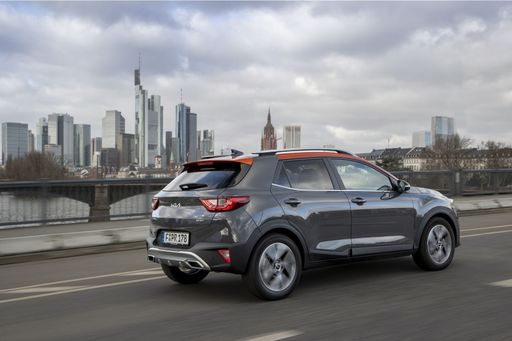
Kia Stonic and VW Taigo square off as compact, city‑friendly crossovers with very different priorities under the skin. The Kia Stonic arrives as the bargain‑minded, easy‑to‑park choice with a fresh cockpit and an uncommon long warranty that soothes ownership worries. The VW Taigo counters with a more comfortable, practical package that stretches the usability of a B‑SUV—most notably with a noticeably larger boot and a calmer demeanor on longer trips. Shoppers who value short‑haul agility and low‑stress running costs will read the Stonic as the pragmatic pick, while buyers who haul luggage or spend motorway miles will spot the Taigo’s everyday advantages. This comparison focuses on how those differences play out in real life rather than on raw figures alone.
Taigo

Character and driving manners

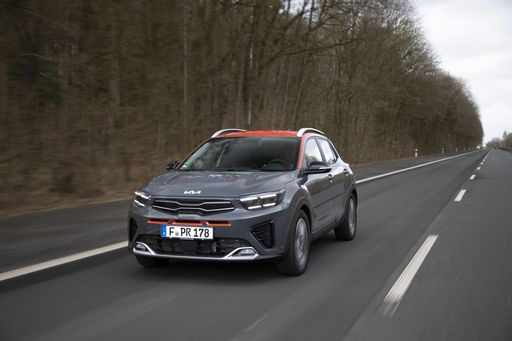
The Kia Stonic feels light, eager and city‑focused where the VW Taigo is tuned toward composed, confidence‑oriented driving. Kia Stonic’s sharp steering and compact footprint make downtown maneuvers and tight parking straightforward, whereas the VW Taigo’s more planted suspension and stronger engine choices make motorway cruising and overtaking feel less effortful. Kia Stonic rewards urban drivers with a nimble, engaging personality but can come across underpowered and strained when speeds rise, while VW Taigo rewards longer runs with steadiness at the cost of a less playful steering feel. If you want a car that dances through traffic choose the Kia Stonic; if you prefer a car that calmly covers miles with less fuss, the VW Taigo is the natural leaning.

Stonic

Comfort and long‑distance behavior

On comfort, the VW Taigo leans clearly toward relaxed long‑distance use while the Kia Stonic keeps things firmer and more alert. VW Taigo’s suspension soaks up undulations with less noise and more composure, which makes motorway journeys and long weekend trips noticeably less tiring than in the Kia Stonic. Kia Stonic’s firmer damping and higher interior noise at speed mean that short trips feel lively but extended motorway stints expose its compromises. For buyers who regularly do long runs, the VW Taigo’s calmer cabin will be more forgiving; for urban commuters who prize sharp responses over plushness, the Kia Stonic remains appealing.

Taigo

Practicality and everyday usability

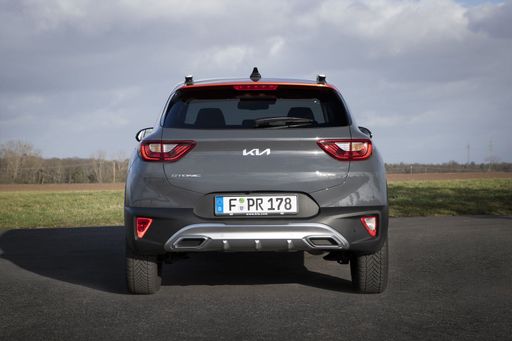
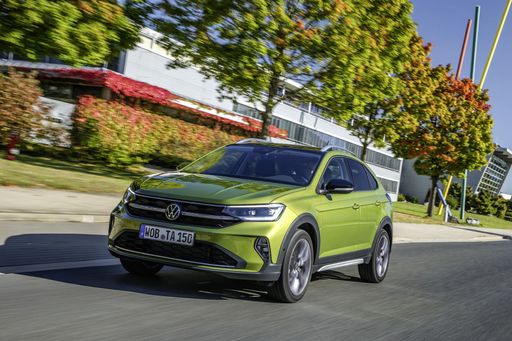
The VW Taigo takes the clear lead in usable space and luggage practicality compared with the Kia Stonic’s tighter load bay. VW Taigo’s broader, more accessible boot and generally more accommodating cargo layout make weekend baggage, prams or grocery runs simpler, while Kia Stonic’s smaller boot and stepped floor require a little more planning when packing. Rear passenger room follows the same script: the Kia Stonic is fine for shorter trips or kids, whereas the VW Taigo offers a bit more rear comfort although tall adults will still notice the coupe‑style roofline. If flexible everyday hauling matters, VW Taigo is the more practical choice; if you rarely load the car and value compactness, Kia Stonic will do the job more nimbly.

Stonic

Cabin feel, tech and daily ergonomics

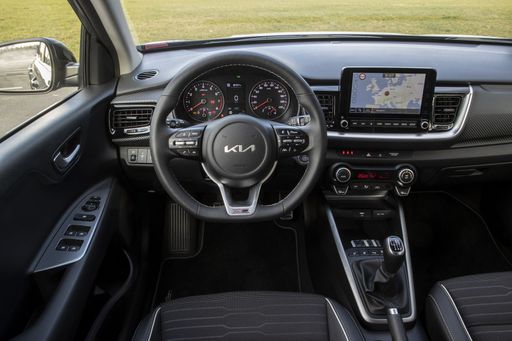
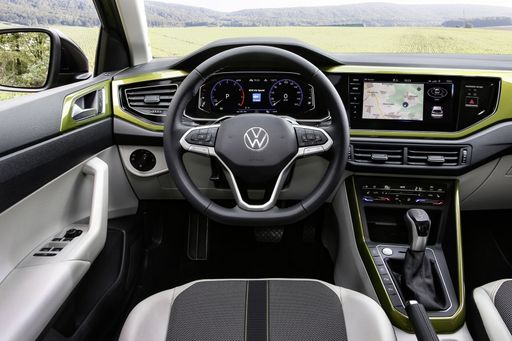
Kia Stonic refreshed its interior with twin displays and a straightforward switchgear layout that favors easy, familiar control, while the VW Taigo sticks to VW’s conservative ergonomics but suffers from a sometimes sluggish infotainment experience and touch‑slider climate controls that irritate some users. Kia Stonic’s cabin can look more modern on paper, yet it still shows affordable plastics in places, whereas VW Taigo feels sturdily built but equally functional rather than premium. Kia Stonic’s long warranty is a tangible ownership plus that defuses worry about value, while VW Taigo’s pack of driver aids and safe, predictable ergonomics will appeal to people who prioritize refinement and reassurance. For daily use, Kia Stonic feels simpler and more youthful; VW Taigo feels steadier and more conventional.

Taigo

Who should pick which car — buyer fit and trade‑offs

Put simply: choose the Kia Stonic if you live in town, prize easy parking, want a fresh cabin and long warranty cover, and rarely carry large loads or do long motorway miles. Choose the VW Taigo if you frequently travel with luggage or passengers, want a more relaxed ride for longer distances, and prefer the confidence of a VW driving package even if some trims push the price up. The Kia Stonic trades long‑haul refinement and boot space for urban agility and ownership peace of mind, while the VW Taigo trades a touch of city nimbleness for everyday usability and motorway calm. Below we’ll drill into the technical differences so you can see how engines, gearboxes and dimensions translate into those real‑world compromises.

Here’s where it gets real: The technical differences in detail

Stonic

Costs and Efficiency:

Looking at overall running costs, both models reveal some interesting differences in everyday economy.

VW Taigo is only slightly cheaper – starting at 19,900 £ , while the Kia Stonic costs 20,400 £ . That’s a price difference of around 471 £.

Fuel consumption also shows a difference: the VW Taigo uses 5.3 L/100km and is only slightly more efficient than the Kia Stonic with 5.6 L/100km. The difference is about 0.3 L/100km.

Taigo

Engine and Performance:

Power, torque and acceleration are the classic benchmarks for car enthusiasts – and here, some clear differences start to show.

When it comes to engine power, the VW Taigo offers noticeably more power – delivering 150 HP compared to 115 HP. That’s roughly 35 HP more horsepower.

When accelerating from 0 to 100 km/h, the VW Taigo is markedly quicker – completing the sprint in 8.2 s, while the Kia Stonic takes 10.7 s. That’s about 2.5 s quicker.

There’s also a difference in torque: the VW Taigo delivers somewhat more torque with 250 Nm compared to 200 Nm. That’s about 50 Nm more.

Stonic

Space and Everyday Use:

Beyond pure performance, interior space and usability matter most in daily life. This is where you see which car is more practical and versatile.

Both vehicles offer seating for 5 people.

In terms of curb weight, Kia Stonic is only slightly lighter – 1,205 kg compared to 1,229 kg. The difference is around 24 kg.

Looking at boot space, the VW Taigo offers somewhat more boot space – 440 L compared to 352 L. That’s a difference of about 88 L.

When it comes to payload, the VW Taigo carries very slightly more – 457 kg compared to 445 kg. That’s a difference of about 12 kg.

Who wins the race in the data check?

The VW Taigo is decisively ahead in the objective data comparison.
This result only shows which model scores more points on paper – not which of the two cars feels right for you.

from £19,900
Taigo

VW Taigo

  • Engine Type Petrol
  • Transmission Manual, Automatic
  • Drive Type Front-Wheel Drive
  • Power HP 95 - 150 HP
  • Consumption L/100km 5.3 - 5.8 L/100km
Kia Stonic
VW Taigo

Costs and Consumption

View detailed analysis

Engine and Performance

View detailed analysis

Dimensions and Body

View detailed analysis

Kia Stonic

The Kia Stonic is a compact crossover that pairs nimble city manners with a surprisingly spacious and comfortable cabin. It’s a practical, well-equipped choice for buyers who value sensible features, approachable styling and easy everyday usability.

details

VW Taigo

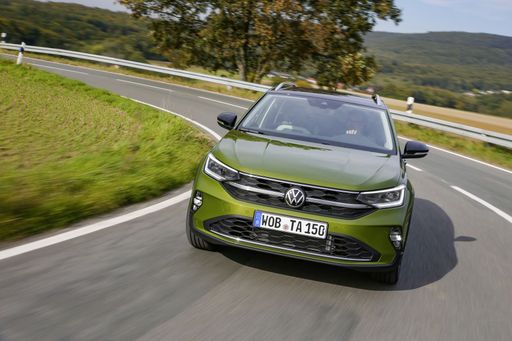
The VW Taigo blends a coupe-like roofline with crossover practicality, giving it a stylish presence on the road while remaining easy to live with for everyday driving. It delivers a comfortable ride, intuitive tech and smart use of space, making it a good choice if you want SUV looks without the bulk of a larger vehicle.

details
Kia Stonic
VW Taigo

Costs and Consumption

Price
20,400 - 26,800 £
Price
19,900 - 31,800 £
Consumption L/100km
5.6 - 5.7 L/100km
Consumption L/100km
5.3 - 5.8 L/100km
Consumption kWh/100km
-
Consumption kWh/100km
-
Electric Range
-
Electric Range
-
Battery Capacity
-
Battery Capacity
-
co2
126 - 128 g/km
co2
120 - 132 g/km
Fuel tank capacity
-
Fuel tank capacity
-

Dimensions and Body

Body Type
SUV
Body Type
SUV
Seats
5
Seats
5
Doors
-
Doors
-
Curb weight
1,205 - 1,270 kg
Curb weight
1,229 - 1,302 kg
Trunk capacity
352 L
Trunk capacity
440 L
Length
-
Length
-
Width
1,760 mm
Width
1,757 mm
Height
-
Height
-
Max trunk capacity
-
Max trunk capacity
-
Payload
440 - 445 kg
Payload
448 - 457 kg

Engine and Performance

Engine Type
Petrol, Petrol MHEV
Engine Type
Petrol
Transmission
Manual, Automatic
Transmission
Manual, Automatic
Transmission Detail
Manual Gearbox, Dual-Clutch Automatic
Transmission Detail
Manual Gearbox, Dual-Clutch Automatic
Drive Type
Front-Wheel Drive
Drive Type
Front-Wheel Drive
Power HP
100 - 115 HP
Power HP
95 - 150 HP
Acceleration 0-100km/h
10.7 - 12.1 s
Acceleration 0-100km/h
8.2 - 11.1 s
Max Speed
-
Max Speed
-
Torque
172 - 200 Nm
Torque
175 - 250 Nm
Number of Cylinders
3
Number of Cylinders
3 - 4
Power kW
74 - 85 kW
Power kW
70 - 110 kW
Engine capacity
998 cm3
Engine capacity
999 - 1,498 cm3

General

Model Year
2025
Model Year
2,024 - 2,025
CO2 Efficiency Class
D
CO2 Efficiency Class
D
Brand
Kia
Brand
VW
DriveDuel uses data analysis and artificial intelligence to evaluate vehicle data and create content. Content is regularly reviewed and improved. The displayed prices are estimates based on German list prices, adjusted to the respective country’s VAT. Country-specific registration taxes are not included. This information is not legally binding.