VS

Mazda 2 vs Hyundai i10 comparison

Compare performance (115 HP vs 90 HP), boot space and price (14,200 £ vs 14,600 £ ) at a glance. Find out which car is the better choice for you – Mazda 2 or Hyundai i10?

Mazda 2 vs Hyundai i10: Key differences

Mazda 2

  • barely cheaper
  • visibly more power
  • very slightly more efficient
  • markedly quicker 0–100 km/h
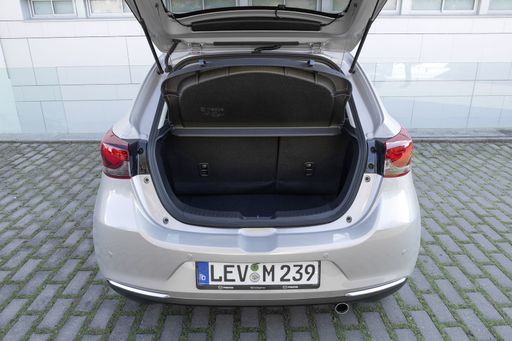
  • barely more trunk space
details

Hyundai i10

5 (1 Reviews)
rate
  • somewhat lighter
details

All details on performance, efficiency, range and trunk space can be found in the technical comparison below – including user reviews for both models.

By Achim Sedelmaier

2

In the ever-evolving landscape of compact cars, the Hyundai i10 and Mazda 2 stand out as popular options for urban drivers who prioritize efficiency and style. This comparison delves into the technical aspects, innovations, and overall driving experience that each vehicle offers.

i10

Design and Dimensions

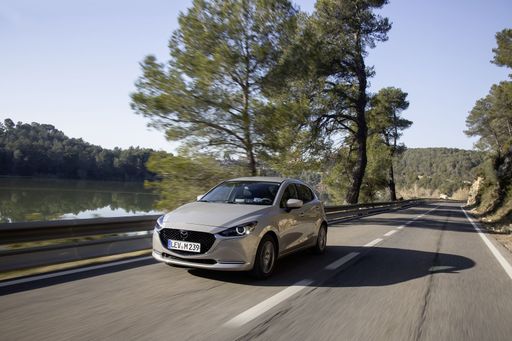
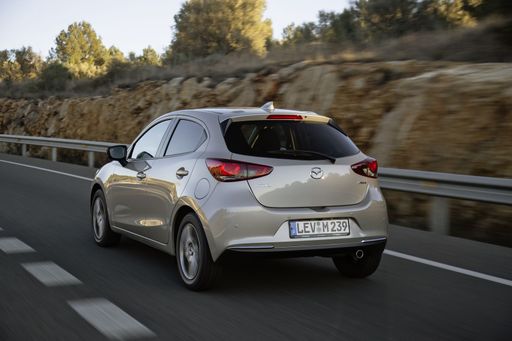
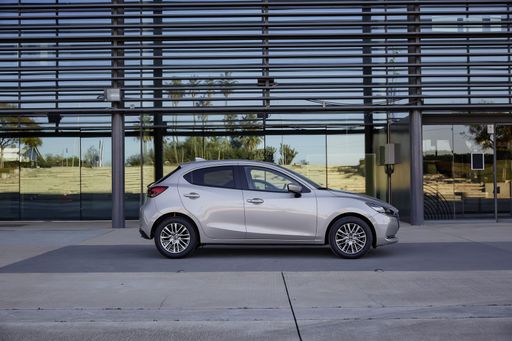
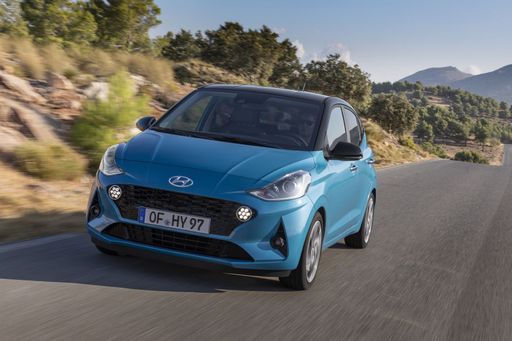
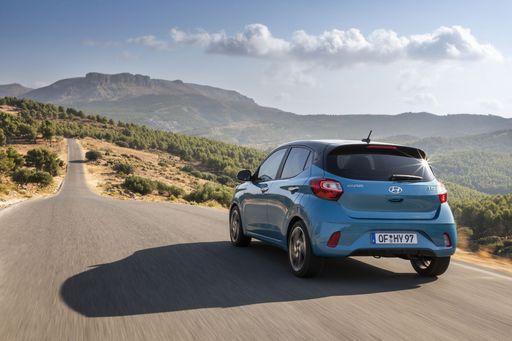
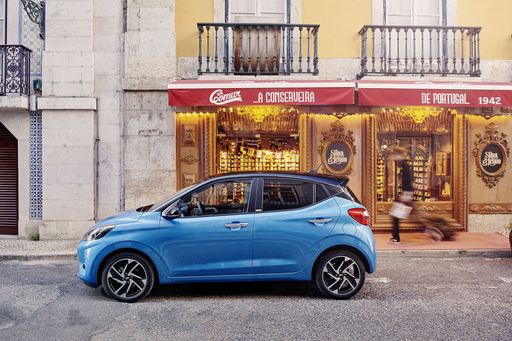
The Hyundai i10 presents a fresh and dynamic design characterized by its sporty hatchback silhouette. Measuring 3,670 mm in length and 1,680 mm in width, it offers a compact form that is ideal for city driving. In contrast, the Mazda 2 is slightly larger at 4,080 mm long and 1,695 mm wide, providing more interior room while retaining a sleek appearance.

Height-wise, the i10 stands at 1,480 mm (1,483 mm for certain variants), while the Mazda 2 is taller at 1,515 mm. Both vehicles feature five doors for easy access, making them practical choices for daily commutes or weekend adventures.

2

Performance and Engine Options

The Hyundai i10 offers a variety of petrol engines with power outputs ranging from 63 HP to 90 HP, featuring a choice between manual and automated manual transmissions. With a top speed of up to 175 km/h and acceleration times from 11.4 seconds to 18.4 seconds for 0-100 km/h, the i10 balances efficiency and performance well, especially for city conditions.

On the other hand, the Mazda 2 excels with its 1.5-liter petrol engine, delivering up to 115 HP. Acceleration is brisk, clocking in at just 9.1 seconds for the 0-100 km/h mark. With a maximum speed of 200 km/h, the Mazda 2 aims to provide a spirited driving experience that can handle both urban streets and open roads.

i10

Fuel Efficiency and Emissions

Fuel economy is a critical aspect of any urban vehicle, and the Hyundai i10 boasts consumption figures ranging from 4.9 to 5.4 L/100 km. With CO2 emissions between 111 and 123 g/km, it ranks well for environmental efficiency in its class.

The Mazda 2, with its slightly larger engine, manages to maintain competitive fuel efficiency, averaging between 4.7 and 5.4 L/100 km. Its CO2 emissions range from 107 to 113 g/km, making it a strong contender in terms of eco-friendliness without sacrificing driving excitement.

2

Interior and Technology

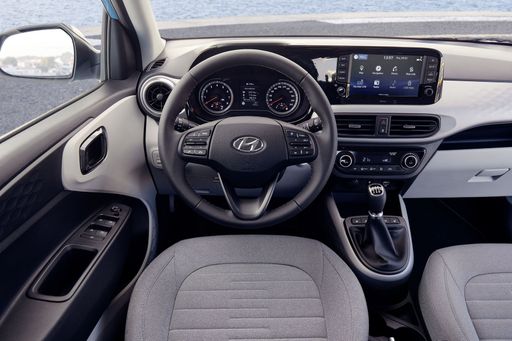
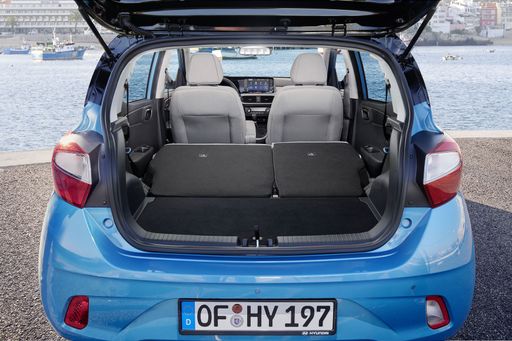
Stepping inside, the Hyundai i10 offers a user-friendly dashboard with ample technology, featuring a touchscreen infotainment system that supports smartphone connectivity. Despite its smaller size, it provides comfortable seating for up to five passengers and a trunk capacity of 252 liters.

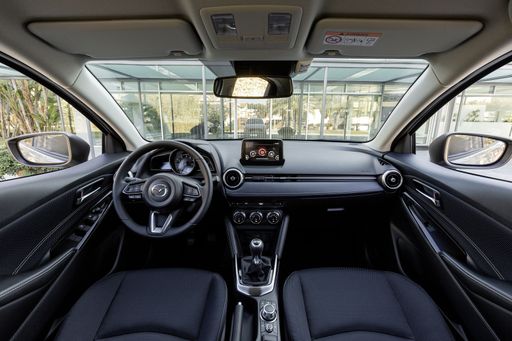
The Mazda 2, with its emphasis on quality and driver experience, features a premium interior design. The layout is intuitive, offering an infotainment system that integrates seamlessly with your devices. With a slightly larger trunk capacity of 280 liters, it gives users extra room for groceries or luggage while comfortably seating five passengers.

i10

Safety Features and Innovations

Both models prioritize safety, featuring multiple airbags and advanced braking systems. The i10 comes equipped with Hyundai's SmartSense technologies, including lane-keeping assist and enhanced rear-view sensors. The Mazda 2, on the other hand, incorporates i-Activsense safety technologies, such as adaptive cruise control and a high-strength body structure that enhances crash protection.

2

Conclusion

In conclusion, the choice between the Hyundai i10 and Mazda 2 ultimately depends on individual preferences regarding performance, style, and technological needs. The i10 is perfect for those seeking a compact, economical car for city driving, while the Mazda 2 appeals to those desiring a blend of performance and luxury in a larger hatchback. Both vehicles deliver on the promise of modern automotive innovation, making them worthy contenders in the compact car segment.

Here’s where it gets real: The technical differences in detail

2

Costs and Efficiency:

Looking at overall running costs, both models reveal some interesting differences in everyday economy.

Mazda 2 is barely cheaper – starting at 14,200 £ , while the Hyundai i10 costs 14,600 £ . That’s a price difference of around 342 £.

Fuel consumption also shows a difference: the Mazda 2 uses 4.7 L/100km and is very slightly more efficient than the Hyundai i10 with 4.9 L/100km. The difference is about 0.2 L/100km.

i10

Engine and Performance:

Power, torque and acceleration say a lot about how a car feels on the road. This is where you see which model delivers more driving dynamics.

When it comes to engine power, the Mazda 2 offers visibly more power – delivering 115 HP compared to 90 HP. That’s roughly 25 HP more horsepower.

When accelerating from 0 to 100 km/h, the Mazda 2 is markedly quicker – completing the sprint in 9.1 s, while the Hyundai i10 takes 11.4 s. That’s about 2.3 s quicker.

Looking at top speed, the Mazda 2 is a bit faster – reaching 200 km/h, while the Hyundai i10 tops out at 175 km/h. The difference is around 25 km/h.

There’s also a difference in torque: the Hyundai i10 delivers a bit more torque with 172 Nm compared to 151 Nm. That’s about 21 Nm more.

2

Space and Everyday Use:

Cabin size, boot volume and payload all play a role in everyday practicality. Here, comfort and flexibility make the difference.

Both vehicles offer seating for 5 people.

In terms of curb weight, Hyundai i10 is somewhat lighter – 996 kg compared to 1,099 kg. The difference is around 103 kg.

Looking at boot space, the Mazda 2 offers barely more boot space – 280 L compared to 252 L. That’s a difference of about 28 L.

For maximum load capacity, the Hyundai i10 offers marginally more capacity – up to 1,050 L, about 100 L more than the Mazda 2.

When it comes to payload, the Mazda 2 carries only slightly more – 437 kg compared to 423 kg. That’s a difference of about 14 kg.


Who wins the race in the data check?

The Mazda 2 is far ahead overall in the objective data comparison.
This result only shows which model scores more points on paper – not which of the two cars feels right for you.

from £14,200
2

Mazda 2

  • Engine Type : Petrol MHEV, Petrol
  • Transmission : Manuel, Automatic
  • Drive Type : Front-Wheel Drive
  • Power HP : 75 - 115 HP
  • Consumption L/100km : 4.7 - 5.4 L/100km
Mazda 2
Hyundai i10

Costs and Consumption

View detailed analysis

Engine and Performance

View detailed analysis

Dimensions and Body

View detailed analysis

Mazda 2

The Mazda 2 is a pocket-sized charmer that makes city driving feel light and lively, wrapped in sleek styling that looks right at home on trendy streets. Buyers who want an economical, fun-to-drive hatch with surprisingly grown-up cabin quality will find it hard to resist — it’s the kind of everyday companion that puts a grin on your face every time you head out.

details

Hyundai i10

The Hyundai i10 is a cheeky city car that squeezes big-car confidence into a pocket-friendly package, carving through tight streets with surprising composure and sensible practicality. For buyers after low fuss, sensible equipment and wallet-friendly running costs, it's a smart, no-nonsense pick that makes sense whether you're a first-time driver or need a reliable second car.

details
Mazda 2
Hyundai i10

Costs and Consumption

Price
14,200 - 21,700 £
Price
14,600 - 19,000 £
Consumption L/100km
4.7 - 5.4 L/100km
Consumption L/100km
4.9 - 5.5 L/100km
Consumption kWh/100km
-
Consumption kWh/100km
-
Electric Range
-
Electric Range
-
Battery Capacity
-
Battery Capacity
-
co2
107 - 122 g/km
co2
110 - 124 g/km
Fuel tank capacity
44 L
Fuel tank capacity
36 L

Dimensions and Body

Body Type
Hatchback
Body Type
Hatchback
Seats
5
Seats
4 - 5
Doors
5
Doors
5
Curb weight
1,099 - 1,120 kg
Curb weight
996 - 1,099 kg
Trunk capacity
280 L
Trunk capacity
252 L
Length
4,080 mm
Length
3,670 - 3,675 mm
Width
1,695 mm
Width
1,680 mm
Height
1,515 mm
Height
1,480 - 1,483 mm
Max trunk capacity
950 L
Max trunk capacity
1,050 L
Payload
420 - 437 kg
Payload
344 - 423 kg

Engine and Performance

Engine Type
Petrol MHEV, Petrol
Engine Type
Petrol
Transmission
Manuel, Automatic
Transmission
Manuel, Automatic
Transmission Detail
Manual Gearbox, Automatic Gearbox
Transmission Detail
Manual Gearbox, Automated Manual
Drive Type
Front-Wheel Drive
Drive Type
Front-Wheel Drive
Power HP
75 - 115 HP
Power HP
63 - 90 HP
Acceleration 0-100km/h
9.1 - 12.1 s
Acceleration 0-100km/h
11.4 - 18.4 s
Max Speed
171 - 200 km/h
Max Speed
143 - 175 km/h
Torque
143 - 151 Nm
Torque
93 - 172 Nm
Number of Cylinders
4
Number of Cylinders
3 - 4
Power kW
55 - 85 kW
Power kW
46 - 66 kW
Engine capacity
1,496 cm3
Engine capacity
998 - 1,197 cm3

General

Model Year
2023
Model Year
2024
CO2 Efficiency Class
C, D
CO2 Efficiency Class
C, D
Brand
Mazda
Brand
Hyundai
DriveDuel uses data analysis and artificial intelligence to evaluate vehicle data and create content. Content is regularly reviewed and improved. The displayed prices are estimates based on German list prices, adjusted to the respective country’s VAT. Country-specific registration taxes are not included. This information is not legally binding.