VS

Mazda CX-30 vs BMW X1 comparison

Compare performance (186 HP vs 326 HP), boot space and price (25,200 £ vs 38,200 £ ) at a glance. Find out which car is the better choice for you – Mazda CX-30 or BMW X1?

Mazda CX-30 vs BMW X1: Key differences

Mazda CX-30

4.6 (3 Reviews)
rate
  • clearly cheaper
  • very slightly lighter

BMW X1

4.2 (6 Reviews)
rate
  • considerably more power
  • substantially more efficient
  • considerably quicker 0–100 km/h
  • markedly more trunk space

All details on performance, efficiency, range and trunk space can be found in the technical comparison below – including user reviews for both models.

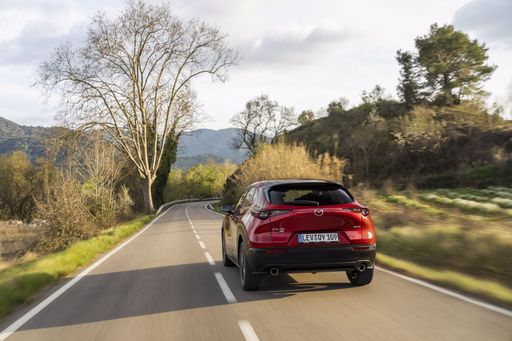
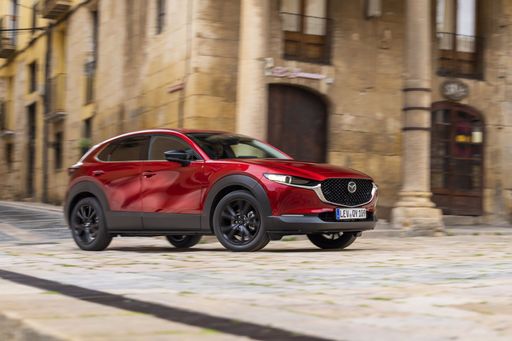
CX-30

BMW X1 vs. Mazda CX-30: An In-Depth Comparison

The compact SUV segment continues to thrive, with numerous models vying for supremacy. Among them, the BMW X1 and Mazda CX-30 stand out for their innovative technologies, performance capabilities, and overall design. In this article, we’ll dissect both models, focusing on their technical aspects, features, and innovations to help you make an informed decision.
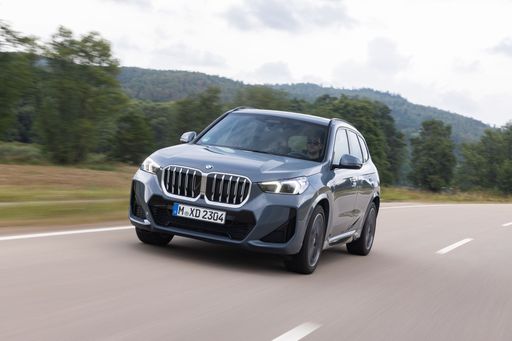
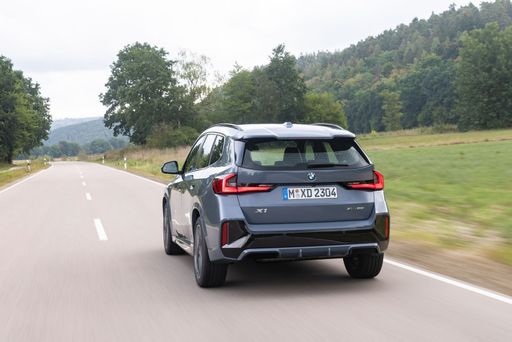
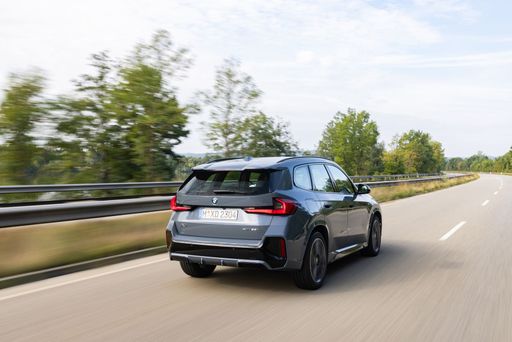
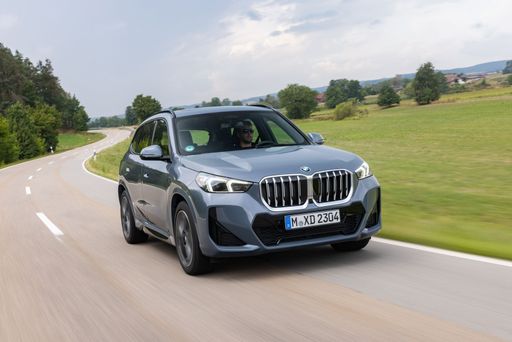
X1

Performance and Engine Options

The BMW X1 boasts a diverse range of engine options with power outputs ranging from 150 to 326 HP. Customers can choose from several engine types, including Diesel, Petrol, and hybrid variants. The most capable configuration can accelerate from 0-100 km/h in as little as 5.4 seconds, with a top speed reaching up to 250 km/h. The incorporation of both front-wheel and all-wheel drive systems adds versatility to the driving experience.

In contrast, the Mazda CX-30 primarily offers petrol MHEV powertrains, producing between 140 to 186 HP. Despite fewer options, it delivers impressive acceleration figures, with the best variant achieving 0-100 km/h in about 8.3 seconds and a top speed of 204 km/h. Both vehicles feature automatic transmissions, enhancing the driving experience with smooth shifts.

CX-30

Fuel Efficiency and Environmental Considerations

When it comes to fuel consumption, the BMW X1 excels with figures as low as 4.6 L/100 km for some variants. The overall consumption for the lineup ranges between 5.1 and 7.7 L/100 km, depending on the specific engine and configuration chosen. These fuel-efficient models emit CO2 ratings from 120 to 175 g/km, falling into efficiency classes B to F.

Bucking the trend slightly, the Mazda CX-30 shows competitive consumption figures ranging from 5.7 to 6.6 L/100 km. Its CO2 emissions range from 129 g/km to 148 g/km, placing it in CO2 efficiency classes D and E. While both vehicles are oriented towards efficiency, the BMW X1 has a clear advantage in e-mobility with its hybrid configurations.

X1

Interior Comfort and Technology

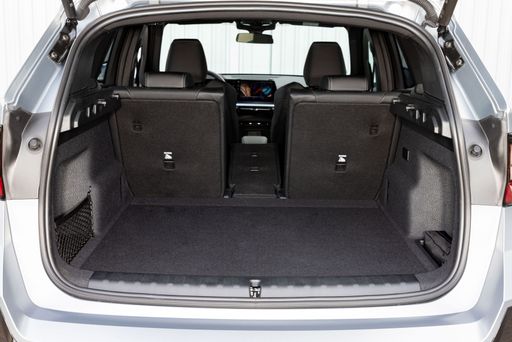
Step into the BMW X1, and you are greeted with a premium interior that blends function with luxury. The model accommodates up to five passengers with ample space and a trunk capacity of up to 540 liters. Its focus on driver and passenger comfort is complemented by the latest in infotainment and driver assistance technologies.

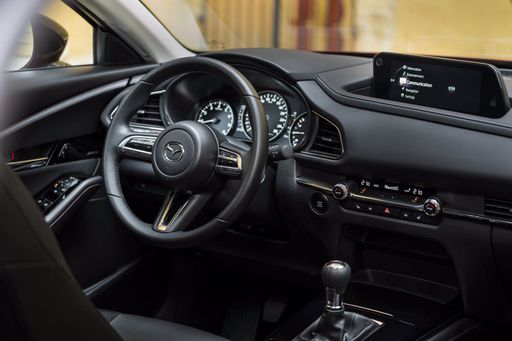
On the other hand, the Mazda CX-30 offers a stylish interior that emphasizes a driver-centric layout. While providing slightly less trunk space (430 liters), it doesn’t skimp on user-friendly technology or comfort features. Mazda’s infotainment system integrates practical functionality and modern design, ensuring an enjoyable ride.

CX-30

Safety Features and Innovations

Safety is paramount in both SEVs, and both the BMW X1 and Mazda CX-30 come rigged with an array of safety features. The BMW X1 offers advanced driver assistance technologies, such as lane-keeping assistance and adaptive cruise control, significantly enhancing safety and convenience on the road.

Similarly, the Mazda CX-30 is equipped with robust safety systems including adaptive cruise control and automatic emergency braking. Its commitment to safety earned it high marks in crash tests, proving that it stands toe-to-toe with the BMW in this critical aspect.

X1

Conclusion: Which SUV Wins?

In the battle of the BMW X1 vs. Mazda CX-30, both models have unique strengths. The BMW X1 is undoubtedly the powerhouse of the two, offering more engine choices, better performance metrics, and innovative hybrid technology. However, the Mazda CX-30 presents a compelling argument with its stylish interior, excellent safety ratings, and strong reliability reputation.

Your choice ultimately hinges on what you value more in a compact SUV: raw performance and luxury, or style and practicality. Each model has its stellar attributes, making either a worthy contender in the compact SUV market. Happy driving!

Here’s where it gets real: The technical differences in detail

CX-30

Costs and Efficiency:

When it comes to price and running costs, the biggest differences usually appear. This is often where you see which car fits your budget better in the long run.

Mazda CX-30 is clearly cheaper – starting at 25,200 £ , while the BMW X1 costs 38,200 £ . That’s a price difference of around 12,994 £.

Fuel consumption also shows a difference: the BMW X1 uses 2.5 L/100km and is substantially more efficient than the Mazda CX-30 with 5.7 L/100km. The difference is about 3.2 L/100km.

X1

Engine and Performance:

Power, torque and acceleration are the classic benchmarks for car enthusiasts – and here, some clear differences start to show.

When it comes to engine power, the BMW X1 offers considerably more power – delivering 326 HP compared to 186 HP. That’s roughly 140 HP more horsepower.

When accelerating from 0 to 100 km/h, the BMW X1 is considerably quicker – completing the sprint in 5.4 s, while the Mazda CX-30 takes 8.3 s. That’s about 2.9 s quicker.

There’s also a difference in torque: the BMW X1 delivers significantly more torque with 477 Nm compared to 240 Nm. That’s about 237 Nm more.

CX-30

Space and Everyday Use:

Beyond pure performance, interior space and usability matter most in daily life. This is where you see which car is more practical and versatile.

Both vehicles offer seating for 5 people.

In terms of curb weight, Mazda CX-30 is very slightly lighter – 1,455 kg compared to 1,575 kg. The difference is around 120 kg.

Looking at boot space, the BMW X1 offers markedly more boot space – 540 L compared to 430 L. That’s a difference of about 110 L.

When it comes to payload, the BMW X1 carries barely more – 500 kg compared to 496 kg. That’s a difference of about 4 kg.

Who wins the race in the data check?

The BMW X1 is clearly superior overall in the objective data comparison.
This result only shows which model scores more points on paper – not which of the two cars feels right for you.

from £38,200
X1

BMW X1

  • Engine Type : Diesel MHEV, Petrol MHEV, Petrol, Diesel, Plugin Hybrid
  • Transmission : Automatic
  • Drive Type : Front-Wheel Drive, All-Wheel Drive
  • Power HP : 136 - 326 HP
  • Consumption L/100km : 2.5 - 7.7 L/100km
  • Electric Range : 81 km
Mazda CX-30
BMW X1

Costs and Consumption

View detailed analysis

Engine and Performance

View detailed analysis

Dimensions and Body

View detailed analysis

Mazda CX-30

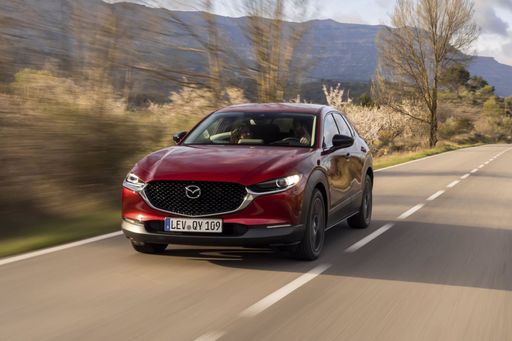
The Mazda CX-30 blends sleek coupe-like lines with the practicality of a compact crossover, feeling more premium than its price tag suggests. It’s a joy to drive for anyone who likes a taut chassis and an interior that treats daily commutes like a small luxury escape.

details

BMW X1

The BMW X1 brings a premium feel to compact crossover life, wrapping practical space and agile handling into a tidy, upscale package. It’s ideal for buyers who want BMW driving dynamics without the bulk, offering everyday comfort and a few clever tricks to keep the commute interesting.

details
Mazda CX-30
BMW X1

Costs and Consumption

Price
25,200 - 36,800 £
Price
38,200 - 55,500 £
Consumption L/100km
5.7 - 6.6 L/100km
Consumption L/100km
2.5 - 7.7 L/100km
Consumption kWh/100km
-
Consumption kWh/100km
-
Electric Range
-
Electric Range
81 km
Battery Capacity
-
Battery Capacity
14.2 kWh
co2
129 - 148 g/km
co2
57 - 175 g/km
Fuel tank capacity
-
Fuel tank capacity
47 - 54 L

Dimensions and Body

Body Type
SUV
Body Type
SUV
Seats
5
Seats
5
Doors
-
Doors
5
Curb weight
1,455 - 1,587 kg
Curb weight
1,575 - 1,935 kg
Trunk capacity
422 - 430 L
Trunk capacity
490 - 540 L
Length
-
Length
4,500 mm
Width
1,795 mm
Width
1,845 mm
Height
-
Height
1,630 - 1,642 mm
Max trunk capacity
-
Max trunk capacity
1,495 - 1,545 L
Payload
458 - 496 kg
Payload
490 - 500 kg

Engine and Performance

Engine Type
Petrol MHEV
Engine Type
Diesel MHEV, Petrol MHEV, Petrol, Diesel, Plugin Hybrid
Transmission
Manuel, Automatic
Transmission
Automatic
Transmission Detail
Manual Gearbox, Automatic Gearbox
Transmission Detail
Dual-Clutch Automatic
Drive Type
Front-Wheel Drive, All-Wheel Drive
Drive Type
Front-Wheel Drive, All-Wheel Drive
Power HP
140 - 186 HP
Power HP
136 - 326 HP
Acceleration 0-100km/h
8.3 - 10.3 s
Acceleration 0-100km/h
5.4 - 9.2 s
Max Speed
-
Max Speed
190 - 233 km/h
Torque
238 - 240 Nm
Torque
230 - 477 Nm
Number of Cylinders
4
Number of Cylinders
3 - 4
Power kW
103 - 137 kW
Power kW
100 - 240 kW
Engine capacity
1,998 - 2,488 cm3
Engine capacity
1,499 - 1,998 cm3

General

Model Year
2,025
Model Year
2,024 - 2,025
CO2 Efficiency Class
D, E
CO2 Efficiency Class
D, E, F, B
Brand
Mazda
Brand
BMW
DriveDuel uses data analysis and artificial intelligence to evaluate vehicle data and create content. Content is regularly reviewed and improved. The displayed prices are estimates based on German list prices, adjusted to the respective country’s VAT. Country-specific registration taxes are not included. This information is not legally binding.