@ Mazda Motor Corporation
@ SEAT S.A. / SEAT Media Center
VS

Mazda CX-30 vs SEAT Arona – Which one offers the better deal?

Compare performance, boot capacity, efficiency and price at a glance.
Find out which car is the better choice for you – Mazda CX-30 or SEAT Arona?

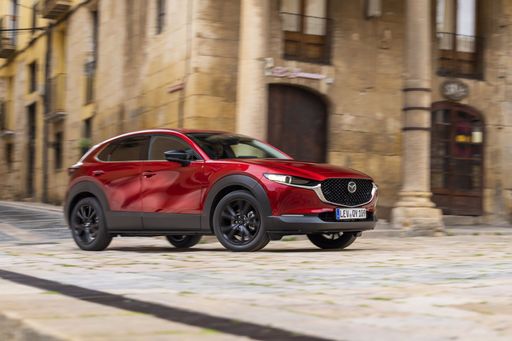
CX-30 @ Mazda Motor Corporation

The automotive segment is constantly evolving, and in the compact SUV segment, two standout contenders are the Mazda CX-30 and the SEAT Arona. Both vehicles cater to a growing audience that values versatility, advanced technology, and dynamic driving experiences. In this article, we'll dive deep into the specifications, features, and innovations that define these two remarkable SUVs.
Arona @ SEAT S.A. / SEAT Media Center

Design and Dimensions

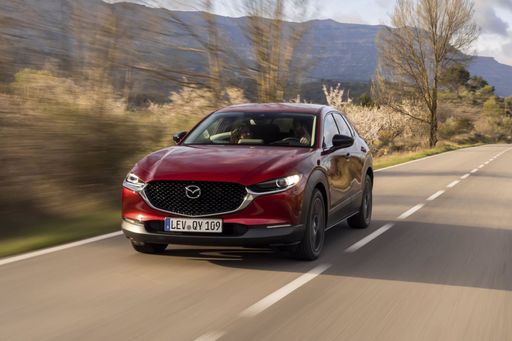
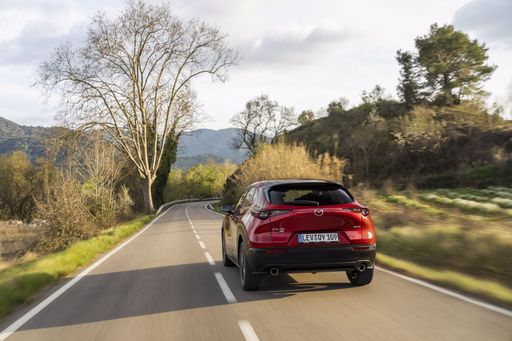
The Mazda CX-30 presents a striking design that embodies Mazda's Kodo philosophy, which emphasizes elegance and a sense of motion. Measuring 4395 mm in length, 1795 mm in width, and 1540 mm in height, the CX-30 offers a robust and modern silhouette that appeals to many buyers.

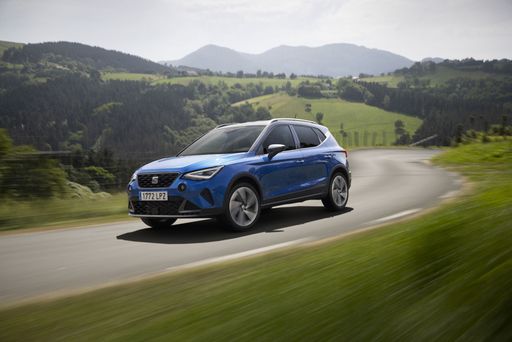
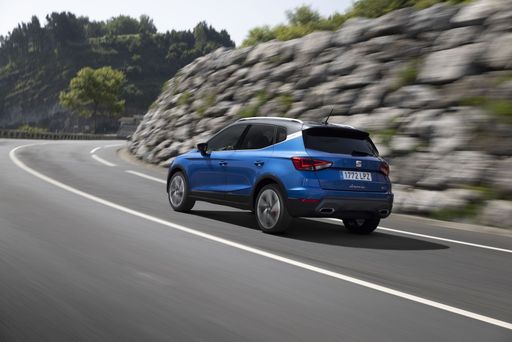
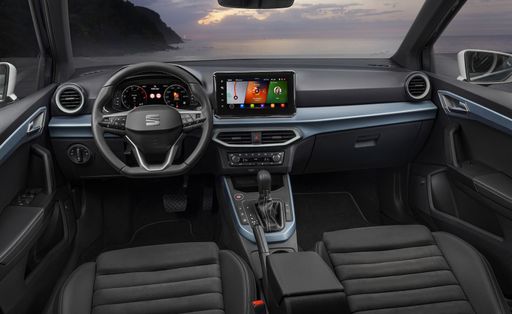
On the other hand, the SEAT Arona, while smaller at 4153 mm in length, 1780 mm in width, and 1537 mm in height, still boasts an athletic stance and an eye-catching design. The Arona targets urban drivers who appreciate a compact vehicle but do not want to sacrifice style and functionality.

CX-30 @ Mazda Motor Corporation

Performance and Powertrains

Looking under the hood, the Mazda CX-30 is equipped with a range of petrol hybrid engines, offering two power outputs: 140 HP and 186 HP. Its 1998 cm³ engine provides sufficient torque (up to 240 Nm), allowing it to accelerate from 0 to 100 km/h in as little as 8.3 seconds. The CX-30 also features both a manual and automatic gearbox, catering to different driving preferences.

The SEAT Arona offers three petrol engine options, ranging from 95 HP to a potent 150 HP. The standout performance version can reach 0 to 100 km/h in a competitive 8.4 seconds. The Arona’s engine lineup is complemented by a manual gearbox and a dual-clutch automatic option for seamless gear shifts, making it a solid choice for performance-oriented drivers.

Arona @ SEAT S.A. / SEAT Media Center

Fuel Efficiency and Environmental Impact

Fuel efficiency is a crucial aspect for many buyers. The Mazda CX-30 records a consumption figure between 5.7 and 6.6 L/100 km, which is commendable for its class, given its performance capabilities. The vehicle also emits CO2 levels ranging from 129 to 148 g/km, placing it in an efficiency class of D to E.

On the contrary, the SEAT Arona excels slightly in this category, offering a remarkable consumption between 5.4 and 5.6 L/100 km and CO2 emissions ranging from 122 to 128 g/km, solidifying its position in the D efficiency class. This makes the Arona a more environmentally friendly option for those concerned about emissions.

CX-30 @ Mazda Motor Corporation

Interior Comfort and Technology

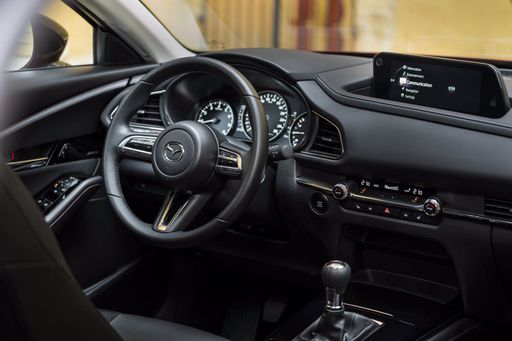
Inside, the Mazda CX-30 emphasizes a premium feel, incorporating high-quality materials and an ergonomic layout. The spacious cabin comfortably seats five adults, with a trunk capacity of 430 liters, making it practical for daily use. The CX-30 also integrates a suite of modern technology, including a user-friendly infotainment system with smartphone connectivity, advanced safety features, and driver-assist technologies.

The SEAT Arona, on the other hand, offers a youthful and tech-savvy interior. Its trunk capacity of 400 liters is slightly less than that of the CX-30, but it still provides ample storage for everyday needs. The Arona focuses heavily on connectivity, featuring an advanced infotainment system with accessibility to various apps, making it a favorite among younger drivers.

Arona @ SEAT S.A. / SEAT Media Center

Conclusion: The Right Choice for You

In conclusion, both the Mazda CX-30 and the SEAT Arona bring unique strengths to the compact SUV segment. The CX-30 impresses with its performance, upscale interior, and advanced safety technologies, while the Arona stands out with its fuel efficiency, compact dimensions for urban driving, and youthful flair.

Your choice ultimately depends on your personal priorities: whether you lean towards performance and comfort or prefer efficiency and style. Test driving both vehicles will surely help in making the right decision tailored to your needs.

Here’s where it gets real: The technical differences in detail

CX-30 @ Mazda Motor Corporation

Costs and Efficiency:

When it comes to price and running costs, the biggest differences usually appear. This is often where you see which car fits your budget better in the long run.

SEAT Arona has a evident advantage in terms of price – it starts at 19300 £, while the Mazda CX-30 costs 25200 £. That’s a price difference of around 5932 £.

Fuel consumption also shows a difference: SEAT Arona manages with 5.40 L and is therefore slight more efficient than the Mazda CX-30 with 5.70 L. The difference is about 0.30 L per 100 km.

Arona @ SEAT S.A. / SEAT Media Center

Engine and Performance:

Power, torque and acceleration say a lot about how a car feels on the road. This is where you see which model delivers more driving dynamics.

When it comes to engine power, the Mazda CX-30 has a a bit edge – offering 186 HP compared to 150 HP. That’s roughly 36 HP more horsepower.

In acceleration from 0 to 100 km/h, the Mazda CX-30 is barely noticeable quicker – completing the sprint in 8.30 s, while the SEAT Arona takes 8.40 s. That’s about 0.10 s faster.

In terms of top speed, the SEAT Arona performs hardly perceptible better – reaching 210 km/h, while the Mazda CX-30 tops out at 204 km/h. The difference is around 6 km/h.

There’s also a difference in torque: SEAT Arona pulls hardly perceptible stronger with 250 Nm compared to 240 Nm. That’s about 10 Nm difference.

Space and Everyday Use:

Whether family car or daily driver – which one offers more room, flexibility and comfort?

Both vehicles offer seating for 5 people.

In curb weight, SEAT Arona is noticeable lighter – 1188 kg compared to 1455 kg. The difference is around 267 kg.

In terms of boot space, the Mazda CX-30 offers barely noticeable more room – 430 L compared to 400 L. That’s a difference of about 30 L.

In maximum load capacity, the Mazda CX-30 performs hardly perceptible better – up to 1406 L, which is about 126 L more than the SEAT Arona.

When it comes to payload, SEAT Arona minimal takes the win – 522 kg compared to 496 kg. That’s a difference of about 26 kg.

Who wins the race?

The Mazda CX-30 proves to be secures victory with a clear margin and therefore becomes our DriveDuel Champion!
Mazda CX-30 is the better all-rounder in this comparison.

from about £25,200
CX-30 @ Mazda Motor Corporation

Mazda CX-30

  • Engine Type : Petrol MHEV
  • Transmission : Manuel, Automatic
  • Drive Type : Front-Wheel Drive, All-Wheel Drive
  • Power HP : 140 - 186 HP
  • Consumption L/100km : 5.7 - 6.6 L

Mazda CX-30

5 (1)
rate

The Mazda CX-30 blends sleek coupe-like lines with the practicality of a compact crossover, feeling more premium than its price tag suggests. It’s a joy to drive for anyone who likes a taut chassis and an interior that treats daily commutes like a small luxury escape.

details

SEAT Arona

The SEAT Arona is a cheeky urban crossover that mixes sharp styling with sensible practicality, making it an appealing choice for buyers who want personality without fuss. It’s zippy in traffic, comfortable enough for daily driving, and brings enough character to make routine journeys feel a little more fun.

details
Mazda CX-30
SEAT Arona
CX-30 @ Mazda Motor Corporation
Arona @ SEAT S.A. / SEAT Media Center

Costs and Consumption

Price
25200 - 36800 £
Price
19300 - 29300 £
Consumption L/100km
5.7 - 6.6 L
Consumption L/100km
5.4 - 5.6 L
Consumption kWh/100km
-
Consumption kWh/100km
-
Electric Range
-
Electric Range
-
Battery Capacity
-
Battery Capacity
-
co2
129 - 148 g/km
co2
122 - 128 g/km
Fuel tank capacity
48 - 51 L
Fuel tank capacity
40 L

Dimensions and Body

Body Type
SUV
Body Type
SUV
Seats
5
Seats
5
Doors
5
Doors
5
Curb weight
1455 - 1587 kg
Curb weight
1188 - 1268 kg
Trunk capacity
422 - 430 L
Trunk capacity
400 L
Length
4395 mm
Length
4153 mm
Width
1795 mm
Width
1780 mm
Height
1540 mm
Height
1537 mm
Max trunk capacity
1398 - 1406 L
Max trunk capacity
1280 L
Payload
458 - 496 kg
Payload
502 - 522 kg

Engine and Performance

Engine Type
Petrol MHEV
Engine Type
Petrol
Transmission
Manuel, Automatic
Transmission
Manuel, Automatic
Transmission Detail
Manual Gearbox, Automatic Gearbox
Transmission Detail
Manual Gearbox, Dual-Clutch Automatic
Drive Type
Front-Wheel Drive, All-Wheel Drive
Drive Type
Front-Wheel Drive
Power HP
140 - 186 HP
Power HP
95 - 150 HP
Acceleration 0-100km/h
8.3 - 10.3 s
Acceleration 0-100km/h
8.4 - 11.3 s
Max Speed
191 - 204 km/h
Max Speed
182 - 210 km/h
Torque
238 - 240 Nm
Torque
175 - 250 Nm
Number of Cylinders
4
Number of Cylinders
3 - 4
Power kW
103 - 137 kW
Power kW
70 - 110 kW
Engine capacity
1998 - 2488 cm3
Engine capacity
999 - 1498 cm3

General

Model Year
2025
Model Year
2025
CO2 Efficiency Class
D, E
CO2 Efficiency Class
D
Brand
Mazda
Brand
SEAT
What drive types are available for the Mazda CX-30?

The Mazda CX-30 is offered with Front-Wheel Drive or All-Wheel Drive.

The prices and data displayed are estimates based on German list prices and may vary by country. This information is not legally binding.