VS

Mercedes GLC vs CUPRA Terramar comparison

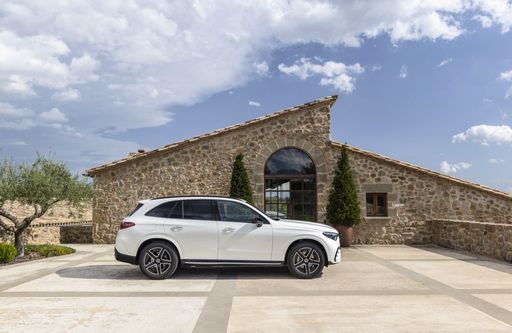
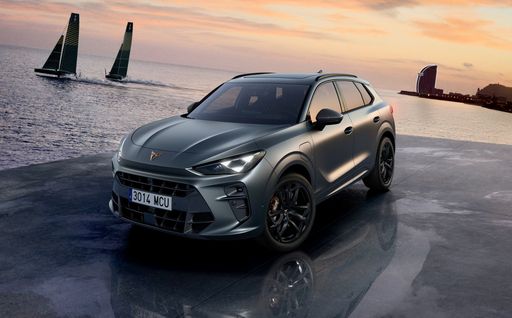
Compare performance (472 HP vs 272 HP), boot space and price (50,300 £ vs 42,000 £ ) at a glance. Find out which car is the better choice for you – Mercedes GLC or CUPRA Terramar?

Mercedes GLC vs CUPRA Terramar: Key differences

Mercedes GLC

4.4 (13 Reviews)
rate
  • considerably more power
  • marginally more electric range
  • considerably quicker 0–100 km/h
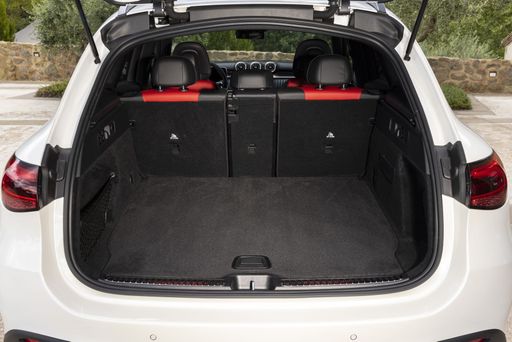
  • moderately more trunk space
details

CUPRA Terramar

4.9 (9 Reviews)
rate
  • somewhat cheaper
  • clearly lighter
details

All details on performance, efficiency, range and trunk space can be found in the technical comparison below – including user reviews for both models.

By Achim Sedelmaier

GLC

Comparative Review: CUPRA Terramar vs. Mercedes GLC

In the competitive world of luxury SUVs, two models stand out for their unique offerings: the CUPRA Terramar and the Mercedes GLC. Both vehicles cater to a diverse audience, providing a blend of performance, comfort, and innovative technology. Let's delve deeper into the technical specifications and innovations that set these two apart.
Terramar

Dynamic Performances

The CUPRA Terramar boasts an impressive lineup of powertrains designed for efficiency and performance. Its most powerful option is the 2.0-litre petrol engine producing up to 272 HP, enabling rapid acceleration from 0-100 km/h in just 5.3 seconds. The Terramar also offers hybrid options, with a plugin hybrid variant offering a remarkable CO2 output of just 10 g/km and an electric range of up to 120 km.

On the other hand, the Mercedes GLC presents an equally formidable range of engines, including petrol MHEVs and diesel options. The most potent engine variant delivers an astonishing 435 HP, capable of hitting the 0-100 km/h mark in just 3.5 seconds. With a fuel consumption rate as low as 5.1 L/100km in its diesel variants, the GLC combines performance with frugality.

GLC

Engine and Transmission Options

Both SUVs feature automatic transmissions, with the CUPRA utilizing a dual-clutch setup for sharp and responsive gear changes. The GLC, however, also incorporates advanced 4MATIC all-wheel-drive technology across its range, enhancing traction and stability in adverse weather conditions.

Engine configurations vary, with the Terramar offering a choice between a plugin hybrid, petrol MHEV, and petrol options. In contrast, the GLC provides a broader selection, including various diesel hybrids. Both models maintain a five-seat capacity, ensuring ample space for passengers.

Terramar

Efficiency and Eco-friendliness

Fuel efficiency is a strongpoint for both models. The CUPRA Terramar achieves consumption figures of 0.4 L/100 km in hybrid mode and up to 6.1 L/100 km for its petrol MHEV variant. In contrast, the Mercedes GLC maintains an impressive fuel economy, with diesel variants achieving as low as 5.2 L/100 km.

When it comes to eco-friendliness, the CUPRA leads with its cutting-edge hybrid technology, delivering one of the lowest CO2 outputs in its class at just 10 g/km. However, the GLC's range of hybrid engines, contributing to a maximum output of 10 g/km in specific configurations, showcases Mercedes' commitment to sustainability as well.

GLC

Interior Comfort and Technology

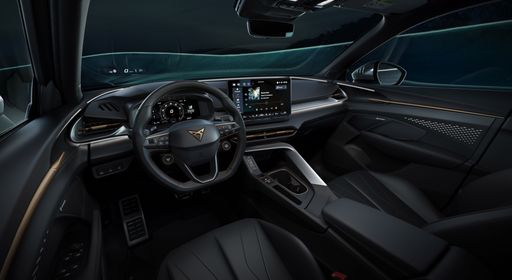
Inside, both SUV offerings prioritize comfort and modern technology. The CUPRA Terramar features a driver-focused cockpit, with high-quality materials and a digital infotainment system. With a trunk capacity of 450 liters, it also caters to practical storage needs.

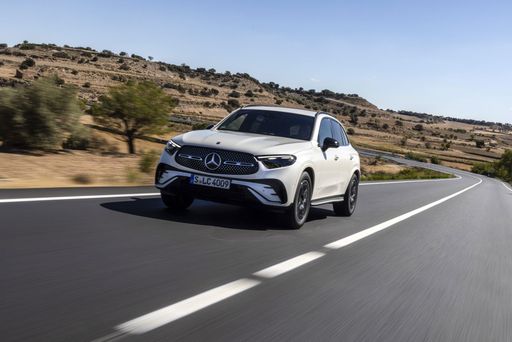
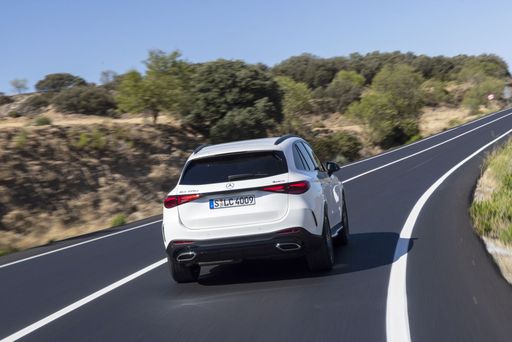
The Mercedes GLC, widely recognized for its luxurious interior, offers features like ambient lighting, advanced sound systems, and a larger trunk capacity of up to 620 liters, making it a versatile choice. The integration of the innovative MBUX system provides a seamless user experience across various interfaces.

Terramar

Safety Innovations

Safety is paramount in both SUVs. The CUPRA Terramar is equipped with state-of-the-art driver assistance systems designed to enhance safety and driving experience. Meanwhile, the GLC provides a comprehensive suite of intelligent safety features, including advanced collision prevention systems and adaptive cruise control.

GLC

Final Thoughts

In summary, choosing between the CUPRA Terramar and the Mercedes GLC hinges on individual preferences and needs. The Terramar shines with its eco-friendly hybrid technology and sporty performance, while the GLC excels in luxury, advanced technology, and an extensive engine lineup. Ultimately, both SUVs deliver a compelling blend of performance, innovation, and style in the ever-growing luxury SUV segment.

Here’s where it gets real: The technical differences in detail

GLC

Costs and Efficiency:

Price and efficiency are often the first things buyers look at. Here it becomes clear which model has the long-term edge – whether at the pump, the plug, or in purchase price.

CUPRA Terramar is somewhat cheaper – starting at 42,000 £ , while the Mercedes GLC costs 50,300 £ . That’s a price difference of around 8,345 £.

Both cars consume an average of 1.6 L/100km – no difference here.

As for electric range, the Mercedes GLC offers marginally more range – reaching up to 128 km, about 10 km more than the CUPRA Terramar.

Terramar

Engine and Performance:

Power, torque and acceleration say a lot about how a car feels on the road. This is where you see which model delivers more driving dynamics.

When it comes to engine power, the Mercedes GLC offers considerably more power – delivering 472 HP compared to 272 HP. That’s roughly 200 HP more horsepower.

When accelerating from 0 to 100 km/h, the Mercedes GLC is considerably quicker – completing the sprint in 4.2 s, while the CUPRA Terramar takes 5.9 s. That’s about 1.7 s quicker.

There’s also a difference in torque: the Mercedes GLC delivers significantly more torque with 750 Nm compared to 400 Nm. That’s about 350 Nm more.

GLC

Space and Everyday Use:

Cabin size, boot volume and payload all play a role in everyday practicality. Here, comfort and flexibility make the difference.

Both vehicles offer seating for 5 people.

In terms of curb weight, CUPRA Terramar is clearly lighter – 1,638 kg compared to 1,985 kg. The difference is around 347 kg.

Looking at boot space, the Mercedes GLC offers moderately more boot space – 620 L compared to 540 L. That’s a difference of about 80 L.

When it comes to payload, the Mercedes GLC carries marginally more – 575 kg compared to 542 kg. That’s a difference of about 33 kg.

Who wins the race in the data check?

The Mercedes GLC stands well ahead of its rival in the objective data comparison.
This result only shows which model scores more points on paper – not which of the two cars feels right for you.

from £50,300
GLC

Mercedes GLC

  • Engine Type Diesel MHEV, Plugin Hybrid, Petrol MHEV
  • Transmission Automatic
  • Drive Type All-Wheel Drive
  • Power HP 186 - 472 HP
  • Consumption L/100km 1.6 - 9.4 L/100km
  • Electric Range 122 - 128 km
Mercedes GLC
CUPRA Terramar

Costs and Consumption

View detailed analysis

Engine and Performance

View detailed analysis

Dimensions and Body

View detailed analysis

Mercedes GLC

The Mercedes GLC blends quiet refinement with premium materials to create a comfortable, modern cabin that feels more upscale than its size might suggest. It delivers composed handling and confident on-road manners while offering practical versatility and a strong suite of driver assistance and infotainment features.

details

CUPRA Terramar

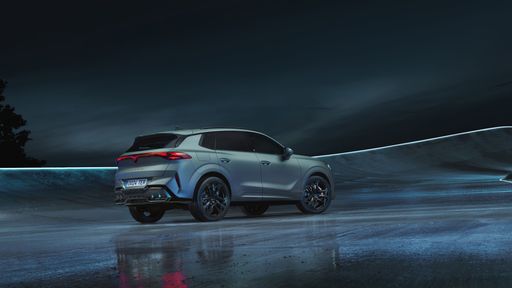
The CUPRA Terramar blends the brand’s sporty DNA with the practicality of a compact crossover, offering striking design and a driver-focused, premium-feeling cabin. It’s aimed at buyers who want engaging handling and athletic looks without giving up everyday usability and modern connectivity.

details
Mercedes GLC
CUPRA Terramar

Costs and Consumption

Price
50,300 - 82,100 £
Price
42,000 - 51,100 £
Consumption L/100km
1.6 - 9.4 L/100km
Consumption L/100km
1.6 - 8.4 L/100km
Consumption kWh/100km
-
Consumption kWh/100km
-
Electric Range
122 - 128 km
Electric Range
118 km
Battery Capacity
-
Battery Capacity
-
co2
41 - 214 g/km
co2
36 - 191 g/km
Fuel tank capacity
-
Fuel tank capacity
-

Dimensions and Body

Body Type
SUV
Body Type
SUV
Seats
5
Seats
5
Doors
-
Doors
-
Curb weight
1,985 - 2,400 kg
Curb weight
1,638 - 1,904 kg
Trunk capacity
390 - 620 L
Trunk capacity
450 - 540 L
Length
-
Length
-
Width
1,890 - 1,920 mm
Width
1,869 mm
Height
-
Height
-
Max trunk capacity
-
Max trunk capacity
-
Payload
475 - 575 kg
Payload
512 - 542 kg

Engine and Performance

Engine Type
Diesel MHEV, Plugin Hybrid, Petrol MHEV
Engine Type
Petrol, Petrol MHEV, Plugin Hybrid
Transmission
Automatic
Transmission
Automatic
Transmission Detail
Automatic Gearbox
Transmission Detail
Dual-Clutch Automatic
Drive Type
All-Wheel Drive
Drive Type
All-Wheel Drive, Front-Wheel Drive
Power HP
186 - 472 HP
Power HP
150 - 272 HP
Acceleration 0-100km/h
4.2 - 9 s
Acceleration 0-100km/h
5.9 - 9.3 s
Max Speed
-
Max Speed
-
Torque
380 - 750 Nm
Torque
250 - 400 Nm
Number of Cylinders
4 - 6
Number of Cylinders
4
Power kW
137 - 347 kW
Power kW
110 - 200 kW
Engine capacity
1,993 - 2,999 cm3
Engine capacity
1,498 - 1,984 cm3

General

Model Year
2,025 - 2,026
Model Year
2,024 - 2,025
CO2 Efficiency Class
D, B, E, F, G
CO2 Efficiency Class
F, E, B, G
Brand
Mercedes-Benz
Brand
CUPRA
DriveDuel uses data analysis and artificial intelligence to evaluate vehicle data and create content. Content is regularly reviewed and improved. The displayed prices are estimates based on German list prices, adjusted to the respective country’s VAT. Country-specific registration taxes are not included. This information is not legally binding.