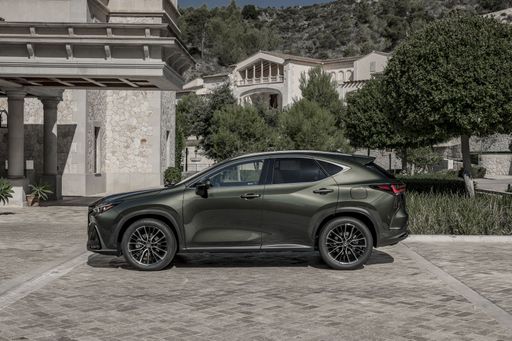
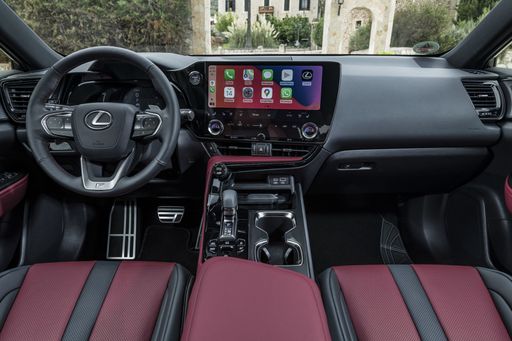
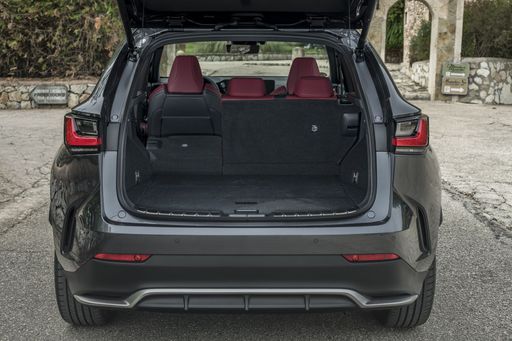
VS

Mercedes GLC vs Lexus NX comparison

Compare performance (680 HP vs 292 HP), boot space and price (50,300 £ vs 46,000 £ ) at a glance. Find out which car is the better choice for you – Mercedes GLC or Lexus NX?

Mercedes GLC vs Lexus NX: Key differences

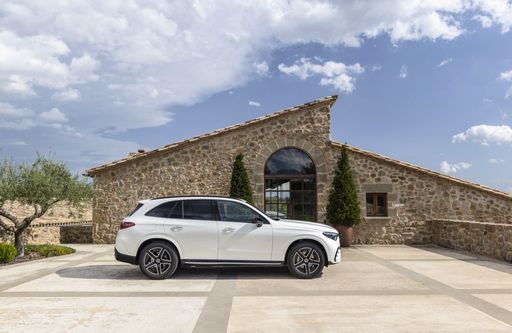
Mercedes GLC

4.4 (11 Reviews)
rate
  • significantly more power
  • considerably more efficient
  • significantly more electric range
  • considerably quicker 0–100 km/h

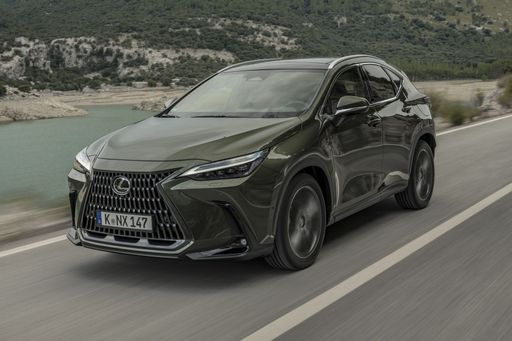
Lexus NX

4.8 (11 Reviews)
rate
  • only slightly cheaper
  • only slightly lighter

All details on performance, efficiency, range and trunk space can be found in the technical comparison below – including user reviews for both models.

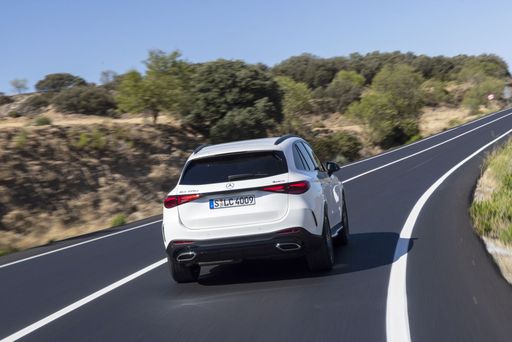
GLC

The luxury SUV segment has witnessed remarkable competition in recent years, with the Lexus NX and the Mercedes GLC standing out for their blend of performance, technology, and comfort. This article provides a comprehensive comparison of these two premium vehicles, highlighting their technical aspects, innovations, and overall appeal to potential buyers.
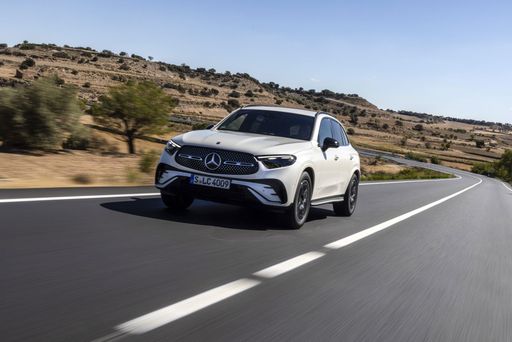
NX

Performance and Powertrain Options

The Lexus NX comes with diverse engine options, including Full Hybrid and Plugin Hybrid variants, offering a power range up to 309 HP. Its engines are coupled with an automatic CVT transmission, providing a smooth driving experience. The NX achieves a remarkable fuel consumption of 5.7 L/100km in hybrid mode, complemented by an electric range of 68 km, making it an efficient choice for eco-conscious drivers.

On the other hand, the Mercedes GLC offers a wider array of powertrains, from petrol and diesel Mild Hybrid Electric Vehicles (MHEVs) to Plugin Hybrids, with power ratings going up to an impressive 680 HP in high-performance models. The GLC’s fuel consumption ranges from 5.1 to 10.3 L/100km, depending on the chosen engine. This versatility in engine choices means buyers can select the performance level that best suits their driving preferences.

GLC

Acceleration and Top Speed

When it comes to acceleration, the Lexus NX boasts figures as low as 6.3 seconds from 0 to 100 km/h, reflecting its sporty edge within the hybrid segment. Its top speed is capped at 200 km/h, which is sufficient for everyday driving and leisure trips.

The Mercedes GLC, however, takes performance to another level. Its quickest models can achieve 0-100 km/h in a scorching 3.5 seconds, with top speeds reaching up to 275 km/h. This makes the GLC a more thrilling option for those who crave powerful performance on the road.

NX

Dimensions and Interior Space

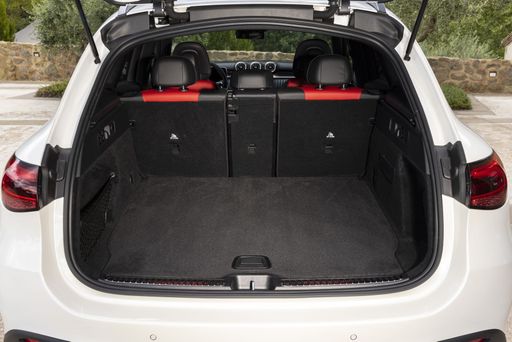
In terms of size, the Lexus NX measures 4660 mm in length, 1865 mm in width, and 1670 mm in height. It offers ample interior space, accommodating five passengers comfortably. The trunk capacity of 545 liters ensures that practical needs are met, making it a great choice for families or those who often carry cargo.

Conversely, the Mercedes GLC varies slightly in size depending on the model, ranging from 4716 mm to 4792 mm in length with a similar width of 1890 mm. The trunk capacity can peak at 620 liters, providing more room for luggage. Both vehicles effectively prioritize comfort for their occupants, but the GLC edges ahead in cargo space.

GLC

Technology and Innovations

Both the Lexus NX and the Mercedes GLC come equipped with cutting-edge technology aimed at enhancing the driving experience. The NX features an advanced multimedia system with a 14-inch touchscreen, voice recognition capabilities, and a suite of safety features including Toyota’s Safety Sense suite, which encompasses pre-collision systems, adaptive cruise control, and lane-departure alert.

The GLC, renowned for its luxurious interior, boasts the latest MBUX infotainment system, which integrates AI-based voice control and navigational assistance. It also introduces augmented reality features to its navigation, enhancing route guidance. Additionally, Mercedes-Benz's array of driver-assistance technologies, including active steering assist and automatic lane change, exemplifies innovation in safety and convenience.

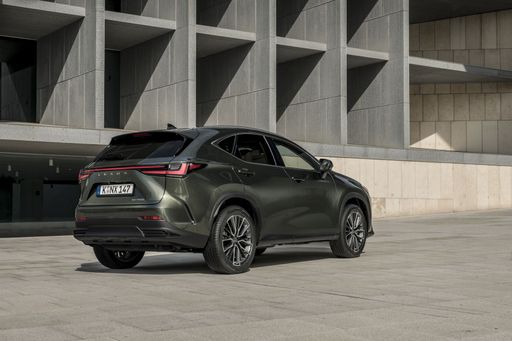
NX

Conclusion: Which SUV Reigns Supreme?

Choosing between the Lexus NX and Mercedes GLC ultimately comes down to personal preference and priorities. The Lexus NX shines in fuel efficiency and hybrid technology, showcasing a commitment to sustainability without compromising on performance. In contrast, the Mercedes GLC offers a more robust powertrain lineup, faster acceleration, and superior luxury features.

For buyers seeking a well-rounded, eco-friendly luxury SUV, the Lexus NX is an excellent choice. Meanwhile, those desiring high performance and advanced technological innovations might find the Mercedes GLC more appealing. Whichever you choose, both vehicles exemplify the pinnacle of automotive engineering in the luxury SUV segment.

Here’s where it gets real: The technical differences in detail

GLC

Costs and Efficiency:

Price and efficiency are often the first things buyers look at. Here it becomes clear which model has the long-term edge – whether at the pump, the plug, or in purchase price.

Lexus NX is only slightly cheaper – starting at 46,000 £ , while the Mercedes GLC costs 50,300 £ . That’s a price difference of around 4,299 £.

Fuel consumption also shows a difference: the Mercedes GLC uses 1.6 L/100km and is considerably more efficient than the Lexus NX with 2.9 L/100km. The difference is about 1.3 L/100km.

As for electric range, the Mercedes GLC offers significantly more range – reaching up to 714 km, about 642 km more than the Lexus NX.

NX

Engine and Performance:

Under the bonnet, it becomes clear which model is tuned for sportiness and which one takes the lead when you hit the accelerator.

When it comes to engine power, the Mercedes GLC offers significantly more power – delivering 680 HP compared to 292 HP. That’s roughly 388 HP more horsepower.

When accelerating from 0 to 100 km/h, the Mercedes GLC is considerably quicker – completing the sprint in 3.5 s, while the Lexus NX takes 6.4 s. That’s about 2.9 s quicker.

GLC

Space and Everyday Use:

Beyond pure performance, interior space and usability matter most in daily life. This is where you see which car is more practical and versatile.

Both vehicles offer seating for 5 people.

In terms of curb weight, Lexus NX is only slightly lighter – 1,805 kg compared to 1,910 kg. The difference is around 105 kg.

When it comes to payload, the Mercedes GLC carries a bit more – 600 kg compared to 515 kg. That’s a difference of about 85 kg.

Who wins the race in the data check?

The Mercedes GLC holds a decisive overall lead in the objective data comparison.
This result only shows which model scores more points on paper – not which of the two cars feels right for you.

from £50,300
GLC

Mercedes GLC

  • Engine Type : Petrol MHEV, Plugin Hybrid, Diesel MHEV, Electric
  • Transmission : Automatic
  • Drive Type : All-Wheel Drive
  • Power HP : 186 - 680 HP
  • Consumption L/100km : 1.6 - 9.7 L/100km
  • Consumption kWh/100km : 14.9 - 16.6 kWh/100km
  • Electric Range : 12 - 714 km
Mercedes GLC
Lexus NX

Costs and Consumption

View detailed analysis

Engine and Performance

View detailed analysis

Dimensions and Body

View detailed analysis

Mercedes GLC

The Mercedes GLC blends plush cabin comfort and composed road manners into an SUV that feels more grown-up than it looks. It won’t shout for attention, but will quietly please buyers who want refinement, usable space and a touch of luxury without the drama.

details

Lexus NX

The Lexus NX wraps striking, chiseled styling around a cabin that feels more crafted living room than utility vehicle, with soft materials and user-friendly tech that give it genuine premium cachet. On the road it's composed and quietly confident, trading sporty pretensions for a refined, easygoing personality that will suit buyers who want luxury without fuss — with a little Lexus flair to make daily commutes feel special.

details
Mercedes GLC
Lexus NX

Costs and Consumption

Price
50,300 - 126,600 £
Price
46,000 - 64,300 £
Consumption L/100km
1.6 - 9.7 L/100km
Consumption L/100km
2.9 - 5.9 L/100km
Consumption kWh/100km
14.9 - 16.6 kWh/100km
Consumption kWh/100km
-
Electric Range
12 - 714 km
Electric Range
72 km
Battery Capacity
94 kWh
Battery Capacity
-
co2
0 - 221 g/km
co2
65 - 134 g/km
Fuel tank capacity
62 - 65 L
Fuel tank capacity
-

Dimensions and Body

Body Type
SUV
Body Type
SUV
Seats
5
Seats
5
Doors
5
Doors
-
Curb weight
1,910 - 2,535 kg
Curb weight
1,805 - 2,065 kg
Trunk capacity
390 - 620 L
Trunk capacity
-
Length
4,716 - 4,845 mm
Length
-
Width
1,890 - 1,913 mm
Width
1,865 mm
Height
1,603 - 1,644 mm
Height
-
Max trunk capacity
1,490 - 1,740 L
Max trunk capacity
-
Payload
475 - 600 kg
Payload
475 - 515 kg

Engine and Performance

Engine Type
Petrol MHEV, Plugin Hybrid, Diesel MHEV, Electric
Engine Type
Full Hybrid, Plugin Hybrid
Transmission
Automatic
Transmission
Automatic
Transmission Detail
Automatic Gearbox, Reduction Gearbox
Transmission Detail
CVT
Drive Type
All-Wheel Drive
Drive Type
Front-Wheel Drive, All-Wheel Drive
Power HP
186 - 680 HP
Power HP
200 - 292 HP
Acceleration 0-100km/h
3.5 - 9 s
Acceleration 0-100km/h
6.4 - 8.8 s
Max Speed
210 - 275 km/h
Max Speed
-
Torque
320 - 1,020 Nm
Torque
-
Number of Cylinders
4 - 6
Number of Cylinders
4
Power kW
137 - 500 kW
Power kW
147 - 215 kW
Engine capacity
1,991 - 2,989 cm3
Engine capacity
2,487 cm3

General

Model Year
2,025 - 2,026
Model Year
2,025
CO2 Efficiency Class
F, G, D, B, E, A
CO2 Efficiency Class
D, B
Brand
Mercedes-Benz
Brand
Lexus
DriveDuel uses data analysis and artificial intelligence to evaluate vehicle data and create content. Content is regularly reviewed and improved. The displayed prices are estimates based on German list prices, adjusted to the respective country’s VAT. Country-specific registration taxes are not included. This information is not legally binding.