
 Deutschland
 France
 Nederland
 Great Britain
 Sverige
 Danmark
 Suomi
Suomi Italia
 Polska
 Česko
Česko España
VS
Mercedes S-Class vs Dacia Sandero comparison
Compare performance (635 HP vs 122 HP), boot space and price (104,000 £ vs 11,000 £ ) at a glance. Find out which car is the better choice for you – Mercedes S-Class or Dacia Sandero?
Mercedes S-Class vs Dacia Sandero: Key differences
All details on performance, efficiency, range and trunk space can be found in the technical comparison below – including user reviews for both models.
S-Class
Costs and Efficiency:
When it comes to price and running costs, the biggest differences usually appear. This is often where you see which car fits your budget better in the long run.
Dacia Sandero is substantially cheaper – starting at 11,000 £ , while the Mercedes S-Class costs 104,000 £ . That’s a price difference of around 93,057 £.
Fuel consumption also shows a difference: the Mercedes S-Class uses 2.2 L/100km and is considerably more efficient than the Dacia Sandero with 5.3 L/100km. The difference is about 3.1 L/100km.
Sandero
Engine and Performance:
Power, torque and acceleration say a lot about how a car feels on the road. This is where you see which model delivers more driving dynamics.
When it comes to engine power, the Mercedes S-Class offers significantly more power – delivering 635 HP compared to 122 HP. That’s roughly 513 HP more horsepower.
When accelerating from 0 to 100 km/h, the Mercedes S-Class is considerably quicker – completing the sprint in 4 s, while the Dacia Sandero takes 9.7 s. That’s about 5.7 s quicker.
There’s also a difference in torque: the Mercedes S-Class delivers considerably more torque with 850 Nm compared to 200 Nm. That’s about 650 Nm more.
S-Class
Space and Everyday Use:
Cabin size, boot volume and payload all play a role in everyday practicality. Here, comfort and flexibility make the difference.
Both vehicles offer seating for 5 people.
In terms of curb weight, Dacia Sandero is significantly lighter – 1,100 kg compared to 2,165 kg. The difference is around 1,065 kg.
Looking at boot space, the Mercedes S-Class offers visibly more boot space – 530 L compared to 372 L. That’s a difference of about 158 L.
When it comes to payload, the Mercedes S-Class carries noticeably more – 660 kg compared to 436 kg. That’s a difference of about 224 kg.
Who wins the race in the data check?
The Dacia Sandero stands well ahead of its rival in the objective data comparison.
This result only shows which model scores more points on paper – not which of the two cars feels right for you.
from £11,000
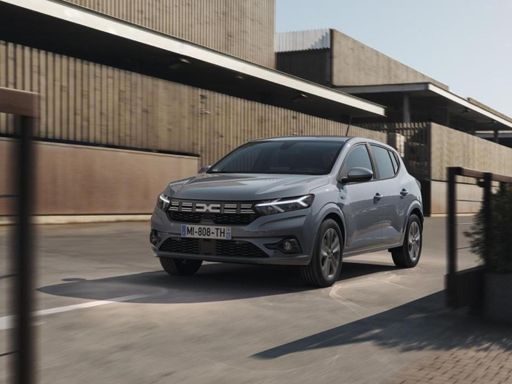
Dacia Sandero
Mercedes S-Class
Dacia Sandero
Costs and Consumption
View detailed analysis
View detailed analysis
Engine and Performance
View detailed analysis
View detailed analysis
Dimensions and Body
View detailed analysis
View detailed analysis
Mercedes S-Class
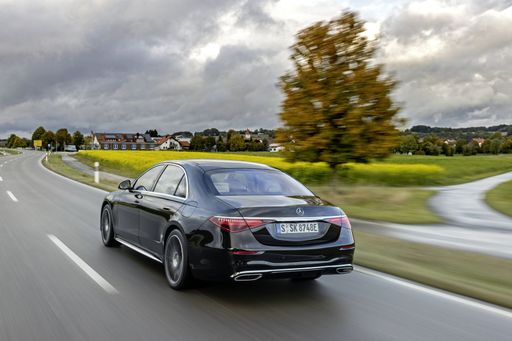
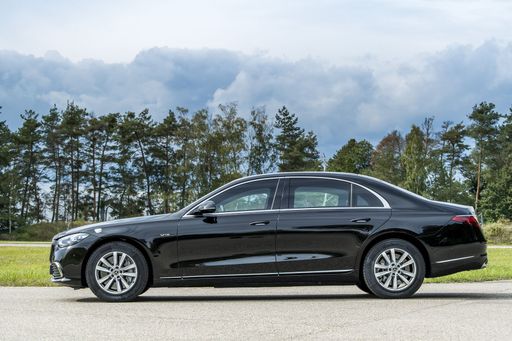
The Mercedes S-Class wraps peerless comfort, whisper-quiet luxury and subtle tech wizardry into a chauffeur-ready package that still knows how to engage the driver. It’s the car for buyers who want to arrive relaxed, be taken seriously and occasionally enjoy a grin when the road reminds them this limousine can dance.
details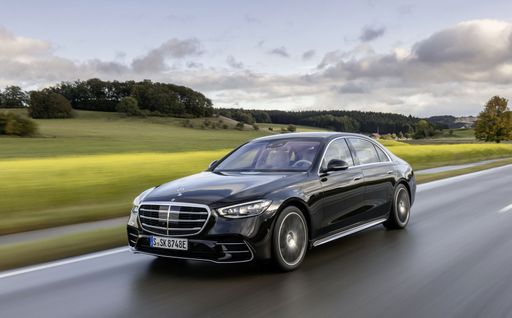


Dacia Sandero
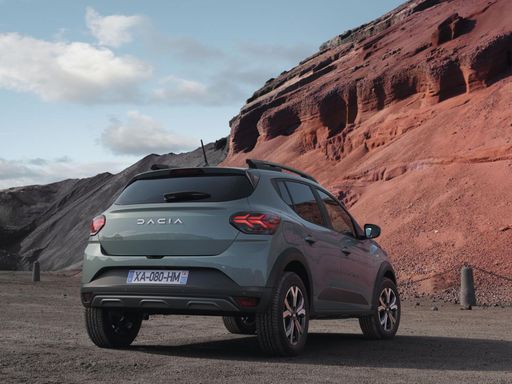
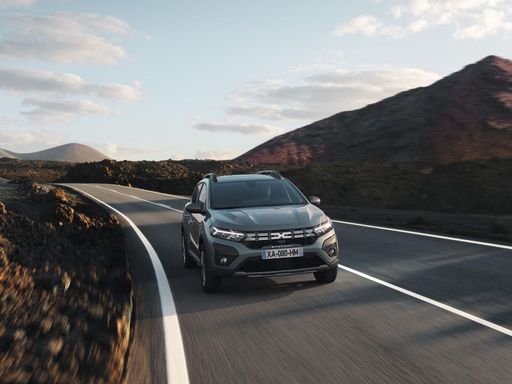
The Sandero is a no-nonsense hatchback that prioritises practicality and low running costs, making it a smart choice for budget-minded buyers. It delivers a surprisingly roomy interior and straightforward, useful equipment so you get everyday usability without paying for unnecessary frills.
details
Mercedes S-Class
Dacia Sandero
Costs and Consumption |
|
|---|---|
|
Price
104,000 - 201,400 £
|
Price
11,000 - 16,300 £
|
|
Consumption L/100km
2.2 - 11 L/100km
|
Consumption L/100km
5.3 - 7.2 L/100km
|
|
Consumption kWh/100km
-
|
Consumption kWh/100km
-
|
|
Electric Range
98 - 118 km
|
Electric Range
-
|
|
Battery Capacity
-
|
Battery Capacity
-
|
|
co2
50 - 252 g/km
|
co2
111 - 131 g/km
|
|
Fuel tank capacity
-
|
Fuel tank capacity
-
|
Dimensions and Body |
|
|---|---|
|
Body Type
Sedan
|
Body Type
Hatchback
|
|
Seats
5
|
Seats
5
|
|
Doors
-
|
Doors
-
|
|
Curb weight
2,165 - 2,650 kg
|
Curb weight
1,100 - 1,297 kg
|
|
Trunk capacity
345 - 530 L
|
Trunk capacity
328 - 372 L
|
|
Length
-
|
Length
-
|
|
Width
1,921 mm
|
Width
1,853 mm
|
|
Height
-
|
Height
-
|
|
Max trunk capacity
-
|
Max trunk capacity
-
|
|
Payload
420 - 660 kg
|
Payload
385 - 436 kg
|
Engine and Performance |
|
|---|---|
|
Engine Type
Petrol MHEV, Plugin Hybrid, Diesel MHEV
|
Engine Type
Petrol, LPG
|
|
Transmission
Automatic
|
Transmission
Manuel, Automatic
|
|
Transmission Detail
Automatic Gearbox
|
Transmission Detail
Manual Gearbox, Dual-Clutch Automatic
|
|
Drive Type
All-Wheel Drive, Rear-Wheel Drive
|
Drive Type
Front-Wheel Drive
|
|
Power HP
336 - 635 HP
|
Power HP
67 - 122 HP
|
|
Acceleration 0-100km/h
4 - 5.7 s
|
Acceleration 0-100km/h
9.7 - 16.7 s
|
|
Max Speed
-
|
Max Speed
-
|
|
Torque
560 - 850 Nm
|
Torque
95 - 200 Nm
|
|
Number of Cylinders
6 - 8
|
Number of Cylinders
3
|
|
Power kW
247 - 467 kW
|
Power kW
49 - 90 kW
|
|
Engine capacity
2,989 - 3,982 cm3
|
Engine capacity
999 - 1,199 cm3
|
General |
|
|---|---|
|
Model Year
2026
|
Model Year
2025
|
|
CO2 Efficiency Class
G, B, F
|
CO2 Efficiency Class
D, C
|
|
Brand
Mercedes-Benz
|
Brand
Dacia
|
DriveDuel uses data analysis and artificial intelligence to evaluate vehicle data and create content. Content is regularly reviewed and improved.
The displayed prices are estimates based on German list prices, adjusted to the respective country’s VAT. Country-specific registration taxes are not included. This information is not legally binding.