VS

MG MGS9 vs BYD Seal U comparison

Compare performance (299 HP vs 324 HP), boot space and price (38,600 £ vs 34,300 £ ) at a glance. Find out which car is the better choice for you – MG MGS9 or BYD Seal U?

MG MGS9 vs BYD Seal U: Key differences

MG MGS9

details

BYD Seal U

4.2 (9 Reviews)
rate
  • somewhat cheaper
  • very slightly more power
  • substantially more electric range
  • clearly quicker 0–100 km/h
  • somewhat lighter
  • noticeably more trunk space
details

All details on performance, efficiency, range and trunk space can be found in the technical comparison below – including user reviews for both models.

By Achim Sedelmaier

MGS9

Head-to-head: BYD Seal U VS MG MGS9 — which suits your family life?

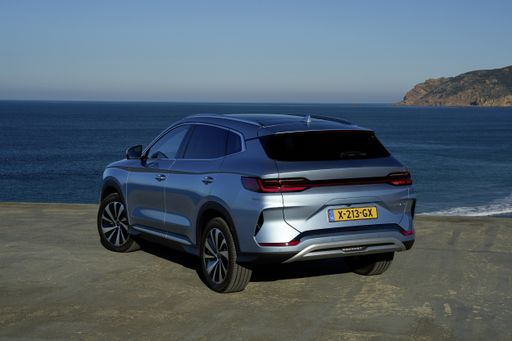
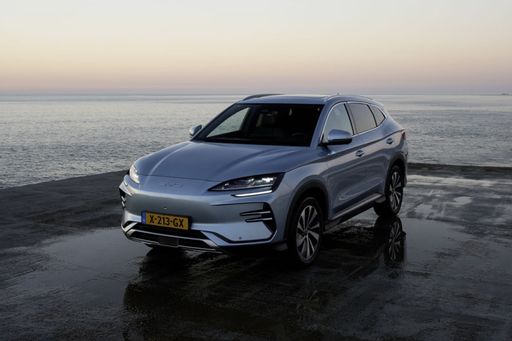
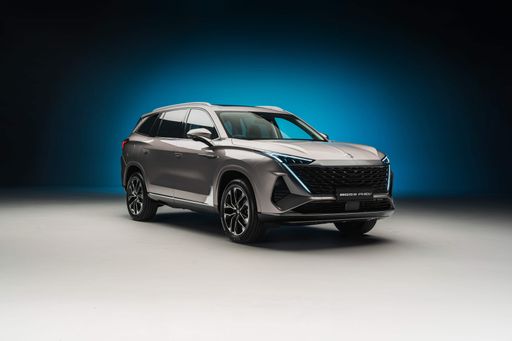
BYD Seal U VS MG MGS9 frames a clear choice between a comfort‑and‑tech focused five‑seater and a space‑first seven‑seater. The BYD Seal U presents itself as a quietly appointed, well‑equipped SUV that leans into refinement and highway calm, while the MG MGS9 trades some of that finesse for genuine three‑row practicality and a lower price of entry. Buyers will notice immediately that the Seal U aims to impress with cabin tech and a composed long‑distance demeanour, whereas the MGS9 sells you space, sliding middle seats and towing versatility. Read on to see how those priorities play out in daily use, city routines and family trips. This comparison concentrates on real‑world differences that matter more than spec sheets.
Seal U

Comfort and cabin feel on real journeys

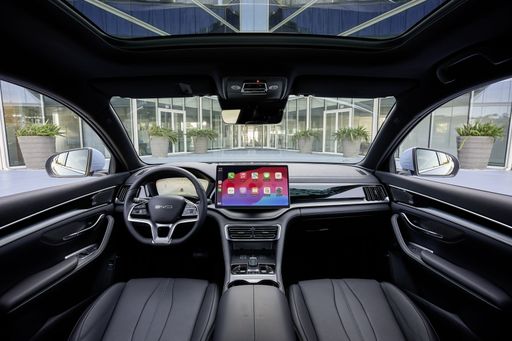
The BYD Seal U feels like a traditional comfort car: soft suspension, excellent acoustic insulation and a calm, floating cruise that soothes motorways and long runs. The MG MGS9 is comfortable too, but its larger dimensions and firmer responses reveal themselves on uneven surfaces where more chassis motion and tyre noise can creep in. In the Seal U that luxury is paired with a polished interior presentation and gadgetry that make long drives less fatiguing, while the MGS9 offsets slightly coarser refinement with roomy seats and tri‑zone climate controls that keep seven occupants content. If you prize whisper‑quiet motorway miles the BYD Seal U tends to feel more grown‑up; if you prioritise space for people over absolute hush, the MG MGS9 will suit you better.

Practicality and family usability

Space is where the MG MGS9 makes its strongest case: true seven‑seat flexibility, a sliding second row and useful third‑row access mean it handles 3+ child households or car‑pool duty with less compromise than the BYD Seal U. The BYD Seal U, however, feels better thought‑out for daily luggage use and passenger comfort for five — its cabin ergonomics, ISOFIX layout and smart storage make routine family life simpler for smaller families. The MG MGS9’s two ISOFIX mounts and larger overall cargo area with five seats give it an edge when seats are folded, but that comes with a larger footprint to park and manoeuvre. For buyers juggling multiple child seats and regular full‑load travel, the MG MGS9 is the pragmatic pick; for those who want tech, comfort and simpler daily usability for up to five people, the BYD Seal U wins on convenience.

City friendliness and everyday usability

In tight urban environments the BYD Seal U feels nimbler: lighter steering, compact turning and detailed camera aids reduce hassle when parking or threading through traffic, and its infotainment and HUD make short trips less fiddly. The MG MGS9 is quieter in EV mode for city errands and delivers a relaxed driving posture, but its nearly five‑metre length and broader shoulders are more demanding in narrow streets and multi‑storey car parks. Both offer ample tech to help parking, yet the Seal U’s sharper camera system and more direct shortcut controls tend to save time and frustration during daily use. If your life is predominantly inner‑city with frequent tight parkings, the BYD Seal U will feel easier to live with; if you can accommodate size for the benefit of regular seven‑seat needs, the MG MGS9 remains workable.

Driving character and long‑distance behaviour

The BYD Seal U projects relaxed authority at speed: composed straight‑line stability, smooth power delivery and brisk acceleration when you ask for it, making motorway overtakes feel effortless. The MG MGS9 drives more plainly — predictable, comfortable and tuned for load‑carrying rather than sport — and you’ll notice the front axle working harder under brisk throttle inputs. Both vehicles favour comfort over sharp handling, but the BYD Seal U trades some agility for quieter, more assured long‑distance cruising while the MG MGS9 prioritises usable performance with occupants aboard and the ability to tow or carry heavy loads. Drivers who enjoy a confident, long‑haul cruiser will lean toward the BYD Seal U; those who want steady, load‑tolerant responses with seven seats will prefer the MG MGS9.

Who should pick which — buyer fit and next steps

If your shortlist starts with high equipment levels, low in‑use noise, and the kind of electric‑capable commuting that benefits from a long EV stint, the BYD Seal U maps more closely to that lifestyle. If your priority is maximum passenger flexibility, genuine seven‑seat practicality, and the cheapest route to a roomy family vehicle with decent electric everyday range, the MG MGS9 is the more logical choice. Think about daily passenger count, whether you can charge at home, and how often you tow or fill the car with bulky kit — those realities decide which compromises you’ll accept. With those buyer fits clear, the technical comparison that follows will help translate these impressions into concrete charging, range, cargo and performance trade‑offs.

Here’s where it gets real: The technical differences in detail

MGS9

Costs and Efficiency:

Price and efficiency are often the first things buyers look at. Here it becomes clear which model has the long-term edge – whether at the pump, the plug, or in purchase price.

BYD Seal U is somewhat cheaper – starting at 34,300 £ , while the MG MGS9 costs 38,600 £ . That’s a price difference of around 4,285 £.

As for electric range, the BYD Seal U offers substantially more range – reaching up to 500 km, about 400 km more than the MG MGS9.

Seal U

Engine and Performance:

Under the bonnet, it becomes clear which model is tuned for sportiness and which one takes the lead when you hit the accelerator.

When it comes to engine power, the BYD Seal U offers very slightly more power – delivering 324 HP compared to 299 HP. That’s roughly 25 HP more horsepower.

When accelerating from 0 to 100 km/h, the BYD Seal U is clearly quicker – completing the sprint in 5.9 s, while the MG MGS9 takes 9.6 s. That’s about 3.7 s quicker.

There’s also a difference in torque: the BYD Seal U delivers noticeably more torque with 550 Nm compared to 390 Nm. That’s about 160 Nm more.

Space and Everyday Use:

Cabin size, boot volume and payload all play a role in everyday practicality. Here, comfort and flexibility make the difference.

Seats: MG MGS9 offers more seats – 7 vs 5.

In terms of curb weight, BYD Seal U is somewhat lighter – 1,940 kg compared to 2,160 kg. The difference is around 220 kg.

Looking at boot space, the BYD Seal U offers noticeably more boot space – 552 L compared to 332 L. That’s a difference of about 220 L.

When it comes to payload, the MG MGS9 carries noticeably more – 557 kg compared to 410 kg. That’s a difference of about 147 kg.

Who wins the race in the data check?

The BYD Seal U stands well ahead of its rival in the objective data comparison.
This result only shows which model scores more points on paper – not which of the two cars feels right for you.

from £34,300
Seal U

BYD Seal U

  • Engine Type Electric, Plugin Hybrid
  • Transmission Automatic
  • Drive Type Front-Wheel Drive, All-Wheel Drive
  • Power HP 218 - 324 HP
  • Consumption kWh/100km 12.1 - 20.5 kWh/100km
  • Electric Range 70 - 500 km
MG MGS9
BYD Seal U

Costs and Consumption

View detailed analysis

Engine and Performance

View detailed analysis

Dimensions and Body

View detailed analysis

MG MGS9

The MG MGS9 presents itself as a stylish, value-focused flagship SUV with a roomy, well-equipped cabin and contemporary infotainment. It balances a comfortable ride with engaging handling, making it a compelling choice for buyers seeking a feature-rich alternative to established rivals.

details

BYD Seal U

The BYD Seal U is a sleek electric fastback that blends sporty styling with a roomy, tech-focused interior, making it an appealing choice for buyers who want electric performance without sacrificing comfort. It delivers a smooth, composed ride and intuitive features, positioning it as a practical yet modern option in the EV market.

details
MG MGS9
BYD Seal U

Costs and Consumption

Price
38,600 - 41,800 £
Price
34,300 - 39,800 £
Consumption L/100km
2.4 L/100km
Consumption L/100km
-
Consumption kWh/100km
-
Consumption kWh/100km
12.1 - 20.5 kWh/100km
Electric Range
100 km
Electric Range
70 - 500 km
Battery Capacity
-
Battery Capacity
-
co2
54 g/km
co2
0 - 71 g/km
Fuel tank capacity
-
Fuel tank capacity
-

Dimensions and Body

Body Type
SUV
Body Type
SUV
Seats
7
Seats
5
Doors
-
Doors
-
Curb weight
2,160 kg
Curb weight
1,940 - 2,147 kg
Trunk capacity
332 L
Trunk capacity
425 - 552 L
Length
-
Length
-
Width
1,967 mm
Width
1,890 mm
Height
-
Height
-
Max trunk capacity
-
Max trunk capacity
-
Payload
557 kg
Payload
410 kg

Engine and Performance

Engine Type
Plugin Hybrid
Engine Type
Electric, Plugin Hybrid
Transmission
Automatic
Transmission
Automatic
Transmission Detail
Automatic Gearbox
Transmission Detail
Reduction Gearbox, Automatic Gearbox
Drive Type
Front-Wheel Drive
Drive Type
Front-Wheel Drive, All-Wheel Drive
Power HP
299 HP
Power HP
218 - 324 HP
Acceleration 0-100km/h
9.6 s
Acceleration 0-100km/h
5.9 - 9.6 s
Max Speed
-
Max Speed
-
Torque
390 Nm
Torque
300 - 550 Nm
Number of Cylinders
4
Number of Cylinders
4
Power kW
220 kW
Power kW
160 - 238 kW
Engine capacity
1,496 cm3
Engine capacity
1,497 - 1,498 cm3

General

Model Year
2026
Model Year
2,024 - 2,026
CO2 Efficiency Class
B
CO2 Efficiency Class
A, B
Brand
MG
Brand
BYD
DriveDuel uses data analysis and artificial intelligence to evaluate vehicle data and create content. Content is regularly reviewed and improved. The displayed prices are estimates based on German list prices, adjusted to the respective country’s VAT. Country-specific registration taxes are not included. This information is not legally binding.