VS

MINI Countryman vs BMW X3 comparison

Compare performance (313 HP vs 398 HP), boot space and price (30,100 £ vs 51,700 £ ) at a glance. Find out which car is the better choice for you – MINI Countryman or BMW X3?

MINI Countryman vs BMW X3: Key differences

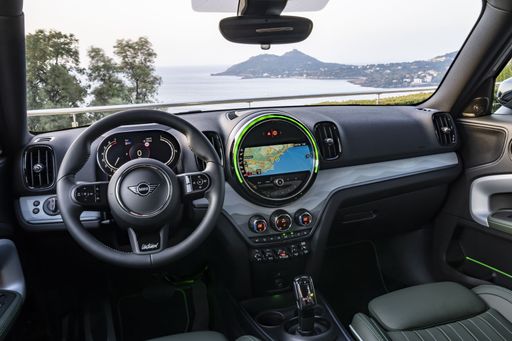
MINI Countryman

5 (1 Reviews)
rate
  • considerably cheaper
  • clearly more electric range
  • clearly lighter
details

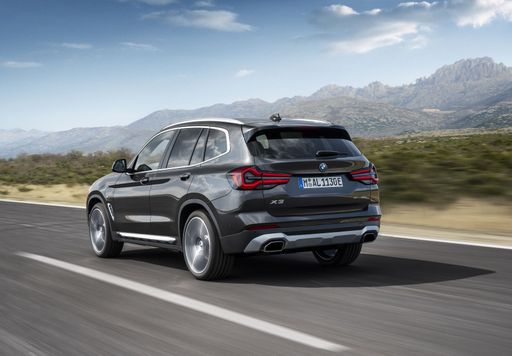
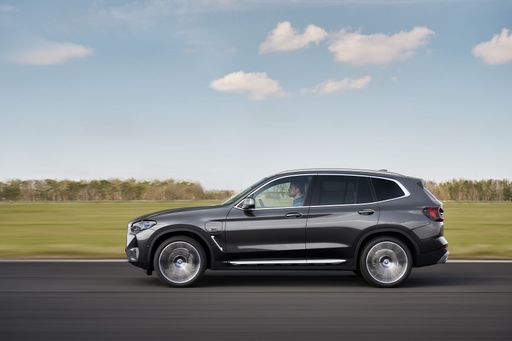
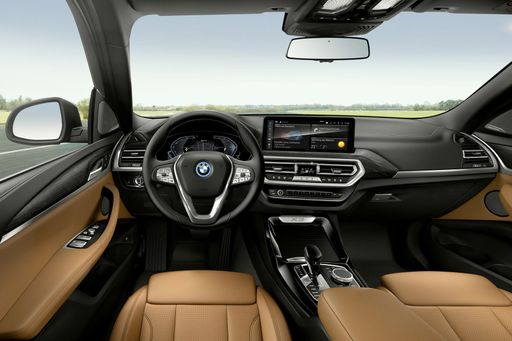
BMW X3

4.6 (1 Reviews)
rate
  • visibly more power
  • considerably more efficient
  • clearly quicker 0–100 km/h
  • slightly more trunk space
details

All details on performance, efficiency, range and trunk space can be found in the technical comparison below – including user reviews for both models.

By Achim Sedelmaier

Countryman

Head-to-Head: BMW X3 vs MINI Countryman

The automotive world is rich with choices, especially in the competitive SUV segment. Today, we dive into two popular options: the BMW X3 and the MINI Countryman. Both vehicles bring distinct flavors to the table, each blending technical prowess with unique styling. Whether you're looking for performance, efficiency, or versatility, both the X3 and Countryman have qualities worth exploring.
X3

Performance and Engine Options

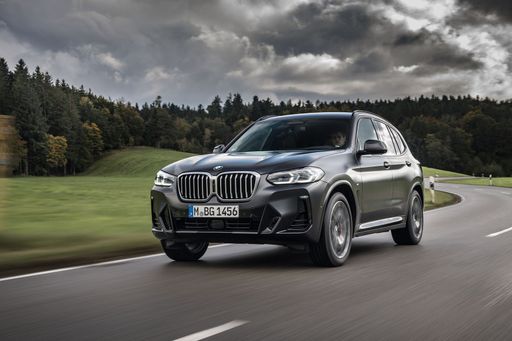
The BMW X3 offers a compelling range of engines, including diesel mild-hybrid electric vehicles (MHEV), petrol MHEV, plug-in hybrids, and traditional petrol engines. Power output varies significantly, with options ranging from 184 to an exhilarating 510 horsepower. The X3's configuration with a robust all-wheel-drive system ensures that power is delivered efficiently, making it both a sport performer and a reliable everyday vehicle.

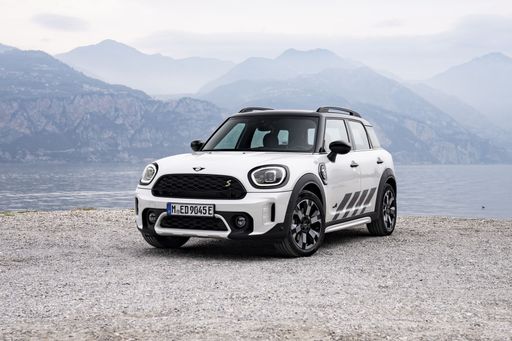
In contrast, the MINI Countryman also provides diverse powertrain offerings. These include petrol MHEV, diesel MHEV, an electric version, and traditional petrol engines. Power output ranges from 170 to 313 horsepower, with both front-wheel and all-wheel-drive variants available. The electric model stands out for its impressive 462 km range, appealing to those with eco-conscious sensibilities.

Countryman

Efficiency and Emissions

The BMW X3 demonstrates a broad spectrum in fuel consumption, from an efficient 0.9 L/100km in its plug-in hybrid variant to 10.8 L/100km in more powerful petrol engines. The CO2 emissions reflect these variations, ranging from 21 g/km to 246 g/km. Notably, the X3 offers an electric range of up to 90 km, powered by an advanced 19.7 kWh battery.

The MINI Countryman, on the other hand, showcases its strength in electric efficiency with options consuming as low as 15.7 kWh/100km and boasting zero emissions in full electric mode. The combustion engine variants provide balanced efficiency ranging up to 7.8 L/100km, and CO2 emissions from 0 to 177 g/km, making it a well-rounded performer.

X3

Dimensions and Practicality

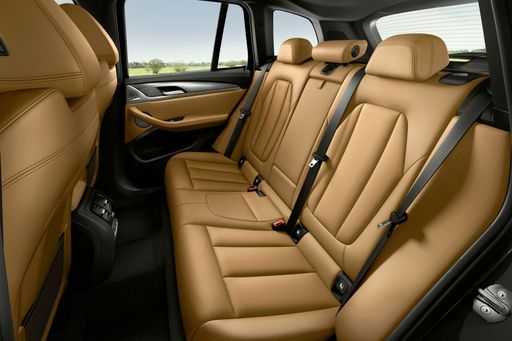
Size-wise, the BMW X3 is more extensive, measuring between 4708 to 4755 mm in length, and providing a trunk capacity ranging from 450 to 570 liters. With five comfortable seats and a healthy payload capacity of up to 585 kg, the X3 excels in offering a spacious, practical driving experience ideal for families or those with active outdoor lifestyles.

The MINI Countryman positions itself as a compact SUV, with a length of 4444 to 4447 mm and a trunk capacity of up to 505 liters. While slightly more compact, it still accommodates five passengers comfortably. Its nimble stature combined with a payload capacity of up to 500 kg makes it suitable for urban and suburban adventures.

Countryman

Innovations and Technology

Technology in the BMW X3 is cutting-edge, featuring advanced driver-assistance systems, luxury interiors with digital dashboard options, and a range of connectivity features, including seamless integration with various smart devices.

The MINI Countryman is no slouch either in terms of innovation, offering its blend of quirky design with high-tech elements. From dual-clutch transmissions to reduction gearboxes in their electric models, tech-savvy drivers will appreciate the streamlined user interface and comprehensive infotainment system.

X3

The Verdict: Choosing Your SUV Companion

Choosing between the BMW X3 and MINI Countryman depends largely on personal preference. For those seeking performance, power, and a slightly larger build, the BMW X3 is undeniably compelling. Alternatively, if you desire a compact, versatile vehicle with a unique style and eco-friendly credentials, the MINI Countryman might be your match.

Both SUVs excel in their rights, encapsulating the spirit of their brands while offering fantastic options for various types of drivers. Whether you're cruising the city streets or embarking on weekend getaways, both the X3 and Countryman deliver an engaging and satisfying driving experience.

Here’s where it gets real: The technical differences in detail

Countryman

Costs and Efficiency:

Price and efficiency are key factors when choosing a car – and this is often where the real differences emerge.

MINI Countryman is considerably cheaper – starting at 30,100 £ , while the BMW X3 costs 51,700 £ . That’s a price difference of around 21,600 £.

Fuel consumption also shows a difference: the BMW X3 uses 2.8 L/100km and is considerably more efficient than the MINI Countryman with 5.9 L/100km. The difference is about 3.1 L/100km.

As for electric range, the MINI Countryman offers clearly more range – reaching up to 497 km, about 409 km more than the BMW X3.

X3

Engine and Performance:

Power, torque and acceleration are the classic benchmarks for car enthusiasts – and here, some clear differences start to show.

When it comes to engine power, the BMW X3 offers visibly more power – delivering 398 HP compared to 313 HP. That’s roughly 85 HP more horsepower.

When accelerating from 0 to 100 km/h, the BMW X3 is clearly quicker – completing the sprint in 4.6 s, while the MINI Countryman takes 5.6 s. That’s about 1 s quicker.

There’s also a difference in torque: the BMW X3 delivers clearly more torque with 670 Nm compared to 494 Nm. That’s about 176 Nm more.

Countryman

Space and Everyday Use:

Beyond pure performance, interior space and usability matter most in daily life. This is where you see which car is more practical and versatile.

Both vehicles offer seating for 5 people.

In terms of curb weight, MINI Countryman is clearly lighter – 1,570 kg compared to 1,930 kg. The difference is around 360 kg.

Looking at boot space, the BMW X3 offers slightly more boot space – 570 L compared to 460 L. That’s a difference of about 110 L.

When it comes to payload, the BMW X3 carries a bit more – 570 kg compared to 500 kg. That’s a difference of about 70 kg.

Who wins the race in the data check?

The BMW X3 leads convincingly in the objective data comparison.
This result only shows which model scores more points on paper – not which of the two cars feels right for you.

from £51,700
X3

BMW X3

  • Engine Type : Petrol MHEV, Diesel MHEV, Plugin Hybrid
  • Transmission : Automatic
  • Drive Type : All-Wheel Drive
  • Power HP : 197 - 398 HP
  • Consumption L/100km : 2.8 - 7.7 L/100km
  • Electric Range : 88 km
MINI Countryman
BMW X3

Costs and Consumption

View detailed analysis

Engine and Performance

View detailed analysis

Dimensions and Body

View detailed analysis

MINI Countryman

The MINI Countryman turns the cheeky charm of a classic MINI into a proper all-rounder, blending playful styling with surprisingly usable space for everyday life. It still grins at city lights but will happily tackle muddy lanes, perfect for buyers who want character without sacrificing practicality.

details

BMW X3

The BMW X3 mixes Bavarian poise with everyday practicality, delivering a composed ride and a cabin that feels both premium and lived-in. It’s the sort of SUV that lets you enjoy sporty handling without sacrificing family-friendly space, so you get fun and sense in one neat package.

details
MINI Countryman
BMW X3

Costs and Consumption

Price
30,100 - 39,900 £
Price
51,700 - 73,000 £
Consumption L/100km
5.9 - 6.5 L/100km
Consumption L/100km
2.8 - 7.7 L/100km
Consumption kWh/100km
14.8 - 15.9 kWh/100km
Consumption kWh/100km
-
Electric Range
463 - 497 km
Electric Range
88 km
Battery Capacity
-
Battery Capacity
-
co2
0 - 149 g/km
co2
64 - 175 g/km
Fuel tank capacity
-
Fuel tank capacity
-

Dimensions and Body

Body Type
SUV
Body Type
SUV
Seats
5
Seats
5
Doors
-
Doors
-
Curb weight
1,570 - 2,075 kg
Curb weight
1,930 - 2,140 kg
Trunk capacity
450 - 460 L
Trunk capacity
460 - 570 L
Length
-
Length
-
Width
1,843 mm
Width
1,920 mm
Height
-
Height
-
Max trunk capacity
-
Max trunk capacity
-
Payload
475 - 500 kg
Payload
570 kg

Engine and Performance

Engine Type
Petrol MHEV, Electric
Engine Type
Petrol MHEV, Diesel MHEV, Plugin Hybrid
Transmission
Automatic
Transmission
Automatic
Transmission Detail
Dual-Clutch Automatic, Reduction Gearbox
Transmission Detail
Automatic Gearbox
Drive Type
Front-Wheel Drive, All-Wheel Drive
Drive Type
All-Wheel Drive
Power HP
122 - 313 HP
Power HP
197 - 398 HP
Acceleration 0-100km/h
5.6 - 10.5 s
Acceleration 0-100km/h
4.6 - 7.8 s
Max Speed
-
Max Speed
-
Torque
230 - 494 Nm
Torque
330 - 670 Nm
Number of Cylinders
3
Number of Cylinders
4 - 6
Power kW
90 - 230 kW
Power kW
145 - 293 kW
Engine capacity
1,499 cm3
Engine capacity
1,995 - 2,998 cm3

General

Model Year
2026
Model Year
2,024 - 2,025
CO2 Efficiency Class
D, A, E
CO2 Efficiency Class
F, E, B
Brand
MINI
Brand
BMW
DriveDuel uses data analysis and artificial intelligence to evaluate vehicle data and create content. Content is regularly reviewed and improved. The displayed prices are estimates based on German list prices, adjusted to the respective country’s VAT. Country-specific registration taxes are not included. This information is not legally binding.