VS

BMW iX3 vs MINI Countryman comparison

Compare performance (469 HP vs 313 HP), boot space and price (54,300 £ vs 30,100 £ ) at a glance. Find out which car is the better choice for you – BMW iX3 or MINI Countryman?

BMW iX3 vs MINI Countryman: Key differences

BMW iX3

4.6 (4 Reviews)
rate
  • noticeably more power
  • marginally more efficient
  • noticeably more electric range
  • a bit quicker 0–100 km/h
details

MINI Countryman

5 (1 Reviews)
rate
  • significantly cheaper
  • substantially lighter
details

All details on performance, efficiency, range and trunk space can be found in the technical comparison below – including user reviews for both models.

By Achim Sedelmaier

iX3

BMW iX3 vs MINI Countryman: a practical editorial comparison

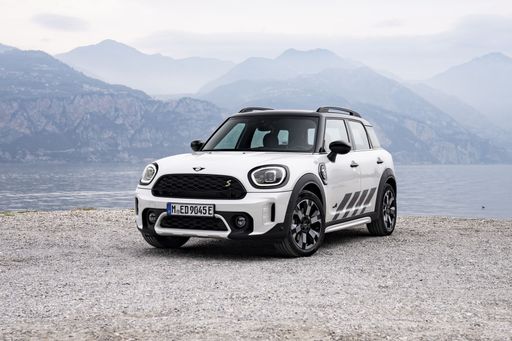
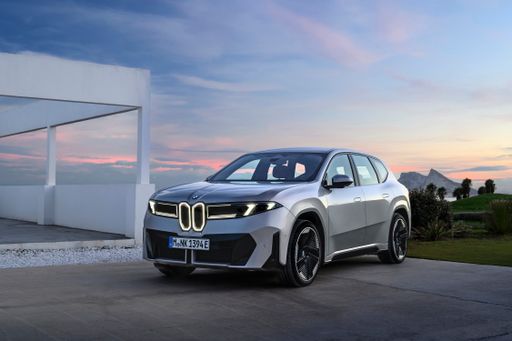
BMW iX3 and MINI Countryman sit at opposite ends of the compact‑SUV conversation: one is an efficiency‑and‑tech focused long‑distance specialist, the other is a style‑forward, family‑friendly compact with strong city manners. The iX3 projects calm competence — long range, ultra‑fast charging capability and a new, widescreen cockpit that privileges digital control. The Countryman leans into personality and usable space, wrapping MINI character into five seats and an interior that feels designed rather than engineered. Buyers should approach this match as a trade‑off between motorway composure and premium electric range on one side, and everyday manoeuvrability, cabin ambience and cost on the other.
Countryman

Character and driving feel

The BMW iX3 drives like a modern long‑distance machine: quiet, planted and surprisingly agile for its size, with sharp steering and a composure that rewards steady high‑speed miles. The MINI Countryman, by contrast, feels more compact and front‑focused — composed and confident but decidedly less about sporty theatrics than older MINIs promised. Where the iX3 emphasises effortless shove and electronically refined responses, the Countryman trades outright propulsion for a tidy, predictable behaviour that suits mixed city and autobahn use. If you want engaging, controlled thrust and motorway reassurance, the iX3 pulls ahead; if you prefer a compact SUV that feels light to place and predictable in traffic, the Countryman is the better match.

iX3

Comfort and cabin experience

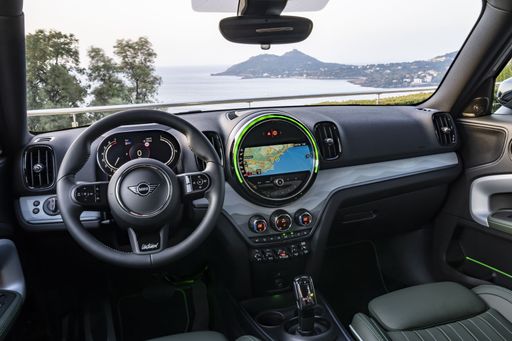
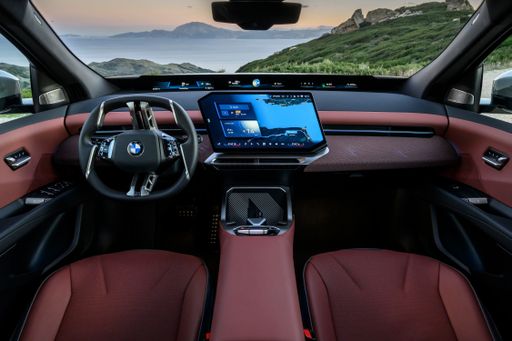
Inside the BMW iX3 the mood is modern and restrained: broad displays, a low, deep seating position in the rear and an exceptionally quiet cabin that makes long trips feel less tiring. That modernity has a cost — many climate and shortcut controls live in screens, so the iX3 demands a learning curve and rewards those who embrace voice and menu shortcuts. The MINI Countryman offers a warmer, more textured cabin with characterful materials and a round OLED centrepiece that creates personality, but the system can feel fiddly and cheaper plastics appear in everyday touchpoints. For long‑haul serenity pick the iX3; for tactile atmosphere and a friendlier immediate environment, the Countryman feels more familiar and approachable.

Countryman

Practicality and everyday usability

The BMW iX3 is generous with usable volume: a sizable boot, an additional front compartment and family‑friendly rear legroom make it excellent for luggage and towing needs, though some latching and floor‑flat ergonomics are less straightforward than they appear. The MINI Countryman surprises with real rear‑seat comfort and practical tricks — ICE variants even get a sliding rear bench — but its load lip and, in electric versions, slightly reduced cargo volume make heavy or awkward loading more of a chore. Both cars seat five comfortably, yet the trade‑off is clear: the iX3 is the more travel‑oriented utility vehicle, while the Countryman prioritises clever packaging and daily flexibility in tighter urban spaces. If you regularly carry bulky loads or tow, the iX3 will frustrate less; if you move people and small‑to‑medium cargo around town, the Countryman is easier to live with.

iX3

City friendliness versus motorway behavior

In city life the MINI Countryman shines — narrower presence, easier front visibility and a nimble turn‑in make tight streets and parking simpler and less stressful than the broader BMW iX3. On the motorway the balance shifts emphatically to the iX3: low noise, confident high‑speed manners and driver‑assist features that reduce fatigue turn long journeys into a core strength. The Countryman remains composed at speed but its firmer suspension and some vibration over surface irregularities make extended high‑speed cruising less cushy than the iX3. Choose the Countryman for daily urban convenience and the iX3 for frequent highway miles and relaxed intercity travel.

Countryman

Who each car suits and the practical decision points

If your life is made of long commutes, motorway weekends and you prioritise range, rapid charging and a hushed cabin, the BMW iX3 is aimed directly at your needs; it rewards tech‑savvy drivers who accept a touch more digital control and a premium price. The MINI Countryman is better for buyers who value personality, a roomy rear seat, lower entry price and easier city handling — though option packs can push the final cost higher. Both cars represent distinct compromises rather than outright superiority: pick the iX3 for distance, composure and high‑speed convenience, pick the Countryman for daily manoeuvrability, cabin character and family practicality. The technical comparison that follows will unpack range, charging, power delivery and weight implications to help you translate these real‑world tendencies into numbers for your decision.

Here’s where it gets real: The technical differences in detail

iX3

Costs and Efficiency:

Looking at overall running costs, both models reveal some interesting differences in everyday economy.

MINI Countryman is significantly cheaper – starting at 30,100 £ , while the BMW iX3 costs 54,300 £ . That’s a price difference of around 24,257 £.

In terms of energy consumption, the BMW iX3 is marginally more efficient: consuming 14.6 kWh/100km compared to 14.8 kWh/100km for the MINI Countryman. That’s a difference of about 0.2 kWh/100km.

As for electric range, the BMW iX3 offers noticeably more range – reaching up to 805 km, about 308 km more than the MINI Countryman.

Countryman

Engine and Performance:

Power, torque and acceleration say a lot about how a car feels on the road. This is where you see which model delivers more driving dynamics.

When it comes to engine power, the BMW iX3 offers noticeably more power – delivering 469 HP compared to 313 HP. That’s roughly 156 HP more horsepower.

When accelerating from 0 to 100 km/h, the BMW iX3 is a bit quicker – completing the sprint in 4.9 s, while the MINI Countryman takes 5.6 s. That’s about 0.7 s quicker.

There’s also a difference in torque: the BMW iX3 delivers clearly more torque with 645 Nm compared to 494 Nm. That’s about 151 Nm more.

iX3

Space and Everyday Use:

Beyond pure performance, interior space and usability matter most in daily life. This is where you see which car is more practical and versatile.

Both vehicles offer seating for 5 people.

In terms of curb weight, MINI Countryman is substantially lighter – 1,570 kg compared to 2,360 kg. The difference is around 790 kg.

When it comes to payload, the MINI Countryman carries barely more – 500 kg compared to 465 kg. That’s a difference of about 35 kg.

Who wins the race in the data check?

The BMW iX3 is narrowly ahead in the objective data comparison.
This result only shows which model scores more points on paper – not which of the two cars feels right for you.

from £54,300
iX3

BMW iX3

  • Engine Type Electric
  • Transmission Automatic
  • Drive Type All-Wheel Drive, Rear-Wheel Drive
  • Power HP 320 - 469 HP
  • Consumption kWh/100km 14.6 - 15.1 kWh/100km
  • Electric Range 635 - 805 km
BMW iX3
MINI Countryman

Costs and Consumption

View detailed analysis

Engine and Performance

View detailed analysis

Dimensions and Body

View detailed analysis

BMW iX3

The BMW iX3 is an electric SUV that delivers the composed, premium driving experience BMW buyers expect. With a calm, refined cabin and practical everyday usability, it’s a strong choice for those who want electric motoring without giving up luxury and comfort.

details

MINI Countryman

The MINI Countryman turns the cheeky charm of a classic MINI into a proper all-rounder, blending playful styling with surprisingly usable space for everyday life. It still grins at city lights but will happily tackle muddy lanes, perfect for buyers who want character without sacrificing practicality.

details
BMW iX3
MINI Countryman

Costs and Consumption

Price
54,300 - 66,300 £
Price
30,100 - 39,800 £
Consumption L/100km
-
Consumption L/100km
5.9 - 6.5 L/100km
Consumption kWh/100km
14.6 - 15.1 kWh/100km
Consumption kWh/100km
14.8 - 15.9 kWh/100km
Electric Range
635 - 805 km
Electric Range
463 - 497 km
Battery Capacity
-
Battery Capacity
-
co2
0 g/km
co2
0 - 149 g/km
Fuel tank capacity
-
Fuel tank capacity
-

Dimensions and Body

Body Type
SUV
Body Type
SUV
Seats
5
Seats
5
Doors
-
Doors
-
Curb weight
2,360 kg
Curb weight
1,570 - 2,075 kg
Trunk capacity
-
Trunk capacity
450 - 505 L
Length
-
Length
-
Width
1,895 mm
Width
1,843 mm
Height
-
Height
-
Max trunk capacity
-
Max trunk capacity
-
Payload
465 kg
Payload
475 - 500 kg

Engine and Performance

Engine Type
Electric
Engine Type
Petrol MHEV, Electric
Transmission
Automatic
Transmission
Automatic
Transmission Detail
Reduction Gearbox
Transmission Detail
Dual-Clutch Automatic, Reduction Gearbox
Drive Type
All-Wheel Drive, Rear-Wheel Drive
Drive Type
Front-Wheel Drive, All-Wheel Drive
Power HP
320 - 469 HP
Power HP
122 - 313 HP
Acceleration 0-100km/h
4.9 - 5.9 s
Acceleration 0-100km/h
5.6 - 10.5 s
Max Speed
-
Max Speed
-
Torque
500 - 645 Nm
Torque
230 - 494 Nm
Number of Cylinders
-
Number of Cylinders
3
Power kW
235 - 345 kW
Power kW
90 - 230 kW
Engine capacity
-
Engine capacity
1,499 cm3

General

Model Year
2026
Model Year
2026
CO2 Efficiency Class
A
CO2 Efficiency Class
D, A, E
Brand
BMW
Brand
MINI
DriveDuel uses data analysis and artificial intelligence to evaluate vehicle data and create content. Content is regularly reviewed and improved. The displayed prices are estimates based on German list prices, adjusted to the respective country’s VAT. Country-specific registration taxes are not included. This information is not legally binding.