VS

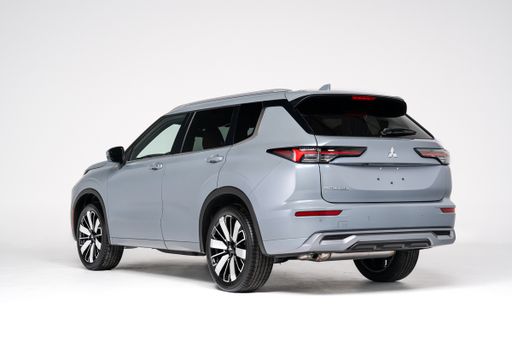
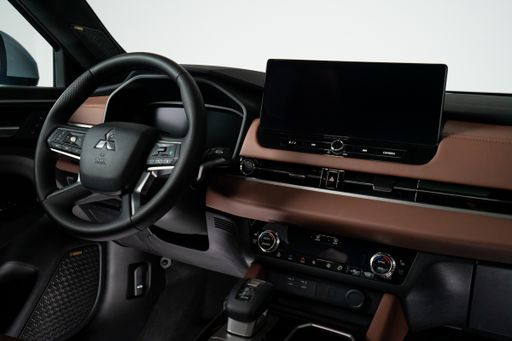
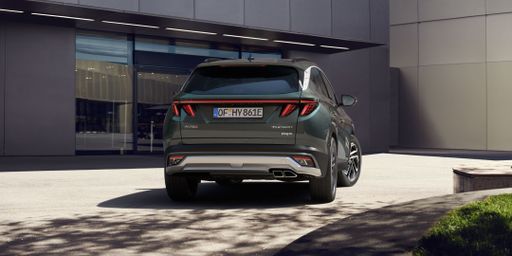
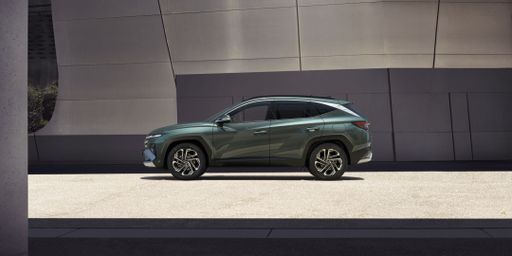
Mitsubishi Outlander vs Hyundai Tucson comparison

Compare performance (306 HP vs 288 HP), boot space and price (42,800 £ vs 20,900 £ ) at a glance. Find out which car is the better choice for you – Mitsubishi Outlander or Hyundai Tucson?

Mitsubishi Outlander vs Hyundai Tucson: Key differences

Mitsubishi Outlander

4.6 (2 Reviews)
rate
  • barely more power
  • marginally more efficient
  • somewhat more electric range
details

Hyundai Tucson

4.6 (4 Reviews)
rate
  • substantially cheaper
  • marginally quicker 0–100 km/h
  • markedly lighter
details

All details on performance, efficiency, range and trunk space can be found in the technical comparison below – including user reviews for both models.

By Achim Sedelmaier

Outlander

The Battle of Versatility: Hyundai Tucson VS Mitsubishi Outlander

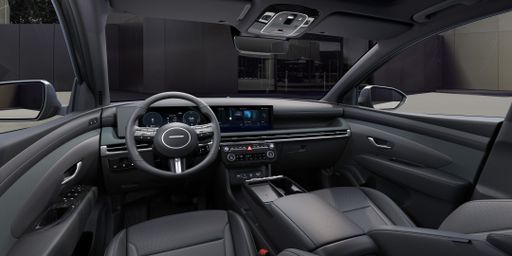
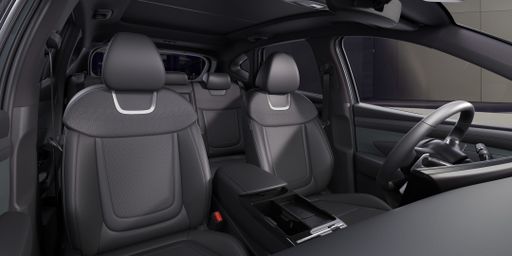
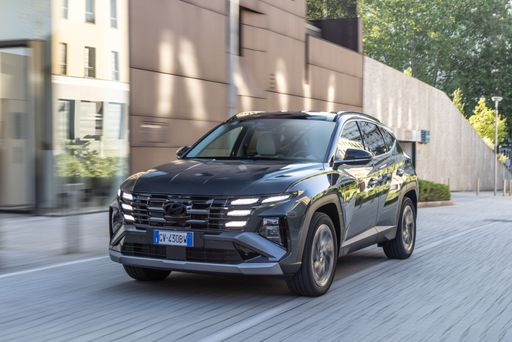
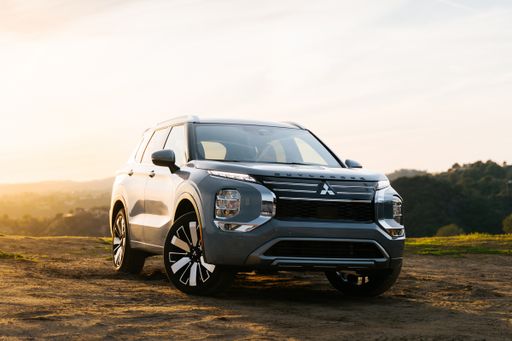
In the rapidly evolving world of SUVs, two models are making quite the commotion: the 2024 Hyundai Tucson and the 2024 Mitsubishi Outlander. Both contenders bring a range of features and innovations, suitable for a wide array of drivers. While they both present the rugged appeal and spaciousness characteristic of their class, they have distinct personalities and offer different experiences on the road. Let's delve into their technical details and innovative features to see which one ticks more boxes for your motoring needs.
Tucson

Engine and Performance: Power Meets Efficiency

The Hyundai Tucson boasts a varied lineup of engine types, including Diesel MHEV, Petrol MHEV, a Full Hybrid, and a Plugin Hybrid, offering power outputs ranging from 136 HP to 252 HP. Whether you prefer a dual-clutch automatic or a manual gearbox, Hyundai offers options for both front-wheel and all-wheel drive, accommodating different driving styles and demands. Tucson accelerates from 0 to 100 km/h in a range between 7.9 and 11.4 seconds, depending on the engine type, with a top speed of up to 194 km/h.

The Mitsubishi Outlander, on the other hand, focuses on a single but powerful engine type: the Plugin Hybrid, which fires up 306 HP. It reaches 0 to 100 km/h in just 7.9 seconds, delivering a robust performance. Its max speed tops at 170 km/h. The Outlander comes exclusively with all-wheel drive, catering to those who favor a power-packed and confident drive.

Outlander

Fuel Efficiency and Range: Balancing Act

Both vehicles cater well to the environmentally conscious driver. The Tucson offers a range of consumption ratings from 1.2 to 6.8 L/100km, with electric ranges between 65 and 70 km depending on the variant. Therefore, if you’re looking for more electric assistance, Tucson might appeal to you.

The Outlander impresses with a remarkable fuel consumption rate of 0.8 L/100km and an electric range of 84 to 86 km. Its strong CO2 efficiency class of B, with emissions as low as 18 g/km, is a testament to its eco-friendly design.

Tucson

Size and Practicality: Room to Stretch

When it comes to size, the Outlander is an inch ahead in terms of length, measuring 4719 mm compared to the Tucson’s 4510-4520 mm. However, the Tucson holds an advantage in trunk space, offering up to 620 liters, depending on the configuration. The Outlander, while still spacious, provides a trunk capacity of 495 liters.

Both vehicles comfortably accommodate five passengers, with Tucson presenting a more compact and maneuverable package, and the Outlander offering a larger frame suitable for more extended road trips or family outings.

Outlander

Innovations and Features: High-Tech Territory

Hyundai Tucson and Mitsubishi Outlander bring a suite of innovative technologies to the table. Tucson is equipped with multiple engine options, which ensures a customizable ride for varied consumer needs. Its plugin hybrid option allows for extensive electric-only operation, aligning with modern energy-saving trends.

Mitsubishi's Outlander excels with its singular focus on a high-performance plugin hybrid system, offering seamless transition between electric and combustion power, indicative of its dedication to offering a premium and efficient driving experience.

Tucson

Conclusion: Choosing Your Champion

When pitting the 2024 Hyundai Tucson against the 2024 Mitsubishi Outlander, buyers will find that both vehicles excel in distinct areas. Tucson offers extensive engine diversity and ample cargo space, making it an adaptable choice for drivers with varied needs. In contrast, the Outlander is ideal for those prioritizing powerful hybrid performance and excellent fuel efficiency.

Ultimately, the choice between Tucson and Outlander will depend largely on individual priorities—varied drivetrains and practicality versus robust plugin hybrid efficiency and power. As the saying goes, the best car is the one that fits your lifestyle best.

Here’s where it gets real: The technical differences in detail

Outlander

Costs and Efficiency:

When it comes to price and running costs, the biggest differences usually appear. This is often where you see which car fits your budget better in the long run.

Hyundai Tucson is substantially cheaper – starting at 20,900 £ , while the Mitsubishi Outlander costs 42,800 £ . That’s a price difference of around 21,951 £.

Fuel consumption also shows a difference: the Mitsubishi Outlander uses 2.6 L/100km and is marginally more efficient than the Hyundai Tucson with 2.7 L/100km. The difference is about 0.1 L/100km.

As for electric range, the Mitsubishi Outlander offers somewhat more range – reaching up to 85 km, about 15 km more than the Hyundai Tucson.

Tucson

Engine and Performance:

Under the bonnet, it becomes clear which model is tuned for sportiness and which one takes the lead when you hit the accelerator.

When it comes to engine power, the Mitsubishi Outlander offers barely more power – delivering 306 HP compared to 288 HP. That’s roughly 18 HP more horsepower.

When accelerating from 0 to 100 km/h, the Hyundai Tucson is marginally quicker – completing the sprint in 7.5 s, while the Mitsubishi Outlander takes 7.9 s. That’s about 0.4 s quicker.

Outlander

Space and Everyday Use:

Beyond pure performance, interior space and usability matter most in daily life. This is where you see which car is more practical and versatile.

Both vehicles offer seating for 5 people.

In terms of curb weight, Hyundai Tucson is markedly lighter – 1,542 kg compared to 2,070 kg. The difference is around 528 kg.

When it comes to payload, the Mitsubishi Outlander carries marginally more – 595 kg compared to 545 kg. That’s a difference of about 50 kg.

Who wins the race in the data check?

The Hyundai Tucson is decisively ahead in the objective data comparison.
This result only shows which model scores more points on paper – not which of the two cars feels right for you.

from £20,900
Tucson

Hyundai Tucson

  • Engine Type : Petrol, Full Hybrid, Plugin Hybrid, Diesel MHEV
  • Transmission : Manuel, Automatic
  • Drive Type : Front-Wheel Drive, All-Wheel Drive
  • Power HP : 136 - 288 HP
  • Consumption L/100km : 2.7 - 7.6 L/100km
  • Electric Range : 63 - 70 km
Mitsubishi Outlander
Hyundai Tucson

Costs and Consumption

View detailed analysis

Engine and Performance

View detailed analysis

Dimensions and Body

View detailed analysis

Mitsubishi Outlander

The Mitsubishi Outlander is a sensible family SUV that blends roomy practicality with a calm, assured ride—ideal for school runs and weekend getaways. It won’t set pulses racing, but its tidy interior, straightforward equipment and low-stress ownership make it a smart, unfussy pick for buyers who prefer reliability over flash.

details

Hyundai Tucson

Hyundai Tucson marries bold, sculpted looks with a clever, roomy cabin that feels smarter than its price tag suggests. It's composed on the road, easy to live with day-to-day, and a sensible choice for buyers who want SUV style without the showroom theatrics.

details
Mitsubishi Outlander
Hyundai Tucson

Costs and Consumption

Price
42,800 - 53,000 £
Price
20,900 - 47,900 £
Consumption L/100km
2.6 - 2.7 L/100km
Consumption L/100km
2.7 - 7.6 L/100km
Consumption kWh/100km
-
Consumption kWh/100km
-
Electric Range
83 - 85 km
Electric Range
63 - 70 km
Battery Capacity
-
Battery Capacity
-
co2
60 g/km
co2
62 - 172 g/km
Fuel tank capacity
-
Fuel tank capacity
52 - 54 L

Dimensions and Body

Body Type
SUV
Body Type
SUV
Seats
5
Seats
5
Doors
-
Doors
5
Curb weight
2,070 - 2,120 kg
Curb weight
1,542 - 1,893 kg
Trunk capacity
-
Trunk capacity
546 - 620 L
Length
-
Length
4,525 - 4,535 mm
Width
1,862 mm
Width
1,865 mm
Height
-
Height
1,650 mm
Max trunk capacity
-
Max trunk capacity
1,795 - 1,799 L
Payload
545 - 595 kg
Payload
518 - 545 kg

Engine and Performance

Engine Type
Plugin Hybrid
Engine Type
Petrol, Full Hybrid, Plugin Hybrid, Diesel MHEV
Transmission
-
Transmission
Manuel, Automatic
Transmission Detail
-
Transmission Detail
Manual Gearbox, Dual-Clutch Automatic, Automatic Gearbox
Drive Type
All-Wheel Drive
Drive Type
Front-Wheel Drive, All-Wheel Drive
Power HP
306 HP
Power HP
136 - 288 HP
Acceleration 0-100km/h
7.9 s
Acceleration 0-100km/h
7.5 - 11.6 s
Max Speed
-
Max Speed
196 - 204 km/h
Torque
-
Torque
250 - 379 Nm
Number of Cylinders
4
Number of Cylinders
4
Power kW
225 kW
Power kW
100 - 212 kW
Engine capacity
2,360 cm3
Engine capacity
1,598 cm3

General

Model Year
2025
Model Year
2025
CO2 Efficiency Class
B
CO2 Efficiency Class
F, D, E, B
Brand
Mitsubishi
Brand
Hyundai
DriveDuel uses data analysis and artificial intelligence to evaluate vehicle data and create content. Content is regularly reviewed and improved. The displayed prices are estimates based on German list prices, adjusted to the respective country’s VAT. Country-specific registration taxes are not included. This information is not legally binding.