VS

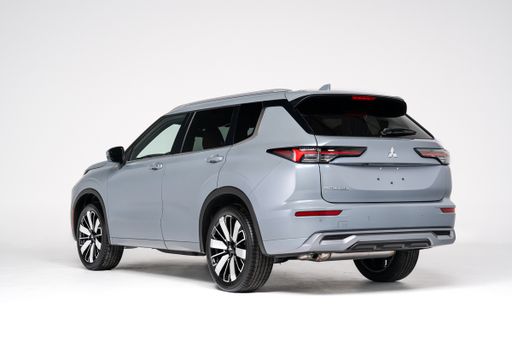
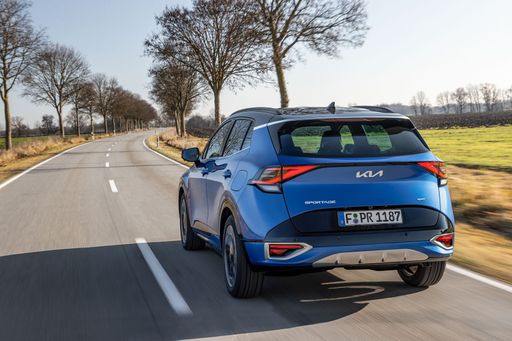
Mitsubishi Outlander vs Kia Sportage comparison

Compare performance (306 HP vs 288 HP), boot space and price (42,800 £ vs 29,100 £ ) at a glance. Find out which car is the better choice for you – Mitsubishi Outlander or Kia Sportage?

Mitsubishi Outlander vs Kia Sportage: Key differences

Mitsubishi Outlander

4.7 (5 Reviews)
rate
  • only slightly more power
  • somewhat more efficient
  • clearly more electric range
details

Kia Sportage

5 (4 Reviews)
rate
  • significantly cheaper
  • only slightly quicker 0–100 km/h
  • markedly lighter
  • slightly more trunk space
details

All details on performance, efficiency, range and trunk space can be found in the technical comparison below – including user reviews for both models.

By Achim Sedelmaier

Outlander

Introduction: The SUV Showdown

In the ever-competitive world of SUVs, consumers are constantly faced with the choice between various models that promise performance, comfort, and innovation. This article pits the 2024 Kia Sportage against the 2024 Mitsubishi Outlander, examining their technical specifications, innovative features, and overall driving experience.
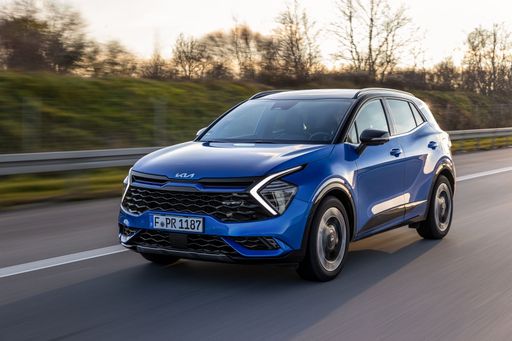
Sportage

Engine Performance and Efficiency

The Kia Sportage offers a versatile lineup of engines to cater to different driving preferences, including Diesel MHEV, Petrol MHEV, Full Hybrid, and various petrol options. With power outputs ranging from 136 HP to a robust 252 HP, the Sportage ensures that there's a suitable option for everyone. Its full hybrid version boasts a combined fuel consumption of approximately 5 L/100km, making it an economical choice for the environmentally conscious.

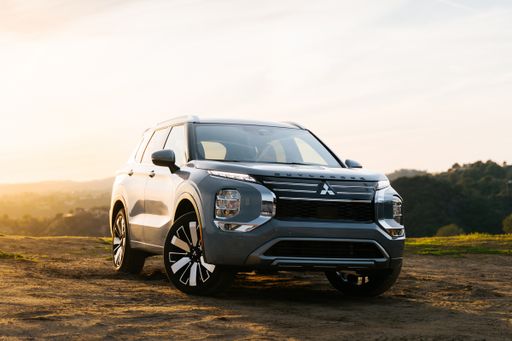
In comparison, the Mitsubishi Outlander is powered by a potent Plugin Hybrid engine that delivers an impressive 306 HP. With a mere fuel consumption of 0.8 L/100km and an electric range of up to 86 km, it's clear that the Outlander is engineered for efficiency without sacrificing power. However, its max speed of 170 km/h trails behind the Sportage's top speeds that can reach up to 194 km/h.

Outlander

Acceleration and Handling Dynamics

The Kia Sportage showcases its agility with impressive acceleration times across its range. The sportier versions can sprint from 0-100 km/h in as little as 8.3 seconds. Both the front-wheel drive and all-wheel drive configurations contribute to its confident handling, allowing for a dynamic driving experience on various terrains.

The Outlander, while slightly slower with a 0-100 km/h time of 7.9 seconds, offers all-wheel drive as a standard feature, enhancing grip and stability. This makes it a solid choice for those who frequently tackle rough conditions. However, its curb weight of 2070 kg is significantly higher than that of the Sportage, which can affect maneuverability.

Sportage

Design and Interior Space

When it comes to dimensions and interior space, the Kia Sportage measures 4515 mm in length, 1865 mm in width, and 1650 mm in height. It boasts a trunk capacity ranging from 526 to 587 liters, depending on the variant, making it practical for families or outdoor adventures.

On the other hand, the Mitsubishi Outlander is slightly larger, with a length of 4719 mm and a height ranging from 1746 to 1750 mm. Its trunk space is also competitive at 495 liters. However, the higher curb weight and slightly less cargo capacity can be a drawback for some consumers who prioritize space and convenience.

Outlander

Safety and Technology Features

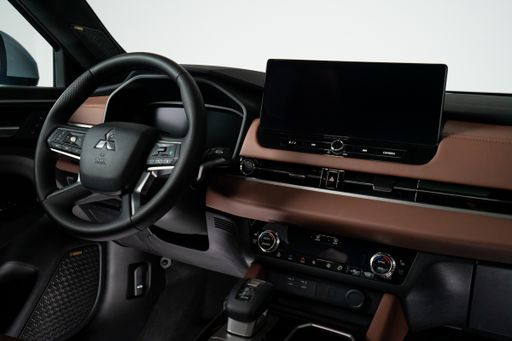
Both vehicles come equipped with a host of advanced safety features, including adaptive cruise control, lane-keeping assist, and automatic emergency braking. The Sportage also integrates an advanced infotainment system with a larger display and smartphone connectivity options, catering to tech-savvy drivers.

The Outlander, known for its robustness, includes a sophisticated suite of driver-assistance technologies and excels with its intuitive infotainment system. The clear distinction, however, lies in the overall technology and connectivity features that the Sportage offers, particularly for younger drivers looking for an engaging in-car experience.

Sportage

Conclusion: Making the Right Choice

Ultimately, the choice between the Kia Sportage and Mitsubishi Outlander comes down to individual needs and preferences. The Sportage impresses with its agile performance, efficient engine options, and tech-forward interior, making it an ideal selection for urban drivers or those seeking versatility.

Conversely, the Mitsubishi Outlander stands out with its robust powertrain, excellent fuel efficiency, and rugged capabilities, appealing to adventure seekers and those prioritizing all-wheel-drive performance. Whichever path you choose, both models showcase the evolving landscape of SUVs, blending performance, efficiency, and modern design to meet the demands of today's drivers.

Here’s where it gets real: The technical differences in detail

Outlander

Costs and Efficiency:

Looking at overall running costs, both models reveal some interesting differences in everyday economy.

Kia Sportage is significantly cheaper – starting at 29,100 £ , while the Mitsubishi Outlander costs 42,800 £ . That’s a price difference of around 13,714 £.

Fuel consumption also shows a difference: the Mitsubishi Outlander uses 2.6 L/100km and is somewhat more efficient than the Kia Sportage with 2.9 L/100km. The difference is about 0.3 L/100km.

As for electric range, the Mitsubishi Outlander offers clearly more range – reaching up to 85 km, about 19 km more than the Kia Sportage.

Sportage

Engine and Performance:

Power, torque and acceleration say a lot about how a car feels on the road. This is where you see which model delivers more driving dynamics.

When it comes to engine power, the Mitsubishi Outlander offers only slightly more power – delivering 306 HP compared to 288 HP. That’s roughly 18 HP more horsepower.

When accelerating from 0 to 100 km/h, the Kia Sportage is only slightly quicker – completing the sprint in 7.5 s, while the Mitsubishi Outlander takes 7.9 s. That’s about 0.4 s quicker.

Outlander

Space and Everyday Use:

Beyond pure performance, interior space and usability matter most in daily life. This is where you see which car is more practical and versatile.

Both vehicles offer seating for 5 people.

In terms of curb weight, Kia Sportage is markedly lighter – 1,552 kg compared to 2,156 kg. The difference is around 604 kg.

Looking at boot space, the Kia Sportage offers slightly more boot space – 587 L compared to 498 L. That’s a difference of about 89 L.

When it comes to payload, the Kia Sportage carries marginally more – 580 kg compared to 529 kg. That’s a difference of about 51 kg.

Who wins the race in the data check?

The Kia Sportage is slightly ahead in the objective data comparison.
This result only shows which model scores more points on paper – not which of the two cars feels right for you.

from £29,100
Sportage

Kia Sportage

  • Engine Type Petrol, Full Hybrid, Diesel MHEV, Plugin Hybrid
  • Transmission Manuel, Automatic
  • Drive Type Front-Wheel Drive, All-Wheel Drive
  • Power HP 136 - 288 HP
  • Consumption L/100km 2.9 - 7.8 L/100km
  • Electric Range 63 - 66 km
Mitsubishi Outlander
Kia Sportage

Costs and Consumption

View detailed analysis

Engine and Performance

View detailed analysis

Dimensions and Body

View detailed analysis

Mitsubishi Outlander

The Mitsubishi Outlander is a sensible family SUV that blends roomy practicality with a calm, assured ride—ideal for school runs and weekend getaways. It won’t set pulses racing, but its tidy interior, straightforward equipment and low-stress ownership make it a smart, unfussy pick for buyers who prefer reliability over flash.

details

Kia Sportage

The Kia Sportage is a roomy, well-equipped compact SUV that balances comfort and practicality for daily driving. It delivers a modern interior, composed ride, and strong value for buyers who want versatility without fuss.

details
Mitsubishi Outlander
Kia Sportage

Costs and Consumption

Price
42,800 - 54,600 £
Price
29,100 - 47,100 £
Consumption L/100km
2.6 - 2.7 L/100km
Consumption L/100km
2.9 - 7.8 L/100km
Consumption kWh/100km
-
Consumption kWh/100km
-
Electric Range
83 - 85 km
Electric Range
63 - 66 km
Battery Capacity
-
Battery Capacity
-
co2
60 g/km
co2
67 - 177 g/km
Fuel tank capacity
-
Fuel tank capacity
-

Dimensions and Body

Body Type
SUV
Body Type
SUV
Seats
5
Seats
5
Doors
-
Doors
-
Curb weight
2,156 - 2,232 kg
Curb weight
1,552 - 1,896 kg
Trunk capacity
498 L
Trunk capacity
526 - 587 L
Length
-
Length
-
Width
1,862 mm
Width
1,865 mm
Height
-
Height
-
Max trunk capacity
-
Max trunk capacity
-
Payload
453 - 529 kg
Payload
533 - 580 kg

Engine and Performance

Engine Type
Plugin Hybrid
Engine Type
Petrol, Full Hybrid, Diesel MHEV, Plugin Hybrid
Transmission
-
Transmission
Manuel, Automatic
Transmission Detail
-
Transmission Detail
Manual Gearbox, Dual-Clutch Automatic, Automatic Gearbox
Drive Type
All-Wheel Drive
Drive Type
Front-Wheel Drive, All-Wheel Drive
Power HP
306 HP
Power HP
136 - 288 HP
Acceleration 0-100km/h
7.9 s
Acceleration 0-100km/h
7.5 - 11.6 s
Max Speed
-
Max Speed
-
Torque
-
Torque
250 - 380 Nm
Number of Cylinders
4
Number of Cylinders
4
Power kW
225 kW
Power kW
100 - 212 kW
Engine capacity
2,360 cm3
Engine capacity
1,598 cm3

General

Model Year
2,025 - 2,026
Model Year
2,025 - 2,026
CO2 Efficiency Class
B
CO2 Efficiency Class
F, D, E, G, B
Brand
Mitsubishi
Brand
Kia
DriveDuel uses data analysis and artificial intelligence to evaluate vehicle data and create content. Content is regularly reviewed and improved. The displayed prices are estimates based on German list prices, adjusted to the respective country’s VAT. Country-specific registration taxes are not included. This information is not legally binding.