VS

Nissan Juke vs Ford Focus comparison

Compare performance (143 HP vs 280 HP), boot space and price (21,400 £ vs 27,500 £ ) at a glance. Find out which car is the better choice for you – Nissan Juke or Ford Focus?

Nissan Juke vs Ford Focus: Key differences

Nissan Juke

5 (1 Reviews)
rate
  • visibly cheaper
  • very slightly more efficient
  • very slightly lighter
  • marginally more trunk space
details

Ford Focus

4.6 (1 Reviews)
rate
  • considerably more power
  • clearly quicker 0–100 km/h
details

All details on performance, efficiency, range and trunk space can be found in the technical comparison below – including user reviews for both models.

By Achim Sedelmaier

Juke

Ford Focus VS Nissan Juke — direct comparison for buyers

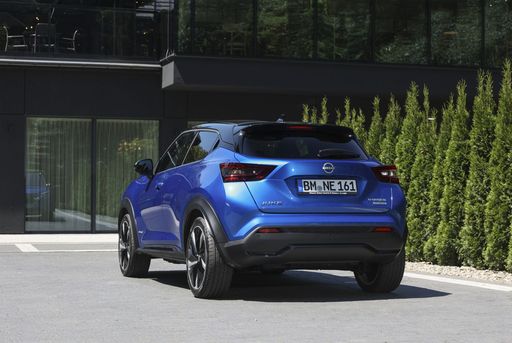
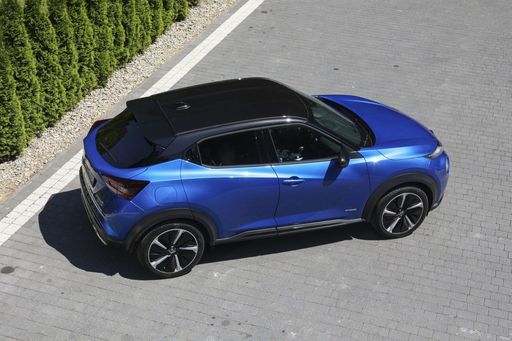
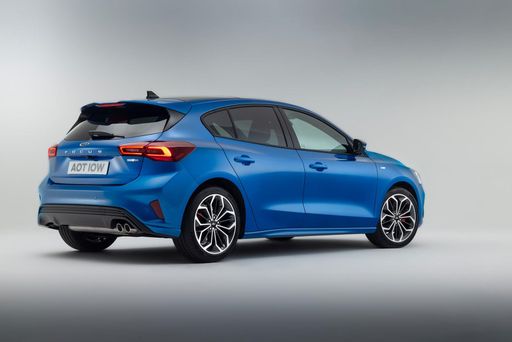
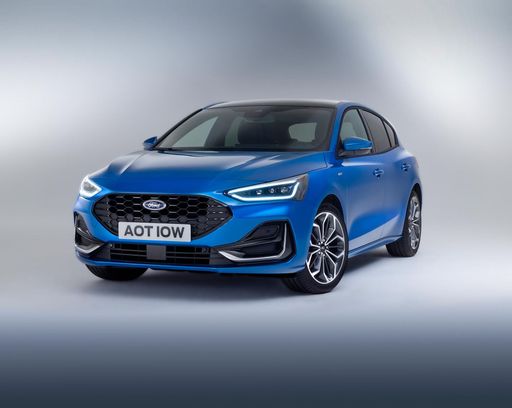
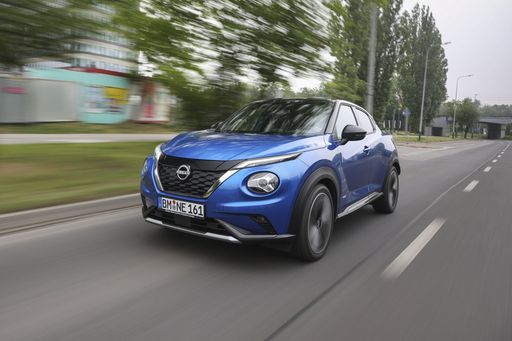
Ford Focus VS Nissan Juke put two different compact philosophies side by side: the Focus drives like a compact car first, the Juke like a small SUV with city manners. The Focus leans into precise steering and a taut chassis that rewards an active driver, while the Juke prioritises upright seating, easy manoeuvring and an extroverted look. Both present modern infotainment, but they use it for different goals: the Focus aims at a connected driving experience, the Juke at simple, tactile cockpit control. Read on to see which character and compromises match your daily life rather than hunting for a single numerical winner.
Focus

Character and driving experience

The Ford Focus feels like a driver’s compact — it wants to be placed into corners with confidence and gives clear feedback through the wheel, whereas the Nissan Juke behaves more like a nimble town crossover with quick steering but less finesse at speed. On twisty roads the Focus rewards engagement and feels planted, while the Juke trades some precision for a higher ride and a friendlier, less demanding personality. In town the Juke’s lighter steering and higher seating make traffic easier to live with, but on longer, faster routes the Focus’s stability is more relaxing. Choosing between them is a choice between sporty composure (Focus) and easy urban agility (Juke).

Juke

Comfort and long-distance usability

For motorway miles the Ford Focus generally wins on refinement and rear-seat comfort: it isolates wind and road noise better and its back seats give more space for adults on long trips. The Nissan Juke is comfortable in short bursts and city commutes, but becomes noticeably louder and firmer on sustained high-speed runs, particularly with larger wheels. If long motorway stages and four-up travel are common, the Focus feels more grown-up and less tiring, while the Juke suits buyers who spend most time around town and want a sprightly, compact ride. In short, Focus = long-distance poise, Juke = urban friendliness with compromises when the journey gets long.

Focus

Practicality, space and everyday usability

The Ford Focus offers a more spacious rear seat and a practical layout that benefits families and regular passengers, whereas the Nissan Juke compromises rear legroom and visibility for its compact footprint and distinctive styling. Boot space behaves differently too: the Juke can be surprisingly useful in its petrol form but hides a high loading lip that makes heavy items awkward, and its hybrid variants eat into luggage room. For parents fitting child seats or anyone loading prams and bigger boxes, the Focus’s room and easier cabin access feel more forgiving day-to-day. If you prioritise easy parking and short-trip shopping in tight urban settings, the Juke’s smaller exterior and higher seating position are definite advantages.

Juke

Cabin feel, controls and technology

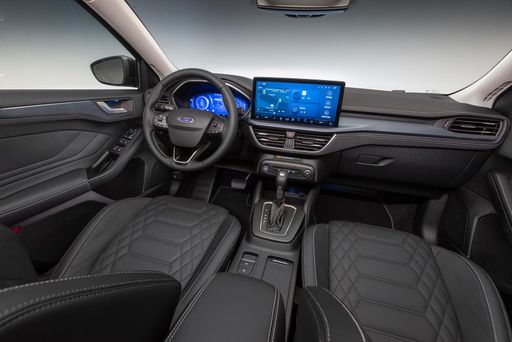
Inside, the Ford Focus goes big on screen real estate and smartphone integration but leans more on digital menus for climate and small tasks, which some find less intuitive on the move; the Nissan Juke counters that with a more tactile cockpit and physical climate controls that make simple adjustments quicker. Material quality is broadly competitive: both use durable plastics where it matters, but the Juke’s recent facelift pulled its interior into a fresher, more cohesive look while the Focus still feels more purpose-built than premium. Tech-wise the Focus offers broad connectivity and slightly more sophisticated long‑distance assistance, while the Juke keeps the ergonomic wins in the city with clearly arranged buttons and a driver-oriented display. Your tolerance for touchscreen-driven controls versus physical switches will nudge the choice between them.

Focus

Which buyer each car suits — quick decision cues

Pick the Ford Focus if you value precise handling, stronger long‑distance comfort and a more spacious rear seat for passengers — it suits drivers who mix motorway commutes with family duties. Choose the Nissan Juke if you live in the city, prioritise easy parking, a confident urban presence and straightforward, tactile controls that work without diving into menus. Both cars bring modern infotainment and safety kit, but the trade-offs are clear: Focus trades some urban convenience for better highway manners, Juke trades rear-room and quiet for compactness and city ease. If you want the nitty-gritty on powertrains, economy and cargo figures to confirm the fit, the technical comparison that follows will map those differences to real-life consequences.

Here’s where it gets real: The technical differences in detail

Juke

Costs and Efficiency:

Looking at overall running costs, both models reveal some interesting differences in everyday economy.

Nissan Juke is visibly cheaper – starting at 21,400 £ , while the Ford Focus costs 27,500 £ . That’s a price difference of around 6,129 £.

Fuel consumption also shows a difference: the Nissan Juke uses 4.7 L/100km and is very slightly more efficient than the Ford Focus with 4.9 L/100km. The difference is about 0.2 L/100km.

Focus

Engine and Performance:

Under the bonnet, it becomes clear which model is tuned for sportiness and which one takes the lead when you hit the accelerator.

When it comes to engine power, the Ford Focus offers considerably more power – delivering 280 HP compared to 143 HP. That’s roughly 137 HP more horsepower.

When accelerating from 0 to 100 km/h, the Ford Focus is clearly quicker – completing the sprint in 5.7 s, while the Nissan Juke takes 10.1 s. That’s about 4.4 s quicker.

There’s also a difference in torque: the Ford Focus delivers clearly more torque with 420 Nm compared to 200 Nm. That’s about 220 Nm more.

Juke

Space and Everyday Use:

Beyond pure performance, interior space and usability matter most in daily life. This is where you see which car is more practical and versatile.

Both vehicles offer seating for 5 people.

In terms of curb weight, Nissan Juke is very slightly lighter – 1,274 kg compared to 1,330 kg. The difference is around 56 kg.

Looking at boot space, the Nissan Juke offers marginally more boot space – 422 L compared to 392 L. That’s a difference of about 30 L.

When it comes to payload, the Ford Focus carries visibly more – 560 kg compared to 427 kg. That’s a difference of about 133 kg.

Who wins the race in the data check?

The Ford Focus is decisively ahead in the objective data comparison.
This result only shows which model scores more points on paper – not which of the two cars feels right for you.

from £27,500
Focus

Ford Focus

  • Engine Type Petrol MHEV, Diesel, Petrol
  • Transmission Manuel, Automatic
  • Drive Type Front-Wheel Drive
  • Power HP 115 - 280 HP
  • Consumption L/100km 4.9 - 8 L/100km
Nissan Juke
Ford Focus

Costs and Consumption

View detailed analysis

Engine and Performance

View detailed analysis

Dimensions and Body

View detailed analysis

Nissan Juke

The Nissan Juke is a pocket-sized crossover that refuses to blend in, with quirky styling and a cheeky stance that turns heads at every traffic light. It’s ideal for shoppers who value personality and nimble urban driving over maximum practicality, delivering surprising pep and a well-equipped feel for everyday fun.

details

Ford Focus

The Ford Focus remains a clever all‑rounder that balances sharp handling with everyday comfort, making it a strong choice whether your commute is city streets or country lanes. Its practical cabin and sensible running costs mean you’ll spend more time enjoying the drive and less time worrying about ownership, with a playful streak underfoot that keeps things interesting.

details
Nissan Juke
Ford Focus

Costs and Consumption

Price
21,400 - 30,100 £
Price
27,500 - 42,700 £
Consumption L/100km
4.7 - 6 L/100km
Consumption L/100km
4.9 - 8 L/100km
Consumption kWh/100km
-
Consumption kWh/100km
-
Electric Range
-
Electric Range
-
Battery Capacity
-
Battery Capacity
-
co2
105 - 136 g/km
co2
117 - 183 g/km
Fuel tank capacity
-
Fuel tank capacity
52 L

Dimensions and Body

Body Type
SUV
Body Type
Hatchback
Seats
5
Seats
5
Doors
-
Doors
5
Curb weight
1,274 - 1,405 kg
Curb weight
1,330 - 1,529 kg
Trunk capacity
354 - 422 L
Trunk capacity
392 L
Length
-
Length
4,382 - 4,397 mm
Width
1,800 mm
Width
1,825 - 1,844 mm
Height
-
Height
1,438 - 1,482 mm
Max trunk capacity
-
Max trunk capacity
1,354 L
Payload
405 - 427 kg
Payload
495 - 560 kg

Engine and Performance

Engine Type
Petrol, Full Hybrid
Engine Type
Petrol MHEV, Diesel, Petrol
Transmission
Manuel, Automatic
Transmission
Manuel, Automatic
Transmission Detail
Manual Gearbox, Dual-Clutch Automatic, Automatic Gearbox
Transmission Detail
Manual Gearbox, Dual-Clutch Automatic, Automatic Gearbox
Drive Type
Front-Wheel Drive
Drive Type
Front-Wheel Drive
Power HP
114 - 143 HP
Power HP
115 - 280 HP
Acceleration 0-100km/h
10.1 - 11.8 s
Acceleration 0-100km/h
5.7 - 11.8 s
Max Speed
-
Max Speed
186 - 250 km/h
Torque
200 Nm
Torque
170 - 420 Nm
Number of Cylinders
3 - 4
Number of Cylinders
3 - 4
Power kW
84 - 105 kW
Power kW
85 - 206 kW
Engine capacity
999 - 1,598 cm3
Engine capacity
999 - 2,261 cm3

General

Model Year
2025
Model Year
2,022 - 2,024
CO2 Efficiency Class
D, E, C
CO2 Efficiency Class
D, G
Brand
Nissan
Brand
Ford
DriveDuel uses data analysis and artificial intelligence to evaluate vehicle data and create content. Content is regularly reviewed and improved. The displayed prices are estimates based on German list prices, adjusted to the respective country’s VAT. Country-specific registration taxes are not included. This information is not legally binding.