VS

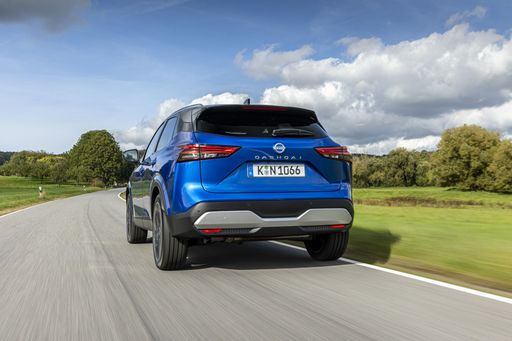
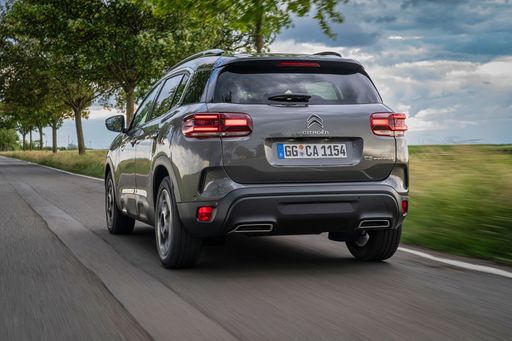
Nissan Qashqai vs Citroen C5 Aircross comparison

Compare performance (205 HP vs 225 HP), boot space and price (29,600 £ vs 29,100 £ ) at a glance. Find out which car is the better choice for you – Nissan Qashqai or Citroen C5 Aircross?

Nissan Qashqai vs Citroen C5 Aircross: Key differences

Nissan Qashqai

4.9 (3 Reviews)
rate
  • only slightly quicker 0–100 km/h
  • moderately lighter
details

Citroen C5 Aircross

3.9 (5 Reviews)
rate
  • barely cheaper
  • only slightly more power
  • significantly more efficient
  • moderately more trunk space
details

All details on performance, efficiency, range and trunk space can be found in the technical comparison below – including user reviews for both models.

By Achim Sedelmaier

Qashqai

Introduction: A Clash of Titans in the SUV Arena

The SUV market is ever-evolving, and consumers are often left pondering which model to choose. Today, we examine two key players: the Citroen C5 Aircross and the Nissan Qashqai. Both vehicles boast impressive specifications and advanced technologies, but how do they truly compare in terms of performance, comfort, and innovative features? Let's delve deeper into what each has to offer.
C5 Aircross

Dimensions and Design: First Impressions Matter

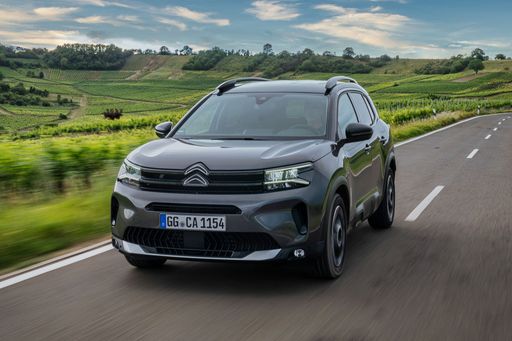
The Citroen C5 Aircross stretches to a length of 4500 mm and is 1859 mm wide, towering at 1688 mm high. Its distinctive design focuses on comfort, blending practicality with a touch of flair. With a generous trunk capacity of 580 liters, the C5 Aircross is well-equipped for family trips or luggage-laden adventures.

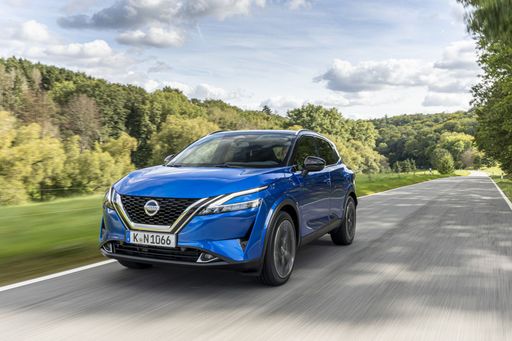
In comparison, the Nissan Qashqai, while slightly shorter at 4425 mm in length and narrower at 1835 mm, maintains a respectable height of 1625 mm. It offers a slightly smaller trunk capacity of 504 liters, yet still provides ample space for everyday use. Both models feature a sleek and modern aesthetic, but the choice may come down to personal preference.

Qashqai

Engine Options: Power to the People

The Citroen C5 Aircross offers a choice of three engine types: diesel, petrol MHEV, and a plug-in hybrid. The power outputs range from 131 HP to a powerful 224 HP, providing a variety of options for drivers who prioritize efficiency or performance. Fuel consumption is impressive, too, with the hybrid model consuming just 1.4 L/100km in electric mode, and an electric range of up to 58 km.

On the other hand, the Nissan Qashqai offers petrol MHEV and full hybrid variants, with power outputs ranging from 140 HP to 190 HP. Notably, the Qashqai's full hybrid engine delivers efficient performance with fuel consumption as low as 5.1 L/100km. The torque, which peaks at 330 Nm, ensures robust power delivery, particularly for those opting for an all-wheel-drive system.

C5 Aircross

Performance: Speed and Acceleration

When it comes to acceleration, the Citroen C5 Aircross performs admirably, with the fastest variant achieving 0-100 km/h in just 8.9 seconds. Its maximum speed can reach up to 225 km/h, offering plenty of excitement for drivers seeking a sporty edge.

Conversely, the Nissan Qashqai showcases swift performance as well, especially in its top-tier variant, which can accelerate from 0-100 km/h in a mere 7.9 seconds. Its highest speed caps at 206 km/h, making it a competitive performer in this segment.

Qashqai

Innovative Features: Comfort Meets Technology

The Citroen C5 Aircross is packed with innovative technology, including a remarkably comfortable suspension system that utilizes advanced hydraulic technology for a smooth ride over rough terrain. It also features an intuitive infotainment system, offering seamless smartphone integration and numerous driver-assist features for enhanced safety.

The Nissan Qashqai excels in its use of safety and driver-assist technologies, including ProPILOT Assist, which supports the driver in both highway and city driving. The Qashqai's user-friendly infotainment system and high-quality materials used throughout the cabin further accentuate its appeal.

C5 Aircross

Conclusion: Which SUV Reigns Supreme?

Ultimately, the choice between the Citroen C5 Aircross and the Nissan Qashqai boils down to individual preferences and priorities. If you lean towards comfort and innovative ride technology, the C5 Aircross may be the better fit. However, if you prioritize performance and cutting-edge driver assist features, the Qashqai stands out with its strong offerings.

Both vehicles showcase the capabilities that modern SUVs bring to the table, making this comparison a compelling study for any prospective buyer in the market. Regardless of your choice, rest assured you’ll be investing in quality engineering and contemporary design.

Here’s where it gets real: The technical differences in detail

Qashqai

Costs and Efficiency:

Price and efficiency are often the first things buyers look at. Here it becomes clear which model has the long-term edge – whether at the pump, the plug, or in purchase price.

Citroen C5 Aircross is barely cheaper – starting at 29,100 £ , while the Nissan Qashqai costs 29,600 £ . That’s a price difference of around 471 £.

Fuel consumption also shows a difference: the Citroen C5 Aircross uses 2.5 L/100km and is significantly more efficient than the Nissan Qashqai with 4.3 L/100km. The difference is about 1.8 L/100km.

C5 Aircross

Engine and Performance:

Power, torque and acceleration say a lot about how a car feels on the road. This is where you see which model delivers more driving dynamics.

When it comes to engine power, the Citroen C5 Aircross offers only slightly more power – delivering 225 HP compared to 205 HP. That’s roughly 20 HP more horsepower.

When accelerating from 0 to 100 km/h, the Nissan Qashqai is only slightly quicker – completing the sprint in 7.6 s, while the Citroen C5 Aircross takes 8.3 s. That’s about 0.7 s quicker.

There’s also a difference in torque: the Nissan Qashqai delivers barely more torque with 330 Nm compared to 300 Nm. That’s about 30 Nm more.

Qashqai

Space and Everyday Use:

Cabin size, boot volume and payload all play a role in everyday practicality. Here, comfort and flexibility make the difference.

Both vehicles offer seating for 5 people.

In terms of curb weight, Nissan Qashqai is moderately lighter – 1,420 kg compared to 1,629 kg. The difference is around 209 kg.

Looking at boot space, the Citroen C5 Aircross offers moderately more boot space – 565 L compared to 504 L. That’s a difference of about 61 L.

When it comes to payload, the Nissan Qashqai carries very slightly more – 516 kg compared to 471 kg. That’s a difference of about 45 kg.

Who wins the race in the data check?

The Citroen C5 Aircross is clearly superior overall in the objective data comparison.
This result only shows which model scores more points on paper – not which of the two cars feels right for you.

from £29,100
C5 Aircross

Citroen C5 Aircross

  • Engine Type : Petrol MHEV, Electric, Plugin Hybrid
  • Transmission : Automatic
  • Drive Type : Front-Wheel Drive
  • Power HP : 145 - 225 HP
  • Consumption L/100km : 2.5 - 5.4 L/100km
  • Consumption kWh/100km : 17 kWh/100km
  • Electric Range : 81 - 520 km
Nissan Qashqai
Citroen C5 Aircross

Costs and Consumption

View detailed analysis

Engine and Performance

View detailed analysis

Dimensions and Body

View detailed analysis

Nissan Qashqai

The Nissan Qashqai blends practical, family-friendly packaging with SUV styling that refuses to shout, making it a sensible and dependable choice for everyday life. It’s comfortable to live with, economical on the road, and neatly equipped enough to feel modern without ever feeling precious — perfect if you want crossover versatility without the drama.

details

Citroen C5 Aircross

The Citroën C5 Aircross feels like a sofa on wheels, delivering a calm, floaty ride and clever packaging that makes life with luggage and kids noticeably easier. Quirky French styling and a supremely practical, family-focused cabin mean it quietly wins hearts by prioritising comfort over showroom bravado.

details
Nissan Qashqai
Citroen C5 Aircross

Costs and Consumption

Price
29,600 - 39,900 £
Price
29,100 - 43,000 £
Consumption L/100km
4.3 - 6.8 L/100km
Consumption L/100km
2.5 - 5.4 L/100km
Consumption kWh/100km
-
Consumption kWh/100km
17 kWh/100km
Electric Range
-
Electric Range
81 - 520 km
Battery Capacity
-
Battery Capacity
-
co2
98 - 152 g/km
co2
0 - 121 g/km
Fuel tank capacity
-
Fuel tank capacity
-

Dimensions and Body

Body Type
SUV
Body Type
SUV
Seats
5
Seats
5
Doors
-
Doors
-
Curb weight
1,420 - 1,624 kg
Curb weight
1,629 - 2,184 kg
Trunk capacity
479 - 504 L
Trunk capacity
565 L
Length
-
Length
-
Width
1,835 mm
Width
1,870 mm
Height
-
Height
-
Max trunk capacity
-
Max trunk capacity
-
Payload
446 - 516 kg
Payload
446 - 471 kg

Engine and Performance

Engine Type
Petrol MHEV, Full Hybrid
Engine Type
Petrol MHEV, Electric, Plugin Hybrid
Transmission
Manuel, Automatic
Transmission
Automatic
Transmission Detail
Manual Gearbox, CVT, Reduction Gearbox
Transmission Detail
Dual-Clutch Automatic, Reduction Gearbox
Drive Type
Front-Wheel Drive, All-Wheel Drive
Drive Type
Front-Wheel Drive
Power HP
158 - 205 HP
Power HP
145 - 225 HP
Acceleration 0-100km/h
7.6 - 9.9 s
Acceleration 0-100km/h
8.3 - 11.2 s
Max Speed
-
Max Speed
-
Torque
260 - 330 Nm
Torque
230 - 300 Nm
Number of Cylinders
3 - 4
Number of Cylinders
3 - 4
Power kW
116 - 151 kW
Power kW
107 - 165 kW
Engine capacity
1,332 - 1,498 cm3
Engine capacity
1,199 - 1,598 cm3

General

Model Year
2,025 - 2,026
Model Year
2,025 - 2,026
CO2 Efficiency Class
E, C
CO2 Efficiency Class
D, A, B
Brand
Nissan
Brand
Citroen
DriveDuel uses data analysis and artificial intelligence to evaluate vehicle data and create content. Content is regularly reviewed and improved. The displayed prices are estimates based on German list prices, adjusted to the respective country’s VAT. Country-specific registration taxes are not included. This information is not legally binding.