
 Deutschland
 France
 Nederland
 Great Britain
 Sverige
 Norge
Norge Danmark
 Suomi
Suomi Italia
 Polska
 España
VS
Nissan X-Trail vs Tesla Model 3 - Differences and prices compared
Compare performance (213 HP vs 460 HP), boot space and price (34200 £ vs 34300 £ ) at a glance. Find out which car is the better choice for you – Nissan X-Trail or Tesla Model 3?
X-Trail
Costs and Efficiency:
When it comes to price and running costs, the biggest differences usually appear. This is often where you see which car fits your budget better in the long run.
Nissan X-Trail has a slight advantage in terms of price – it starts at 34200 £ , while the Tesla Model 3 costs 34300 £ . That’s a price difference of around 120 £.
Model 3
Engine and Performance:
Under the bonnet, it becomes clear which model is tuned for sportiness and which one takes the lead when you hit the accelerator.
When it comes to engine power, the Tesla Model 3 has a significantly edge – offering 460 HP compared to 213 HP. That’s roughly 247 HP more horsepower.
In acceleration from 0 to 100 km/h, the Tesla Model 3 is decisively quicker – completing the sprint in 3.10 s, while the Nissan X-Trail takes 7 s. That’s about 3.90 s faster.
There’s also a difference in torque: Tesla Model 3 pulls evident stronger with 660 Nm compared to 525 Nm. That’s about 135 Nm difference.
Ad · Affiliate

As an Amazon Associate, we earn from qualifying purchases.
X-Trail
Space and Everyday Use:
Whether family car or daily driver – which one offers more room, flexibility and comfort?
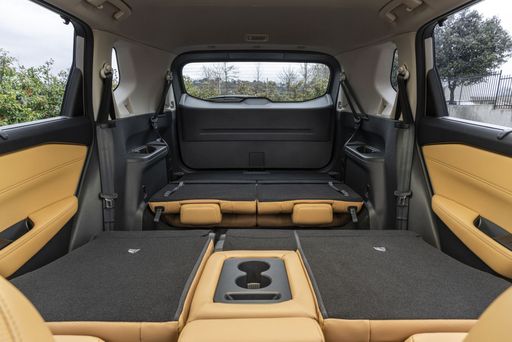
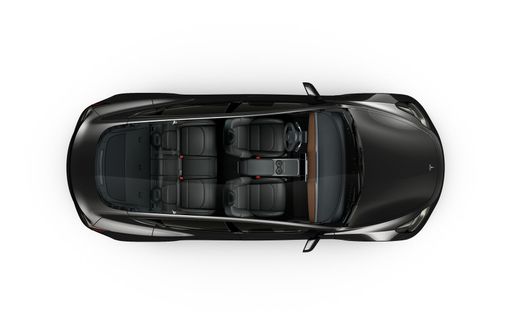
Seats: Nissan X-Trail offers distinct more seating capacity – 7 vs 5.
In curb weight, Nissan X-Trail is barely noticeable lighter – 1668 kg compared to 1822 kg. The difference is around 154 kg.
In terms of boot space, the Tesla Model 3 offers slight more room – 594 L compared to 585 L. That’s a difference of about 9 L.
When it comes to payload, Nissan X-Trail significantly takes the win – 574 kg compared to 333 kg. That’s a difference of about 241 kg.
Who wins the race in the data check?
The Tesla Model 3 holds a decisive overall lead in the objective data comparison.
This result only shows which model scores more points on paper – not which of the two cars feels right for you.
Nissan X-Trail
Tesla Model 3
Costs and Consumption
View detailed analysis
View detailed analysis
Engine and Performance
View detailed analysis
View detailed analysis
Dimensions and Body
View detailed analysis
View detailed analysis
from about £34,300
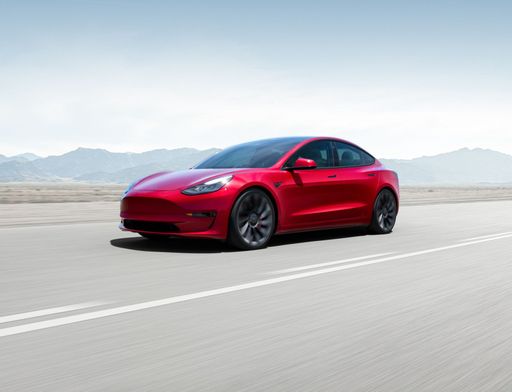
Tesla Model 3
Nissan X-Trail
5 (1 Reviews)
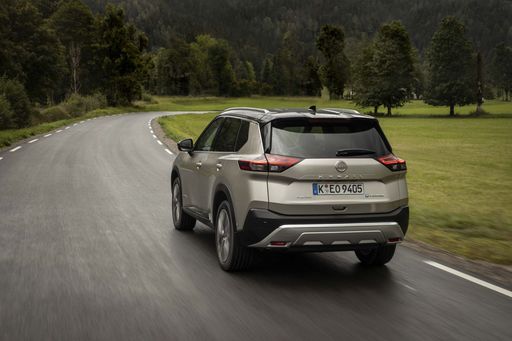
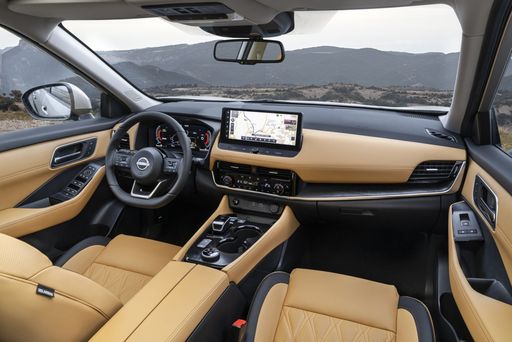
The Nissan X-Trail is a roomy, no-nonsense family SUV that mixes sensible practicality with a quietly modern look, making it an easy choice for busy lives and weekend escapes. It drives with calm confidence, delivers a comfortable ride and sensible tech, and won’t demand drama while doing the everyday heavy lifting.
details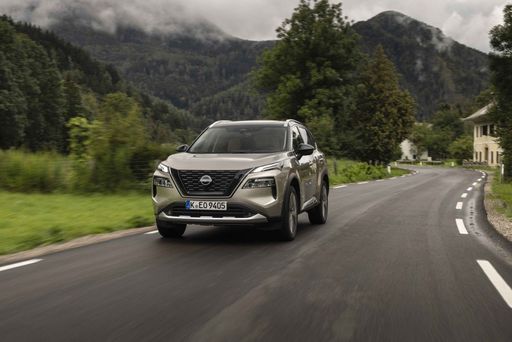
Tesla Model 3
2.9 (2 Reviews)
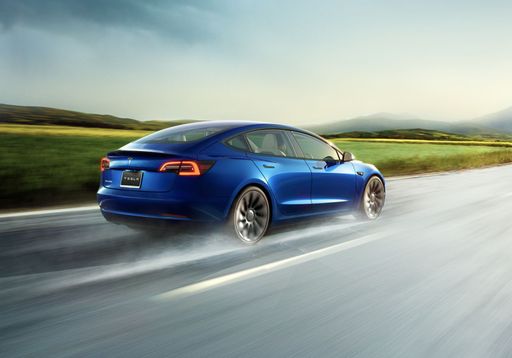
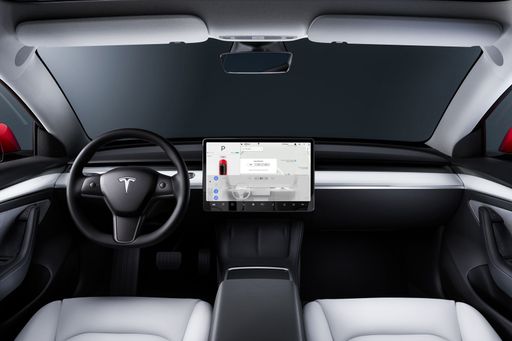
The Tesla Model 3 slices through daily commuting with a silent, confident shove that makes petrolheads reassess their life choices, while its minimalist cabin feels more like a slick gadget gallery than a traditional car interior. For buyers after a fuss-free, tech-forward electric with plenty of grin factor and low running drama, it’s hard to beat—just don't be surprised when the car updates itself overnight.
details
Nissan X-Trail
Tesla Model 3
Costs and Consumption |
|
|---|---|
|
Price
34200 - 50500 £
|
Price
34300 - 50100 £
|
|
Consumption L/100km
5.7 - 6.9 L
|
Consumption L/100km
-
|
|
Consumption kWh/100km
-
|
Consumption kWh/100km
13.2 - 16.7 kWh
|
|
Electric Range
-
|
Electric Range
550 - 750 km
|
|
Battery Capacity
-
|
Battery Capacity
64.5 - 83 kWh
|
|
co2
131 - 161 g/km
|
co2
0 g/km
|
|
Fuel tank capacity
-
|
Fuel tank capacity
-
|
Dimensions and Body |
|
|---|---|
|
Body Type
SUV
|
Body Type
Sedan
|
|
Seats
5 - 7
|
Seats
5
|
|
Doors
-
|
Doors
4
|
|
Curb weight
1668 - 1961 kg
|
Curb weight
1822 - 1929 kg
|
|
Trunk capacity
177 - 585 L
|
Trunk capacity
594 L
|
|
Length
-
|
Length
4720 - 4724 mm
|
|
Width
1840 mm
|
Width
1850 mm
|
|
Height
-
|
Height
1431 - 1440 mm
|
|
Max trunk capacity
-
|
Max trunk capacity
-
|
|
Payload
432 - 574 kg
|
Payload
303 - 333 kg
|
Engine and Performance |
|
|---|---|
|
Engine Type
Petrol MHEV, Full Hybrid
|
Engine Type
Electric
|
|
Transmission
Automatic
|
Transmission
Automatic
|
|
Transmission Detail
CVT, Reduction Gearbox
|
Transmission Detail
Reduction Gearbox
|
|
Drive Type
Front-Wheel Drive, All-Wheel Drive
|
Drive Type
Rear-Wheel Drive, All-Wheel Drive
|
|
Power HP
163 - 213 HP
|
Power HP
283 - 460 HP
|
|
Acceleration 0-100km/h
7 - 9.6 s
|
Acceleration 0-100km/h
3.1 - 6.1 s
|
|
Max Speed
-
|
Max Speed
201 - 262 km/h
|
|
Torque
300 - 525 Nm
|
Torque
420 - 660 Nm
|
|
Number of Cylinders
3
|
Number of Cylinders
-
|
|
Power kW
120 - 157 kW
|
Power kW
208 - 338 kW
|
|
Engine capacity
1497 cm3
|
Engine capacity
-
|
General |
|
|---|---|
|
Model Year
2025
|
Model Year
2025
|
|
CO2 Efficiency Class
F, D, E
|
CO2 Efficiency Class
A
|
|
Brand
Nissan
|
Brand
Tesla
|
Is the Nissan X-Trail offered with different drivetrains?
The Nissan X-Trail is offered with Front-Wheel Drive or All-Wheel Drive.
The prices shown are estimates based on German list prices, adjusted for local VAT. Local registration taxes (e.g. NoVA, BPM or CO2 malus) are not included. This information is not legally binding.