VS

Omoda 5 vs BYD Seal U comparison

Compare performance (204 HP vs 324 HP), boot space and price (31,600 £ vs 34,300 £ ) at a glance. Find out which car is the better choice for you – Omoda 5 or BYD Seal U?

Omoda 5 vs BYD Seal U: Key differences

Omoda 5

5 (4 Reviews)
rate
  • only slightly cheaper
  • moderately lighter
details

BYD Seal U

4.1 (7 Reviews)
rate
  • clearly more power
  • noticeably more efficient
  • a bit more electric range
  • visibly quicker 0–100 km/h
  • visibly more trunk space
details

All details on performance, efficiency, range and trunk space can be found in the technical comparison below – including user reviews for both models.

By Achim Sedelmaier

5

BYD Seal U vs Omoda 5: A Comprehensive SUV Comparison

In the ever-evolving automotive landscape, buyers often find themselves torn between models that offer distinct features and advantages. The BYD Seal U and the Omoda 5 are two such contenders, both presenting unique propositions in the SUV segment. Let's dive into their technical specs and innovations to help potential buyers make an informed decision.

Seal U

Performance and Power

The BYD Seal U comes with an impressive dual-engine option — plug-in hybrid and all-electric versions. With power outputs ranging from 218 HP to a robust 324 HP, drivers can choose between front-wheel and all-wheel drive systems, ensuring versatility across different driving conditions. The vehicle's accelerated performance is remarkable with a top speed of up to 180 km/h and an acceleration from 0 to 100 km/h in just 5.9 seconds for the electric variant.

In contrast, the Omoda 5 sticks to the efficiency of a petrol engine. It offers 204 HP channeled through a dual-clutch automatic transmission, ensuring a smooth yet punchy driving experience. The Omoda 5 can achieve a maximum speed of 220 km/h, with a respectable sprint from 0 to 100 km/h in 7.8 seconds. This makes Omoda 5 slightly more speed-oriented compared to its electric rival.

Fuel Efficiency and Range

With environmental efficiency in mind, the BYD Seal U takes a clear lead in terms of consumption, with its plug-in hybrid version offering just 0.9 to 1.2 L/100km. The all-electric model consumes approximately 19.9 to 20.5 kWh/100km and boasts an exceptional electric range between 80 to 500 km depending on the driving mode, emphasizing its eco-friendly credentials.

The Omoda 5, on the other hand, presents a conventional petrol-driven approach with a consumption rate of 7.5 L/100km. While it lacks the electric efficiency of the Seal U, it's designed for those who prefer traditional combustion engines and the straightforwardness of petrol refueling.

Dimensions and Practicality

Dimensionally, the BYD Seal U is a larger SUV at 4775 mm in length and 1890 mm in width, offering ample interior space that comfortably houses five passengers. The trunk provides a capacity ranging from 425 to 552 liters, making it suitable for families and long journeys.

The Omoda 5 is slightly more compact with a length of 4424 mm and a width of 1830 mm. Although slightly narrower, it remains practical with seating for five, though it doesn't explicitly list trunk space, hinting at an innovative interior cargo arrangement prioritizing flexibility over sheer volume.

Innovations and Features

Technologically, the BYD Seal U distinguishes itself via its hybridized powertrain and low CO2 emissions, placing it in efficiency classes A and B. This accentuates its role in promoting sustainable mobility solutions.

The Omoda 5, on the other hand, focuses on a driving-centric approach with a frugal yet spirited 1.6-liter engine. While lacking the hybrid's environmental badge, it appeals to drivers desiring a responsive and engaging drive, reinforced by its lightweight design and fluid gearbox transitions.

Conclusion

Both the BYD Seal U and Omoda 5 provide significant value within their specific niches. The Seal U is well-suited for eco-conscious drivers seeking advanced hybrid technology and a roomy interior. Conversely, the Omoda 5 caters to those who prioritize a more traditional yet dynamic driving experience. Your choice between these innovative SUVs ultimately hinges on personal preferences regarding powertrains and driving dynamics.

Here’s where it gets real: The technical differences in detail

5

Costs and Efficiency:

Price and efficiency are key factors when choosing a car – and this is often where the real differences emerge.

Omoda 5 is only slightly cheaper – starting at 31,600 £ , while the BYD Seal U costs 34,300 £ . That’s a price difference of around 2,649 £.

In terms of energy consumption, the BYD Seal U is noticeably more efficient: consuming 12.1 kWh/100km compared to 15.9 kWh/100km for the Omoda 5. That’s a difference of about 3.8 kWh/100km.

As for electric range, the BYD Seal U offers a bit more range – reaching up to 500 km, about 70 km more than the Omoda 5.

Seal U

Engine and Performance:

Under the bonnet, it becomes clear which model is tuned for sportiness and which one takes the lead when you hit the accelerator.

When it comes to engine power, the BYD Seal U offers clearly more power – delivering 324 HP compared to 204 HP. That’s roughly 120 HP more horsepower.

When accelerating from 0 to 100 km/h, the BYD Seal U is visibly quicker – completing the sprint in 5.9 s, while the Omoda 5 takes 7.6 s. That’s about 1.7 s quicker.

There’s also a difference in torque: the BYD Seal U delivers noticeably more torque with 550 Nm compared to 340 Nm. That’s about 210 Nm more.

Space and Everyday Use:

Whether family car or daily driver – which one offers more room, flexibility and comfort?

Both vehicles offer seating for 5 people.

In terms of curb weight, Omoda 5 is moderately lighter – 1,710 kg compared to 1,940 kg. The difference is around 230 kg.

Looking at boot space, the BYD Seal U offers visibly more boot space – 552 L compared to 350 L. That’s a difference of about 202 L.

When it comes to payload, the Omoda 5 carries markedly more – 536 kg compared to 410 kg. That’s a difference of about 126 kg.

Who wins the race in the data check?

The BYD Seal U is clearly superior overall in the objective data comparison.
This result only shows which model scores more points on paper – not which of the two cars feels right for you.

from £34,300
Seal U

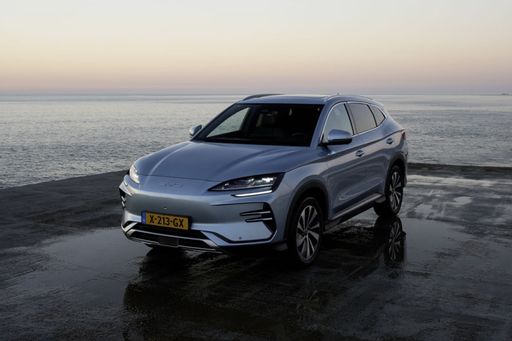
BYD Seal U

  • Engine Type : Electric, Plugin Hybrid
  • Transmission : Automatic
  • Drive Type : Front-Wheel Drive, All-Wheel Drive
  • Power HP : 218 - 324 HP
  • Consumption kWh/100km : 12.1 - 20.5 kWh/100km
  • Electric Range : 70 - 500 km
Omoda 5
BYD Seal U

Costs and Consumption

View detailed analysis

Engine and Performance

View detailed analysis

Dimensions and Body

View detailed analysis

Omoda 5

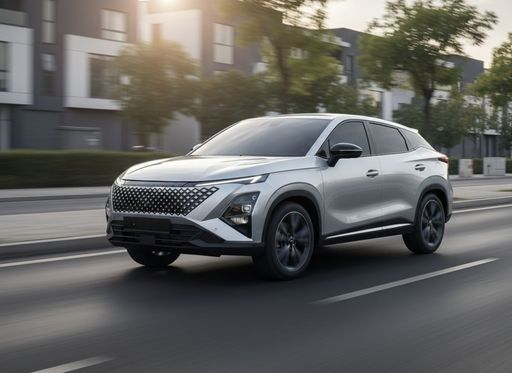
The Omoda 5 arrives as a stylish, tech-forward compact crossover that punches above its class with bold design and a surprisingly premium cabin. It’s an attractive choice for buyers who want modern gadgets, confident road manners and value without the usual showroom drama.

details

BYD Seal U

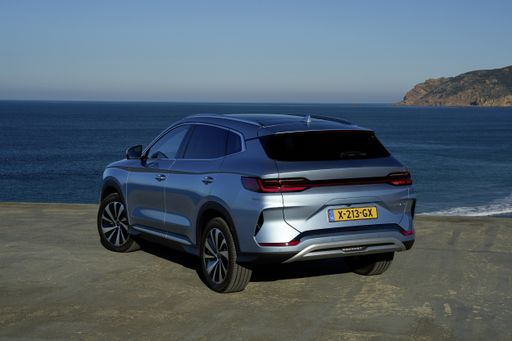
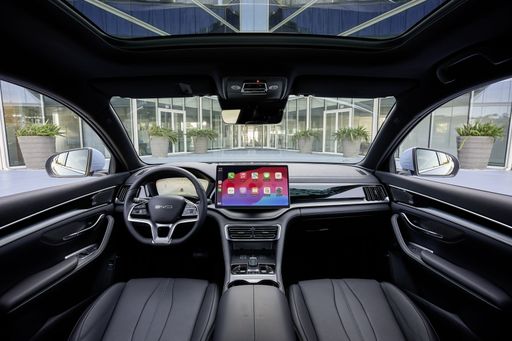
The BYD Seal U pairs a sleek fastback silhouette with a surprisingly roomy, tech-rich cabin, giving electric chic without the showroom pretension. It's a smart pick for buyers after confident handling, sensible practicality and standout value — all wrapped up with a cheeky grin when you put your foot down.

details
Omoda 5
BYD Seal U

Costs and Consumption

Price
31,600 £
Price
34,300 - 39,800 £
Consumption L/100km
-
Consumption L/100km
-
Consumption kWh/100km
15.9 kWh/100km
Consumption kWh/100km
12.1 - 20.5 kWh/100km
Electric Range
430 km
Electric Range
70 - 500 km
Battery Capacity
-
Battery Capacity
-
co2
0 g/km
co2
0 - 71 g/km
Fuel tank capacity
-
Fuel tank capacity
-

Dimensions and Body

Body Type
SUV
Body Type
SUV
Seats
5
Seats
5
Doors
-
Doors
-
Curb weight
1,710 kg
Curb weight
1,940 - 2,147 kg
Trunk capacity
350 L
Trunk capacity
425 - 552 L
Length
-
Length
-
Width
1,830 mm
Width
1,890 mm
Height
-
Height
-
Max trunk capacity
-
Max trunk capacity
-
Payload
536 kg
Payload
410 kg

Engine and Performance

Engine Type
Electric
Engine Type
Electric, Plugin Hybrid
Transmission
Automatic
Transmission
Automatic
Transmission Detail
Reduction Gearbox
Transmission Detail
Reduction Gearbox, Automatic Gearbox
Drive Type
Front-Wheel Drive
Drive Type
Front-Wheel Drive, All-Wheel Drive
Power HP
204 HP
Power HP
218 - 324 HP
Acceleration 0-100km/h
7.6 s
Acceleration 0-100km/h
5.9 - 9.6 s
Max Speed
-
Max Speed
-
Torque
340 Nm
Torque
300 - 550 Nm
Number of Cylinders
-
Number of Cylinders
4
Power kW
150 kW
Power kW
160 - 238 kW
Engine capacity
-
Engine capacity
1,497 - 1,498 cm3

General

Model Year
2026
Model Year
2,024 - 2,026
CO2 Efficiency Class
A
CO2 Efficiency Class
A, B
Brand
Omoda
Brand
BYD
DriveDuel uses data analysis and artificial intelligence to evaluate vehicle data and create content. Content is regularly reviewed and improved. The displayed prices are estimates based on German list prices, adjusted to the respective country’s VAT. Country-specific registration taxes are not included. This information is not legally binding.