VS

Omoda 5 vs Volvo XC40 comparison

Compare performance (204 HP vs 197 HP), boot space and price (23,100 £ vs 36,800 £ ) at a glance. Find out which car is the better choice for you – Omoda 5 or Volvo XC40?

Omoda 5 vs Volvo XC40: Key differences

Omoda 5

5 (4 Reviews)
rate
  • significantly cheaper
  • marginally more power
details

Volvo XC40

5 (5 Reviews)
rate
  • a bit more efficient
  • barely quicker 0–100 km/h
  • clearly more trunk space
details

All details on performance, efficiency, range and trunk space can be found in the technical comparison below – including user reviews for both models.

By Achim Sedelmaier

5

Compact SUV Showdown: Omoda 5 vs. Volvo XC40

The compact SUV market is fiercely competitive, and two notable contenders vying for attention are the Omoda 5 and the Volvo XC40. Both vehicles bring their own set of strengths to the table, but which one comes out on top? Here we delve into the technical specifics and innovative features of these 2024 models to help you make an informed decision.
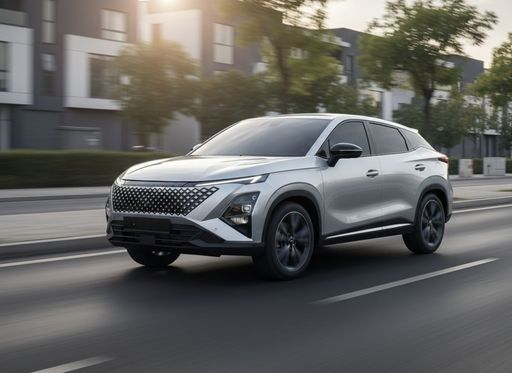
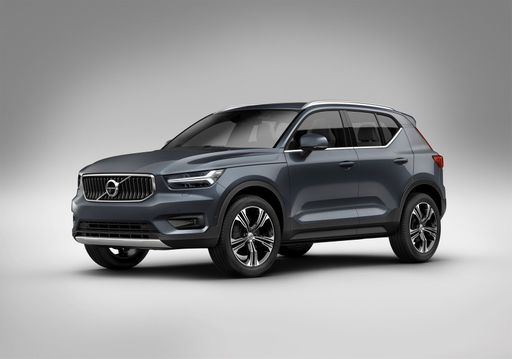
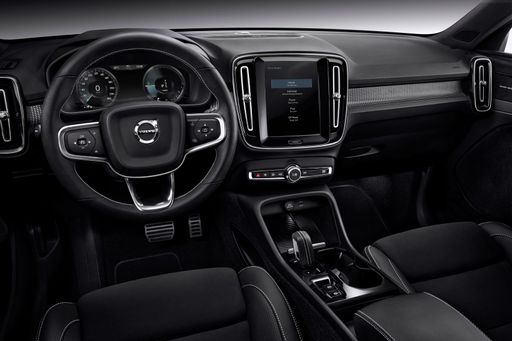
XC40

Performance and Power

When it comes to heart-thumping power, the Omoda 5 delivers with its turbocharged petrol engine producing 204 HP and 145 kW, with a torque of 290 Nm. This enables the Omoda 5 to accelerate from 0 to 100 km/h in a nimble 7.8 seconds, reaching a top speed of 220 km/h. It promises not just speed but efficiency, with a consumption of 7.5 L/100km.

On the other hand, the Volvo XC40 offers a choice between 163 HP and 197 HP engines with torque between 265 and 300 Nm. The model achieves a slightly slower 0 to 100 km/h in 8.6 to 7.6 seconds but ensures a smoother ride with a fuel consumption of 6.5 L/100km.

Design and Dimensions

Dimension-wise, the Omoda 5 is slightly more compact, measuring 4424 mm in length, 1830 mm in width, and 1588 mm in height. In contrast, the XC40 offers a bit more space, coming in at 4425 mm long, 1863 mm wide, and 1652 mm tall — parameters that increase interior volume and presence on the road.

Innovations and Features

Both SUVs boast automatic dual-clutch transmissions and front-wheel drive systems, which are innovatively engineered for a refined driving experience. The Volvo XC40 stands out with its mild-hybrid technology, designed to improve fuel efficiency and reduce emissions, contributing to its CO2 emissions of 147-148 g/km leading to a CO2 efficiency class of E.

While both entries provide the standard features expected in modern SUVs, the Volvo XC40 provides an edge with a large trunk capacity of 452 L, compared to the less specified trunk spacing of the Omoda 5. This allows for greater versatility and usability in everyday situations.

Comfort and Practicality

Both vehicles offer a spacious seating setup for five passengers, prioritizing comfort and style. Practicality is well-addressed in the XC40 with a slightly higher fuel tank capacity of 54 L compared to Omoda’s 51 L, possibly leading to fewer stops at gas stations.

Additionally, the XC40’s payload capacity of 532 kg over its curb weight of 1688 kg proves advantageous for those needing extra hauling capability.

The Verdict

Choosing between the Omoda 5 and Volvo XC40 largely depends on personal preference and priorities. If seeking cutting-edge power and performance, the Omoda 5 might capture your attention with its impressive acceleration and top speed.

Conversely, if a focus on efficiency, eco-friendliness, and practical features such as cargo capacity and hybrid elements pique your interest, the Volvo XC40 offers a compelling package.

Both models certainly bring exciting dynamics to the table, making them strong contenders in the ever-diverse compact SUV market.

Here’s where it gets real: The technical differences in detail

5

Costs and Efficiency:

Price and efficiency are key factors when choosing a car – and this is often where the real differences emerge.

Omoda 5 is significantly cheaper – starting at 23,100 £ , while the Volvo XC40 costs 36,800 £ . That’s a price difference of around 13,620 £.

Fuel consumption also shows a difference: the Volvo XC40 uses 6.5 L/100km and is a bit more efficient than the Omoda 5 with 7.5 L/100km. The difference is about 1 L/100km.

XC40

Engine and Performance:

Power, torque and acceleration are the classic benchmarks for car enthusiasts – and here, some clear differences start to show.

When it comes to engine power, the Omoda 5 offers marginally more power – delivering 204 HP compared to 197 HP. That’s roughly 7 HP more horsepower.

When accelerating from 0 to 100 km/h, the Volvo XC40 is barely quicker – completing the sprint in 7.6 s, while the Omoda 5 takes 7.8 s. That’s about 0.2 s quicker.

Looking at top speed, the Omoda 5 is somewhat faster – reaching 220 km/h, while the Volvo XC40 tops out at 180 km/h. The difference is around 40 km/h.

There’s also a difference in torque: the Volvo XC40 delivers barely more torque with 300 Nm compared to 290 Nm. That’s about 10 Nm more.

Space and Everyday Use:

Whether family car or daily driver – which one offers more room, flexibility and comfort?

Both vehicles offer seating for 5 people.

Looking at boot space, the Volvo XC40 offers clearly more boot space – 452 L compared to 0 L. That’s a difference of about 452 L.

For maximum load capacity, the Volvo XC40 offers somewhat more capacity – up to 1,328 L, about 253 L more than the Omoda 5.

Who wins the race in the data check?

The Volvo XC40 holds a decisive overall lead in the objective data comparison.
This result only shows which model scores more points on paper – not which of the two cars feels right for you.

from £36,800
XC40

Volvo XC40

  • Engine Type : Petrol MHEV
  • Transmission : Automatic
  • Drive Type : Front-Wheel Drive
  • Power HP : 163 - 197 HP
  • Consumption L/100km : 6.5 L/100km
Omoda 5
Volvo XC40

Costs and Consumption

View detailed analysis

Engine and Performance

View detailed analysis

Dimensions and Body

View detailed analysis

Omoda 5

The Omoda 5 arrives as a stylish, tech-forward compact crossover that punches above its class with bold design and a surprisingly premium cabin. It’s an attractive choice for buyers who want modern gadgets, confident road manners and value without the usual showroom drama.

details

Volvo XC40

The Volvo XC40 wraps Scandinavian minimalism into a compact, city-ready SUV with a premium cabin that feels both practical and grown-up. It will suit buyers who prize safety, clever storage and a composed ride, proving that small dimensions don't mean small personality.

details
Omoda 5
Volvo XC40

Costs and Consumption

Price
23,100 £
Price
36,800 - 47,200 £
Consumption L/100km
7.5 L/100km
Consumption L/100km
6.5 L/100km
Consumption kWh/100km
-
Consumption kWh/100km
-
Electric Range
-
Electric Range
-
Battery Capacity
-
Battery Capacity
-
co2
-
co2
147 - 148 g/km
Fuel tank capacity
51 L
Fuel tank capacity
54 L

Dimensions and Body

Body Type
SUV
Body Type
SUV
Seats
5
Seats
5
Doors
5
Doors
5
Curb weight
-
Curb weight
1,688 kg
Trunk capacity
0 L
Trunk capacity
452 L
Length
4,424 mm
Length
4,425 mm
Width
1,830 mm
Width
1,863 mm
Height
1,588 mm
Height
1,652 mm
Max trunk capacity
1,075 L
Max trunk capacity
1,328 L
Payload
-
Payload
532 kg

Engine and Performance

Engine Type
Petrol
Engine Type
Petrol MHEV
Transmission
Automatic
Transmission
Automatic
Transmission Detail
Dual-Clutch Automatic
Transmission Detail
Dual-Clutch Automatic
Drive Type
Front-Wheel Drive
Drive Type
Front-Wheel Drive
Power HP
204 HP
Power HP
163 - 197 HP
Acceleration 0-100km/h
7.8 s
Acceleration 0-100km/h
7.6 - 8.6 s
Max Speed
220 km/h
Max Speed
180 km/h
Torque
290 Nm
Torque
265 - 300 Nm
Number of Cylinders
4
Number of Cylinders
4
Power kW
145 kW
Power kW
120 - 145 kW
Engine capacity
1,598 cm3
Engine capacity
1,969 cm3

General

Model Year
2024
Model Year
2024
CO2 Efficiency Class
-
CO2 Efficiency Class
E
Brand
Omoda
Brand
Volvo
DriveDuel uses data analysis and artificial intelligence to evaluate vehicle data and create content. Content is regularly reviewed and improved. The displayed prices are estimates based on German list prices, adjusted to the respective country’s VAT. Country-specific registration taxes are not included. This information is not legally binding.