VS

Vauxhall Astra vs Dacia Sandero comparison

Compare performance (196 HP vs 122 HP), boot space and price (28,300 £ vs 11,000 £ ) at a glance. Find out which car is the better choice for you – Vauxhall Astra or Dacia Sandero?

Vauxhall Astra vs Dacia Sandero: Key differences

Vauxhall Astra

4.6 (2 Reviews)
rate
  • visibly more power
  • significantly more efficient
  • noticeably quicker 0–100 km/h
  • a bit more trunk space
details

Dacia Sandero

3.3 (5 Reviews)
rate
  • considerably cheaper
  • visibly lighter
details

All details on performance, efficiency, range and trunk space can be found in the technical comparison below – including user reviews for both models.

By Achim Sedelmaier

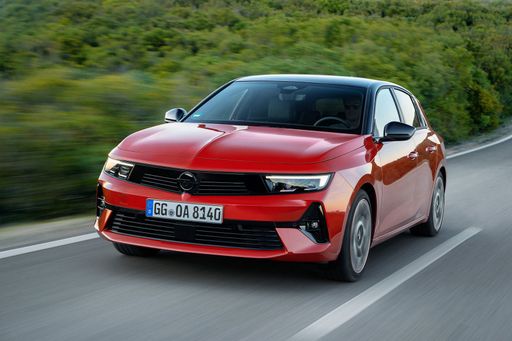
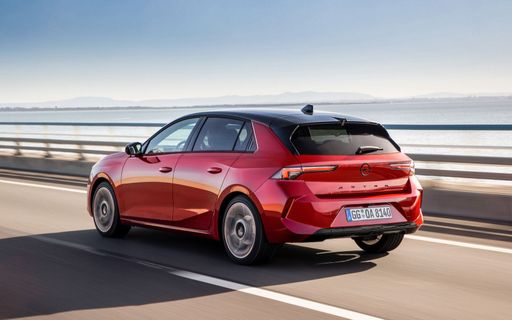
Astra

A Surprising Contender: Dacia Sandero vs Vauxhall Astra

When it comes to reliable hatchbacks, the competition is fierce. Today, we delve into a comparison between two popular models: the Dacia Sandero and the Vauxhall Astra. Both vehicles bring unique features to the table, catering to different desires and needs. Join us as we explore the technical aspects, innovations, and overall offerings of these two contenders.
Sandero

Performance and Powertrain: A Balancing Act

The latest model year for both vehicles is 2024, featuring various engine types and power outputs. The Dacia Sandero comes equipped with a choice of petrol or LPG engines, offering power outputs ranging from 67 to 110 horsepower. The choice between a manual gearbox and a CVT transmission complements its front-wheel drive configuration, aiming to provide a balance between simplicity and efficiency.

On the other hand, the Vauxhall Astra showcases a more diverse engine lineup, including petrol, diesel, mild hybrid (MHEV), plug-in hybrid, and electric options. With power ranging from 110 to an impressive 225 horsepower, the Astra offers both manual and automatic transmissions, enhancing versatility for drivers. For those looking for eco-friendly drives, the plug-in hybrid and electric options bring added appeal.

Astra

Efficiency Matters: Fuel and Emissions

When it comes to efficiency, the Dacia Sandero strives to keep consumption low with its best figure at 5.2 L/100km. Its CO2 emissions range between 105 to 139 g/km, placing it largely in the C and D efficiency classes.

The Vauxhall Astra steps up the game with its ability to achieve as low as 1.3 L/100km in hybrid mode, while its electric variant offers an impressive 15.5 kWh/100km consumption figure, with up to 418 km of electric range. CO2 emissions see notable reductions especially in hybrid forms, bringing it into the A and B efficiency classes.

Sandero

Interior and Practicality: Space for Everyone

Space is a crucial aspect of any hatchback, and both models aim to deliver. The Sandero provides decent storage with its 328 liters of trunk capacity. Consistent with its body type, the Sandero maintains a 5-seat configuration perfectly suited for small families or urban driving.

Meanwhile, the Vauxhall Astra offers more with a trunk capacity ranging from 352 to 422 liters depending on the model variant. The Astra, known for its slightly larger dimensions, offers a comfortable interior space for all passengers, especially during longer trips.

Astra

Dimensions and Road Presence

A closer look at the dimensions reveals that both vehicles are similar in size with the Sandero stretching up to 4099 mm in length, a width of 1848 mm, and a height up to 1535 mm. Though the Vauxhall Astra is slightly longer at 4374 mm, it maintains a narrower profile with its 1860 mm width and a slightly lower height range down to 1432 mm.

Sandero

Conclusion: Which Hatchback Will Win Your Heart?

In conclusion, the choice between the Dacia Sandero and Vauxhall Astra depends largely on individual priorities. The Sandero caters to those looking for a straightforward, budget-friendly option with adequate power and features. Conversely, the Astra stands out with its extensive range of powertrains and modern efficiency technologies, offering more versatility and luxury.

While the Sandero is perfect for budget-conscious buyers and simpler needs, the Vauxhall Astra is ideal for those seeking more power, options, and a touch of cutting-edge advances. Ultimately, each car presents its own unique charms, making the choice between them a matter of personal preference and lifestyle needs.

Here’s where it gets real: The technical differences in detail

Astra

Costs and Efficiency:

Price and efficiency are often the first things buyers look at. Here it becomes clear which model has the long-term edge – whether at the pump, the plug, or in purchase price.

Dacia Sandero is considerably cheaper – starting at 11,000 £ , while the Vauxhall Astra costs 28,300 £ . That’s a price difference of around 17,315 £.

Fuel consumption also shows a difference: the Vauxhall Astra uses 2.2 L/100km and is significantly more efficient than the Dacia Sandero with 5.3 L/100km. The difference is about 3.1 L/100km.

Sandero

Engine and Performance:

Power, torque and acceleration say a lot about how a car feels on the road. This is where you see which model delivers more driving dynamics.

When it comes to engine power, the Vauxhall Astra offers visibly more power – delivering 196 HP compared to 122 HP. That’s roughly 74 HP more horsepower.

When accelerating from 0 to 100 km/h, the Vauxhall Astra is noticeably quicker – completing the sprint in 7.6 s, while the Dacia Sandero takes 9.7 s. That’s about 2.1 s quicker.

There’s also a difference in torque: the Vauxhall Astra delivers considerably more torque with 360 Nm compared to 200 Nm. That’s about 160 Nm more.

Astra

Space and Everyday Use:

Whether family car or daily driver – which one offers more room, flexibility and comfort?

Both vehicles offer seating for 5 people.

In terms of curb weight, Dacia Sandero is visibly lighter – 1,100 kg compared to 1,438 kg. The difference is around 338 kg.

Looking at boot space, the Vauxhall Astra offers a bit more boot space – 422 L compared to 372 L. That’s a difference of about 50 L.

When it comes to payload, the Vauxhall Astra carries moderately more – 502 kg compared to 436 kg. That’s a difference of about 66 kg.

Who wins the race in the data check?

The Vauxhall Astra is far ahead overall in the objective data comparison.
This result only shows which model scores more points on paper – not which of the two cars feels right for you.

from £28,300
Astra

Vauxhall Astra

  • Engine Type Petrol MHEV, Plugin Hybrid, Diesel, Electric
  • Transmission Automatic
  • Drive Type Front-Wheel Drive
  • Power HP 130 - 196 HP
  • Consumption L/100km 2.2 - 4.9 L/100km
  • Consumption kWh/100km 15.3 kWh/100km
  • Electric Range 84 - 454 km
Vauxhall Astra
Dacia Sandero

Costs and Consumption

View detailed analysis

Engine and Performance

View detailed analysis

Dimensions and Body

View detailed analysis

Vauxhall Astra

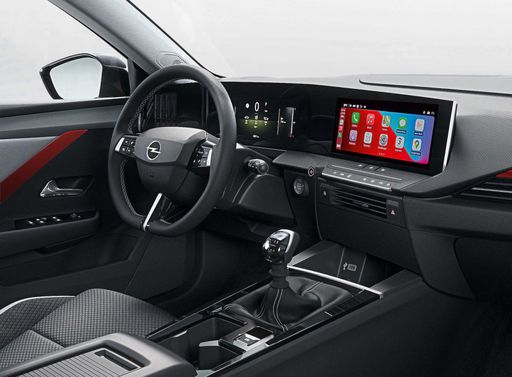
The Opel Astra strikes a neat balance between everyday practicality and engaging handling, so the daily grind suddenly feels a bit less dull. Inside it's intelligently packaged with modern kit and comfortable seating, making it a very sensible pick for buyers who want a dependable hatchback that doesn't take itself too seriously.

details

Dacia Sandero

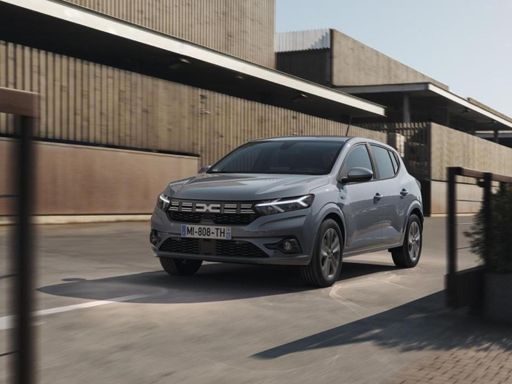
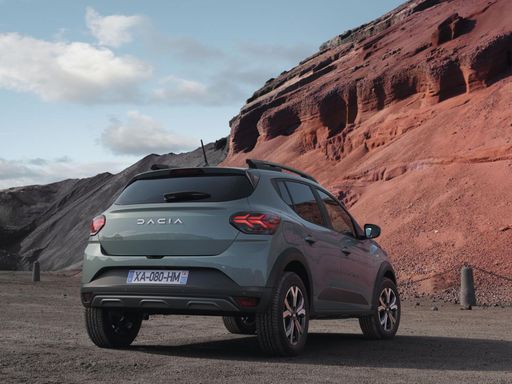
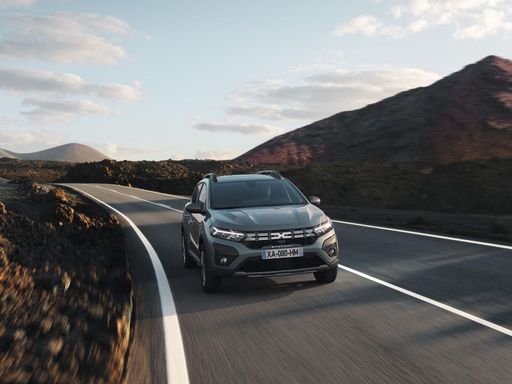
The Sandero is a no-nonsense hatchback that prioritises practicality and low running costs, making it a smart choice for budget-minded buyers. It delivers a surprisingly roomy interior and straightforward, useful equipment so you get everyday usability without paying for unnecessary frills.

details
Vauxhall Astra
Dacia Sandero

Costs and Consumption

Price
28,300 - 37,900 £
Price
11,000 - 16,300 £
Consumption L/100km
2.2 - 4.9 L/100km
Consumption L/100km
5.3 - 7.2 L/100km
Consumption kWh/100km
15.3 kWh/100km
Consumption kWh/100km
-
Electric Range
84 - 454 km
Electric Range
-
Battery Capacity
-
Battery Capacity
-
co2
0 - 130 g/km
co2
111 - 131 g/km
Fuel tank capacity
-
Fuel tank capacity
-

Dimensions and Body

Body Type
Hatchback
Body Type
Hatchback
Seats
5
Seats
5
Doors
-
Doors
-
Curb weight
1,438 - 1,733 kg
Curb weight
1,100 - 1,297 kg
Trunk capacity
310 - 422 L
Trunk capacity
328 - 372 L
Length
-
Length
-
Width
1,859 mm
Width
1,853 mm
Height
-
Height
-
Max trunk capacity
-
Max trunk capacity
-
Payload
438 - 502 kg
Payload
385 - 436 kg

Engine and Performance

Engine Type
Petrol MHEV, Plugin Hybrid, Diesel, Electric
Engine Type
Petrol, LPG
Transmission
Automatic
Transmission
Manuel, Automatic
Transmission Detail
Dual-Clutch Automatic, Automatic Gearbox, Reduction Gearbox
Transmission Detail
Manual Gearbox, Dual-Clutch Automatic
Drive Type
Front-Wheel Drive
Drive Type
Front-Wheel Drive
Power HP
130 - 196 HP
Power HP
67 - 122 HP
Acceleration 0-100km/h
7.6 - 10.6 s
Acceleration 0-100km/h
9.7 - 16.7 s
Max Speed
-
Max Speed
-
Torque
230 - 360 Nm
Torque
95 - 200 Nm
Number of Cylinders
3 - 4
Number of Cylinders
3
Power kW
96 - 144 kW
Power kW
49 - 90 kW
Engine capacity
1,199 - 1,598 cm3
Engine capacity
999 - 1,199 cm3

General

Model Year
2026
Model Year
2025
CO2 Efficiency Class
C, B, D, A
CO2 Efficiency Class
D, C
Brand
Vauxhall
Brand
Dacia
DriveDuel uses data analysis and artificial intelligence to evaluate vehicle data and create content. Content is regularly reviewed and improved. The displayed prices are estimates based on German list prices, adjusted to the respective country’s VAT. Country-specific registration taxes are not included. This information is not legally binding.