VS

Vauxhall Frontera vs Dacia Jogger comparison

Compare performance (145 HP vs 158 HP), boot space and price (20,700 £ vs 15,400 £ ) at a glance. Find out which car is the better choice for you – Vauxhall Frontera or Dacia Jogger?

Vauxhall Frontera vs Dacia Jogger: Key differences

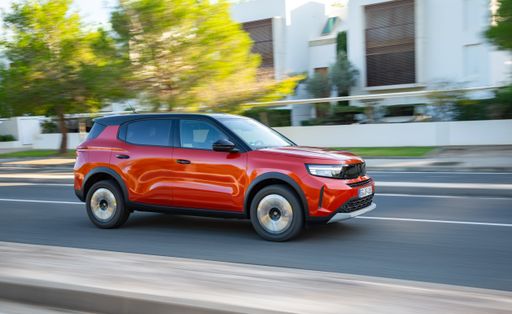
Vauxhall Frontera

4.5 (3 Reviews)
rate

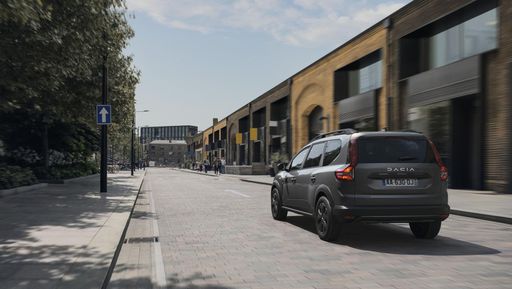
Dacia Jogger

4.6 (1 Reviews)
rate
  • clearly cheaper
  • marginally more power
  • somewhat more efficient
  • barely quicker 0–100 km/h
  • very slightly lighter
  • visibly more trunk space

All details on performance, efficiency, range and trunk space can be found in the technical comparison below – including user reviews for both models.

Frontera

The Modern Contenders: Dacia Jogger vs. Vauxhall Frontera

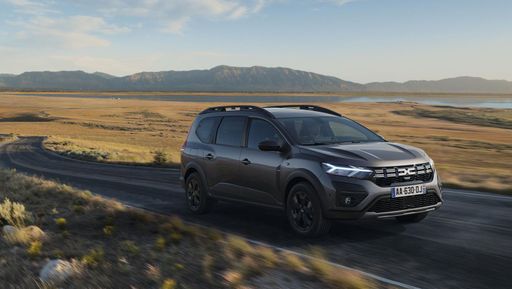
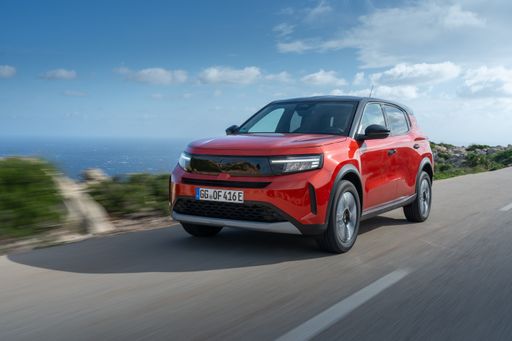
The automotive world continues to embrace innovation and diversity, with cars designed to meet the varied needs of today's drivers. Two models that perfectly embody this trend are the Dacia Jogger and the Vauxhall Frontera. Both cars, while sharing some attributes, offer distinct experiences catered to different types of drivers. In this article, we delve into their key features and innovations, helping you decide which of these 2024 models suits your lifestyle the best.
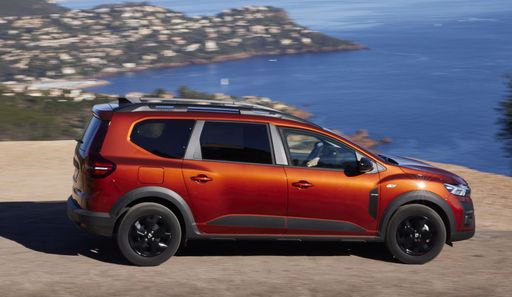
Jogger

A Glance at Performance and Power

The Dacia Jogger stands firm as a versatile Multi-Purpose Vehicle (MPV), offering engine options including Full Hybrid, LPG, and Petrol, with power outputs ranging from 91 HP to 140 HP. Its top speeds vary between 167 km/h and 174 km/h, with acceleration from 0 to 100 km/h in as little as 9.8 seconds for its higher-tier models. The front-wheel drive configuration ensures a harmonized balance between everyday usability and performance efficiency.

The Vauxhall Frontera, identifying itself as an off-road-ready vehicle, harnesses a different set of strengths. With engines that include Petrol MHEV and Electric options, its power peaks at 136 HP. The Frontera achieves a top speed of up to 190 km/h and can accelerate from 0 to 100 km/h in approximately 9 seconds, making it impressive for both city and rugged terrain driving.

Frontera

Fuel Efficiency and Environmental Impact

Dacia Jogger's focus on efficiency is evident with its consumption as low as 4.7 L/100km, while CO2 emissions range from 105 to 137 g/km. This makes it a sensible option for those with environmental concerns. Its hybrid models further bolster this appeal, providing a balanced blend of power and efficiency.

In contrast, the Frontera offers a standout Electric option with a range of 305 km, ideal for those committed to an eco-friendlier driving experience. The petrol MHEV variant's consumption stands at 5.5 L/100km with emissions from 0 to 126 g/km, further highlighting the higher efficiency and lower environmental footprint of its electric version.

Jogger

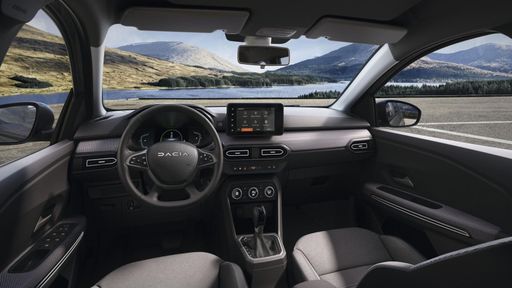
Interior and Practicality

The Dacia Jogger excels in space and practicality, accommodating up to seven passengers. It boasts a sizeable trunk capacity ranging from 160 to 607 liters, easily adjusting to the demands of family or cargo transportation. Its dimensions of 4547 mm in length and 1784 mm in width contribute to its spacious interior.

The Vauxhall Frontera, though slightly more compact with a length of 4385 mm and a width of 1795 mm, offers practicality with flexible seating for five to seven passengers. Its trunk capacity stands at 460 liters, striking a balance between passenger comfort and cargo space.

Frontera

Concluding Thoughts: Choosing Your Ideal Companion

Choosing between the Dacia Jogger and the Vauxhall Frontera depends largely on your lifestyle needs and preferences. The Jogger shines for those who prioritize versatility, practicality, and fuel efficiency, perfect for families and city commuters. Meanwhile, the Frontera promises an adventurous spirit with its off-road capabilities and electric innovations, appealing to those who seek sustainability and power in their driving experience.

Ultimately, both of these models represent the forward-thinking design and diverse functionality that are the hallmarks of modern automotive engineering, catering to a wide array of consumer needs and visions for the future. Which will you choose as your companion on the road?

Here’s where it gets real: The technical differences in detail

Frontera

Costs and Efficiency:

When it comes to price and running costs, the biggest differences usually appear. This is often where you see which car fits your budget better in the long run.

Dacia Jogger is clearly cheaper – starting at 15,400 £ , while the Vauxhall Frontera costs 20,700 £ . That’s a price difference of around 5,314 £.

Fuel consumption also shows a difference: the Dacia Jogger uses 4.5 L/100km and is somewhat more efficient than the Vauxhall Frontera with 5.2 L/100km. The difference is about 0.7 L/100km.

Jogger

Engine and Performance:

Under the bonnet, it becomes clear which model is tuned for sportiness and which one takes the lead when you hit the accelerator.

When it comes to engine power, the Dacia Jogger offers marginally more power – delivering 158 HP compared to 145 HP. That’s roughly 13 HP more horsepower.

When accelerating from 0 to 100 km/h, the Dacia Jogger is barely quicker – completing the sprint in 8.9 s, while the Vauxhall Frontera takes 9.1 s. That’s about 0.2 s quicker.

There’s also a difference in torque: the Vauxhall Frontera delivers slightly more torque with 230 Nm compared to 200 Nm. That’s about 30 Nm more.

Frontera

Space and Everyday Use:

Cabin size, boot volume and payload all play a role in everyday practicality. Here, comfort and flexibility make the difference.

Both vehicles offer seating for 7 people.

In terms of curb weight, Dacia Jogger is very slightly lighter – 1,268 kg compared to 1,394 kg. The difference is around 126 kg.

Looking at boot space, the Dacia Jogger offers visibly more boot space – 607 L compared to 460 L. That’s a difference of about 147 L.

When it comes to payload, the Vauxhall Frontera carries only slightly more – 570 kg compared to 559 kg. That’s a difference of about 11 kg.

Who wins the race in the data check?

The Dacia Jogger holds a solid overall lead in the objective data comparison.
This result only shows which model scores more points on paper – not which of the two cars feels right for you.

from £15,400
Jogger

Dacia Jogger

  • Engine Type : Petrol, Full Hybrid, LPG
  • Transmission : Manuel, Automatic
  • Drive Type : Front-Wheel Drive
  • Power HP : 110 - 158 HP
  • Consumption L/100km : 4.5 - 7.6 L/100km
Vauxhall Frontera
Dacia Jogger

Costs and Consumption

View detailed analysis

Engine and Performance

View detailed analysis

Dimensions and Body

View detailed analysis

Vauxhall Frontera

The Opel Frontera wears its rugged, go-anywhere intentions proudly, serving up a simple, no-nonsense package that feels as comfortable off the beaten track as it does at the supermarket. It won’t set hearts racing with glamour, but its honest practicality and rugged charm make it a smart pick for buyers who prefer substance over style.

details

Dacia Jogger

The Dacia Jogger is a no-nonsense family mover that stretches the idea of value with cavernous practicality and flexible space, perfect for buyers who need a sensible, everyday Swiss Army knife on wheels. It doesn’t try to be glamorous — instead it wins hearts with cheerful thrift, durable materials and honest engineering, giving you useful transport without the pretence.

details
Vauxhall Frontera
Dacia Jogger

Costs and Consumption

Price
20,700 - 30,000 £
Price
15,400 - 23,500 £
Consumption L/100km
5.2 - 5.3 L/100km
Consumption L/100km
4.5 - 7.6 L/100km
Consumption kWh/100km
15.8 - 18.3 kWh/100km
Consumption kWh/100km
-
Electric Range
305 - 408 km
Electric Range
-
Battery Capacity
-
Battery Capacity
-
co2
0 - 119 g/km
co2
103 - 138 g/km
Fuel tank capacity
-
Fuel tank capacity
-

Dimensions and Body

Body Type
SUV
Body Type
MPV
Seats
5 - 7
Seats
5 - 7
Doors
5
Doors
-
Curb weight
1,394 - 1,610 kg
Curb weight
1,268 - 1,463 kg
Trunk capacity
460 L
Trunk capacity
160 - 607 L
Length
4,385 mm
Length
-
Width
1,795 mm
Width
1,784 mm
Height
1,635 mm
Height
-
Max trunk capacity
1,600 L
Max trunk capacity
-
Payload
436 - 570 kg
Payload
384 - 559 kg

Engine and Performance

Engine Type
Electric, Petrol MHEV
Engine Type
Petrol, Full Hybrid, LPG
Transmission
Automatic
Transmission
Manuel, Automatic
Transmission Detail
Reduction Gearbox, Dual-Clutch Automatic
Transmission Detail
Manual Gearbox, Automatic Gearbox, Dual-Clutch Automatic
Drive Type
Front-Wheel Drive
Drive Type
Front-Wheel Drive
Power HP
110 - 145 HP
Power HP
110 - 158 HP
Acceleration 0-100km/h
9.1 - 14.2 s
Acceleration 0-100km/h
8.9 - 12 s
Max Speed
143 km/h
Max Speed
-
Torque
125 - 230 Nm
Torque
190 - 200 Nm
Number of Cylinders
3
Number of Cylinders
3 - 4
Power kW
81 - 107 kW
Power kW
81 - 116 kW
Engine capacity
1,199 cm3
Engine capacity
999 - 1,789 cm3

General

Model Year
2,024 - 2,025
Model Year
2,025
CO2 Efficiency Class
A, D
CO2 Efficiency Class
D, E, C
Brand
Vauxhall
Brand
Dacia
DriveDuel uses data analysis and artificial intelligence to evaluate vehicle data and create content. Content is regularly reviewed and improved. The displayed prices are estimates based on German list prices, adjusted to the respective country’s VAT. Country-specific registration taxes are not included. This information is not legally binding.