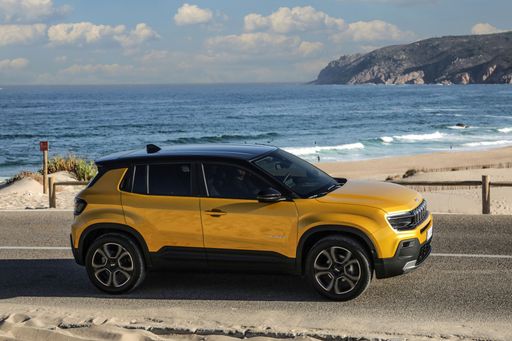
VS

Vauxhall Mokka vs Jeep Avenger comparison

Compare performance (281 HP vs 156 HP), boot space and price (23,000 £ vs 22,500 £ ) at a glance. Find out which car is the better choice for you – Vauxhall Mokka or Jeep Avenger?

Vauxhall Mokka vs Jeep Avenger: Key differences

Vauxhall Mokka

4.1 (4 Reviews)
rate
  • clearly more power
  • marginally more efficient
  • very slightly more electric range
  • significantly quicker 0–100 km/h
details

Jeep Avenger

4.1 (7 Reviews)
rate
  • very slightly cheaper
  • barely lighter
  • only slightly more trunk space
details

All details on performance, efficiency, range and trunk space can be found in the technical comparison below – including user reviews for both models.

By Achim Sedelmaier

Mokka

City swagger vs. urban poise

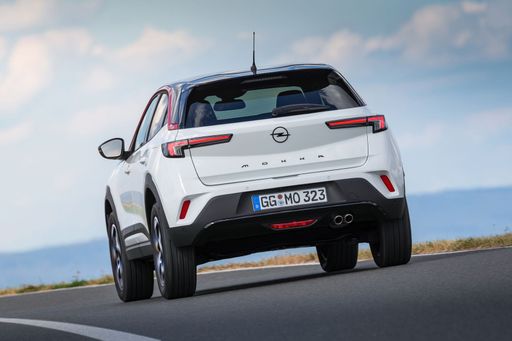
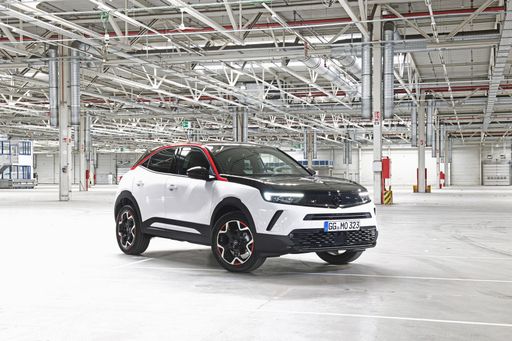
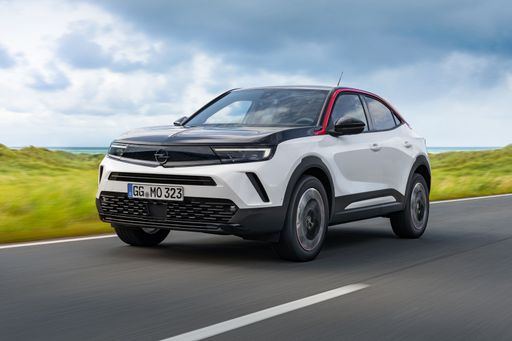
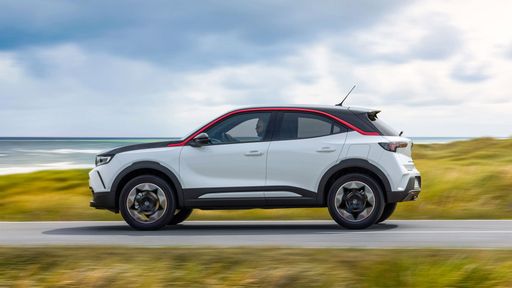
The Jeep Avenger wears its chunky proportions like a badge of character, projecting a go-anywhere attitude even on supermarket runs, while the Opel Mokka leans into a sharper, more sculpted presence that reads as modern and composed. In traffic the Avenger's upright stance gives you a confident view of the road; the Mokka rewards with a planted posture that feels more car-like and assured through corners. Both make statements, but they address different kinds of urban personalities — the Avenger for the adventurous type, the Mokka for someone who prefers restrained confidence.
Avenger

What it feels like behind the wheel

Driving the Avenger is an exercise in easygoing confidence: steering that invites relaxed city cruising and a suspension tune that soaks up potholes without fuss, creating a forgiving ride for everyday use. The Mokka offers a firmer, more focused experience that rewards brisk lane changes and long motorway stints with composure and minimal fuss. Each car has a distinct driving DNA — one leans into comfort and character, the other into poise and driver engagement.

Mokka

A cabin for living, not just driving

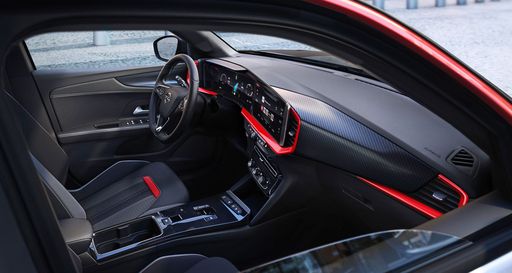
Step inside the Avenger and you notice a practical, friendly layout with materials that aim for durability and a light-hearted vibe rather than luxury gloss; it feels purposeful and approachable for families and commuters alike. The Mokka’s interior feels more refined, with surfaces and controls arranged for intuitive use and a slightly more grown-up ambience that suits buyers who value a polished everyday setting. Both cabins are user-focused, but they speak to different sensibilities: rugged practicality versus urban refinement.

Avenger

Practicality that fits real life

On the day-to-day front the Avenger impresses with clever touches that make loading kids and weekend kit straightforward, while the Mokka plays the utility card with a slightly more versatile layout that suits varied lifestyles. Small details — seat comfort, switchgear ergonomics and storage nooks — tip the balance depending on how you live: regular school runs and carry-on gear or a mixed schedule of commuting and longer trips. Either way, practicality isn’t an afterthought; it’s baked into both designs in ways that reward real owners.

Mokka

Style, character and the neighborhood reaction

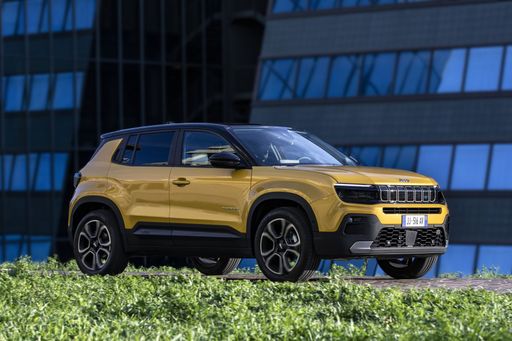
The Avenger’s design is unabashedly Jeep — chunky fenders, bold cues and a little dose of rugged charm that draws smiles and suits buyers who want a bit of personality from their urban runabout. The Mokka prefers to be admired for its contemporary lines and restrained detailing, appealing to those who value a modern look that ages gracefully. Taste will decide which grabs more attention: the Avenger’s playful bravado or the Mokka’s sleek self-assurance.

Avenger

Who should take them for a test drive?

If your days are full of short hops, school runs and the occasional gravel track, the Avenger will likely feel like a natural companion thanks to its easygoing nature and practical focus; if you spend more time on varied roads and want a composed, refined companion for longer journeys, the Mokka will reward a thorough test loop. Book time with both — your route and routine will quickly reveal whose character matches yours. Keep reading to see which car earns the DriveDuel crown and claim the title of our DriveDuel Champion.

Here’s where it gets real: The technical differences in detail

Mokka

Costs and Efficiency:

When it comes to price and running costs, the biggest differences usually appear. This is often where you see which car fits your budget better in the long run.

Jeep Avenger is very slightly cheaper – starting at 22,500 £ , while the Vauxhall Mokka costs 23,000 £ . That’s a price difference of around 506 £.

Both cars consume an average of 4.9 L/100km – no difference here.

In terms of energy consumption, the Vauxhall Mokka is marginally more efficient: consuming 15.4 kWh/100km compared to 15.5 kWh/100km for the Jeep Avenger. That’s a difference of about 0.1 kWh/100km.

As for electric range, the Vauxhall Mokka offers very slightly more range – reaching up to 403 km, about 3 km more than the Jeep Avenger.

Avenger

Engine and Performance:

Under the bonnet, it becomes clear which model is tuned for sportiness and which one takes the lead when you hit the accelerator.

When it comes to engine power, the Vauxhall Mokka offers clearly more power – delivering 281 HP compared to 156 HP. That’s roughly 125 HP more horsepower.

When accelerating from 0 to 100 km/h, the Vauxhall Mokka is significantly quicker – completing the sprint in 5.9 s, while the Jeep Avenger takes 9 s. That’s about 3.1 s quicker.

There’s also a difference in torque: the Vauxhall Mokka delivers markedly more torque with 345 Nm compared to 260 Nm. That’s about 85 Nm more.

Mokka

Space and Everyday Use:

Beyond pure performance, interior space and usability matter most in daily life. This is where you see which car is more practical and versatile.

Both vehicles offer seating for 5 people.

In terms of curb weight, Jeep Avenger is barely lighter – 1,180 kg compared to 1,294 kg. The difference is around 114 kg.

Looking at boot space, the Jeep Avenger offers only slightly more boot space – 380 L compared to 350 L. That’s a difference of about 30 L.

When it comes to payload, the Jeep Avenger carries noticeably more – 502 kg compared to 400 kg. That’s a difference of about 102 kg.

Who wins the race in the data check?

The Vauxhall Mokka is decisively ahead in the objective data comparison.
This result only shows which model scores more points on paper – not which of the two cars feels right for you.

from £23,000
Mokka

Vauxhall Mokka

  • Engine Type : Electric, Petrol, Petrol MHEV
  • Transmission : Automatic, Manuel
  • Drive Type : Front-Wheel Drive
  • Power HP : 136 - 281 HP
  • Consumption L/100km : 4.9 - 5.7 L/100km
  • Consumption kWh/100km : 15.4 - 18.5 kWh/100km
  • Electric Range : 336 - 403 km
Vauxhall Mokka
Jeep Avenger

Costs and Consumption

View detailed analysis

Engine and Performance

View detailed analysis

Dimensions and Body

View detailed analysis

Vauxhall Mokka

The Opel Mokka cuts a smart, modern silhouette that feels right at home in the city while still turning heads on the open road. It's a practical, easy-to-live-with crossover that blends comfy driving manners with enough flair and tech to keep daily commutes interesting — and it won’t make you regret trading up.

details

Jeep Avenger

The Jeep Avenger shrinks Jeep's boxy, adventurous styling into a city-friendly electric crossover that looks just as at home on tight streets as it does on muddy weekend lanes. It's a savvy pick for drivers who want go-anywhere attitude without the truck-size ego — practical inside, lively around town and ready to tackle a bit of rough stuff when the mood strikes.

details
Vauxhall Mokka
Jeep Avenger

Costs and Consumption

Price
23,000 - 40,500 £
Price
22,500 - 35,000 £
Consumption L/100km
4.9 - 5.7 L/100km
Consumption L/100km
4.9 - 5.7 L/100km
Consumption kWh/100km
15.4 - 18.5 kWh/100km
Consumption kWh/100km
15.5 kWh/100km
Electric Range
336 - 403 km
Electric Range
400 km
Battery Capacity
51 kWh
Battery Capacity
-
co2
0 - 129 g/km
co2
0 - 129 g/km
Fuel tank capacity
-
Fuel tank capacity
-

Dimensions and Body

Body Type
SUV
Body Type
SUV
Seats
5
Seats
5
Doors
5
Doors
-
Curb weight
1,294 - 1,672 kg
Curb weight
1,180 - 1,520 kg
Trunk capacity
310 - 350 L
Trunk capacity
355 - 380 L
Length
4,150 mm
Length
-
Width
1,787 mm
Width
1,776 mm
Height
1,515 mm
Height
-
Max trunk capacity
1,060 L
Max trunk capacity
-
Payload
388 - 400 kg
Payload
494 - 502 kg

Engine and Performance

Engine Type
Electric, Petrol, Petrol MHEV
Engine Type
Petrol MHEV, Electric, Petrol
Transmission
Automatic, Manuel
Transmission
Automatic, Manuel
Transmission Detail
Reduction Gearbox, Manual Gearbox, Dual-Clutch Automatic
Transmission Detail
Dual-Clutch Automatic, Reduction Gearbox, Manual Gearbox
Drive Type
Front-Wheel Drive
Drive Type
Front-Wheel Drive
Power HP
136 - 281 HP
Power HP
100 - 156 HP
Acceleration 0-100km/h
5.9 - 9 s
Acceleration 0-100km/h
9 - 10.6 s
Max Speed
150 km/h
Max Speed
-
Torque
230 - 345 Nm
Torque
205 - 260 Nm
Number of Cylinders
3
Number of Cylinders
3
Power kW
100 - 207 kW
Power kW
74 - 115 kW
Engine capacity
1,199 cm3
Engine capacity
1,199 cm3

General

Model Year
2,024 - 2,025
Model Year
2026
CO2 Efficiency Class
A, D, C
CO2 Efficiency Class
C, A, D
Brand
Vauxhall
Brand
Jeep
DriveDuel uses data analysis and artificial intelligence to evaluate vehicle data and create content. Content is regularly reviewed and improved. The displayed prices are estimates based on German list prices, adjusted to the respective country’s VAT. Country-specific registration taxes are not included. This information is not legally binding.