VS

Peugeot 208 vs Suzuki Swift comparison

Compare performance (156 HP vs 82 HP), boot space and price (21000 £ vs 17100 £ ) at a glance. Find out which car is the better choice for you – Peugeot 208 or Suzuki Swift?

208

Peugeot 208 vs Suzuki Swift: A Clash of Hatchback Titans

The hatchback market has always been a fiercely contested segment, attracting buyers looking for compact, efficient, and versatile cars. Two names that frequently pop up in this segment are the Peugeot 208 and the Suzuki Swift. Both cars offer a mix of style, performance, and practicality. Let's dive into the specifics and see how they stack up against each other.
Swift

Engine and Performance

The Peugeot 208 offers a variety of engine options, bringing versatility to its line-up with petrol, mild-hybrid petrol (MHEV), and a fully electric version. Depending on the model, power output ranges from 101 HP to a punchy 156 HP, with the electric variant providing smooth torque delivery up to 260 Nm. This diverse offering means that the 208 caters to both eco-conscious drivers and those seeking a bit more thrill.

On the other hand, the Suzuki Swift sticks to a singular MHEV petrol engine configuration, producing a practical 82 HP and 112 Nm of torque. While it may not have the same power figures as the 208, it balances performance with fuel efficiency, making it ideal for everyday commuting. The Swift offers both manual and CVT transmissions, and for those living in rougher climates, an optional all-wheel-drive is available, enhancing its versatility.

208

Fuel Consumption and Efficiency

The Peugeot 208 impresses with its efficient fuel consumption, ranging from 4.7 L/100km for the most economical petrol model to approximately 14-16.1 kWh/100km for the electric variant. For the eco-conscious, the electric model offers a substantial range between 363 km and 410 km, depending on the battery capacity (46 kWh to 51 kWh).

Meanwhile, the Suzuki Swift showcases a similar level of efficiency, with consumption figures varying between 4.4 L/100km and 4.9 L/100km. Despite its limited power compared to the 208, the Swift’s lighter curb weight, averaging 1107 kg, contributes significantly to its fuel economy.

Swift

Design and Dimensions

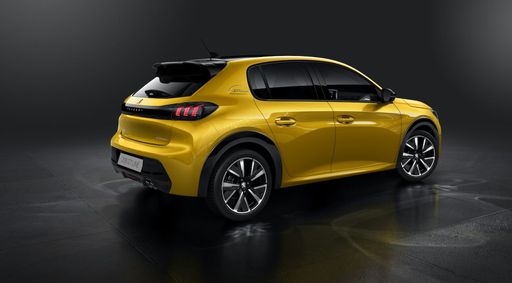
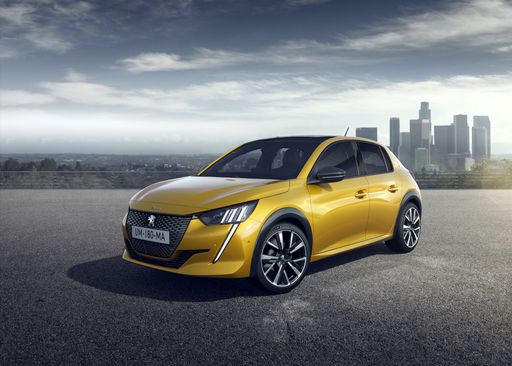
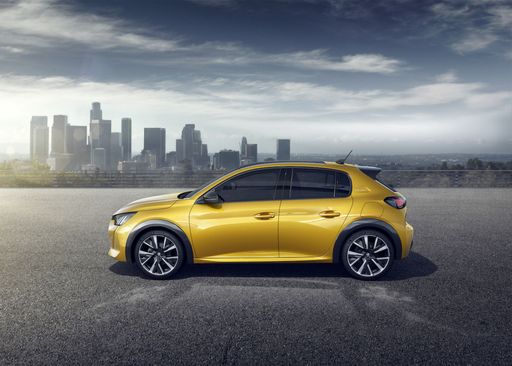
In terms of size, the Peugeot 208 measures 4055 mm in length and 1745 mm in width, standing at a height of 1430 mm. It presents a modern aesthetic, featuring Peugeot’s signature bold grille and sleek lines that emphasize its sporty appeal.

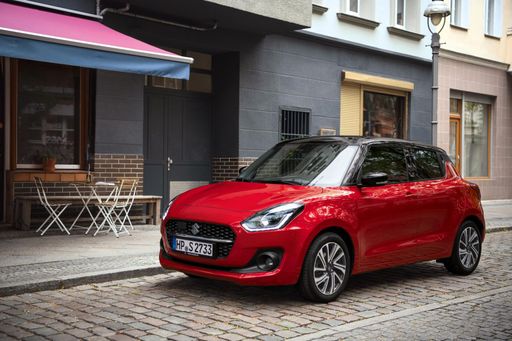
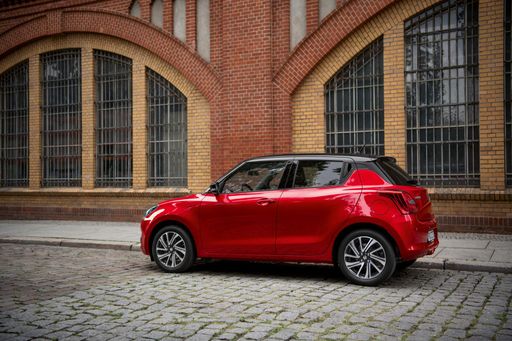
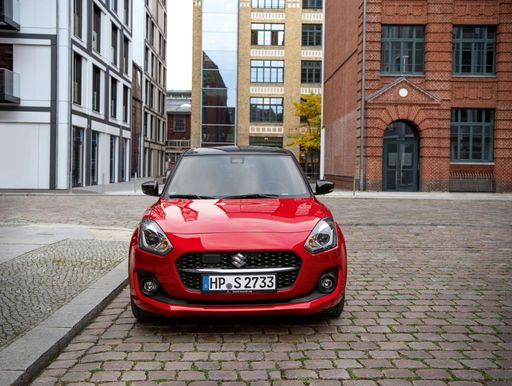
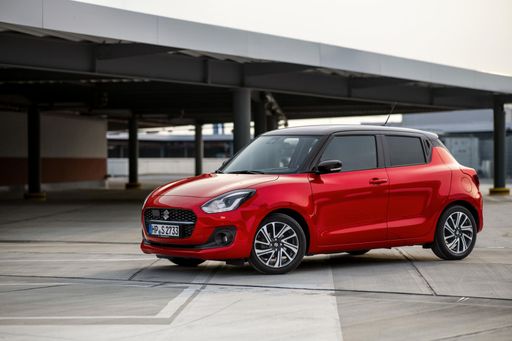
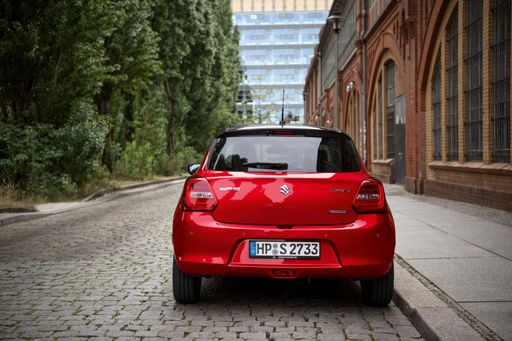
The Suzuki Swift is slightly more compact, with a length of 3860 mm and a width of 1735 mm, though it stands taller at 1510 mm, providing a more upright, hatchback feel. While not as aggressive in styling as the 208, the Swift offers a charming, quirky design that has earned it a dedicated following.

208

Interior and Space

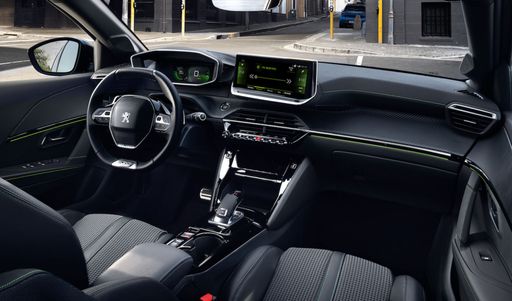
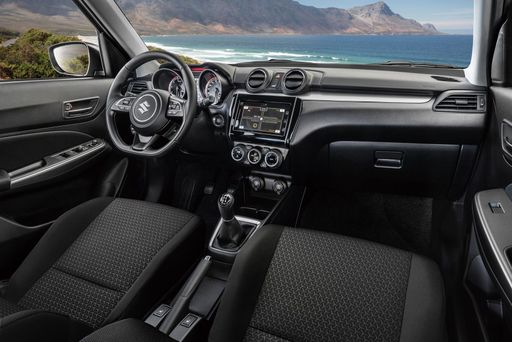
Both hatchbacks offer seating for five, but the Peugeot 208 edges ahead in trunk capacity with 309 liters, offering more storage than the Swift’s 265 liters. However, the Swift's simplicity and intuitive layout make its cabin very user-friendly, while the 208's interior exudes a more premium feel, enhanced by its advanced infotainment systems and quality materials.

Swift

Conclusion

Choosing between the Peugeot 208 and Suzuki Swift comes down to your preferences and needs. The 208 offers a range of engine options that cater to diverse driving styles, along with a sleeker, more sophisticated design. The Swift, however, provides excellent value for money, remarkable efficiency, and versatile all-wheel-drive capability in a compact package.

Both hatchbacks hold their own merits, making them worthy contenders in the highly competitive hatchback arena. Whether you prioritize innovation and variety, as seen in the Peugeot 208, or practical simplicity and efficiency like the Suzuki Swift, both models offer compelling choices for today’s automotive consumers.

Peugeot 208 vs Suzuki Swift: Key differences

Peugeot 208

4 (2 Reviews)
rate
  • convincingly more power
  • evident more trunk space

Suzuki Swift

4.4 (1 Reviews)
rate
  • distinct cheaper
  • barely noticeable more efficient
  • minimal lighter

All details on performance, efficiency, range and trunk space can be found in the technical comparison below – including user reviews for both models.

Here’s where it gets real: The technical differences in detail

208

Costs and Efficiency:

When it comes to price and running costs, the biggest differences usually appear. This is often where you see which car fits your budget better in the long run.

Suzuki Swift has a distinct advantage in terms of price – it starts at 17100 £ , while the Peugeot 208 costs 21000 £ . That’s a price difference of around 3840 £.

Fuel consumption also shows a difference: Suzuki Swift manages with 4.40 L and is therefore barely noticeable more efficient than the Peugeot 208 with 4.50 L. The difference is about 0.10 L per 100 km.

Swift

Engine and Performance:

Power, torque and acceleration say a lot about how a car feels on the road. This is where you see which model delivers more driving dynamics.

When it comes to engine power, the Peugeot 208 has a convincingly edge – offering 156 HP compared to 82 HP. That’s roughly 74 HP more horsepower.

In terms of top speed, the Peugeot 208 performs to a small extent better – reaching 200 km/h, while the Suzuki Swift tops out at 170 km/h. The difference is around 30 km/h.

There’s also a difference in torque: Peugeot 208 pulls convincingly stronger with 270 Nm compared to 112 Nm. That’s about 158 Nm difference.

Space and Everyday Use:

Cabin size, boot volume and payload all play a role in everyday practicality. Here, comfort and flexibility make the difference.

Both vehicles offer seating for 5 people.

In curb weight, Suzuki Swift is minimal lighter – 1069 kg compared to 1165 kg. The difference is around 96 kg.

In terms of boot space, the Peugeot 208 offers evident more room – 352 L compared to 265 L. That’s a difference of about 87 L.

In maximum load capacity, the Peugeot 208 performs somewhat better – up to 1163 L, which is about 183 L more than the Suzuki Swift.

When it comes to payload, Peugeot 208 noticeable takes the win – 430 kg compared to 296 kg. That’s a difference of about 134 kg.

Who wins the race in the data check?

The Peugeot 208 is far ahead overall in the objective data comparison.
This result only shows which model scores more points on paper – not which of the two cars feels right for you.

Peugeot 208
Suzuki Swift

Costs and Consumption

View detailed analysis

Engine and Performance

View detailed analysis

Dimensions and Body

View detailed analysis
from about £21,000
208

Peugeot 208

  • Engine Type : Electric, Petrol MHEV, Petrol
  • Transmission : Automatic, Manuel
  • Drive Type : Front-Wheel Drive
  • Power HP : 101 - 156 HP
  • Consumption L/100km : 4.5 - 5.1 L
  • Consumption kWh/100km : 14.1 - 15.4 kWh
  • Electric Range : 362 - 432 km

Peugeot 208

4 (2 Reviews)
rate

The Peugeot 208 feels like a city-savvy fox: compact, stylish and surprisingly grown-up, with a cabin that punches above its weight and enough personality to make daily commutes a little less boring. It’s a smart pick for buyers who want chic practicality without the showroom bluster — easy to park, thrifty to run and oddly fun when the road tightens up.

details

Suzuki Swift

4.4 (1 Reviews)
rate

The Suzuki Swift is a cheeky little hatch that turns city streets into its playground with lively handling and a grin-inducing drive. Practical enough for daily chores, thrifty to run and kinder on your wallet than many rivals, it's a sensible pick for buyers who want fun without drama.

details
Peugeot 208
Suzuki Swift

Costs and Consumption

Price
21000 - 35200 £
Price
17100 - 21200 £
Consumption L/100km
4.5 - 5.1 L
Consumption L/100km
4.4 - 4.9 L
Consumption kWh/100km
14.1 - 15.4 kWh
Consumption kWh/100km
-
Electric Range
362 - 432 km
Electric Range
-
Battery Capacity
46 - 51 kWh
Battery Capacity
-
co2
0 - 116 g/km
co2
98 - 110 g/km
Fuel tank capacity
44 L
Fuel tank capacity
37 L

Dimensions and Body

Body Type
Hatchback
Body Type
Hatchback
Seats
5
Seats
5
Doors
5
Doors
5
Curb weight
1165 - 1530 kg
Curb weight
1069 - 1145 kg
Trunk capacity
309 - 352 L
Trunk capacity
265 L
Length
4055 mm
Length
3860 mm
Width
1745 mm
Width
1735 mm
Height
1430 mm
Height
1485 - 1510 mm
Max trunk capacity
1118 - 1163 L
Max trunk capacity
980 L
Payload
380 - 430 kg
Payload
282 - 296 kg

Engine and Performance

Engine Type
Electric, Petrol MHEV, Petrol
Engine Type
Petrol MHEV
Transmission
Automatic, Manuel
Transmission
Manuel, Automatic
Transmission Detail
Reduction Gearbox, Dual-Clutch Automatic, Manual Gearbox
Transmission Detail
Manual Gearbox, CVT
Drive Type
Front-Wheel Drive
Drive Type
Front-Wheel Drive, All-Wheel Drive
Power HP
101 - 156 HP
Power HP
82 HP
Acceleration 0-100km/h
8.3 - 10.9 s
Acceleration 0-100km/h
-
Max Speed
150 - 200 km/h
Max Speed
160 - 170 km/h
Torque
205 - 270 Nm
Torque
112 Nm
Number of Cylinders
3
Number of Cylinders
3
Power kW
74 - 115 kW
Power kW
61 kW
Engine capacity
1199 cm3
Engine capacity
1197 cm3

General

Model Year
2023 - 2026
Model Year
2024
CO2 Efficiency Class
A, C, D
CO2 Efficiency Class
C
Brand
Peugeot
Brand
Suzuki
What drive types are available for the Peugeot 208?

The Peugeot 208 is offered with Front-Wheel Drive.

The prices shown are estimates based on German list prices, adjusted for local VAT. Local registration taxes (e.g. NoVA, BPM or CO2 malus) are not included. This information is not legally binding.