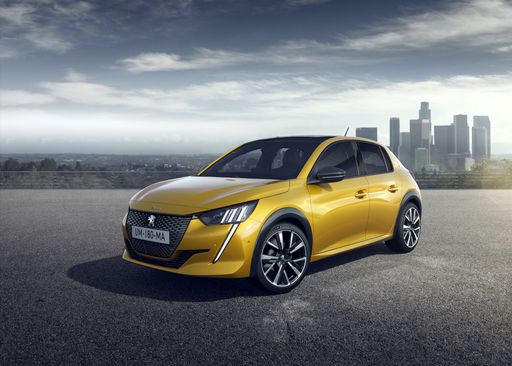
@ Peugeot / Stellantis Media
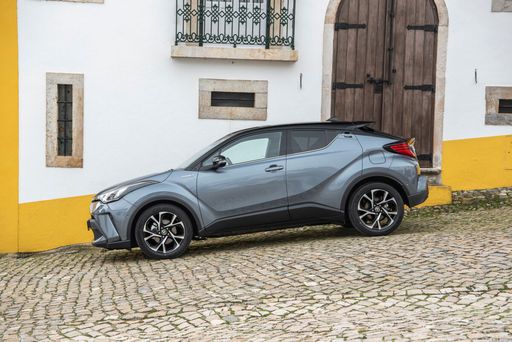
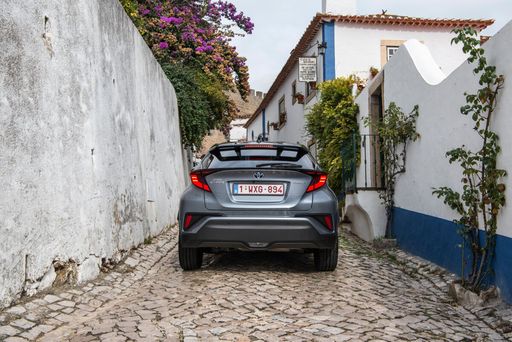
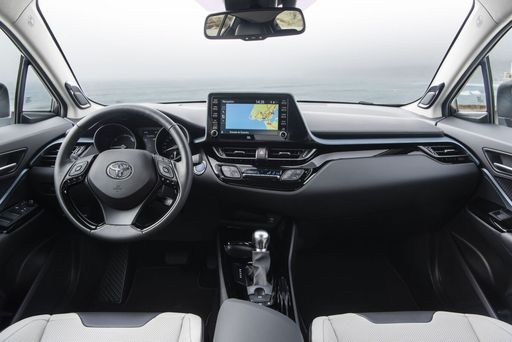
@ Toyota Motor Corporation
VS

Peugeot 208 vs Toyota C-HR – Differences & prices compared

Both models have their strengths – but which one suits you more?
Compare performance, efficiency, price and space directly: Peugeot 208 or Toyota C-HR?

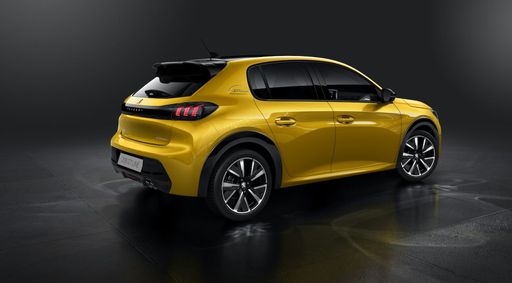
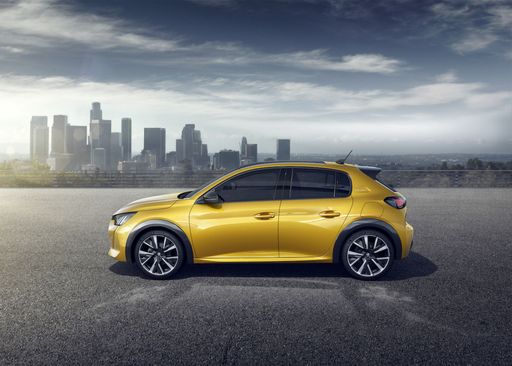
208 @ Peugeot / Stellantis Media

Introduction: The Battle of Compact Versatility

In an era where efficiency meets style in the automotive world, two contenders are making a name for themselves: the Peugeot 208 and the Toyota C-HR. Each brings its unique flair to the table—one being a dynamic hatchback and the other an innovative SUV. This article delves deep into the technical aspects and innovations of these models, helping you decide which best suits your driving lifestyle.
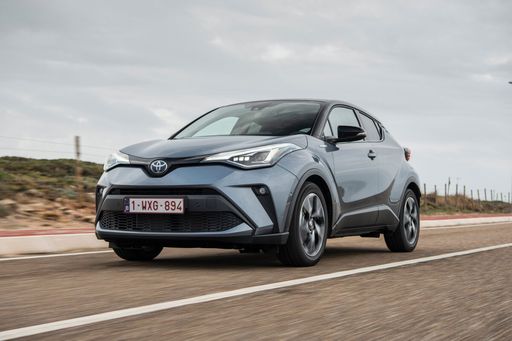
C-HR @ Toyota Motor Corporation

Design and Dimensions

The Peugeot 208, at 4055 mm in length, 1745 mm in width, and 1430 mm in height, exudes a sporty elegance typical of hatchbacks. Its compact dimensions make it well-suited for urban driving, with a trunk capacity of 309 liters for daily errands.

In contrast, the Toyota C-HR stands taller and wider, measuring 4362 mm in length, 1832 mm in width, and 1558 mm in height. The SUV's larger design allows for a more spacious interior and a trunk capacity of up to 447 liters, perfect for those who require more cargo space without sacrificing style.

208 @ Peugeot / Stellantis Media

Performance and Engine Options

The Peugeot 208 presents a versatile range of engine choices: from petrol options (101 to 156 HP) to electric variants, ensuring eco-friendliness without compromising performance. Its petrol engines range from a fuel consumption of 4.7 to 5.4 L/100 km, while the electric variant boasts an impressive range of up to 410 km on a single charge. Acceleration is another strong point, with the best-performing model achieving 0-100 km/h in just 8.3 seconds.

On the other hand, the Toyota C-HR offers impressive hybrid technology, available in both full hybrid and plug-in options, boasting power outputs from 140 up to 223 HP. Fuel efficiency is remarkable, with consumption figures as low as 0.8 L/100 km in hybrid mode, while the electric range is a practical 67 km, suitable for daily commutes. The top-performing model accelerates from 0-100 km/h in just 7.4 seconds, positioning it as a strong competitor in the compact SUV segment.

C-HR @ Toyota Motor Corporation

Transmission and Drive Types

The Peugeot 208 features a front-wheel-drive system, available with both automatic and manual transmissions, including a dual-clutch automatic option for seamless driving. Its handling is sporty and responsive, a hallmark of Peugeot's engineering prowess.

Conversely, the C-HR offers a hybrid drivetrain that is primarily front-wheel drive, with an all-wheel-drive option available for those needing additional traction. A continuously variable transmission (CVT) provides smooth acceleration, making it ideal for city driving and longer journeys alike.

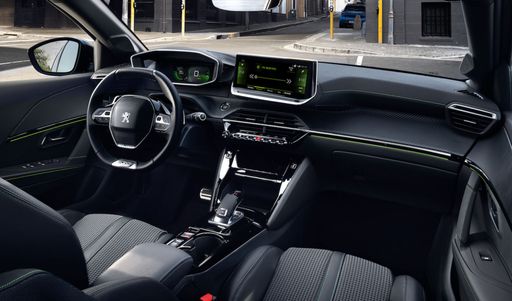
208 @ Peugeot / Stellantis Media

Interior Features and Technology

Stepping inside the Peugeot 208 reveals a modern and tech-forward cabin, replete with cutting-edge infotainment systems, advanced driver-assistance features, and customizable ambient lighting. The vehicle comfortably seats five, with a focus on high-quality materials that enhance the overall driving experience.

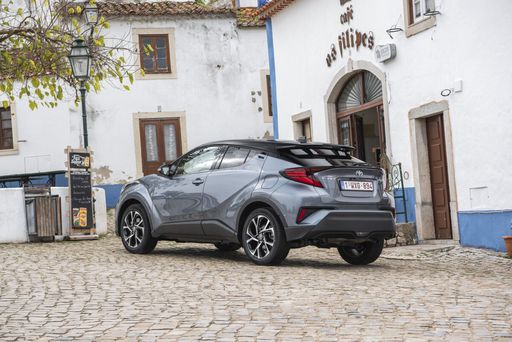
The Toyota C-HR, meanwhile, is known for its spacious feel and superior ergonomics, filled with user-friendly technology and safety features. With the latest Toyota Safety Sense system, it meets high standards for modern vehicles, emphasizing safety and driver confidence.

C-HR @ Toyota Motor Corporation

Eco-Friendliness and Efficiency

Both models exhibit commendable eco-friendliness. The Peugeot 208's petrol options align with stricter emission targets, boasting CO2 emissions as low as 105 g/km. Moreover, its fully electric variant is a perfect solution for urban dwellers aiming for zero emissions.

The Toyota C-HR, particularly in its hybrid configuration, performs exceptionally well in this category, with CO2 emissions as low as 17 g/km, making it an excellent choice for eco-conscious consumers looking for an SUV solution.

208 @ Peugeot / Stellantis Media

Conclusion: Which Is Right for You?

Choosing between the Peugeot 208 and the Toyota C-HR ultimately depends on your needs and lifestyle. The 208 shines as a sporty, efficient hatchback perfect for city driving, while the C-HR offers robust hybrid technology and extra space, making it a versatile choice for outdoor enthusiasts and families. Each model brings its strengths to the table, ensuring a great drive—whichever you choose!

Here’s where it gets real: The technical differences in detail

C-HR @ Toyota Motor Corporation

Costs and Efficiency:

Looking at overall running costs, both models reveal some interesting differences in everyday economy.

Peugeot 208 has a convincingly advantage in terms of price – it starts at 20700 £, while the Toyota C-HR costs 29100 £. That’s a price difference of around 8452 £.

Fuel consumption also shows a difference: Toyota C-HR manages with 0.80 L and is therefore clearly more efficient than the Peugeot 208 with 4.50 L. The difference is about 3.70 L per 100 km.

As for range, the Peugeot 208 performs clearly better – achieving up to 432 km, about 364 km more than the Toyota C-HR.

Engine and Performance:

Under the bonnet, it becomes clear which model is tuned for sportiness and which one takes the lead when you hit the accelerator.

When it comes to engine power, the Toyota C-HR has a distinct edge – offering 223 HP compared to 156 HP. That’s roughly 67 HP more horsepower.

In acceleration from 0 to 100 km/h, the Toyota C-HR is somewhat quicker – completing the sprint in 7.40 s, while the Peugeot 208 takes 8.30 s. That’s about 0.90 s faster.

In terms of top speed, the Peugeot 208 performs barely noticeable better – reaching 200 km/h, while the Toyota C-HR tops out at 180 km/h. The difference is around 20 km/h.

Space and Everyday Use:

Cabin size, boot volume and payload all play a role in everyday practicality. Here, comfort and flexibility make the difference.

Both vehicles offer seating for 5 people.

In curb weight, Peugeot 208 is evident lighter – 1165 kg compared to 1505 kg. The difference is around 340 kg.

In terms of boot space, the Toyota C-HR offers noticeable more room – 447 L compared to 352 L. That’s a difference of about 95 L.

In maximum load capacity, the Peugeot 208 performs barely noticeable better – up to 1163 L, which is about 8 L more than the Toyota C-HR.

When it comes to payload, Peugeot 208 hardly perceptible takes the win – 430 kg compared to 425 kg. That’s a difference of about 5 kg.

Who comes out on top?

Overall, the Toyota C-HR shows itself to be leaves the rival little chance and secures the title of DriveDuel Champion.
It convinces with the more balanced overall package and proves to be the more versatile choice for everyday use.

from about £29,100
C-HR @ Toyota Motor Corporation

Toyota C-HR

  • Engine Type : Full Hybrid, Plugin Hybrid
  • Transmission : Automatic
  • Drive Type : Front-Wheel Drive, All-Wheel Drive
  • Power HP : 140 - 223 HP
  • Consumption L/100km : 0.8 - 5.1 L
  • Electric Range : 68 km

Peugeot 208

The Peugeot 208 feels like a city-savvy fox: compact, stylish and surprisingly grown-up, with a cabin that punches above its weight and enough personality to make daily commutes a little less boring. It’s a smart pick for buyers who want chic practicality without the showroom bluster — easy to park, thrifty to run and oddly fun when the road tightens up.

details

Toyota C-HR

5 (1)
rate

The Toyota C-HR cuts a striking figure with its angular styling and coupe-like profile, so you’ll never go unnoticed in the supermarket car park. It balances everyday practicality with a nimble, city-friendly personality, making routine commutes feel a touch more fun without asking for forgiveness.

details
Peugeot 208
Toyota C-HR
208 @ Peugeot / Stellantis Media
C-HR @ Toyota Motor Corporation

Costs and Consumption

Price
20700 - 35200 £
Price
29100 - 42800 £
Consumption L/100km
4.5 - 5.2 L
Consumption L/100km
0.8 - 5.1 L
Consumption kWh/100km
14.1 - 15.4 kWh
Consumption kWh/100km
-
Electric Range
362 - 432 km
Electric Range
68 km
Battery Capacity
46 - 51 kWh
Battery Capacity
-
co2
0 - 117 g/km
co2
17 - 115 g/km
Fuel tank capacity
44 L
Fuel tank capacity
43 L

Dimensions and Body

Body Type
Hatchback
Body Type
SUV
Seats
5
Seats
5
Doors
5
Doors
5
Curb weight
1165 - 1530 kg
Curb weight
1505 - 1755 kg
Trunk capacity
309 - 352 L
Trunk capacity
350 - 447 L
Length
4055 mm
Length
4362 mm
Width
1745 mm
Width
1832 mm
Height
1430 mm
Height
1558 - 1564 mm
Max trunk capacity
1118 - 1163 L
Max trunk capacity
1076 - 1155 L
Payload
380 - 430 kg
Payload
375 - 425 kg

Engine and Performance

Engine Type
Petrol, Electric, Petrol MHEV
Engine Type
Full Hybrid, Plugin Hybrid
Transmission
Manuel, Automatic
Transmission
Automatic
Transmission Detail
Manual Gearbox, Reduction Gearbox, Dual-Clutch Automatic
Transmission Detail
CVT
Drive Type
Front-Wheel Drive
Drive Type
Front-Wheel Drive, All-Wheel Drive
Power HP
101 - 156 HP
Power HP
140 - 223 HP
Acceleration 0-100km/h
8.3 - 10.9 s
Acceleration 0-100km/h
7.4 - 9.9 s
Max Speed
150 - 200 km/h
Max Speed
175 - 180 km/h
Torque
205 - 270 Nm
Torque
-
Number of Cylinders
3
Number of Cylinders
4
Power kW
74 - 115 kW
Power kW
103 - 164 kW
Engine capacity
1199 cm3
Engine capacity
1798 - 1987 cm3

General

Model Year
2023 - 2025
Model Year
2024 - 2025
CO2 Efficiency Class
D, A, C
CO2 Efficiency Class
C, B
Brand
Peugeot
Brand
Toyota
What drive types are available for the Peugeot 208?

The Peugeot 208 is offered with Front-Wheel Drive.

The prices and data displayed are estimates based on German list prices and may vary by country. This information is not legally binding.