VS

Peugeot 3008 vs Citroen C5 Aircross comparison

Compare performance (325 HP vs 225 HP), boot space and price (35,100 £ vs 29,100 £ ) at a glance. Find out which car is the better choice for you – Peugeot 3008 or Citroen C5 Aircross?

Peugeot 3008 vs Citroen C5 Aircross: Key differences

Peugeot 3008

3.4 (4 Reviews)
rate
  • clearly more power
  • barely more efficient
  • marginally more efficient
  • markedly more electric range
  • markedly quicker 0–100 km/h

Citroen C5 Aircross

3.8 (3 Reviews)
rate
  • visibly cheaper
  • very slightly lighter
  • marginally more trunk space

All details on performance, efficiency, range and trunk space can be found in the technical comparison below – including user reviews for both models.

3008

Street presence and personality

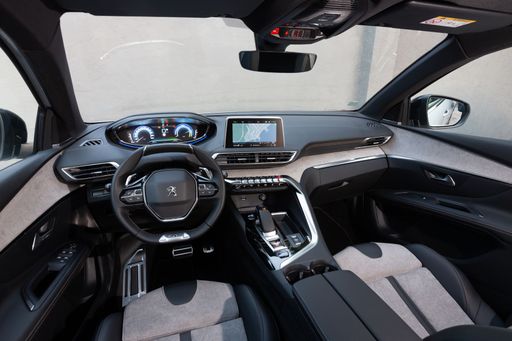
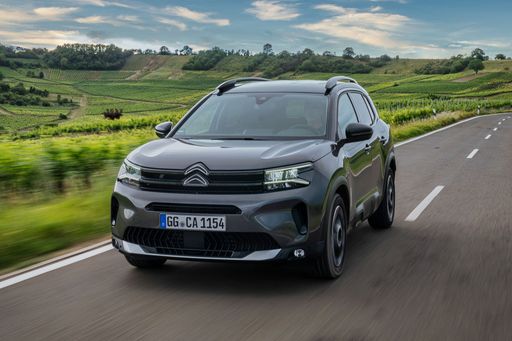
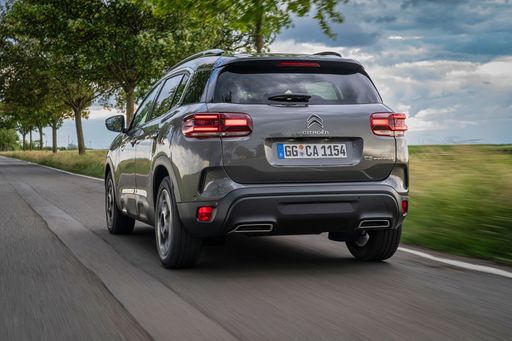
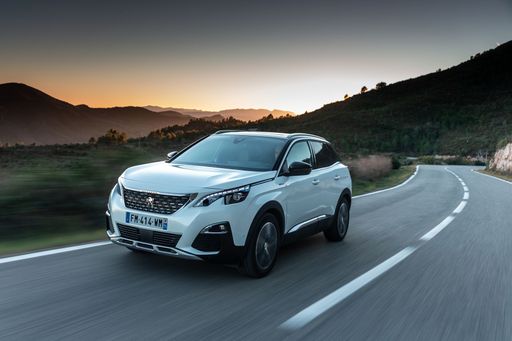
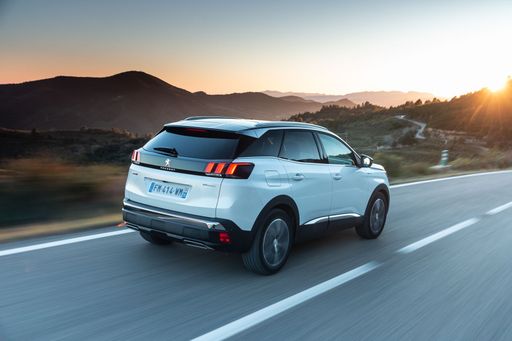
The visual character of these two is a study in contrasts: the Citroën C5 Aircross leans into a friendly, cushioned look that says comfort over aggression, while the Peugeot 3008 presents sharper, more athletic cues that promise a bit more poise on the road. Both have presence that turns heads for different reasons — one is approachable and relaxed, the other is taut and confident. If style matters as much as substance, your taste will steer the choice more than any spec sheet.
C5 Aircross

Comfort and daily livability

Step inside the Citroën and the cabin immediately feels engineered for long stretches and soft landings, with seats and suspension that favour isolation from bumps and city chaos. The Peugeot, by contrast, serves a firmer, more driver-focused environment where support and cabin cohesion are priorities rather than plushness. In everyday use the difference becomes a simple question of preference: do you want a rolling armchair or a cabin that keeps you more connected to the tarmac?

3008

How they behave on the road

In town the Citroën’s suspension soaks up imperfections and makes stop-start driving less tiring, while the Peugeot’s sharper steering and tighter body control make it easier to place on roundabouts or during lane changes. On faster roads the Peugeot rewards with composure and a feeling of momentum, whereas the Citroën keeps things calm and cushioned, smoothing out the long hauls. Both are competent, but they speak different languages — comfort versus dynamics — and you’ll notice that in everyday driving.

C5 Aircross

Practical family sense

Both models think about family life, but they approach it differently: the Citroën emphasises flexible, forgiving space that welcomes child seats and casual loading without fuss, while the Peugeot prioritises intelligently packaged space and refined finishes that feel grown-up and tidy after a school run. Rear room and access are user-friendly in each, though the way they deliver that usability will suit different household rhythms. For buyers who juggle kids, pets and groceries, it comes down to whether you value forgiving ergonomics or a neater, more automotive refinement.

3008

Controls, screens and day-to-day tech

The Peugeot tends to present a more driver-oriented layout with crisp graphics and an infotainment approach that feels contemporary, while the Citroën keeps some handy physical controls and a simpler logic that can be less distracting on the move. Smartphone integration and connectivity are solid in both, but the way you interact with them—the tactile bits versus the all-touch approach—will affect how quickly you adapt. In practice, ease of use is as important as headline features, and each brand takes a distinct route to that goal.

C5 Aircross

Who should be looking at each one

If your priority is cushioned comfort, a forgiving ride and a relaxed daily companion for urban and mixed driving, the Citroën C5 Aircross will feel like home; it’s aimed at buyers who prize comfort and practicality above sporty reflexes. If you lean toward sharper handling, a more sculpted interior and a car that feels taut and composed on longer trips, the Peugeot 3008 suits drivers who want more engagement without losing refinement. Commuters, families, style-conscious drivers and long-distance users will all find a match here depending on which character they prefer.

3008

Want to know who takes the DriveDuel crown?

We’ve laid out how these two SUVs behave, live and breathe in everyday life so you can see which temperament better fits your life and priorities. Keep reading — the DriveDuel Champion will be revealed afterwards, and it’s worth seeing how the judges weighed comfort, usability and character before you decide.

Here’s where it gets real: The technical differences in detail

3008

Costs and Efficiency:

Price and efficiency are often the first things buyers look at. Here it becomes clear which model has the long-term edge – whether at the pump, the plug, or in purchase price.

Citroen C5 Aircross is visibly cheaper – starting at 29,100 £ , while the Peugeot 3008 costs 35,100 £ . That’s a price difference of around 6,008 £.

Fuel consumption also shows a difference: the Peugeot 3008 uses 2.4 L/100km and is barely more efficient than the Citroen C5 Aircross with 2.5 L/100km. The difference is about 0.1 L/100km.

In terms of energy consumption, the Peugeot 3008 is marginally more efficient: consuming 16.9 kWh/100km compared to 17 kWh/100km for the Citroen C5 Aircross. That’s a difference of about 0.1 kWh/100km.

As for electric range, the Peugeot 3008 offers markedly more range – reaching up to 698 km, about 178 km more than the Citroen C5 Aircross.

C5 Aircross

Engine and Performance:

Power, torque and acceleration are the classic benchmarks for car enthusiasts – and here, some clear differences start to show.

When it comes to engine power, the Peugeot 3008 offers clearly more power – delivering 325 HP compared to 225 HP. That’s roughly 100 HP more horsepower.

When accelerating from 0 to 100 km/h, the Peugeot 3008 is markedly quicker – completing the sprint in 6 s, while the Citroen C5 Aircross takes 8.3 s. That’s about 2.3 s quicker.

There’s also a difference in torque: the Peugeot 3008 delivers clearly more torque with 511 Nm compared to 300 Nm. That’s about 211 Nm more.

3008

Space and Everyday Use:

Beyond pure performance, interior space and usability matter most in daily life. This is where you see which car is more practical and versatile.

Both vehicles offer seating for 5 people.

In terms of curb weight, Citroen C5 Aircross is very slightly lighter – 1,629 kg compared to 1,648 kg. The difference is around 19 kg.

Looking at boot space, the Citroen C5 Aircross offers marginally more boot space – 565 L compared to 520 L. That’s a difference of about 45 L.

When it comes to payload, the Citroen C5 Aircross carries marginally more – 471 kg compared to 467 kg. That’s a difference of about 4 kg.

Who wins the race in the data check?

The Peugeot 3008 stands well ahead of its rival in the objective data comparison.
This result only shows which model scores more points on paper – not which of the two cars feels right for you.

from £35,100
3008

Peugeot 3008

  • Engine Type : Electric, Petrol MHEV, Plugin Hybrid
  • Transmission : Automatic
  • Drive Type : Front-Wheel Drive, All-Wheel Drive
  • Power HP : 145 - 325 HP
  • Consumption L/100km : 2.4 - 5.4 L/100km
  • Consumption kWh/100km : 16.9 - 17.6 kWh/100km
  • Electric Range : 81 - 698 km
Peugeot 3008
Citroen C5 Aircross

Costs and Consumption

View detailed analysis

Engine and Performance

View detailed analysis

Dimensions and Body

View detailed analysis

Peugeot 3008

The Peugeot 3008 blends bold French styling with a surprisingly grown-up interior that makes even dull commutes feel a little bit special. Practical enough for family life yet lively to drive, it’s a clever all‑rounder that stands out from the crossover crowd without shouting for attention.

details

Citroen C5 Aircross

The Citroën C5 Aircross feels like a sofa on wheels, delivering a calm, floaty ride and clever packaging that makes life with luggage and kids noticeably easier. Quirky French styling and a supremely practical, family-focused cabin mean it quietly wins hearts by prioritising comfort over showroom bravado.

details
Peugeot 3008
Citroen C5 Aircross

Costs and Consumption

Price
35,100 - 52,000 £
Price
29,100 - 43,000 £
Consumption L/100km
2.4 - 5.4 L/100km
Consumption L/100km
2.5 - 5.4 L/100km
Consumption kWh/100km
16.9 - 17.6 kWh/100km
Consumption kWh/100km
17 kWh/100km
Electric Range
81 - 698 km
Electric Range
81 - 520 km
Battery Capacity
0.4 - 96.9 kWh
Battery Capacity
-
co2
0 - 121 g/km
co2
0 - 121 g/km
Fuel tank capacity
55 L
Fuel tank capacity
-

Dimensions and Body

Body Type
SUV
Body Type
SUV
Seats
5
Seats
5
Doors
5
Doors
-
Curb weight
1,648 - 2,266 kg
Curb weight
1,629 - 2,184 kg
Trunk capacity
470 - 520 L
Trunk capacity
565 L
Length
4,542 mm
Length
-
Width
1,895 mm
Width
1,870 mm
Height
1,641 mm
Height
-
Max trunk capacity
1,430 - 1,480 L
Max trunk capacity
-
Payload
432 - 467 kg
Payload
446 - 471 kg

Engine and Performance

Engine Type
Electric, Petrol MHEV, Plugin Hybrid
Engine Type
Petrol MHEV, Electric, Plugin Hybrid
Transmission
Automatic
Transmission
Automatic
Transmission Detail
Reduction Gearbox, Dual-Clutch Automatic
Transmission Detail
Dual-Clutch Automatic, Reduction Gearbox
Drive Type
Front-Wheel Drive, All-Wheel Drive
Drive Type
Front-Wheel Drive
Power HP
145 - 325 HP
Power HP
145 - 225 HP
Acceleration 0-100km/h
6 - 10.2 s
Acceleration 0-100km/h
8.3 - 11.2 s
Max Speed
170 - 201 km/h
Max Speed
-
Torque
230 - 511 Nm
Torque
230 - 300 Nm
Number of Cylinders
3 - 4
Number of Cylinders
3 - 4
Power kW
107 - 239 kW
Power kW
107 - 165 kW
Engine capacity
1,199 - 1,598 cm3
Engine capacity
1,199 - 1,598 cm3

General

Model Year
2,024 - 2,026
Model Year
2,025 - 2,026
CO2 Efficiency Class
A, D, B
CO2 Efficiency Class
D, A, B
Brand
Peugeot
Brand
Citroen
DriveDuel uses data analysis and artificial intelligence to evaluate vehicle data and create content. Content is regularly reviewed and improved. The displayed prices are estimates based on German list prices, adjusted to the respective country’s VAT. Country-specific registration taxes are not included. This information is not legally binding.